Cursed: Inside Spain’s Only Officially Excommunicated Town!
Saturday, July 25, 2026
If you drive up into the rugged, wind-swept foothills of the Moncayo mountain range in Zaragoza, you will eventually stumble upon a moody, picturesque settlement guarded by the stone ruins of a medieval castle. With a permanent population hovering around just 90 residents, Trasmoz looks like any number of sleepy, forgotten rural villages scattered across northern Spain.
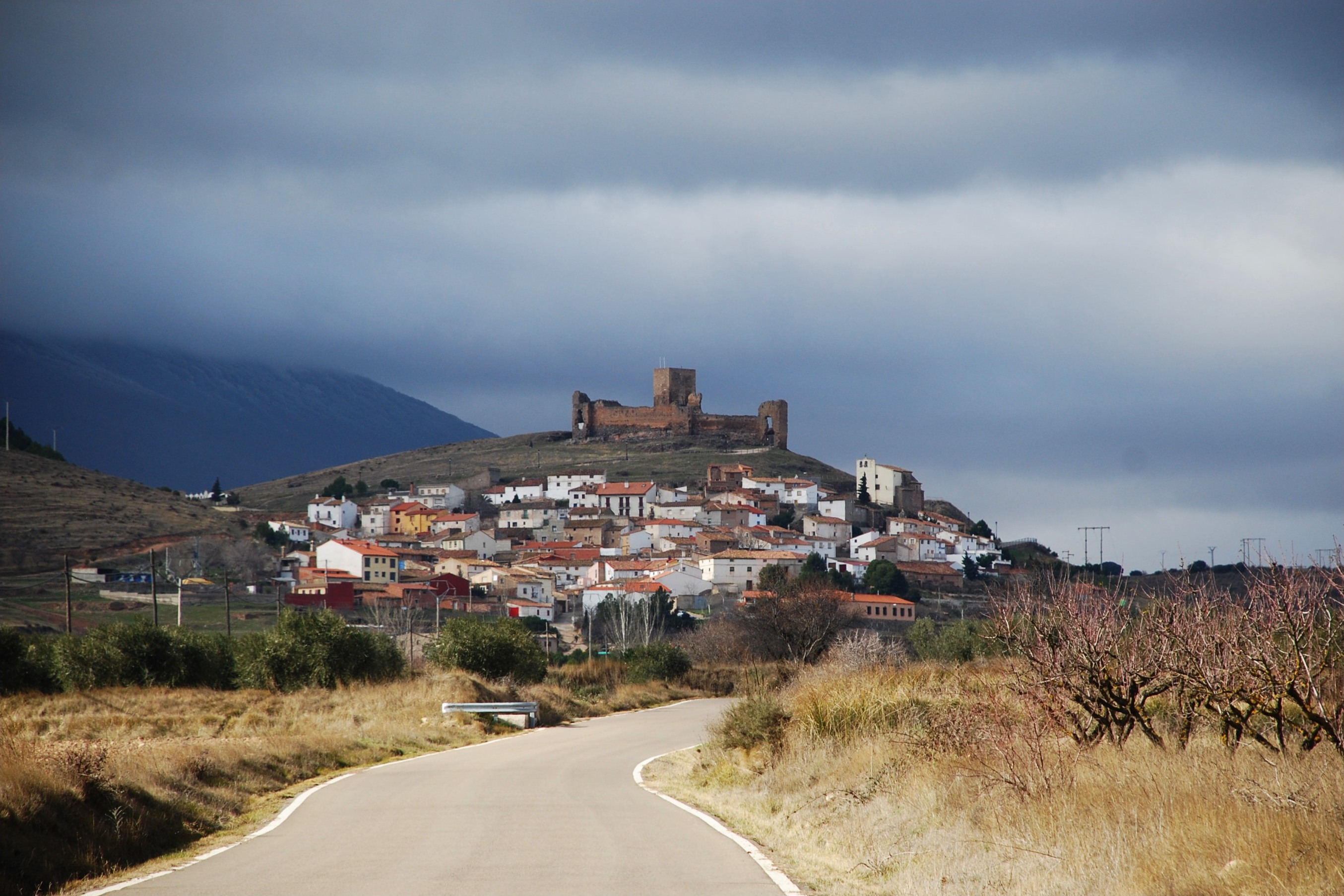
Except for one minor detail: Trasmoz is the only town in Spain—and indeed one of the very few places on earth—to be officially excommunicated and cursed by the Catholic Church. And to this day, neither the Vatican nor local ecclesiastical authorities have ever lifted the punishment.
A Medieval Dispute Over Firewood
To understand how a peaceful mountain village wound up barred from the kingdom of heaven for all eternity, we have to travel back to 1255.
In an era when wood was the absolute lifeblood of any community—used for heating homes, forging metal tools, and cooking daily meals—the villagers of Trasmoz found themselves in a bitter dispute. They insisted on harvesting their firewood from the nearby Monte de la Mata, cutting across the territorial claims of the powerful Cistercian Monastery of Veruela located just five kilometres down the road.
The abbot of Veruela, wielding immense feudal and religious power, demanded total submission and tax compliance from Trasmoz. When the proud locals flatly refused to bow to monastic rule, the abbot took the ultimate nuclear option of the Middle Ages: he initiated proceedings to officially excommunicate the entire town, casting its citizens outside the church and cutting them off from the sacraments.
The Second Curse and the Black Veil
The feud did not end in the 13th century. Three hundred years later, tensions flared up once again between the monastery and the secular lord of Trasmoz, Pedro Manuel Ximénez de Urrea, over water rights and local taxation.
Historical Legend: According to local lore, the enraged abbot decided to settle the score in the dead of night. He draped a heavy black veil over the altar cross inside the village church, took a breath, and began loudly reciting Psalm 108—a biblical passage calling down divine wrath and destruction upon adversaries. Every single verse was punctuated by a tolling bell, sealing a permanent curse upon the town and its lords that supposedly endures to this day.
Because of this dark reputation, coupled with the remote isolation of the Moncayo mountains, Trasmoz quickly became a magnet for terrifying local folklore. For centuries, neighbours whispered about clandestine covens, necromancy, and witchcraft meeting in the shadows of the castle ruins—fables later immortalised by the famous 19th-century romantic poet Gustavo Adolfo Bécquer, who sought recovery from tuberculosis in the surrounding countryside and wrote extensively about the village's haunted aura.
Embracing the Curse: Tourism and Tradition
Today, rather than shying away from their rebellious, unholy past, the resilient people of Trasmoz have leaned into it with brilliant Spanish wit. They proudly embrace the title of "cursed-blessed" (malditos-benditos).
| Festival / Attraction |
What to Expect |
| Feria de Brujería (Witch Fair) |
Held every June, this massive annual celebration draws thousands of visitors. The town crowns a local resident as the Bruja del Año (Witch of the Year) and celebrates local history with medieval markets and theatrical shows. |
| Castillo de Trasmoz |
The iconic 13th-century fortress ruins, now partially restored and housing a fascinating museum dedicated to the region's turbulent history and witchcraft legends. |
| Luz de las Ánimas |
Celebrated at the end of October, this atmospheric festival honours the dead with traditional pumpkin-carving workshops and a haunting evening procession from the church to the local cemetery. |
If you are planning an autumn road trip through Aragon, visiting Trasmoz around late October offers an unmatched eerie atmosphere. While you are there, stop by the single village bar to chat with locals—they love recounting how modern popes still haven't gotten around to signing the paperwork to lift the 800-year-old excommunication!
From medieval property disputes to eternal spiritual bans, Spain's rural interior is packed with eccentric local history that you simply won't find in standard guidebooks.
Have you ever explored the hidden mountain villages of Aragon or tracked down Spain’s darker historical legends? Would you dare to spend a night in the only officially excommunicated village in the country? Drop your thoughts and travel tales in the comments below!
This virtual 4K walking tour provides an immersive look at the medieval streets, castle ruins, and haunting atmosphere of Trasmoz.
 2
Like
Published at 10:06 AM Comments (1)
2
Like
Published at 10:06 AM Comments (1)
When travelling this summer why not take in some stars?
Saturday, July 11, 2026
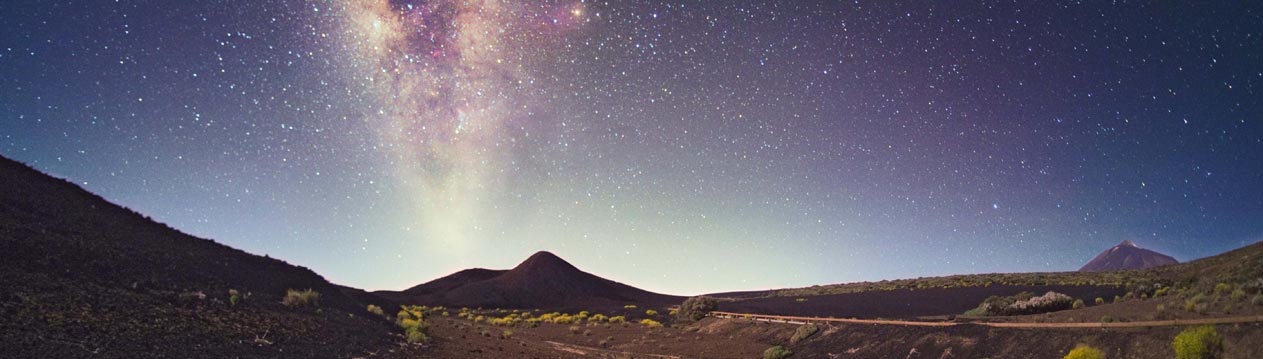
When travelling to or around Spain this summer “Star Tourism” is maybe something you want to keep in mind. If you have never considered this type of tourism and like the idea of gazing and interpreting the firmament, a great place to do so is Spain. Spain has some of the best vantage points in the world to marvel at the sky at night, so why not combine your passion for astronomy with an unforgettable trip to the Spanish countryside.
Spain's clear skies have preserved their natural darkness owing to the lack of light pollution. Indeed, at present, the Canary Islands, along with Hawaii and Chile are the homes of the observatories where the telescopes of the future are to be installed. The good climate offers endless nights with clear skies. Additionally, many of the areas from which the stars can be observed from are protected natural areas, such as nature reserves, that are sure to impress visitors.
There are country house lodges and small hotels in Spain that specialise in stargazing. These normally have planispheres or star charts, educational material and a telescope. There are also companies and associations that specialise in organising events for important moments such as eclipses and meteor showers. Indeed, Tenerife even hosts the Starmus Festival, which is aimed at astronomy, science and music enthusiasts and which has counted with people of the stature of Stephen Hawking as speakers.
There are several types of Starlight certifications (Starlight Reserves, Starlight Tourist Destinations, Stellar Parks, Starlight Hotels, etc.) that are granted to places that include sky watching as part of their natural heritage, thus ensuring a quality tourist experience. You can get more information at the website of the Starlight Foundation, created by the Canary Island Institute of Astrophysics (IAC).
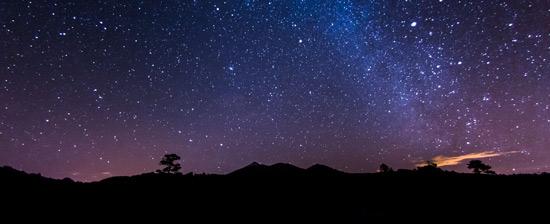
Here is a selection of the Starlight areas in Spain :
Sierra Sur District. (The Sierra Sur mountains in Jaén Andalusia, southern Spain). This is a landscape abounding in mountains and canyons where the air is clean and transparent. Different astronomy associations and the Andalusia Astronomy Observatory normally organise guided observation activities. There are even companies that provide private astronomy guide services at those country house lodges that have professional telescopes.
Andalusia Sierra Morena Mountains. There you will find a marvellous network of star gazing vantage points and accommodation. They also offer package holidays that include specialist guides, observation material, day and night activities, accommodation, 4x4 travel, etc.
El Montsec. This is a Starlight Tourist Destination located in the foothills of the Pyrenees in Lleida (Catalonia). You could do no better in this area than pay a visit to its large astronomy park made up of the Universe Observation Centre (COU) and an Astronomy Observatory. Did you know that the well known “Montsec Eye” is to be found there, the 12-m dome which opens out to bring you “face to face” with the Montsec sky?
Tenerife. Both the Teide National Park along with other mountain peaks on Tenerife and the town of Granadilla de Abona hold Starlight certification. If star gazing is exciting in itself, watching them from a volcano at over 2,000 m above sea level is an incomparable experience. What better place to gaze at the moon than from a lunar-like landscape? The geographical situation of the Canary Islands offers visitors a chance to observe both the northern and southern hemispheres. You can sign up for a guided visit to see inside one of the most modern telescopes in the world or to take a photograph of the night sky.
La Palma. Known as the “beautiful island”, this is the most rugged of the Canary Islands and the one with the clearest skies. It is definitely an understatement to say that this is one of the best places on earth to observe the stars. All the towns on the island have astronomy vantage points. Its famous Roque de Los Muchachos Observatory, standing some 2,400 m above sea level is one of the most complex telescopes, and indeed one of the most complete, in the world. You can visit it, but only by prior arrangement. La Palma has several hotels and country house lodges with observation instruments. There you will find sundials and even restaurants that offer “galaxies” and “constellations” among their dishes.
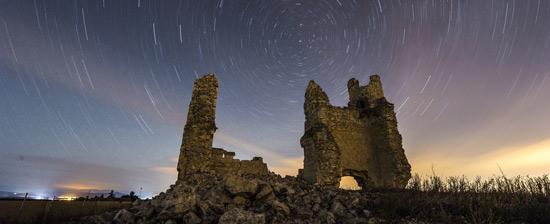
Gredos Norte. This is in the south of the province of Ávila (in Castile-León, inland Spain). It has a network of star watching vantage points that are equipped with information panels, car parks, etc. The Astronomy and Astrophotography Congress is held there every year.
Biosphere Reserve of the Valleys of Leza, Jubera, Cidacos and Alhama. We are talking about the beautiful countryside of La Rioja (northern part of inland Spain). Several activities have been organised there in recent years such as talks about the sounds of nature, tours to spot nocturnal birds, explanations on the link between the Celtiberian culture and the stars, bathing under the stars in thermal springs, learning about the constellations, etc. La Rioja also has two star parks: the Laguna one in Cameros and other in Cervera del río Alhama.
One of the most popular times of the year to stargaze in Spain is during what is known as the “Tears of Saint Lawrence”. They refer to the Perseids meteor shower of shooting stars that usually takes place between the 11 and 13 August every year. Not every night is suitable for sky watching on account of moonlight and wind factors however the best nights are those just before and after a new moon.
2
Like
Published at 2:04 PM Comments (0)
Why the Vote for Spain’s ‘Most Beautiful’ Region Ended in a Dead Heat
Friday, July 3, 2026
Ask any British expat why they chose their corner of Spain, and you will usually get a fierce, unwavering defence of their local barrio, beach, or mountain valley. So when España Fascinante recently polled thousands of seasoned travellers to name Spain's single most beautiful autonomous community, it should come as no surprise that the vote ended in a dramatic tie. The co-winners? Asturias and Andalusia—two regions so geographically, culturally, and climatically opposite that they perfectly capture the dual soul of Spain.
For property owners and long-term residents, this split vote underscores a reality we know well: there is no single "Spain." There is the sun-drenched, Moorish south, and there is the dramatic, emerald-green north.

1st (Tie): Asturias – Spain's emerald Queen of the North. Source: Pablo Sebastian Intelisano / Getty Images

1st (Tie): Andalusia – Moorish grandeur and year-round sunshine. Source: ViliamM / Getty Images

2nd Place: Galicia – Celtic heritage and rugged Atlantic estuaries. Source: Luis Dafos / Getty Images

3rd Place: Valencian Community – Mediterranean beaches meet modern design. Source: Ventura Carmona / Getty Images

4th Place: Aragón – High Pyrenees and enchanting medieval villages. Source: Jorgefontestad / Getty Images
A Tale of Two Spains: Why Asturias and Andalusia Co-Reign
It is fascinating to see voters split straight down the middle between the Principality of Asturias and Andalusia. It proves that expats and travellers are increasingly moving beyond the standard holiday brochure image of Spain to appreciate its wilder frontiers.
In Asturias, you are dealing with "Green Spain" (España Verde). Here, dramatic limestone peaks in the Picos de Europa plunge almost directly into the Cantabrian Sea. It is a land of cider houses (sidrerías), Celtic bagpipes, deep-dish bean stews (fabada), and cool summer breezes. It is the antithesis of the crowded Costas, drawing Brits who want hiking boots rather than flip-flops, and who do not mind occasional rainfall if it means lush pastures and deserted, dramatic coves.
Andalusia, on the other hand, is the romantic heartbeat of the peninsula. It is the Spain of flamenco, white-washed hill towns (pueblos blancos), olive groves that stretch to the horizon, and world-class architectural marvels like Granada’s Alhambra and Seville’s Plaza de España. For many expats, Andalusia’s intoxicating blend of Moorish history, vibrant street life, and reliable winter sunshine makes it unbeatable.
The Complete Reader Ranking: Who Made the Top Five?
While Asturias and Andalusia shared the crown, the remaining spots in the top five highlight regions that have seen a massive surge in interest from British second-home buyers and digital nomads over the last decade:
2nd Place: Galicia – The Silver Medalist
Sitting proudly in second place is Galicia. Much like its neighbour Asturias, Galicia won over voters with its untamed Atlantic coastline, world-famous seafood, and the labyrinthine stone streets of Santiago de Compostela and A Coruña. The deeply indented estuaries (rías) offer some of the cleanest boating and sailing waters in Europe.
3rd Place: The Valencian Community – The Expat Favourite
Claiming third is the Valencian Community—home to the Costa Blanca, Valencia city, and Alicante. While famous for its endless golden beaches and being the birthplace of authentic paella, voters specifically nodded to its enticing hinterland. Move just 30 minutes inland from the bustling coast, and you find tranquil valleys filled with almond blossoms, medieval castles, and limestone climbing crags.
4th Place: Aragón – The Mountain Playground
Aragón secured fourth place thanks to the raw majesty of the Aragonese Pyrenees, the stately elegance of its capital, Zaragoza, and fairy-tale settlements like Albarracín (widely considered one of the most preserved medieval villages in Europe). It is a haven for skiers, cyclists, and those seeking absolute tranquillity away from tourist crowds.
5th Place: The Balearic Islands – Island Magic
Rounding out the top five are the Balearics. Despite intense summer overtourism, Mallorca, Menorca, Ibiza, and Formentera remain undeniably gorgeous. Voters highlighted the sea breezes, dramatic limestone cliffs of the Tramuntana mountain range, and hidden turquoise coves (calas) that still offer slice-of-paradise living off-season.
Over to You: Where Does Your Loyalty Lie?
Did the voters get it right by splitting the crown between the green north and the sunny south, or was your home region robbed of the top spot?
Which autonomous community won you over when you decided to buy or move to Spain? Are you a die-hard Andalusian sun-worshipper, a Costa Blanca veteran, or have you discovered the tranquil magic of the northern coastline? Drop into the comments below and tell us why your corner of Spain beats them all!
1
Like
Published at 11:08 PM Comments (1)
Spam post or Abuse? Please let us know
|
|