Perhaps the most traditional Christmas sweet in Spain is marzipan, a paste of almonds and sugar. There are various theories about its beginnings, although it is certain to have originated in the Mediterranean area, where almonds come from. The stories of the Thousand and one nights mention it as an aphrodisiac, and as a restorative during Ramadan. Others say it first came from convents, many of which still make it. When there was a wheat shortage after the battle of Las Navas de Tolosa (1212), the nuns began making these sweets with what they had in the larder: almonds and sugar. In Toledo, famous for its marzipan, they used to stamp an image of the King on his throne on the marzipan cakes, copying the city's crest. Curiously, "the King seated", in Arabic, sounds like mauthaban, very similar to the Spanish mazapán. So the debate continues.
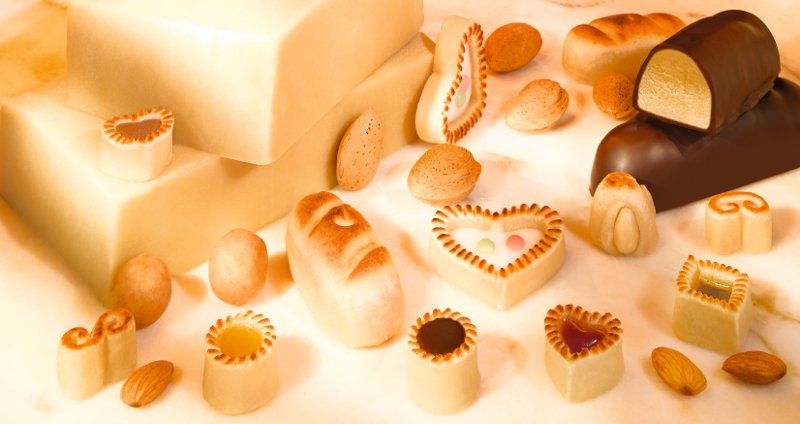
What we can be sure of is that to eat the finest marzipan, you should go to this city in La Mancha, where you can also find traditional variations: anguilas or "eels" with an angel-hair squash filling, thought to have been first made for King Philip III as a gift for the King of Portugal; delicias in the form of a crescent moon, filled with egg paste; castañas, in the form of chestnuts, dipped in chocolate; and empiñonadas, covered in pine nuts.
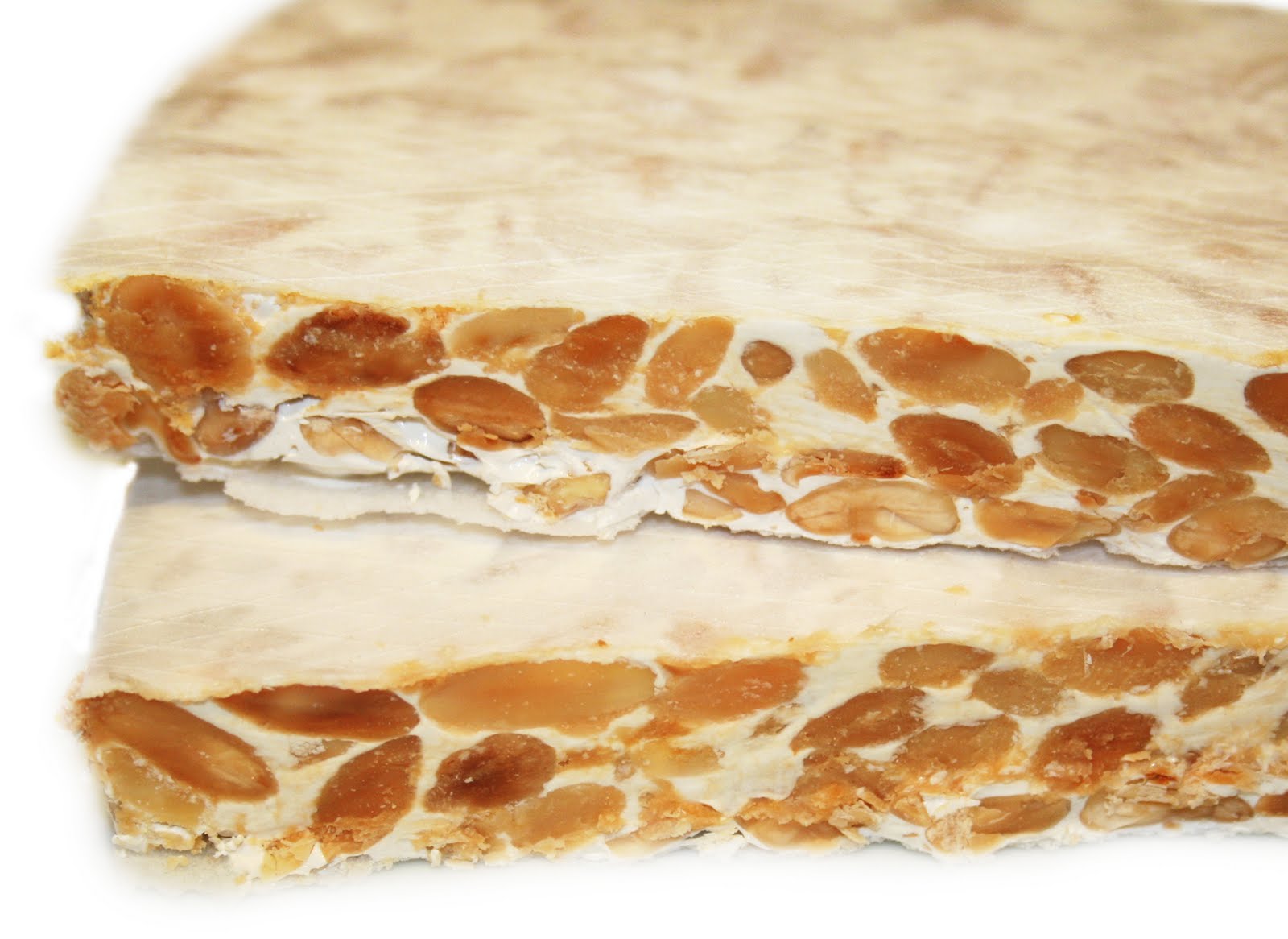
Turrón also seems to have a Muslim origin. A mixture of almonds and honey, called turun, appears for the first time in the book De medicinis et cibis semplicibus, written by an 11th-century Arab doctor. In the 16th century, Philip II's royal cook, Don Francisco Martínez Montiño, comments in his book Conduchos de Navidad that Jijona smells of honey everywhere, because turrón is made in every household. In 1991 the Regulatory Council of the Designation of Jijona was formed, and although traditional turrón is made with almonds and honey, both abundant around Valencia, modern variations can include egg yolk, candied fruit or nuts.
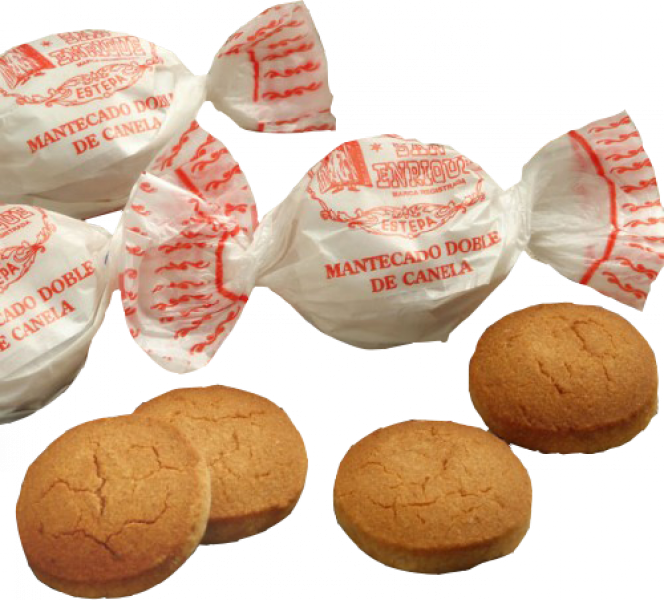
As with most culinary inventions, mantecados or lard cakes also arose to meet a need. In the 16th century there was a surplus of pork lard and of cereals, particularly around Seville. In Estepa they decided to mix the lard and flour, adding olive oil, sugar and egg-white, to make mantecados.
Here there is no possibility of an Arab origin. According to their Protected Geographical Indication, mantecados originated in the Convent of Santa Clara in Estepa, where they were first made as flat cakes, and later as the little cakes we see today. Today they can include coconut, cinnamon, sesame seeds and even chocolate. The polvorón is a very similar sweet which was first made around the same time, but includes almonds.
Christmas meals with children, especially in Catalonia and Aragon, often finish with a type of chocolate-covered Swiss roll. At first sight it looks like a log, but it’s actually a cake filled with cream, the Tronco de Navidad. No-one is sure why these two regions in north-eastern Spain borrowed the Buche de Noel from their French neighbours, who in turn took the idea from the Nordic tradition of the Yule log, where in the northern hemisphere a tree-trunk was burned at the winter solstice between 20 and 23 December as a symbol of prosperity. Like the cake, the log was decorated with flowers, pieces of orange and nuts. In Great Britain, Belgium, and then France, many people took up the tradition of the Yule log, but it fell from favour when enclosed stoves began to be used for heating. A French cake-maker found a solution with this dessert, which quickly became popular in the late 19th century.
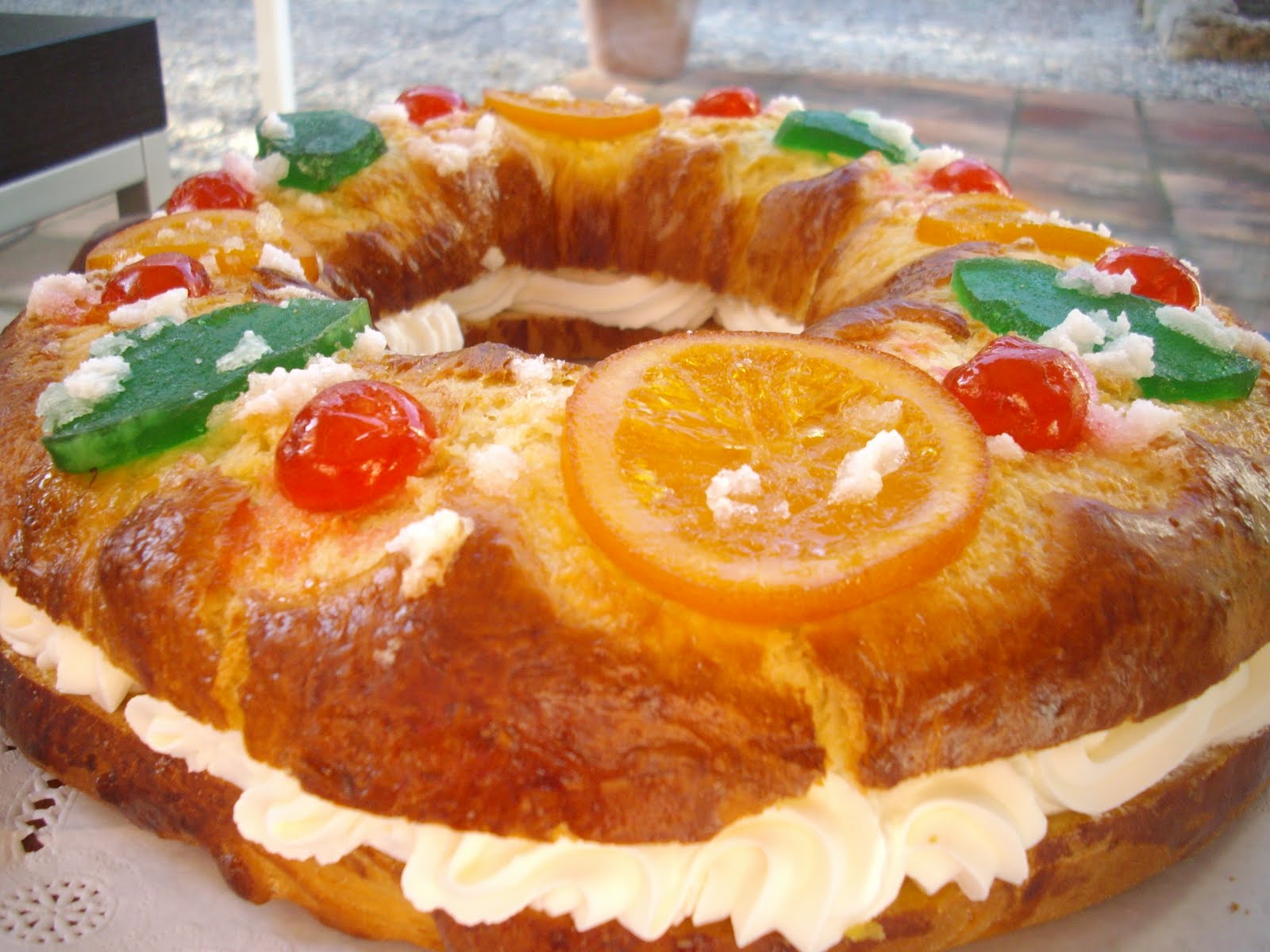
And finally we come to the cake that ends the Christmas season in Spain on 5 or 6 January, depending on the customs of each household: roscón de Reyes. The first people to eat a ring-shaped cake were the Romans, during Saturnalia, also known as the slaves' holiday, because they didn’t have to work. A broad bean would be hidden inside the cake, a symbol of the prosperity that would come in Spring, and of Saturn, the god of agriculture. They spread the tradition all over Europe, but after the arrival of Christianity it endured only in France, where the royal household made the cake with a coin hidden inside. These days it remains a firm tradition in much of Spain, especially in Madrid, accompanied by hot chocolate, and in Latin American countries such as Mexico.