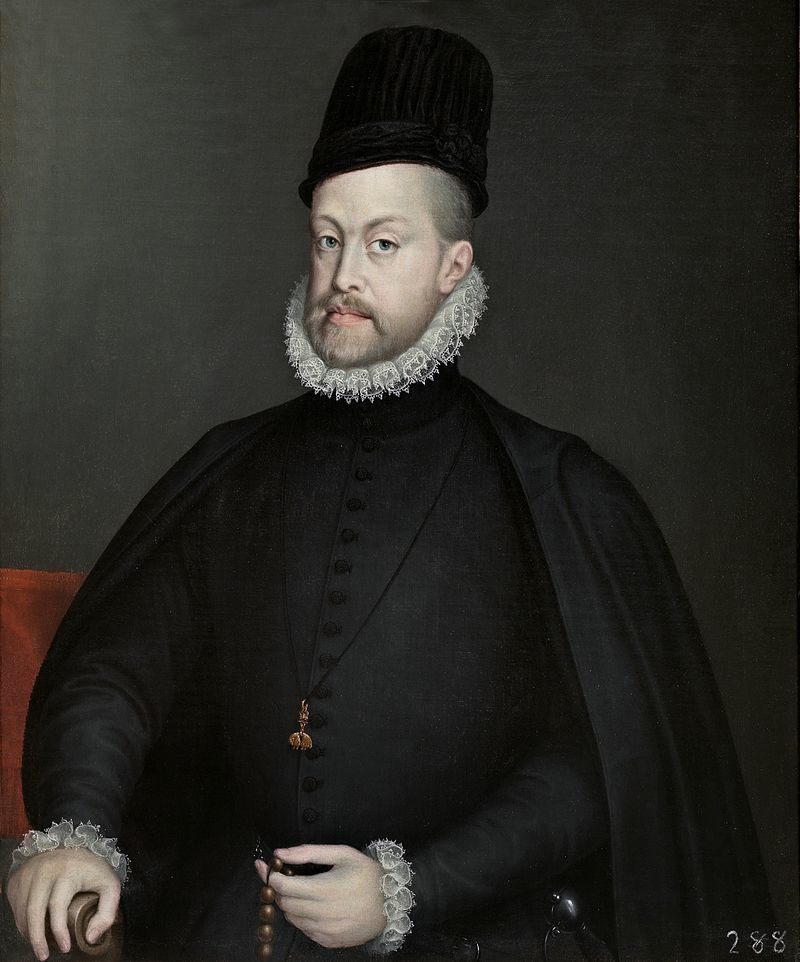
 In the 16th century, King Phillip II of Spain wanted to build a library that would hold not only books and manuscripts of philosophy and theology but also instruments of scientific learning such as ornate globes and astrolabes, both celestial and terrestrial, and maps of the known world.
In earlier times, this would have been considered heretical, but this new emphasis on unifying the humanities and the sciences was typical of the spirit of a new age in Europe, the so-called Renaissance, and so the magnificent Royal Library of San Lorenzo de El Escorial was built.
The library was designed by the mathematical and architectural genius Juan de Herrera, and it is notable for being the first library on the European continent to break from the medieval dogmatic beliefs on architecture and decoration. Indeed, it’s believed that the design and decoration of the Vatican library in Rome took its inspiration from Herrera’s work in El Escorial.
The plan for the space also influenced how libraries worldwide were to display their collections. It was the first institution to display its books and manuscripts in shelving cases along the walls rather than in bays that were placed at right angles. This was done so that the titles would be visible to visitors to avoid the damage caused to the books when they were taken out to view.
The enormous collection of over 40,000 books and manuscripts kept here cover everything from philosophy to politics to poetry, written in a multitude of different languages, including Latin, Greek, Italian, Spanish, Portuguese, English, French, Arabic, Persian, Hebrew, Chinese, and even Nahuatl, the language of the Aztecs. Colourful frescoes adorn the ceiling depicting scenes from classical history that represent what the ancients considered to be the seven arts: grammar, rhetoric, dialectics, arithmetic, music, geometry, and astronomy. Beyond the cornice, you will also find a total of 14 paintings that show scenes meant to encourage an appreciation for the arts in the visitor.
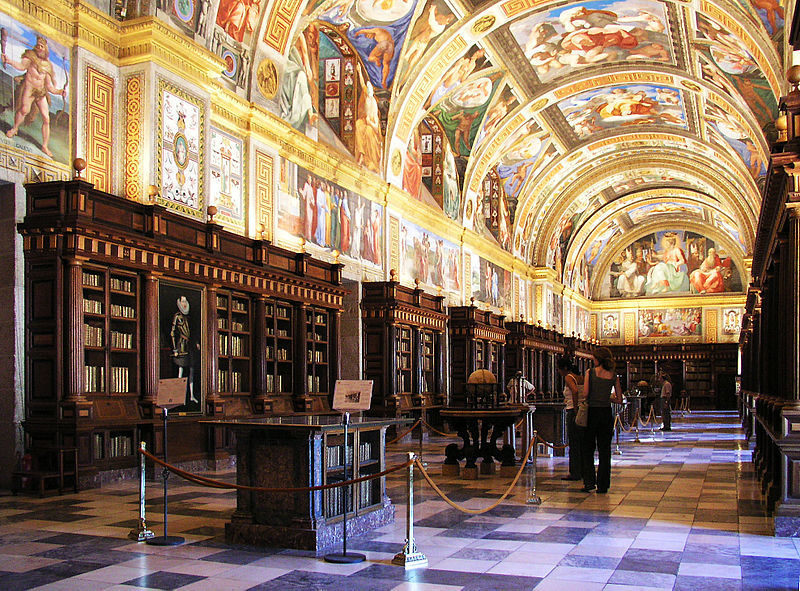
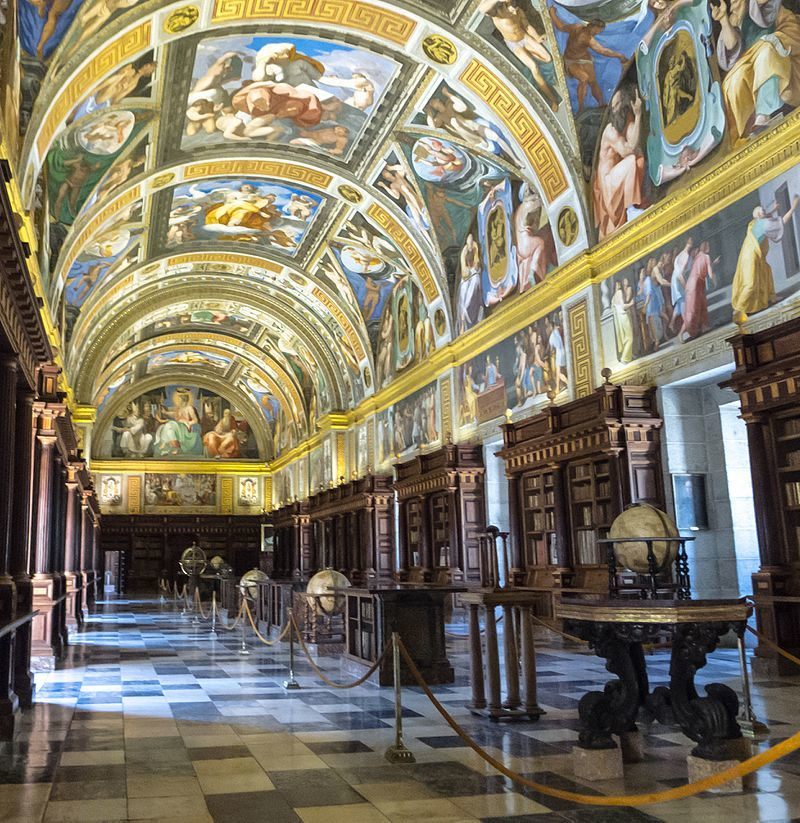
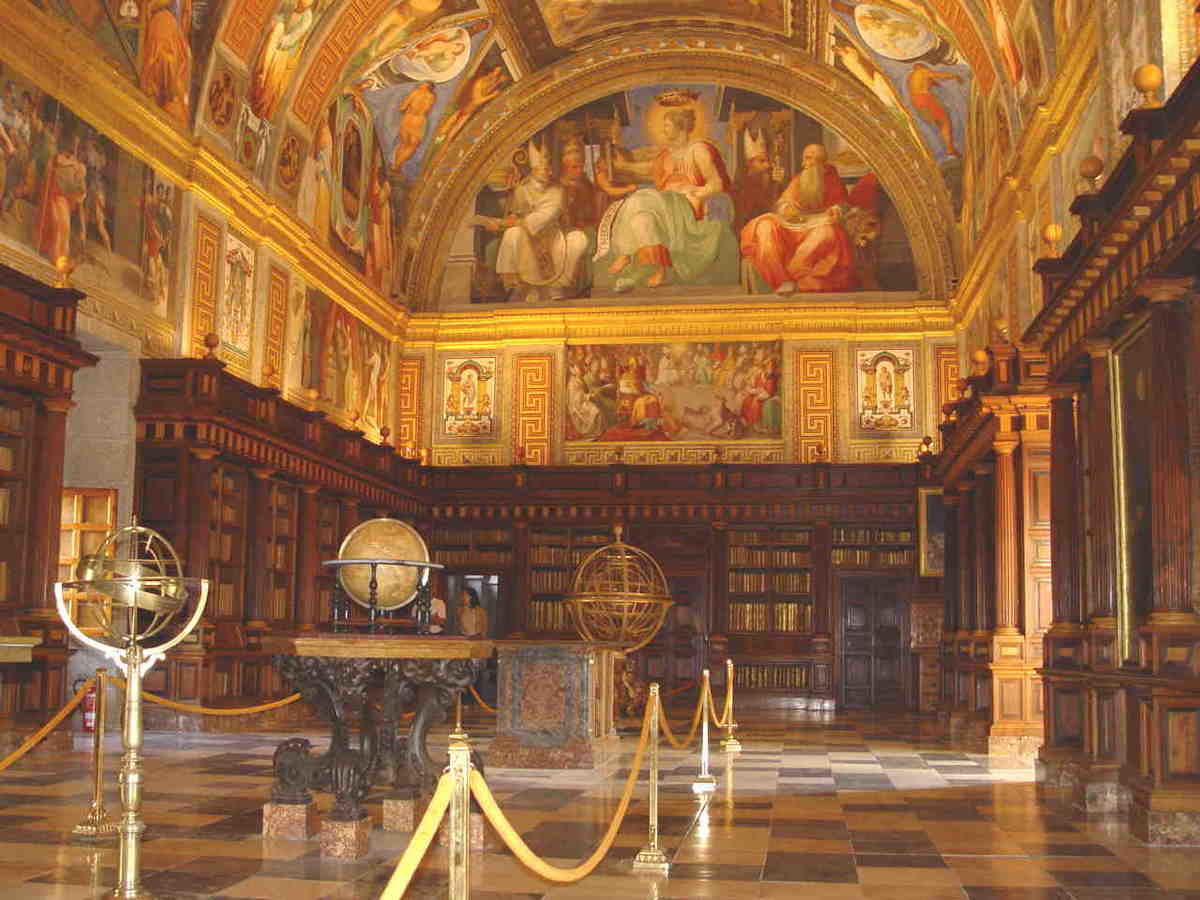
Among the most fascinating objects in the library are the numerous wonderfully baroque globes and armillary spheres, of which King Phillip evidently was an avid collector. It is said that the king would spend much of his time in the library studying these instruments in the company of astronomers, geographers, and cartographers.
The Royal Library (Real Biblioteca) is located within the monastery and palace complex in Lorenzo de El Escorial, outside Madrid. It is open from Tuesday to Sunday from 10 a.m. to 6 p.m. and the entrance fee 10 euros. El Escorial can be reached via public transport from Madrid. Simply take the Cercanias train (line c3) about a half hour from the Atocha or Sol station. Once you reach the station in El Escorial, it's a 30-minute walk to get to the palace, much of which is uphill so it can be quite a hike. Make sure you bring plenty of water and sunscreen if you visit in the summer.