The Letter That Almost Disappeared
Friday, November 21, 2025
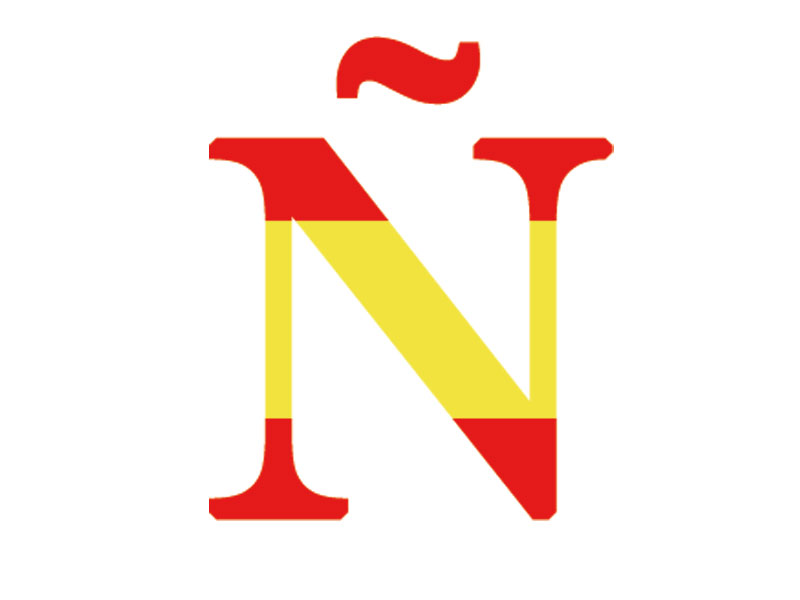 Ñ is the 15th letter in the Spanish alphabet and is used in more than 15,700 words. There’s no "Español" without ñ but even worse there would be no "cañas" either. The letter ñ was first included in the dictionary of RAE in 1803. But its origins stretch to the Middle Ages. The letter first appears in a text dating back to 1176. Ñ is the 15th letter in the Spanish alphabet and is used in more than 15,700 words. There’s no "Español" without ñ but even worse there would be no "cañas" either. The letter ñ was first included in the dictionary of RAE in 1803. But its origins stretch to the Middle Ages. The letter first appears in a text dating back to 1176.
Neither the sound or the letter ñ existed in Latin, but as the Latin language evolved and romantic languages such as Spanish, French and Italian began to appear, so too did the palatal nasal sound, which is articulated with the back of the tongue raised to the hard palate - the movement required to pronounce the ñ.
In the Middle Ages, monks were the scholars and the monasteries were the centres of knowledge. The letter ñ is thought to have originated at this moment in time due to the shortage of scrolls, which were very costly, and all efforts were made to maximise the efficiency of space on each scroll. As a result, it is believed that the monks were forced to abbreviate some double letters in order to fit more words in each line. According to this theory, the second repeated letter was represented as a tilde over the first. In other words, what we know as the ñ is in fact a double n, so instead of donna, we have doña.
However, there is another theory about the origin of this letter. According to this theory, the letter ñ emerged as a way to represent the new palatal nasal sounds that appeared in the ninth century. These words meant more work for the monks and so different adaptations began to emerge depending on the language. The letter ñ was used in Spanish and Gallego (España); the nh combination in Portuguese (Espanha); gn in French and Italian (Espagna); and ny in Catalan (Espanya).
These different forms continued to be used interchangeably until the 13th century when King Alfonso X of Castile and León ordered a spelling reform as part of his policy of linguistic unification. The monarch introduced the letter ñ as the preferred option to the previous combinations and in doing so set the first rules of the Spanish language. When the use of ñ became widespread across the Iberian peninsula, humanist Antonio de Nebrija included the letter in the first Spanish grammar book in 1492.
But it was not too long ago that the letter ñ was in danger of disappearing, at least from the written language. In the 1990s, the European Economic Community (EEC) proposed eliminating the ñ to make computer keyboards more uniform. It was not until October 2, 2007, that the ñ, as well as other tildes, could appear in email addresses and web domains.
The controversy ended on April 23, 1993, when the Spanish government approved a royal decree that maintained the mandatory inclusion of the letter ñ on keyboards.
But it is important to note that neither the letter ñ nor the sound is exclusively Spanish. In the Iberian peninsula, it is used in Gallego and Asturian, and also to a limited degree in the Basque language Euskera. In Latin America, many indigenous languages also include the letter, such as Mapuche in Chile and Argentina, Zapotec in Mexico and Quechua in Ecuador.
 6
Like
Published at 10:58 PM Comments (1)
6
Like
Published at 10:58 PM Comments (1)
Adios, Pan? Why Spain is Saying 'No' to its Daily Diet of Bread
Friday, November 14, 2025
For decades, the image of Spain was inseparable from its bread. The long, crusty barra de pan (baguette) was the constant companion to every meal, used to scoop up the last drops of olive oil, mop up salsa, and serve as the backbone of every bocadillo.
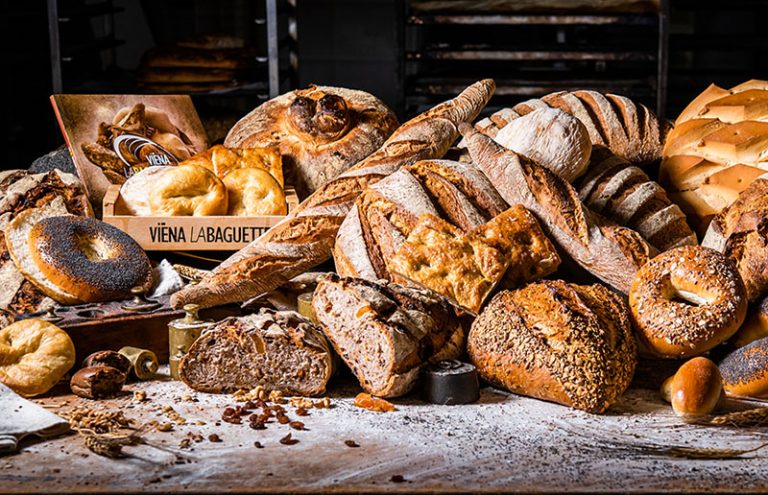
Yet, that staple of the Spanish table is rapidly disappearing. Data shows that bread consumption in Spain has plummeted by a staggering 80% since the 1960s, falling from an estimated 134 kilograms per person per year to around 28 kilograms today. This dramatic cultural shift is doing more than just changing mealtimes; it is reshaping the country's diet and devastating its traditional bakeries.
What is driving this monumental change in a country deeply rooted in the Mediterranean diet? The reasons are a complex mix of health myths and generational shifts:
-
The "Bread Makes You Fat" Myth: This is arguably the most influential factor. Despite being a low-fat food, the persistent, incorrect mantra that "bread makes you fat" has profoundly impacted public perception. Studies indicate that nearly 30% of Spaniards now try to follow a bread-free diet, while another quarter do not consider it necessary for balanced nutrition.
-
The Generational Divide: Younger Spaniards are increasingly replacing bread with other, more globally popular carbohydrates. Rather than pan being the go-to starch, the modern generation often prefers alternatives like pizza and pasta.
-
The Gluten Concern: Following global trends, many Spanish consumers, even without a diagnosed intolerance, have reduced or eliminated gluten-containing products, further pressuring traditional bread sales.
The cultural rejection of daily bread has had a crushing effect on the industry that defines local neighbourhoods:
-
Bakery Closures: Since the turn of the century, an estimated 40% of traditional bakeries (panaderías) have closed their doors.
-
Shift to Industrial Bread: As daily consumption falls, sales have moved away from skilled bakers to large supermarkets and gas stations, where highly processed, industrial, and often less flavourful loaves dominate the market.
-
Rising Prices: Compounding the problem for the consumer, the price of bread has risen significantly—up approximately 30% in the last decade, making bulk purchase less appealing.
Despite the overall decline, there is a positive counter-trend that expats, in particular, have enthusiastically embraced: the rise of artisanal bread.
Spanish consumers are increasingly moving towards high-quality, speciality breads. This demand is for loaves crafted using traditional methods, long fermentation, and quality ingredients—such as rustic sourdough (pan de masa madre) and whole-grain varieties.
This shift suggests that while bread may no longer be the cheap, obligatory filler for every meal, it is re-establishing its prestige as a gourmet, high-value food item. Instead of mindlessly consuming 130 kg of low-quality bread a year, Spaniards are now choosing smaller amounts of superior, traditionally made bread.
For those of us living in Spain who appreciate the rich culinary heritage, the best way to combat this decline is simple: seek out and support your local, artisan baker. Choose quality, complex flavours over convenience, and help keep the heart of Spain's baking tradition alive.
3
Like
Published at 11:05 PM Comments (2)
Spam post or Abuse? Please let us know
|
|