Cracking the Code of Spain’s Menú del Día
Friday, June 26, 2026
For foreign property buyers, long-stay renters, and travelers trying to transition from tourists to locals, navigating a Spanish restaurant can sometimes lead to a bit of linguistic confusion. You sit down at a sun-drenched terrace, confidently ask the waiter for "el menú," and expect to receive a multi-page binder of everything the kitchen offers. Instead, the waiter starts rattling off a verbal list of three or four home-cooked stews, meats, and desserts.
In Spain, there is a fundamental difference between la carta (the full, à la carte menu with fixed individual prices) and el menú del día (the menu of the day).
As we move through 2026, the menú del día remains the absolute cornerstone of Spanish culinary life. It is an incredibly filling, multi-course midday feast offered at a fixed, budget-friendly price that lets you eat like royalty for the cost of a basic sandwich back home. Here is why this dining tradition is one of the country's best-kept secrets, and how to master it like a local.
.jpeg)
The Unlikely History of the Lunch Break Deal
The menú del día is so deeply ingrained in modern Spanish society that many assume it has existed forever. In reality, its roots stem from a highly practical piece of 1960s state planning.
During the dictatorship of General Francisco Franco, Spain experienced a massive international tourism boom alongside rapid industrialisation. To ensure that hard-working labourers who couldn't make it home for lunch could still afford a hot, nutritious, and balanced meal, the government passed a strict national law in 1965 introducing the menú turístico.
Every restaurant in the country was legally obligated to offer a fixed-price, multi-course daily meal featuring regional Mediterranean cuisine. While the strict legal mandate was eventually phased out decades later, the tradition had already become a permanent social fixture. Today, it is a daily necessity for over 50% of Spanish workers who eat out.
What Do You Actually Get?
The beauty of the menú del día is its immense value. Depending on whether you are in a rural village tavern or a neighbourhood spot in a major city, a standard daily menu in 2026 typically costs anywhere between €10 and €16.
For that single flat fee, you don't just get a main dish; you receive a fully integrated feast. The meal follows a strict, scannable structure:
| Course |
What to Expect |
Popular Examples |
| Primer Plato (First Course) |
Typically lighter, vegetable, starch, or soup-based dishes designed to kick off the meal. |
Ensalada mixta (tuna and olive salad), Lentejas (lentil stew), Gazpacho, or a vegetable Paella. |
| Segundo Plato (Second Course) |
The heartier, protein-focused core of the meal is usually served with fries or a light garnish. |
Filete de cerdo (pork loin), Merluza a la plancha (grilled hake), or Albondigas (meatballs in sauce). |
| Pan y bebida (Bread & Drink) |
Crusty white bread is automatically placed on the table, alongside a full drink of your choice. |
A beer, soft drink, water, or a full porrón (pitcher) of house red or white wine to share. |
| Postre o Café (Dessert or Coffee) |
A sweet finish to the meal. Many restaurants let you choose between a dessert or a coffee. |
Flan (caramel custard), Arroz con leche (rice pudding), fresh seasonal fruit, or a café solo. |
Rules for Ordering Like a Native
Because the menú del día operates on razor-thin profit margins and high volume, the service is fast, loud, and delightfully no-nonsense. To blend in seamlessly with the locals, keep these structural tips in mind:
-
Look for the Chalkboard: The best daily menus are rarely printed on fancy glossy paper. Look for the hand-written wooden blackboards (pizarras) propped up on the pavement outside the bar or taped inside the window. If there's no board and it's between 1:30 PM and 4:00 PM, simply ask the waiter: ¿Tenéis menú del día?
-
Order Everything at Once: When the waiter approaches your table, they will expect you to state your entire order in one swift breath. You must choose your primero, your segundo, your postre, and your bebida right at the start so the kitchen can coordinate the rapid flow of plates.
-
Follow the Crowds: The ultimate indicator of a spectacular menú isn't the decor or a fancy logo—it's density. If a tavern is packed to the rafters with local construction workers, police officers, and bank staff at 2:00 PM, walk straight in. They know exactly where the freshest, highest-quality ingredients are being served that day.
-
No Sharing Allowed: Given the exceptionally low price point, a menú del día is strictly a per-person arrangement. You cannot order one menu and split the two main plates between two people. However, many establishments offer a medio menú (half menu) for a slightly reduced price if you only have the appetite for a single course.
The menú del día is far more than just a cheap way to fuel your afternoon. It is an immersive cultural gateway into the very heart of Spanish community life. It represents a society that refuses to compromise on the importance of sitting down, taking a breath, and enjoying a real, home-cooked meal in the middle of the working day
 4
Like
Published at 9:54 PM Comments (3)
4
Like
Published at 9:54 PM Comments (3)
Don't Forget about Toledo...
Friday, June 19, 2026
_01 - Copy 1.jpg)
The historic city of Toledo sits atop a steep-cragged rock, around which the Tajo or Tagus river slowly meanders. This strategic position together with abundant water, forests, grazing and arable lands in the surrounding areas gives much value to the city and has always favoured its use as a permanent human settlement since prehistoric times.
With over two thousand years of history, having first been a Celtiberian city, Toledo has the special characteristic of being a melting pot where all the cultures and eras of Spain have come together and intermingled, and which together make up a small but rich example of the history of the land.
Thus, Toledo is known as The City of the Three Cultures, a name which refers to the Christian, Islamic, and Hebrew cultures that coexisted during centuries within its walls, impregnating it with its own special identity. This almost brotherly union and the plurality of traditions can best be seen in the architecture, where the customary artistic styles of each one are interwoven, exchanging influences and forming hybrids with their own personalities. The Mudejar style, a mixture of Islamic and Christian styles, predominates in the city, combining principally Romanesque structures and purely Muslim elements.
There were various important examples of intercultural exchange, such as the so-called School of Translators of the 12th and 13th centuries, which was decisive in preserving and disseminating knowledge of the Greco-Latin and Arab cultures.
A very important town developed while Christianity took hold around the first century, remaining until the present day and maintaining, for better or worse, the Greco Latin cultural legacy.
The first written historical document which mentions Toledo dates from the Roman period, a testimony of the conquest of the city in the year 193 BC, when it was already an important Celtiberian city. The Roman historian Tito Livio mentioned the city of Toletum, a term whose origin would be Tollitum, meaning "raised aloft". During this era, Toledo became an important urban centre and evidence of this period include the ruins of a monumental circus, and the ruins of the water supply system with the dam wall, also some remains of the aqueduct across the deep ravine of the Tagus River.
Following the decay and fall of the Roman empire at the hands of peoples from the North of Europe, the city was conquered in the 5th century AD by the northern barbarians and in the 6th century, the Visigoths moved their court to Toledo.
In the year 569, Leovigildo, King of the Visigoths, established his court in Toledo and in 589 it became the political and religious capital of Hispania, after the abandonment of Arianism and conversion to Catholicism by the Visigothic king Recaredo. During this period, the Councils of Toledo took place here. These were assemblies with ecclesiastical, political and legislative functions. Only a few material vestiges remain of this era, such as some ruins of chrismons, capitals and pilasters, together with some gold and silversmith work. These items are on display in the Museo de Los Concilios y Cultura Visigótica (Museum of the Visigothic Councils and Culture), and others found in various parts of the city were later re-used and remain embedded in walls and towers.
Although dating from old, the Jewish presence was not pronounced until 712, the year in which the Moors conquered the city.
The conquest, without a fight, of the city by the Berbers of Tarik in the year 711, began the period of Muslim domination in which the Moors occupied Toledo for 373 years, a relatively short period, but their influence was enormous, both in the labyrinth-like layout of narrow and steep alleyways, of parapet walks that go nowhere, often with covered passageways on top, and in important architectural remains, such as the Bab-al-Mardum mosque, today known as Cristo de la Luz (the Christ of Light), built by Musa ibn Ali, among others.
The religious tolerance of the Muslims allowed the Christians to co-exist with the Moors and led to the appearance of the so-called Mozárabes-"Mozarabs"-who created a unique culture which would have far-reaching effects on architecture and decoration, as well as customs, vocabulary, literature and music. This situation also allowed the Jews to form a prosperous community, although their presence dated back to the Visigoth period.
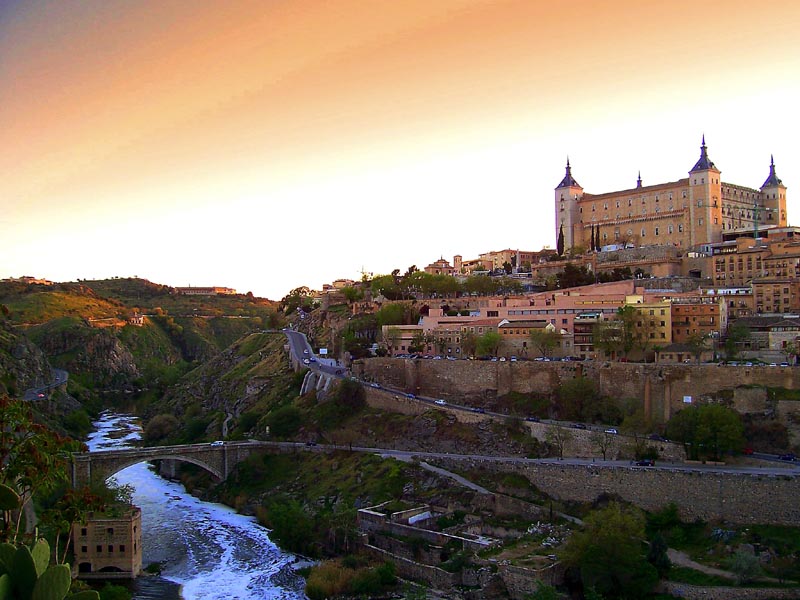
In 1085, when Alfonso VI took the city walls with no bloodshed, many of the Muslim inhabitants decided to stay with the Christians and Jews. The harmony between the three cultures bore fruit as notable as the School of Translators of Toledo, renowned for having recuperated part of the classical culture from various Arab documents. The Islamic legacy faded with time, and the Catholic Monarchs, Ferdinand and Isabella, expelled the Jews in the 15th century. However, the cultural mix in the city had been determined and can still be felt today.
King Alfonso VI conquered the city from the Muslims in 1085, and Toledo became part of the Kingdom of Castile. The King promised to respect not only the Muslims and their property, but also allowed them the use of their language and the freedom to practice their religion. This maintained the stability of a large portion of the population. The Christians who had taken part in the conquest. and their religious orders also became part of this plural society and received houses and orchards in the city as rewards from the King.
In 1226, Fernando III and the Archbishop Rodrigo Ximénez de Rada decided to build the Cathedral, the only purely Gothic building from this period. In the 14th century, due to the economic and social crisis at the time, the atmosphere of religious tolerance which characterised Toledo in previous centuries progressively disappeared, especially affecting the Jewish community, which was accused of being the cause of all problems.
In the 15th century, the "Catholic Monarchs", Ferdinand and Isabel, who sought the political and religious unity of the Kingdom, established the Tribunal of the Inquisition in Toledo in 1485 and decreed the expulsion of the Jews in 1492. These decisions deeply affected the social structure of Toledo.
With the crowning of Charles V (also known as Charles I) in 1519, Toledo became the most important city in the world, known as the Imperial Capital. This period, although short, brought to Toledo an era of splendour in which the Renaissance was manifested in important works carried out under royal patronage, together with that of the archbishops of Toledo, who were great promoters and sponsors of buildings.
In 1561, Philip II decided to move the court to Madrid, initiating a period of political decline, but fortunately, it had no effect on religious, artistic or cultural aspects. It was right at this time when Domenico Theotocopoulos, El Greco, the extraordinary painter born in Crete, decided to settle in the city and paint the majority of his universally acclaimed works of art.
In the second half of the 19th century, the arrival of the railway brought growth outside the city walls, in the areas with the easiest terrain, and the appearance of extensive neighbourhoods of new buildings where most of the city's population lives today.
In 1982, Toledo was named the capital of the Autonomous Community of Castilla La Mancha, returning to the city some of to its former political and administrative importance.
In December 1987, the UNESCO declared Toledo a World Heritage city in recognition of its uniqueness, as it is almost impossible to walk its streets without coming across an ancient mosque, a Gothic or Mudejar church, a Romanesque or Visigothic structure, a synagogue, or a Renaissance palace. Several days are needed to visit and enjoy all of the sights of Toledo, as well as a dash of adventurous spirit to fall under the spell of the city and discover its mysteries while touring it, either in search of a well-known monument, or just exploring its winding streets.
Ver mapa más grande
3
Like
Published at 11:36 PM Comments (1)
Four of the most beautiful medieval towns in Spain are in Aragon
Friday, June 19, 2026
Aragón does not stop receiving praise from renowned publications, thanks to its rich and varied heritage, spectacular natural landscapes and charming towns.
The French newspaper 'Le Monde' placed Riglos among the favourite destinations to visit, Loarre Castle was chosen as the most beautiful in Spain by the followers of the Lonely Planet Instagram account, and was among the 15 most beautiful in the world, according to 'National Geographic'. In addition, the British site Uswitch placed Albarracín as one of the most beautiful towns in Europe. Also worth mentioning that the Ordesa National Park has recently been chosen as the best in Aragon by the followers of Lonely Planet Spain on Instagram.
On this occasion, the aforementioned publication 'National Geographic' has selected four medieval Aragonese villages among the 30 most beautiful in Spain. Beautiful towns with cobbled streets and, often, prominent slopes, where it seems that time has stopped. These are the towns of Daroca, in the province of Zaragoza, Albarracín, in Teruel, and the Huesca Alquézar and Aínsa. Of these, three (Albarracín, Alquézar and Aínsa) are part of the selection of 'The most beautiful villages in Spain', in which Aragón has a total of 13 towns.
Daroca
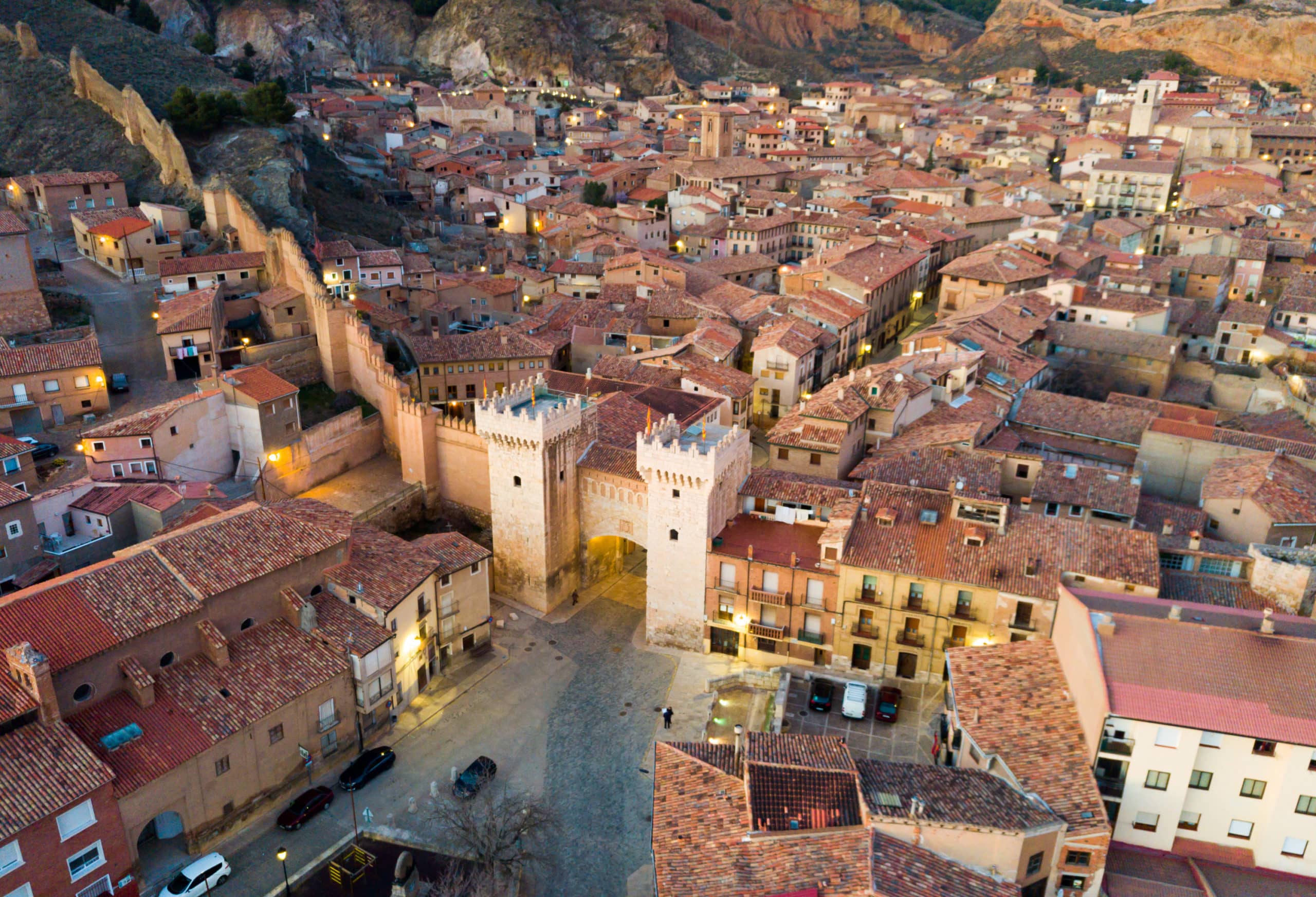
This Zaragoza town, which is most famous for its wall, has managed to maintain its marked medieval flavour over time, which is why it is well worth a visit. This can be done as a day visit from the Aragonese capital, as it is only 83 kilometres away. In addition to walking along the wall, which is four kilometres long, it is essential to visit the Collegiate Church of Santa María, which guards the famous Corporales and also houses the Diocesan Museum. The publication highlights that its towers, which welcome the traveller, can boast about being one of the most beautiful on the peninsula.
Another thing that everybody must see when visiting the town is the visit to the Manuel Segura pastry shop. And if you have time, drop by Anento, a small town that appears on the list of the most beautiful in Spain.
Albarracin
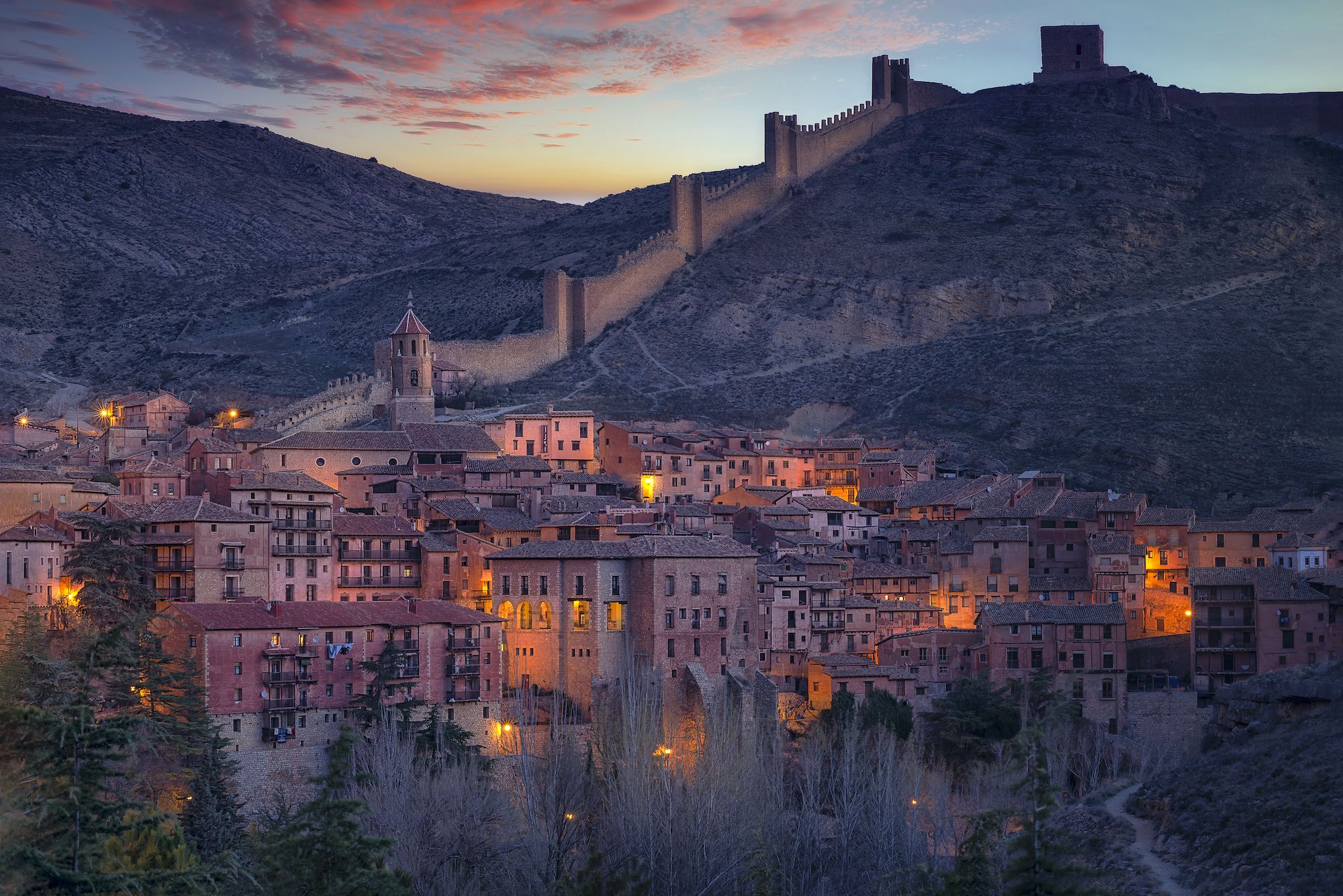
The town of Teruel is one of the main tourist attractions in Aragon. National and international visitors pass through its streets at any time of the year, attracted by the alleys of its historic centre, historic buildings, museums and a natural environment of great beauty with the Albarracín Cultural Park and the Rodeno Pinares Protected Area. 'National Geographic' recommends walking the wall that surrounds the municipality and stopping at the Plaza Mayor and Calle de la Catedral.
Alquezar

This town in Somontano, located in the heart of the Sierra y Cañones de Guara Natural Park, also knows a lot about beauty, whose medieval past is clearly reflected in its irregular layout and narrow streets. Declared a historic-artistic complex, it combines a fairytale image with adventure tourism, chic hotels and a high-end gastronomic variety. The publication highlights its castle-collegiate church of Santa María, one of its main treasures, and the impressive views that the town's viewpoint offers of the town and its surroundings. The main square (or that of Rafael Ayerbe) or the church of San Miguel are also worth visiting.
Along with the essential walk through its streets, whoever arrives in Alquézar cannot leave without going through the footbridges over the Vero, which surrounds the town. A route through nature suitable for family enjoyment through the interior of the river canyon.
Ainsa
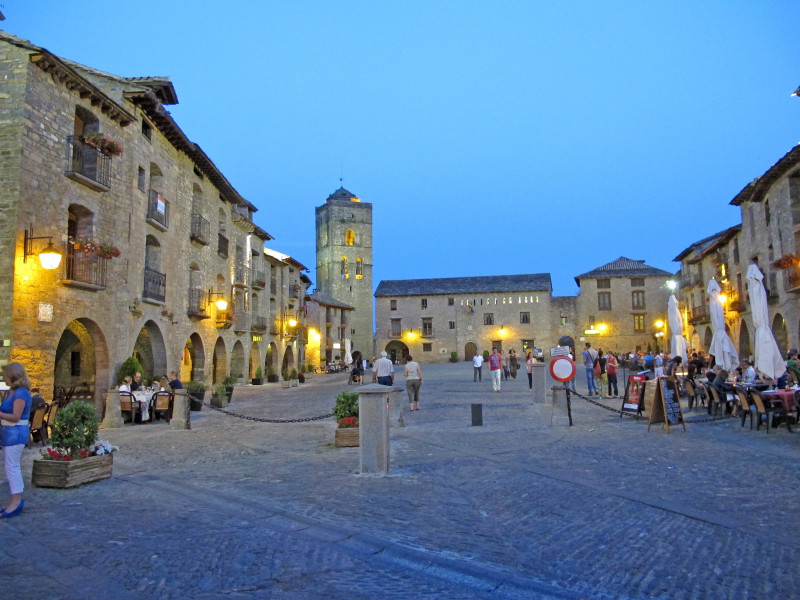
Around the 12th and 13th centuries, this square was built, which today preserves all its essence, becoming one of the most beautiful in Spain. It still preserves the remains of the first wall, although the characteristic element of the porticoed square is the semicircular arches.
'National Geographic' also highlights this beautiful corner of the Pyrenees that serves as the gateway to the Ordesa National Park. Its old town is one of the best preserved, declared a historic-artistic complex in 1931. The Plaza Mayor, the epicentre of the town's cultural activity, is the maximum expression of the medieval past of this town, one of the most visited in the province from Huesca. Other important tourist spots in the city are the Romanesque Church of Santa María and the castle walls. Among its rich gastronomic offer, Aínsa can boast of having a Michelin star restaurant: Callizo.
Its surroundings also offer different possibilities to practice adventure sports, such as rafting or canyoning in the Añisclo Canyon area or rock climbing.
1
Like
Published at 11:29 PM Comments (0)
WOW! The World's Best Preserved Geode is in Spain
Friday, June 12, 2026
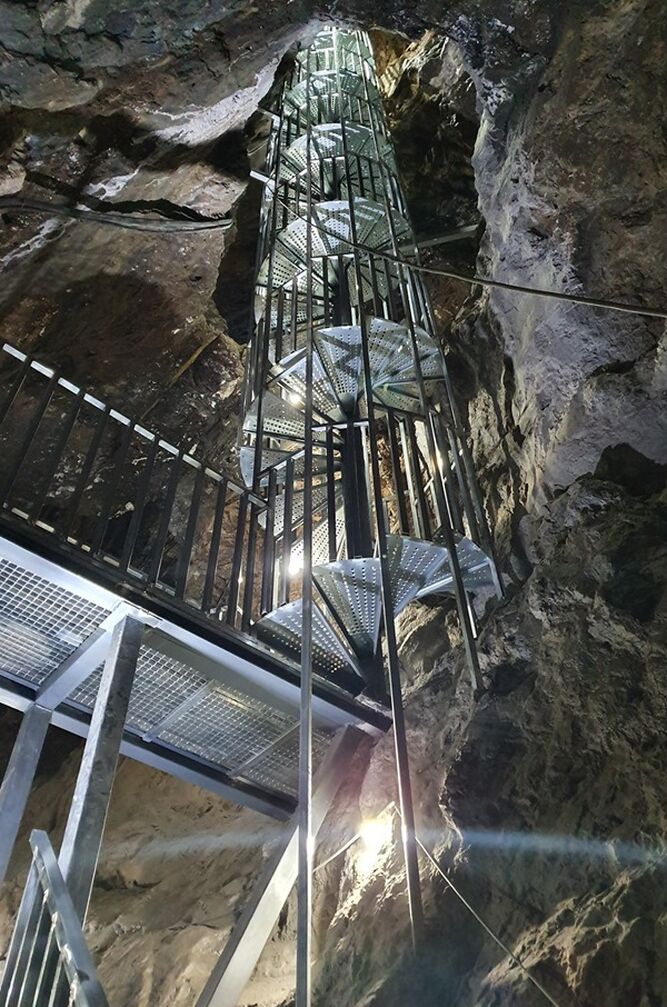
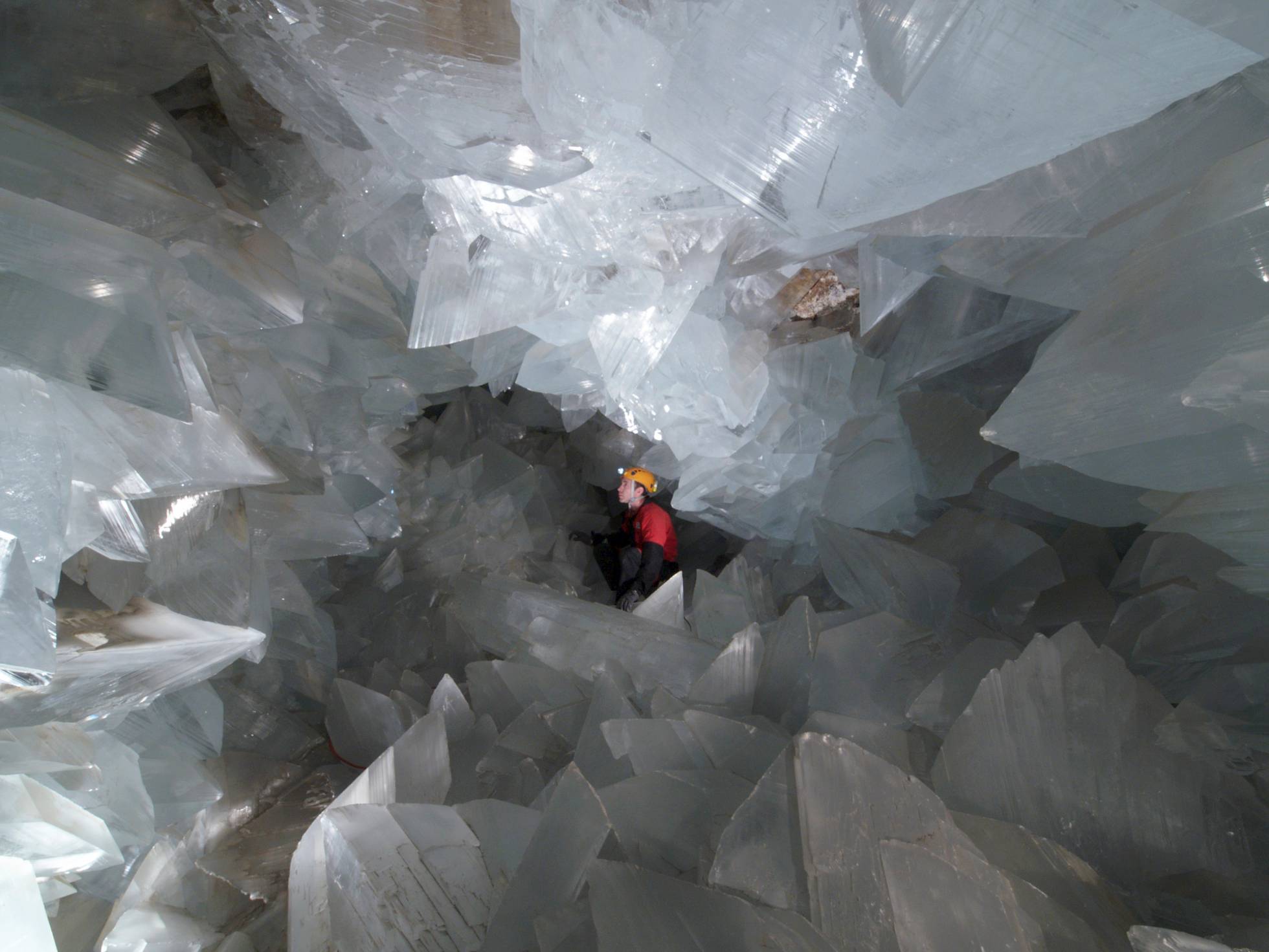
The Pulpí Geode is a unique phenomenon in the world, given the size, perfection and transparency of the gypsum crystals. It is located inside a mine of iron and lead in the district of Pilarde Jaravía, at a depth of 60 m, coinciding with sea level and 3 km from the coastline of San Juan de Los Terreros.
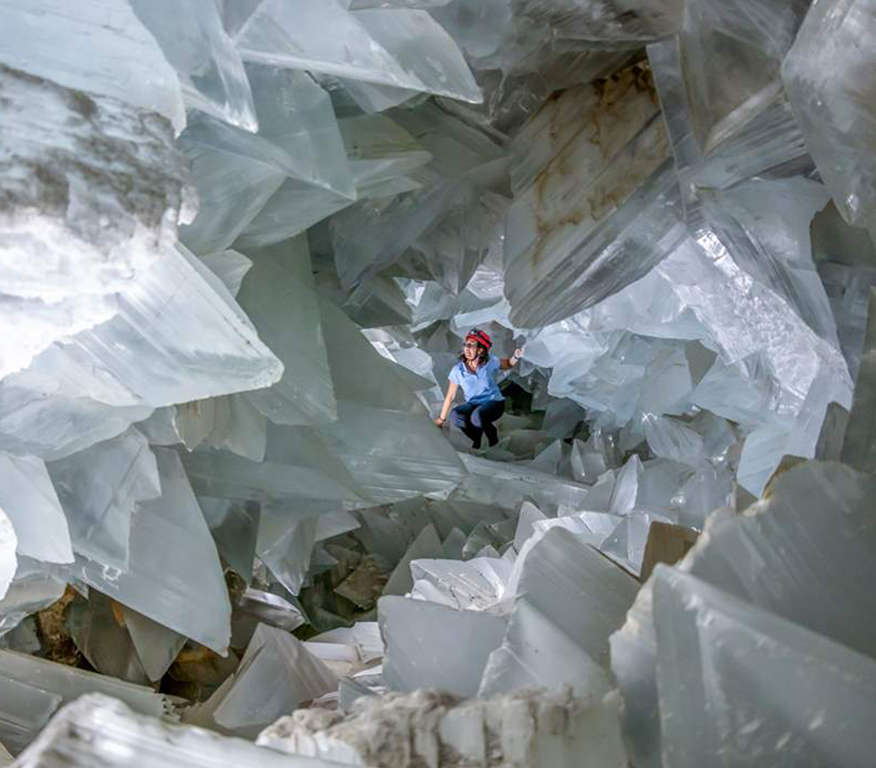
The geode is funnel-shaped, with the narrowest part an angled L-shaped hollow form 10.7 m3 volume, with 8 m long, 1.8 m wide and 1.7 m high. The average size of gypsum crystals is 0.5 x 0.4 x 0.3 m, with specimens up to 2 m long. Considered the best-preserved geode in the world, it was discovered by Angel Romero in 1999 inside an abandoned mine on the site of Pilar de Jaravía. It has been declared a Natural Monument.
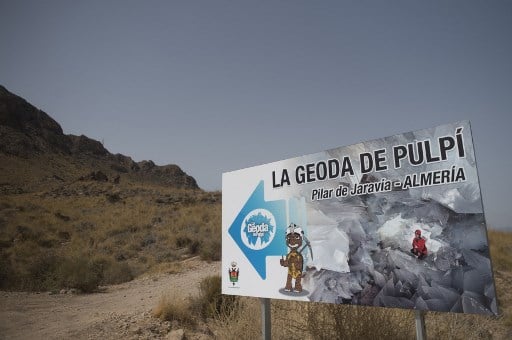
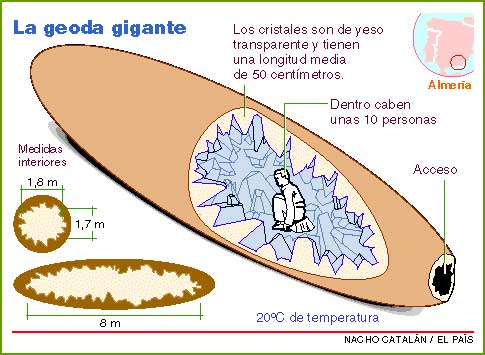
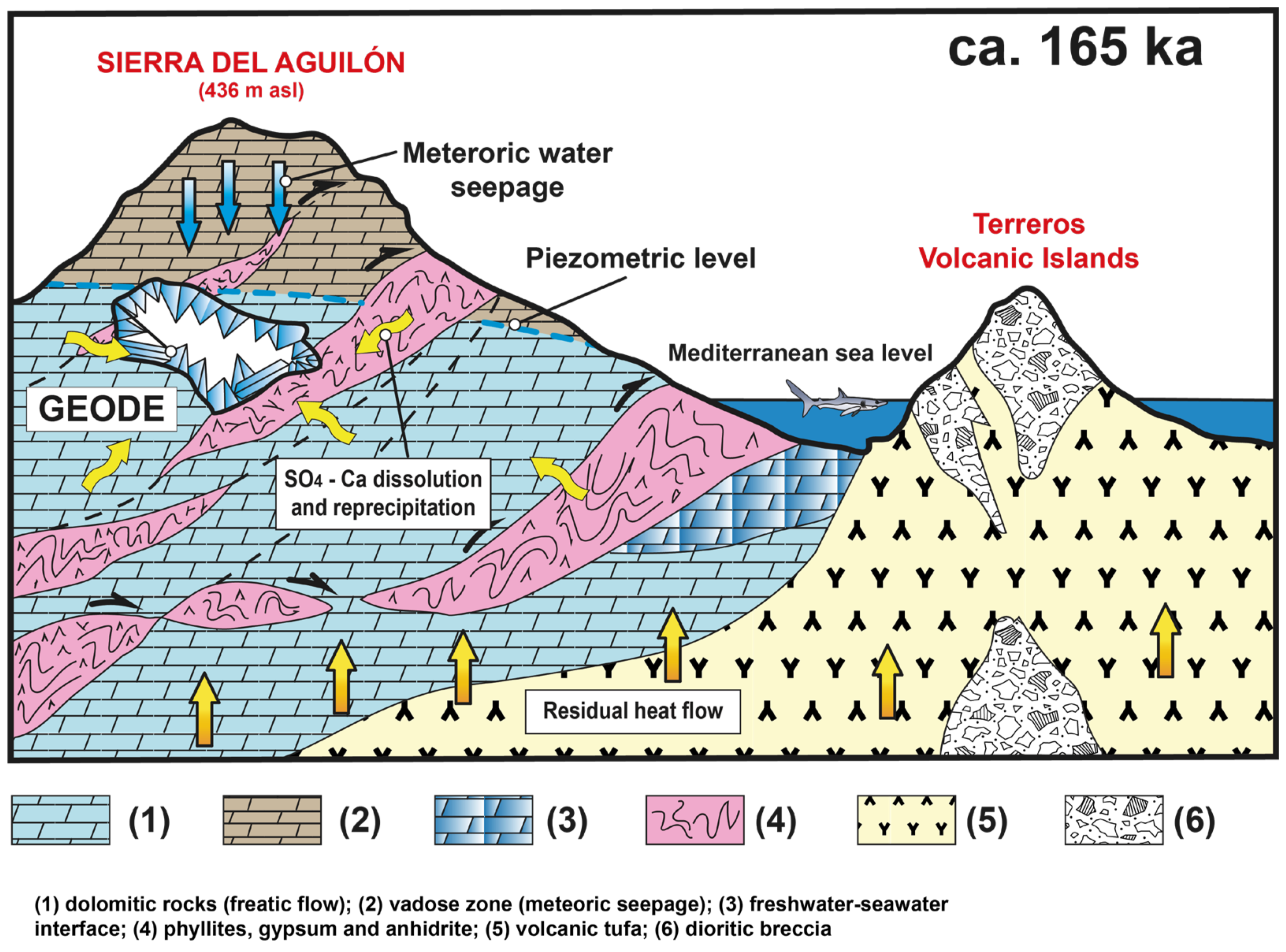
The largest geode in the world is in Naica (Mexico) and boasts crystals that reach 10 meters in length, but it is in a mine which suffers temperatures of 45ºC and with 100% humidity which makes it impossible for it to be visited by the public. However, the Pulpí geode is at a temperature of 20ºC and offers a more than acceptable humidity level. Therefore it is the second largest in the world but the only one that can be visited.
2
Like
Published at 11:38 PM Comments (0)
Spam post or Abuse? Please let us know
|
|