All EOS blogs All Spain blogs  Start your own blog Start your own blog 

IAN & SPAIN

WELCOME TO MY BLOG. HAVING LIVED IN SPAIN FOR OVER TWENTY YEARS I HAVE TRULY MANAGED TO IMMERSE MYSELF IN THE LOCAL CULTURE AND FEEL TOTALLY INTEGRATED. I WILL BE WRITING ABOUT MY PASSION FOR SPANISH FOOD AND DRINK AS WELL AS ITS CULTURE, PEOPLE AND PLACES OF SPECIAL INTEREST. PLEASE FEEL FREE TO LEAVE A COMMENT.

Horchata Time!
Friday, June 12, 2026

For those who are not so familiar with this summer refreshment, I thought I would share some of its history and how it is grown in and around Alboraya, next to Valencia.

It is made from chufa, which in English would be the tiger nut and as a drink it goes back thousands of years. Old civilizations such as the Egyptians left samples of this healthy product in their tombs and sarcophagi. Also, diverse Persian and Arab authors already mentioned in their writings the digestive benefits of the chufa. But it was in the 13th century when the Arabs introduced their crop in the Mediterranean area. 

Valencia was and continues to be the only area in Europe where chufa is grown. Currently, it is farmed in 16 towns around the area known as L'Horta Nord (or the Northern fertile land), which surrounds Valencia.

Alboraya is the world capital of Horchata and if you ever happen to be passing through Valencia I highly recommend you visit Horchateria Panach on the main road that runs through Alboraya. It is as good as it gets and also at an unbeatable price.


The chufa is cultivated in sixteen Valencian towns in the L'Horta Nord area, where a few specific climatic requirements combine and make it the only area of Spain where such a unique tuber is cultivated. About 5.3 million kilograms of tiger nut is produced in this area, of which 90% are covered by the Denomination of Origin.

The tiger nut from Valencia (Cyperus esculentus) is a herbaceous plant of around 40 to 50 centimetres in height. It has a rhizome radicular system from which some little roots grow and in the tips of these roots, the tiger nut is formed. 

The chufa is sown from March until May, a date which is determined by the previous crop. Before the planting begins, a series of preparatory work is carried out, so that the soil remains spongy, loose and well levelled. The planting is carried out in a mechanical fashion, in ridges 20 cm high with 60 cm between them. The depth of the seed is from 4 to 5 cm. The depth of sowing is an important aspect since the yield and the quality of the tuber depend greatly on these measurements. 


The harvest is carried out from November to January. Once the plant has completely withered and dried, it is burned and the ashes and remains are cleaned up. Then, it is sown again mechanically. A few weeks after the new planting, the tuber germinates. You shouldn't miss the opportunity to see the legendary irrigation ditches of Roman origin, improved and expanded by the Arabs throughout the area, which still remain.

Legend says that a young villager from the fertile area of Valencia known as L'Horta offered King Jaume I a white and sweet drink. The King, very pleased, asked; "Qué es això?" (What is this?), and the young woman answered, "Es llet de xufa" (It's tiger nut milk). The King, having tasted the drink replied, "Això no es llet, això és OR, XATA" - This is not milk, this is gold (=OR), pretty girl (=XATA)"

Legend or reality, the drink became famous throughout the country, adopting the name of Horchata de Chufa. This drink is a refreshing and essential product in the Mediterranean diet thanks to its innumerable and healthy benefits.


Known since antiquity as a source of vitamins and nutrients, the horchata is also considered a source of health and energy the world throughout. Along with its delicious and refreshing flavour, several medical studies have accredited its many beneficial properties for the body. Investigations have concluded that the horchata has great digestive properties thanks to its high level of amino acids and starch.

Several prestigious specialists from the University of Valencia have also determined that it is rich in minerals such as phosphorous, magnesium, potassium and iron as well as unsaturated fats and proteins. It is also recommended for all types of people, from the youngest to the oldest. The natural horchata can also be drunk by patients with a declared lack of tolerance to lactose and it is recommended for pregnant women as it includes more iron and potassium than a glass of milk.

It is an energising and nutritious drink that, thanks to its characteristics, has become part of the Mediterranean diet. Its cardiovascular properties are similar to those present in olive oil and it helps in reducing cholesterol and triglycerides as it has over 77% of oleic acid. All these characteristics make the Horchata of Chufa of Valencia a very complete and nutritious drink thanks to its macro and micronutrients. So be sure to try some the next time you are in Valencia this Summer. Enjoy!


Like 2        Published at 10:27 PM   Comments (3)


Premium Gazpacho - You'll never go back!
Friday, June 5, 2026

With all my recipes I attempt to share the raw essence of Spanish cuisine, the simple basic recipes that have become the foundation of the Mediterranean diet. They are not necessarily flamboyant dishes and certainly don’t need expert hands to make them, but they have all passed the test of time and are still classics to this very day. 

 
Almond Cream Gazpacho is similar to a normal Gazpacho but much more filling and creamier in texture more like a Salmorejo, personally, I prefer it and depending on how you prepare it can be a meal in its own right. Whereas with the original Gazpacho you would need a second course to accompany it. This recipe is basically a combination of the two, through trial an error, I finally found the consistency and flavour that was ideal for me. What I am going to share with you is not strictly a Gazpacho or a Salmorejo but a variation of the both and it is absolutely fantastic! My mouth is watering as I write! It’s an all-time favourite with all my family.
 
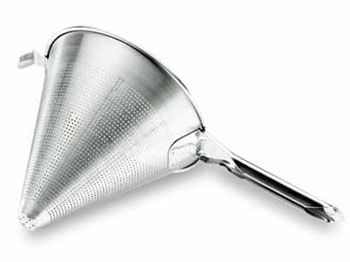
It is cheap, easy and quick to make and as it’s main ingredients are tomato and olive oil, so you can’t go wrong! Anyone who loves a salad will adore this recipe. All you need is a blender, a fine sieve and a pestle and mortar.
 
These are the ingredients you will need for 8 servings, as it keeps in the fridge for a couple of days I always tend to make more than I will need for one sitting.
 
 
For 8 servings 
 
1 kilo of mature tomatoes, peeled and with the seeds removed
30 g of peeled almonds 
2 cloves of garlic (removing the inner root so you don’t have that taste of garlic repeating all day!)
3 slices of stale country loaf bread, approx 300g from the day before (without the crust, not baguette)
100 ml of white wine vinegar 
1 red pepper
1 green pepper
1 or 2 large spring onions or sweet onions (just the onion, not the Green sprouts, but the size of a normal onion)
1 cucumber ( about 20 cm)
150 ml extra virgin olive oil
10g Salt – or to taste
 
Toppings:
 
8 slices of Serrano Ham
8 boiled Eggs
Baguette Croutons fried in Extra Virgin Olive Oil
 
 
 The first step is to scald the tomatoes in boiling water for a minute and then place them in cold water straight away and remove the skin. Then we dice up the bread and add the vinegar to the stale bread. Grind the almonds and the garlic cloves in the mortar. Once you have a paste add the bread and vinegar and keep grinding until they have all blended together nicely.
 
 We remove the skin from the cucumber using a potato peeler and chop it up along with the tomatoes, spring onion and peppers. Now place all the ingredients in the blender all together along with the Extra Virgin Olive Oil. I use Arbequina variety olive oil for this recipe but really you can use any good extra virgin olive oil. Just make sure it isn’t too pungent. Blend them all together until you have an even mixture. Variations may occur depending on the type of bread you have used, so if it is not thick enough just add more bread to the recipe. If it has turned out too thick, you can correct the mixture with a little water. Salt to taste and then pass the entire mixture through the sieve to remove all the seeds from the tomatoes and the cucumbers.
 
 
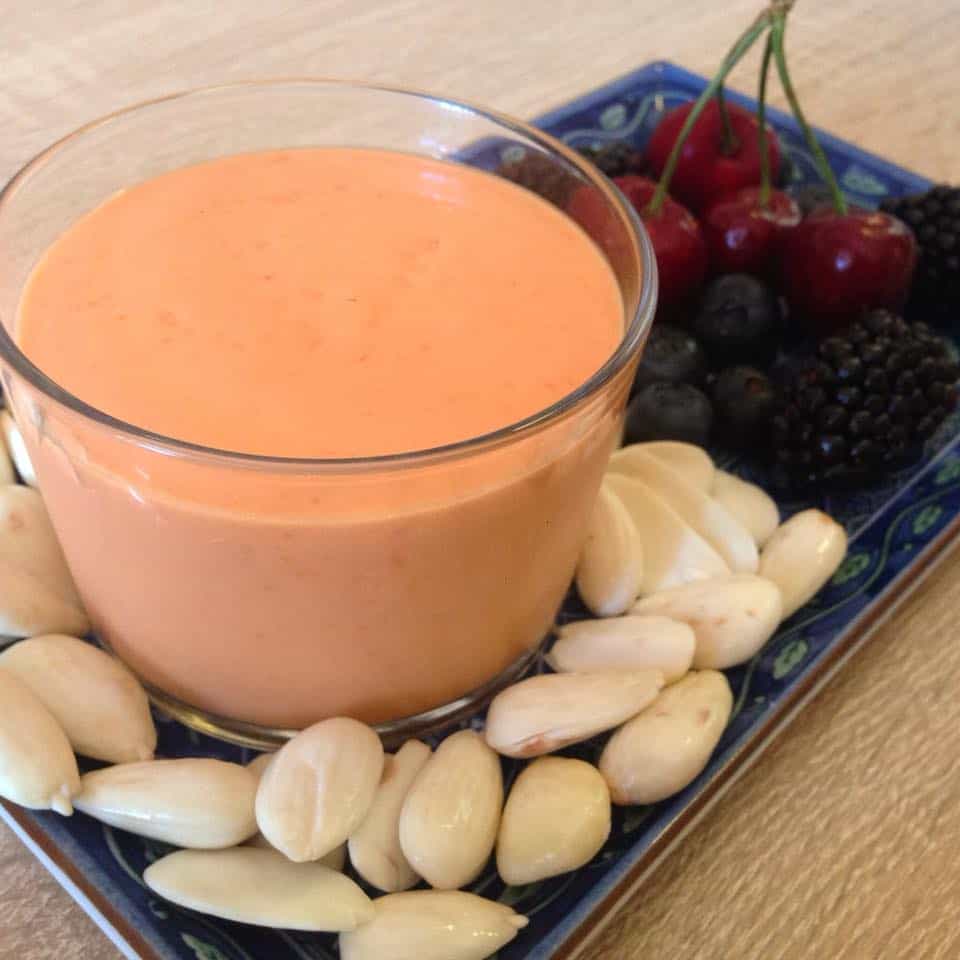
At this point, the Almond Cream Gazpacho is finished. The mixture is certainly not written in stone, so some may prefer it with less vinegar or more vinegar, or more almond or fewer almonds. It is a question of finding your balance. All you need to do is adjust the proportions until you find your ideal flavour. The texture should be a like a thick creamy soup.
 
Next, we need to prepare the toppings. I place the Serrano ham in the microwave for approximately 1 minute until it is nice and crispy. Once out of the microwave, place the ham on a piece of kitchen paper so it cools down and soaks up the fat that has been released. We don’t want that fat in the gazpacho.


This is not traditionally Spanish, but I’m not so keen on chewing cured ham in my soup, I prefer that on its own with a bit of cheese and wine. So now we chop up the crispy ham and the boiled eggs and put them to one side.
 
 
Finally the croutons, you cut up a baguette into small pieces including the crust. Get a frying pan and pour in a healthy amount of extra virgin olive oil. Heat up the olive oil and make sure it is hot before putting the bread in that way the bread won’t soak up the oil but toast it almost instantly. It is very fast so be prepared to take them out quickly before they get too toasted. Let them cool down and dry on a piece of kitchen paper.


When it comes to serving, serve the Almond Cream Gazpacho in a bowl and sprinkle a chopped egg over the top, one chopped slice of crispy ham and a handful of croutons. Listo! Ready to eat.
 
ENJOY! 


Like 2        Published at 6:16 PM   Comments (0)


Spam post or Abuse? Please let us know


This site uses cookies. By continuing to browse you are agreeing to our use of cookies. More information here. x