All EOS blogs All Spain blogs  Start your own blog Start your own blog 

IAN & SPAIN

WELCOME TO MY BLOG. HAVING LIVED IN SPAIN FOR OVER TWENTY YEARS I HAVE TRULY MANAGED TO IMMERSE MYSELF IN THE LOCAL CULTURE AND FEEL TOTALLY INTEGRATED. I WILL BE WRITING ABOUT MY PASSION FOR SPANISH FOOD AND DRINK AS WELL AS ITS CULTURE, PEOPLE AND PLACES OF SPECIAL INTEREST. PLEASE FEEL FREE TO LEAVE A COMMENT.

Making Table Olives in Spain
Friday, March 20, 2026


People often think that table olives can come straight off the tree and into a jar with perhaps some seasoning, but this is not the case and far from it. The substance that renders it essentially inedible is oleuropein, a phenolic compound bitter enough to shrivel your teeth. The bitterness is a protective mechanism for olives, useful for fending off invasive microorganisms and seed-crunching mammals. In the wild, olives are dispersed by birds, who avoid the bitterness issue by swallowing them whole. Given the awfulness of the "au natural" olive, you can’t help but wonder why early humans, after the first appalling bite, didn’t shun the olive tree forever.

The olive is a drupe or stone fruit, like cherries, peaches, and plums, in which a fleshy outer covering surrounds a pit or stone, which in turn encases a seed. In the case of the olive, the outer flesh contains up to 30 per cent oil—a concentration so impressive that the English word oil comes from the ancient Greek "Elaia", which means olive. But it also has a low sugar content from 2.6-6% when compared with other drupes which have on average 12%.

Due to these characteristics, it makes it a fruit that cannot be consumed directly from the tree and it has to undergo a series of processes that differ considerably from region to region, and which also depend on the variety of olive. Some olives are, however, an exception to this rule because as they ripen they sweeten right on the tree, in most cases this is due to fermentation. One case is the Thrubolea variety in Greece, however, this is not at all common.

The oleuropein, which is distinctive to the olive, has to be removed as it has a really strong bitter taste and those who have eaten an olive straight off the tree know what I am talking about: it is not, however, pernicious to health. It just tastes terrible. Depending on local methods and customs, the fruit is generally treated in sodium or potassium hydroxide, brine or successively rinsed in aerated water, a rather complicated process.

The olive's suitability for table consumption is a function of its size, which is important for presentation. Olives between 3 and 5g are considered medium-sized, while those weighing over 5 g are large.  The stone should come away easily from the flesh and a ‘flesh to stone’ ratio of 5 to 1 is considered acceptable. The higher this ratio the better the commercial value of the olives. The skin of the fruit should be fine, yet elastic and resistant to blows and to the action of alkalis and brine.

High sugar content in the flesh is an asset. The lowest acceptable level is 4%, especially in olives that undergo fermentation. For table olives, oil content should be as low as possible because in many cases it impairs the keeping properties and consistency of the processed fruit. Only in certain types of black olives is a medium to high oil content desirable.

In Spain, most of the table olives are green olives. These are obtained from olives harvested during the ripening cycle when they have reached their normal size, but prior to colour change. They are usually hand-picked when there is a slight change in hue from leaf-green to slightly yellowish green and when the flesh begins to change consistency but before it turns soft. Colour change should not have begun. Trials have been run to machine harvest table olives, but owing to the high percentage of bruised fruit they had to be immersed in a diluted alkaline solution while still in the orchard, this being said table olives are still in their majority harvested by hand. Recently harvested, the olives should be taken to the plant for processing on the same day.
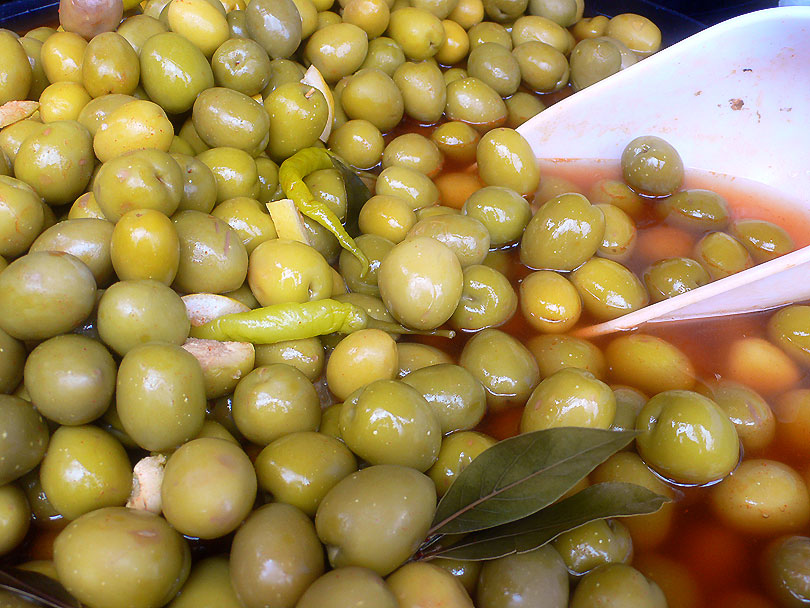


Green olives are processed in two principal ways: with fermentation, which is considered the Spanish style, and without fermentation, which is considered the Picholine or American style. 

In Spain the majority of olives are treated in a diluted lye solution (sodium hydroxide) to eliminate and transform the oleuropein and sugars, to form organic acids that aid in subsequent fermentation, and to increase the permeability of the fruit. The lye concentrations vary from 2% to 3.5%, depending on the ripeness of the olives, the temperature, the variety and the quality of the water. The treatment is performed in containers of varying sizes in which the solution completely covers the fruit. The olives remain in this solution until the lye has penetrated two-thirds of the way through the flesh. The lye is then replaced by water, which removes any remaining residue and the process is repeated. Lengthy washing properly eliminates soda particles but also washes away soluble sugars, which are necessary for subsequent fermentation.

Fermentation is carried out in suitable containers in which the olives are covered with brine. Traditionally, this was done in wooden casks. More recently, larger containers have come into use that are inert on the inside. The brine causes the release of the fruit cell juices, forming a culture medium suitable for fermentation. Brine concentrations are 9-10%, to begin with, but rapidly drop to 5% owing to the olive's higher content of interchangeable water.

When properly fermented, olives keep for a long time. If they are in casks, the brine level must be topped up. At the time of shipment, the olives have to be classified for the first or second time as the case may be. The original brine is replaced and the olives are packed in barrels and tin or glass containers. Sometimes they are stoned (pitted) or stuffed with anchovies, pimento, etc. The most commonly used varieties in Spain are Manzanillo and Gordal.

But after discovering this you may be thinking, whoever came up with the idea of finding a way to eat a drupe that was at first sight totally inedible and had the patience to even work it out?

Well, it is a bit of a mystery but the general consensus is that it was the Romans who most likely came up with the technique that put the olive fruit itself on the dinner table. Earlier people had discovered that olives could be debittered by soaking them in repeated changes of water, a painstaking process that took many months and was probably discovered by accident. This was somewhat improved by fermenting the olives in brine, which was marginally quicker, but the Romans found that supplementing the brine with lye from wood ashes (sodium hydroxide) cut the time required for producing an edible olive from months to hours. 

About 90 per cent of the world’s olive crop goes to make olive oil. The remainder is harvested for table olives which, though there are over 2,000 known olive cultivars, are known to most of us in two colours: green and black.
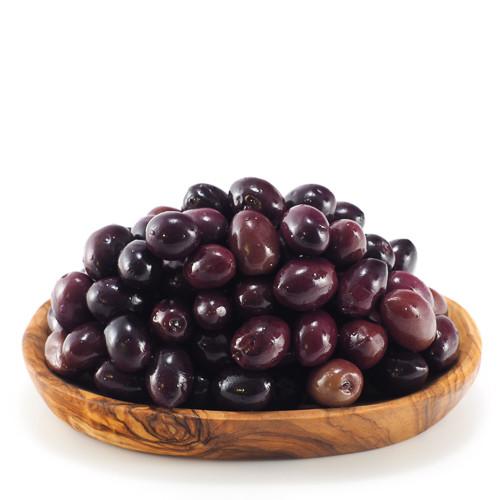
Green olives, the kind found in martinis, are picked green and unripe and then cured. These are often called Spanish olives, as mentioned earlier. Tree-ripened olives, left to themselves, turn purple - not black (as you can see in the image on the left) - due to an accumulation of anthocyanin, the same pigment that puts the purple in Concord grapes.
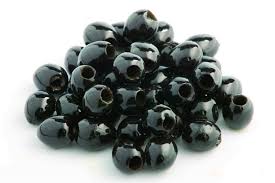
Black olives, though labelled as “ripe” on supermarket cans, actually aren’t: these, a California invention, are green olives that have been cured in an alkaline solution, and then treated with oxygen and an iron compound (ferrous gluconate) that turns their skins a shiny patent-leather black, so they are in fact manipulated and artificial in colour.


Like 4        Published at 9:21 PM   Comments (7)


Iberian Pork and Chorizo Casserole
Friday, March 13, 2026

When the weather is really cold, as it happens to be at the moment in England, few things are better than a hot slow-cooked stew to satisfy your appetite. Something wholesome to warm the body. Today I bring you another interesting recipe made with typically Spanish ingredients. A beautifully rich and flavoursome braised pork and chorizo stew. If you have never tried it, it is well worth a go! Who doesn't like chorizo? Unless you are vegetarian of course. It is a recipe I love to accompany with mashed potatoes, not particularly Spanish though!

Although this is not a traditional recipe as such, the result couldn't be more Spanish. Although now isn't an ideal time for getting families together around a table, it is a recipe that will work wonders when feeding numbers. I love how the combination of pork shoulder and chorizo is complemented by the tanginess of the black olives and the sweetness from the paprika to create a tastebud bomb of a recipe which will definitely be a hit.

So why not give it a go and try out this delicious braised pork and chorizo stew. Don't forget the secret to a fantastic result is patience and slow cooking. It takes the time it takes, you just can't rush it. For six people you will need the following - if it is too much, you can always freeze the extra.

INGREDIENTS:

225g chorizo fresh cooking sausage  - at most semi-cured 
4 tablespoons Extra virgin olive oil
1 kg of lean Iberian pork shoulder, cut into large 3 cm cubes
180 ml of red wine - Crianza is ideal - Mercadona sell a great Crianza for €2,2 (Torre Oria)
2 medium onions, finely chopped
6 large garlic cloves, finely chopped
2 teaspoons sweet smoked paprika
2 tablespoons tomato puree
400g of ripe chopped, skinned plum tomatoes - you can also use tinned
400ml fresh chicken stock - or ready-made stock from the supermarket if you don't have any.
4 springs of thyme, leaves only
2 tablespoons of fresh oregano, chopped
4 bay leaves
3 tablespoons sherry vinegar
salt & pepper
2 teaspoons of caster sugar
110g pitted black olives


INSTRUCTIONS


1. Heat 2 tablespoons of extra virgin olive oil in a large frying pan.

2. Skin and thickly slice the chorizo, add to the heated frying pan and fry on medium heat for 2-3 minutes until the chorizo is lightly browned.

3. Using a slotted spatula, put the chorizo into a large, casserole pot, I use my old faithful Le Creuset pot. Try to keep as much of the oil as possible in the frying pan.

4. Add another tablespoon oil to the frying pan if necessary and brown the pork in batches before adding to the casserole pot.

5. Pour the wine into the frying pan and let it to come to a simmer, deglazing any of the caramelised meat juices stuck to the bottom of the pot. Cook for a few minutes to burn off the alcohol and then pour into the casserole pot.

6. Lower the heat, add the remaining oil and chopped onions to the frying pan and fry gently for 10 minutes or until soft, adding a little more oil if necessary. Add the chopped garlic to the onions and fry for a further 2-3 minutes.

7. Stir in the paprika and then add the tomato puree, chopped tomatoes, chicken stock and herbs. Cook for a couple of minutes and then pour it all over the chorizo and pork in the casserole pot and mix it up well. Season with salt and pepper.

8. Bring the casserole pan to a quick simmer, turn the heat right down to a minimum and cover. Cook for at least 1 hour, stirring from time to time. 

9. In a small pan, boil the sherry vinegar and caster sugar until it has reduced to about a teaspoon. Then stir it into the casserole with the black pitted olives.

10. Simmer uncovered for 30 minutes, or until the pork is really tender. 


Serve with mashed potatoes or rice or simply eat it on its own with some crusty bread.

Enjoy!


Like 2        Published at 8:49 PM   Comments (0)


Puchero Valenciano - Valencian Stew
Thursday, March 5, 2026


Puchero or Cocido Valenciano is a great winter warmer and although it is very common to see it on the table at Christmas, it is without a doubt one of the most popular 'platos de cuchara' in winter, at least in the Valencian region.  Even though we are at the doors of Spring, this is a lifesaver on any cold day. It is, effectively, a stew with giant meatballs, but it is enjoyed in two stages. It may seem very simple and rustic, but it can be a fairly long meal and takes time to digest. It contains almost everything you could possibly imagine putting in a stew. What makes this stew different from the rest of the stews in Spain is the use of local sausages and local vegetables. The Valencian community is well known for its vegetables and this is well portrayed in the Valencian ‘Puchero’.

As with most traditional recipes, there is nothing written in stone, except (traditionally) using a giant cauldron!  So grab the biggest pot you can find; otherwise, there is no way all the ingredients will fit in. Remember, the stock, the meat and the vegetables can all be frozen afterwards, so if you have a lot leftover, which you will, ration it out in Tupperware and freeze it for another day or use it for another recipe.

For the stew, you will need the following :

½ medium-sized Chicken (approx. 1,25kg of meat)
2 large meatballs (recipe as follows)
1 piece of bone marrow
1 piece of knee bone
150 grams of beef 
1 Blanquet sausage 
1 Onion Morcilla sausage 
100 grams of pork fat
300 grams of chickpeas (soaked in water overnight)
Saffron
1 stick of Celery, 1 stick of Cardoon, 1 sweet potato, 1 white turnip, 1 yellow turnip, 1 parsnip, 3 potatoes, 3 carrots, 1 leek, 5 runner beans and ¼ cabbage. (As far as the vegetables go, you can chuck in whatever you have at hand, but this is the standard recipe in Valencia)

So, to make the stew it is as easy as cleaning and peeling the vegetables and placing them all in the pot with the meat and the meatballs, except for the carrots, potatoes, runner beans and the morcilla. These need to be held back for later as they cook more quickly. Cover with water and slowly bring to the boil then reduce the heat to low heat and let it simmer for 90 minutes. Remember to skim off the foam that rises to the top. After 90 minutes pop in the rest of the ingredients that were held back and then simmer for another 90 minutes. To make the meatballs all you will need are the following ingredients:

2 eggs.
150g lean minced beef
150g minced pork.
1 sausage (with skin removed)
200g Breadcrumbs
1 tbsp. Fresh chopped parsley 
50g Pine nuts
1/2 tsp. Cinnamon powder
10ml fresh Lemon juice
Salt and pepper to taste

Stew net for binding
Cabbage leaves for wrapping up the meatballs.   


If you feel like saving some time you can always make the balls the day before. Mix the meat, salt, pepper, parsley, cinnamon, eggs and pine nuts to taste. Pour the breadcrumbs in and knead it all together until it forms a thick mass. Add the lemon juice and knead it all together again. Separate the meat mass into two parts and then roll into two large balls. Once you have made the balls wrap each ball in cabbage leaves and then place it inside the stewing net and tie it up tight and add to the rest of the meat for the stew.


Once the stew is ready it is customary to first enjoy a bowl of soup from the stock cooked either with rice or noodles. Some may add a meatball or two to the soup and others may add a bit of everything and then move on to the rest of the meat and vegetables later, the choice is yours. It would also be customary to make 'oven-baked rice' (Arroz al Horno) the following day with the leftovers.

So there you have it, a very hearty meal from the heart of Valencia and ideal for this time of year, it may not look very sophisticated but it tastes incredible! 


 Enjoy!


Like 1        Published at 11:15 PM   Comments (0)


Spam post or Abuse? Please let us know


This site uses cookies. By continuing to browse you are agreeing to our use of cookies. More information here. x