What Do You Rate Most Highly About Spain?
Friday, May 29, 2026
Every few years, it is worth stepping back from the daily stream of property market updates, tax changes, and bureaucratic hurdles to ask ourselves a fundamental question: Why did we choose Spain in the first place, and what keeps us here?

Looking back at past discussions on the Eye on Spain blogs, the core reasons people fall in love with this country rarely change. However, as we cross the mid-point of 2026, the way we live, work, and enjoy Spain has shifted. A country once loved purely for cheap beer and endless beaches has evolved into a sophisticated, modern haven that offers a completely re-engineered quality of life.
Whether you are a long-term expat, a "snowbird" navigating the post-Brexit landscape, or someone scrolling through property portals from a rainy kitchen in Northern Europe, here is what our community rates most highly about Spain today.
1. The Quality of Life & "The Great Outdoors"
The weather will always be the headline act—300+ days of sunshine a year is hard to beat. But in 2026, the appreciation for Spain's climate has transformed. It is no longer just about sitting by a pool; it is about an active, outdoor lifestyle.
From the world-class cycling infrastructure in the Valencia region to the beautifully maintained hiking trails of the sierras, Spain has become Europe’s playground for health and wellness. The ability to finish work or step out of retirement at 5:00 PM and comfortably play a round of golf, ride a bike on smooth tarmac, or walk along a blue-flag beach in the middle of November remains the ultimate luxury.
2. A World-Class, Modern Infrastructure
There was a time when moving to Spain meant accepting a "slower, slightly disconnected" way of life. That stereotype is officially dead.
Today, Spain boasts one of the most advanced digital infrastructures in the world, with high-speed fibre-optic internet reaching the most remote rural pueblos. This has turned the country into a global magnet for digital nomads and remote executives. Combine that with a high-speed rail network (AVE) that lets you travel across the country seamlessly without ever setting foot in an airport, and Spain offers a level of modern convenience that often outclasses that of the UK and North America.
3. The Unrivalled Healthcare System
Ask any expat who has had to use the Spanish healthcare system—either public or private—and they will likely tell you it is one of the country's greatest assets. Especially for retirees, the peace of mind that comes from clean, efficient hospitals, exceptionally well-trained medical staff, and remarkably low prescription costs is an absolute game-changer. In a post-pandemic world where health is everything, Spain’s medical infrastructure is a massive tick in the safety column.
4. A Culture That Prioritises Family and Connection
In Northern Europe, life often feels like it is built around work and consumerism. In Spain, the entire societal structure is built around human connection.
The concept of the plaza—where three generations sit together at 10:00 PM, children playing, parents talking, grandparents enjoying a glass of wine—is not a tourist cliché; it is a daily reality. There is a profound lack of loneliness here because the culture inherently draws you outside and into the community.
5. The Food Revolution (And It’s Still Great Value)
While global inflation has caused grocery bills to creep up slightly over the last year, Spain’s food scene remains a source of daily joy. The focus on fresh, seasonal, locally sourced ingredients means that even a simple €15 Menú del Día at a roadside Venta can be a culinary highlight. From municipal fresh food markets to world-class gastronomy, eating well in Spain isn't a luxury reserved for special occasions—it is a baseline way of life.
The 2026 Verdict
Spain isn't perfect. Navigating the paperwork can still test the patience of a saint, and keeping up with evolving tax and residency rules requires a sharp eye. But when you weigh the minor frustrations against the daily reality of safety, sunshine, community, and cutting-edge infrastructure, the balance sheet isn't even close.
Spain doesn't just change your location; it changes your pace, your health, and your perspective on what a "good life" actually looks like.
What about you? Whether you've been here for twenty years or are still planning your move, what do you rate most highly about Spain in 2026? Drop your thoughts into the comments section.
 2
Like
Published at 8:41 PM Comments (4)
2
Like
Published at 8:41 PM Comments (4)
Aioli - How to make it and how to cheat!
Friday, May 8, 2026
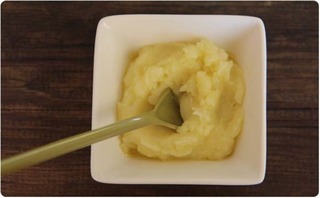 'Aioli', ‘All-i-Oli’ or ‘Ajo Aceite’ in Castilian Spanish, is probably the simplest and one of the hardest recipes you will ever try to make. Simple, because traditionally it only has three ingredients, and hard because it will make you break out in a sweat, especially if you make it in summer! 'Aioli', ‘All-i-Oli’ or ‘Ajo Aceite’ in Castilian Spanish, is probably the simplest and one of the hardest recipes you will ever try to make. Simple, because traditionally it only has three ingredients, and hard because it will make you break out in a sweat, especially if you make it in summer!
All-i-Oli is often translated and served as garlic mayonnaise, but in fact, it is not mayonnaise at all; it's not far off mayonnaise, but it isn’t mayonnaise.
This is probably the recipe where your choice of olive oil is most important, as it is the main ingredient and is pretty much 90% of the final product. So if you want to make it you need to find a very good quality extra virgin olive oil, which is fruity but not too bitter and not very pungent. The variety Arbequina is by far the best due to its high quantity of linoleic acid (an essential fatty acid) that favours the cohesion of emulsions and sauces. However, any good extra virgin will do. Cornicabra is very popular as is Serrana de Espadán here in Valencia. But if you can’t find these varieties, look for an Extra Virgin ‘Suave’. I have read many recipes throughout the net suggesting sunflower oil and refined oils for this recipe. Please do not use these types of oils as they will definitely not give you the same result and are far less healthy.
The recipe I am going to share with you is the authentic one, the one passed on from generation to generation, not the popular garlic mayonnaises being offered around most of Spain (However, I will also tell you how to make that towards the end of the post). It is a recipe that dates back thousands of years and has spread all over the Mediterranean, so I can assure you it was never made with refined olive oil or sunflower oil. Basically, All-i-Oli is an emulsion of olive oil, garlic and salt, nothing else. The secret to the recipe is in the technique, which does take a bit of practice. This is not mayonnaise, a traditional recipe that originated from Mahon in Menorca, as it does not use egg yolk or lemon. In the case of mayonnaise, it is the egg that acts as the emulsifying agent and with All-i-Oli, it is the garlic that has the emulsion-producing properties.
Ingredients
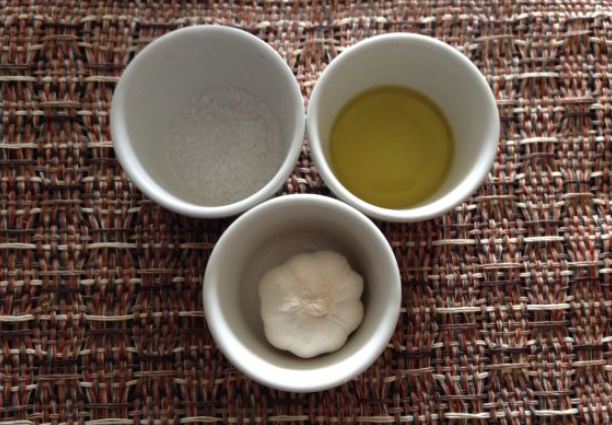
Extra Virgin Olive Oil
Garlic
& Rock Salt
How do we make it the traditional way?
To start with, we need a pestle and mortar, not a blender or a mixer. This is a traditional recipe and must be done by hand to achieve the best results.
For this recipe, we will use 100ml of olive oil and 3-4 large cloves of garlic. Depending on how strong you like it, you can add more or fewer cloves to the recipe. As this involves a substantial amount of garlic, it is a good idea to remove the roots of the cloves before starting. This means slicing it down the middle, lengthwise and taking out the core of the garlic. This will help reduce the characteristic bad breath and the taste of garlic coming back up throughout the day. It is the root of the garlic that our stomach finds so hard to digest, and it just seems to linger around for most of the day!
Once the garlic is peeled and the cores removed, place them in the mortar with a pinch of rock salt and start grinding them. Once we have a lumpy paste, we need to start adding the olive oil. It is very important not to add too much or too quickly. Patience is a virtue with this recipe. Start by adding the oil drop by drop and move the pestle in a circular action from left to right, following the hands of the clock. Once you have started this action, you should not stop until the Ali Oli is ready.
This is when it gets a bit tiring, as you need to apply force as well and keep the pestle moving at a constant speed to draw out the juice from the garlic. Slowly you start adding more olive oil, little by little but always waiting until the previous dose has blended with the emulsion. This continues until you end up with a thick sauce/paste or find the consistency that you prefer. The whole process can take up to 15 minutes. You will probably have problems along the way to achieve an emulsion, it takes practice and isn’t as easy as it sounds but it is really worth the effort! Here is a video that might help ...
.jpeg) .jpeg)
For those of you who find it too difficult, there are a couple of tricks that help to keep the garlic moist and facilitate the cohesion of the emulsion. One is adding 3 teaspoons of freshly squeezed lemon juice to the mortar at the same time you add the garlic and the salt. This will help you keep the emulsion stable and also reduce the pungency of the garlic a little bit more.
GARLIC MAYONNAISE.....and cheating
Finally, if you prefer garlic mayonnaise, which isn't as strong, the only thing you have to add is an egg yolk (no egg white) to the garlic with the lemon juice before you start adding the olive oil. Another trick which works with either recipe is making a little ball of dough from a loaf of sliced bread and wetting it with water. You add this dough ball when you add the egg or just before adding the oil and grind it into the mixture, this will help create the emulsion and stop it from separating!
No time? Don't mind cheating a little?....
Although this may be cheating I know dozens of restaurants on the Balearic islands which use this quick method for their popular 'Pan y All-i-Oli' (one of them told me about it) and it goes down a treat, I use it too and to be honest and I have grown to love it!. Sometimes I just find All-i-Oli too strong and this is just perfect. All you will need is the following:
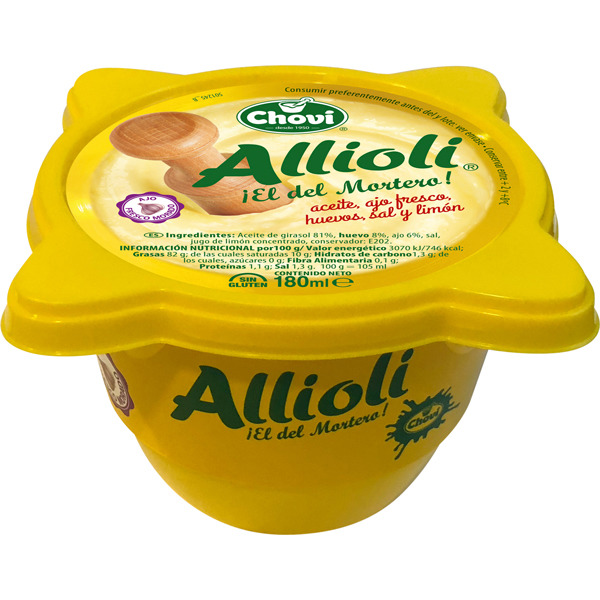  
1. Tub of fresh All-i-Oli from the supermarket
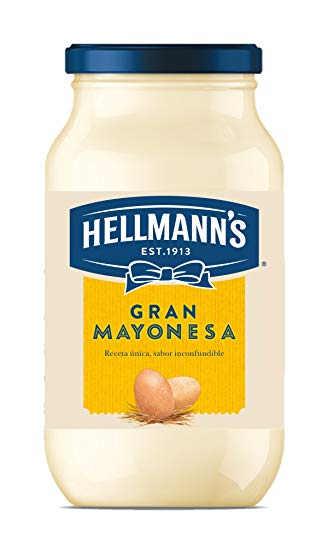
2. Hellman's Mayonnaise (Do not substitute for a different mayonnaise)
3. Finely ground Black Pepper
Quite simply, add equal parts of Allioli and Hellman's mayonnaise to a bowl and sprinkle in some black pepper. Mix well until completely blended, sprinkle a little chopped parsley on top and serve with some crispy bread.
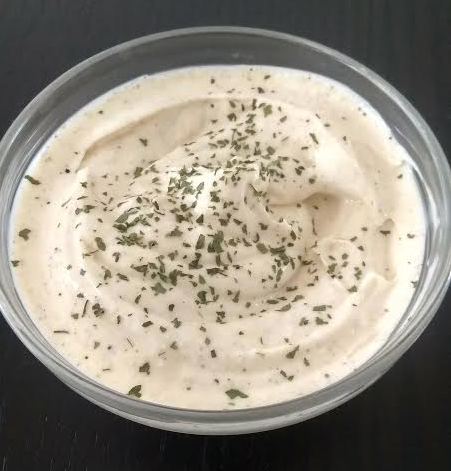
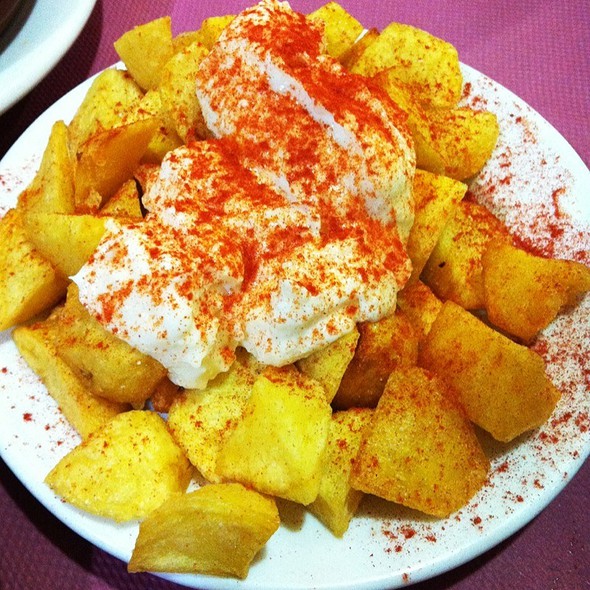
In Valencia, it is particularly common to eat All-i-Oli with anything from fried potatoes seasoned with paprika or Black rice which is a dish that uses the ink from squids. It is very versatile and fantastic with vegetables, fish and meats so use it to accompany anything you want.
2
Like
Published at 4:08 PM Comments (0)
Gazpacho Andaluz - the heat is getting closer
Friday, May 1, 2026
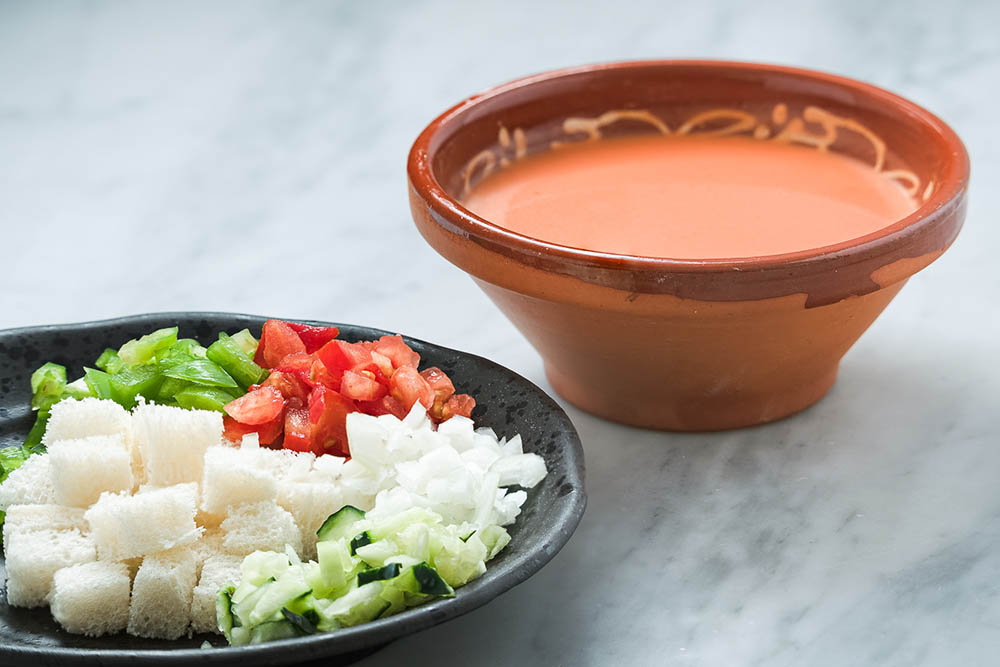
Gazpacho is one of the most international dishes of Spanish gastronomy. Refreshing, low in calories and very easy to make. It is one of the star dishes of the summer, which, accompanied by a bit of crusty bread and a delicious dessert, will provide a solution to many of our meals this coming summer.
Making gazpacho, in principle, is quite a simple task, but like everything else, it has its tricks and you will eventually tweak it to your liking the more your make it.
The most popular version of the recipe for this cold soup is tomato, pepper, onion, garlic, cucumber, bread, and oil. Despite the fact that many think that gazpacho is originally from Andalusia, it has been proven that previous recipes already existed. However, there is no doubt that this one is the most famous version of them all. Most versions of this recipe will vary depending on the amounts of vegetables you used, which is why there are so many different flavours, everyone has different tastes - some prefer more garlic, some less, some more cucumber, some less, in the end, it's really up to you! But as a starting point this is what you need:
Ingredients
800 grams of ripe tomato
1 onion
2 cloves of garlic
1 green pepper
1 red bell pepper
Spanish half cucumber
150 grams of stale bread
1 teaspoon of sweet paprika
1 tablespoon cumin mocha
Salt
1 glass of extra virgin olive oil
1/3 of a glass of sherry vinegar
Water
Steps to take:
Wash all the vegetables well, cut them into medium-sized pieces and put it all in a bowl. Add half of the oil, the vinegar, the salt, the paprika, the cumin and a little water and leave it to marinate in the refrigerator.
After a few hours of marinating, take the vegetables out of the fridge, blend them with a mixer and pass the mixture through a sieve. Then, use the blender again and while blending, add the rest of the oil little by little and ... that's it! All you have to do now is to season with salt and add a little extra vinegar if you prefer more of a kick. You can decorate the gazpacho with some chopped cucumber, peppers and toasted croutons.
As you can see, making gazpacho is really very simple. Adapt the recipe as you see fit and start experimenting! One piece of advice - try and find the best quality ingredients possible - especially the tomatoes, and you can't go wrong.
3
Like
Published at 3:53 PM Comments (2)
Spam post or Abuse? Please let us know
|
|