Bravas Sauce - The ultimate recipe
Friday, February 27, 2026
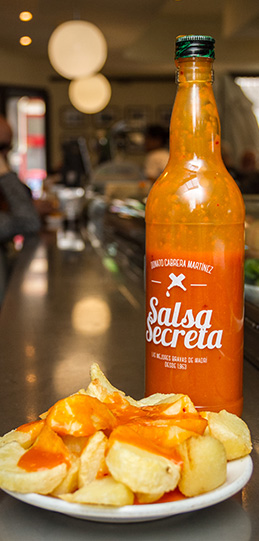 Patatas bravas is originally from Madrid, where it was created and then spread throughout the country. Now each region has made their own modifications such as in Valencia where they serve it with garlic mayonnaise and paprika pepper. But one of the most emblematic places to eat Bravas in Madrid with a traditional Brava sauce is Bar Docamar in Calle Alcalá 337. Its sauce is legendary in Madrid and a house secret. This bar goes through literally tons of potatoes every week and customers travel from all over Madrid to enjoy their Potato Bravas and buy their sauce. This classic tapas is basically potatoes cut into irregular chunks of approximately 3-4 cm, fried and dressed in a spicy sauce that is poured over them and served very hot. Patatas bravas is originally from Madrid, where it was created and then spread throughout the country. Now each region has made their own modifications such as in Valencia where they serve it with garlic mayonnaise and paprika pepper. But one of the most emblematic places to eat Bravas in Madrid with a traditional Brava sauce is Bar Docamar in Calle Alcalá 337. Its sauce is legendary in Madrid and a house secret. This bar goes through literally tons of potatoes every week and customers travel from all over Madrid to enjoy their Potato Bravas and buy their sauce. This classic tapas is basically potatoes cut into irregular chunks of approximately 3-4 cm, fried and dressed in a spicy sauce that is poured over them and served very hot.
When it comes to Patatas bravas' sauce there are two schools of thought: with tomato and without tomato. From my experience of living in Madrid and researching, I would say the more traditional Brava sauce without tomato. It is made with a base of extra virgin olive oil, sauteed onions, garlic, paprika and cayenne pepper, wheat flour and water or chicken stock. However other ingredients are used which are well-guarded secrets by each cook who adds a special something to the recipe.
In Catalonia, the sauce is made with olive oil, chilli, sweet paprika and vinegar. The important thing is that it's spicy, in fact, its name "bravas" makes allusion to this. In the Spanish language, bravo-a means brave or fierce if referring to an animal.
Patatas bravas are typically served in bars in many regions of Spain as tapas or "ración". It's considered one of the cheapest tapas due to its inexpensive ingredients. Should you ever visit Madrid, you'll absolutely have to taste patatas bravas and I highly recommend passing by Bar Docamar.
Here is my take on the 'Madrid' Patatas Bravas - Potatoes and Hot 'Brava' Sauce - Madrid Style
Ingredients - four portions:
4 large potatoes
1 large onion
3 garlic cloves
Pepper mix: 1 tsp of Paprika (normal) + 1 tsp of Paprika de la Vera (smoked) + 1 tsp of ground Cayenne pepper (hot) + 1tsp of white pepper
1,5 tbs of flour
1,5 tbs of sherry vinegar
Extra virgin olive oil
1 tsp salt
1 cup of chicken stock
Instructions:
1. Par-boil the potatoes. Cut the potatoes to size - uneven chunks of about 3 - 4 cms. Put the potatoes in a pot with water and bring to boil. Let them cook for about 10 minutes.
2. Dice the onion in fine chunks and chop the garlic
3. Heat three tbs of extra virgin olive oil and stir-fry the onion until its transparent.
4. When the onion is ready, add the garlic. When the garlic is browned, remove from the heat and add the pepper mix. Stir well so it mixes properly and put at low heat.
5. Add the flour and stir in well for about a minute. Be careful not to burn the paprika.
6. Add the cup chicken stock and cook for 10 minutes to make sure the flour and paprika are properly cooked.
7. Add the salt and the sherry vinegar and cook for a further 5 minutes. If it is too thick just add a little more stock or if it is too liquidy just let if reduce further and cook for a little longer. It should be thick but not too thick. The photo should give you an idea of the consistency. But then again, choose the thickness you prefer.
8. Put the sauce in the mixer and blend until there are no lumps or use a hand blender.
9. In a frying pan heat abundant extra virgin olive oil (very important) and fry the potatoes on medium heat and then raise the heat for the last 2 minutes to crisp. Once they are lightly browned put the potatoes on absorbent paper so any excess oil is drained.
10. Put the potatoes in a large bowl and pour the desired amount of sauce.
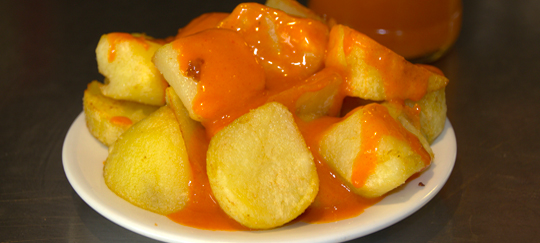
Patatas bravas are simple and cheap to make, and best of all, you can add any spice or herb to your taste, Recipes all over the country are usually modified by each cook. A popular alternative is to add freshly grated tomato instead of chicken stock and flour. They are an excellent tapas and starter to any family meal so if you are thinking of holding a party or inviting friends over for dinner, why not make these for them!
Enjoy!
 1
Like
Published at 4:31 PM Comments (1)
1
Like
Published at 4:31 PM Comments (1)
Cachopo - The Spanish Schnitzel
Friday, February 20, 2026
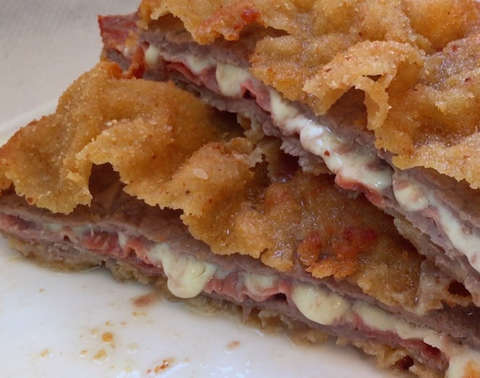
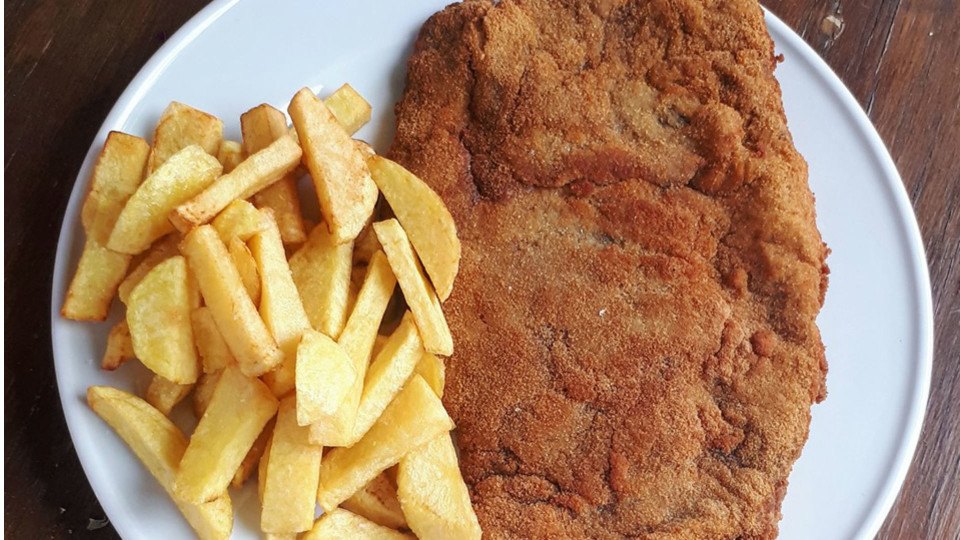 Veal "Cachopo" is an Asturian recipe that consists of a breaded fillet of veal which is stuffed with cured serrano ham or cured beef "cecina", and cheese which is normally a variety typical of this autonomous community, such as cabrales, but you can use any cheese you prefer. It would effectively be the same as a typical Schnitzel but stuffed. If you go on vacation to Gijón or Oviedo, you mustn't leave without trying it! But until then, you can prepare it at home ... What you will need is a couple of very thin veal fillets and, if possible, try and get large long ones. If you go to your local butcher they will normally be able to cut you the perfect fillets. Veal is what is normally used, either rump or silverside cuts, but if you prefer a 'beefier' fillet feel free to get aged meat, just make sure they are thin cuts. Veal "Cachopo" is an Asturian recipe that consists of a breaded fillet of veal which is stuffed with cured serrano ham or cured beef "cecina", and cheese which is normally a variety typical of this autonomous community, such as cabrales, but you can use any cheese you prefer. It would effectively be the same as a typical Schnitzel but stuffed. If you go on vacation to Gijón or Oviedo, you mustn't leave without trying it! But until then, you can prepare it at home ... What you will need is a couple of very thin veal fillets and, if possible, try and get large long ones. If you go to your local butcher they will normally be able to cut you the perfect fillets. Veal is what is normally used, either rump or silverside cuts, but if you prefer a 'beefier' fillet feel free to get aged meat, just make sure they are thin cuts.
The full ingredients to make Asturian Cachopo are as follows:
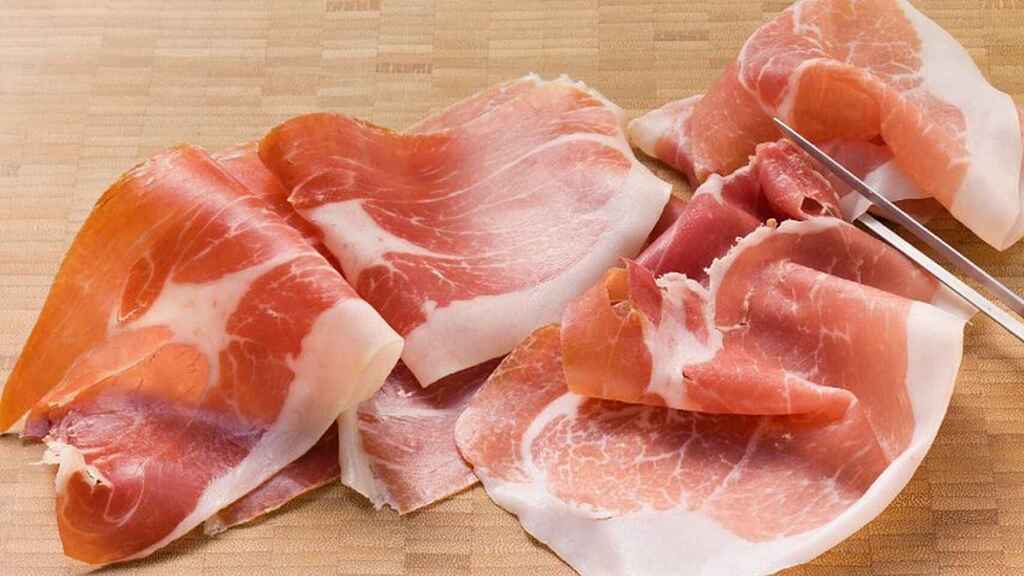 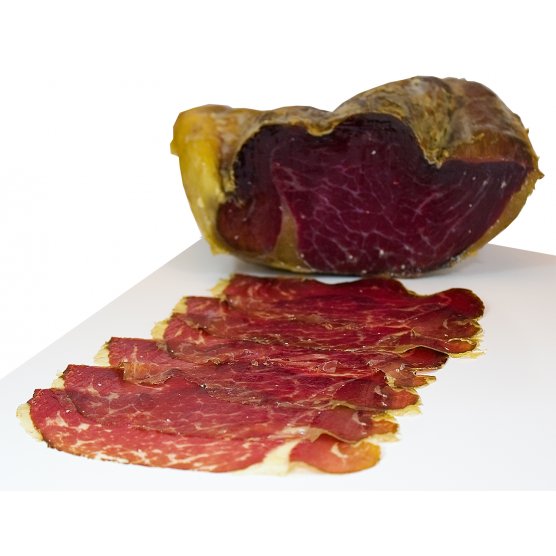
Serrano Ham Cecina
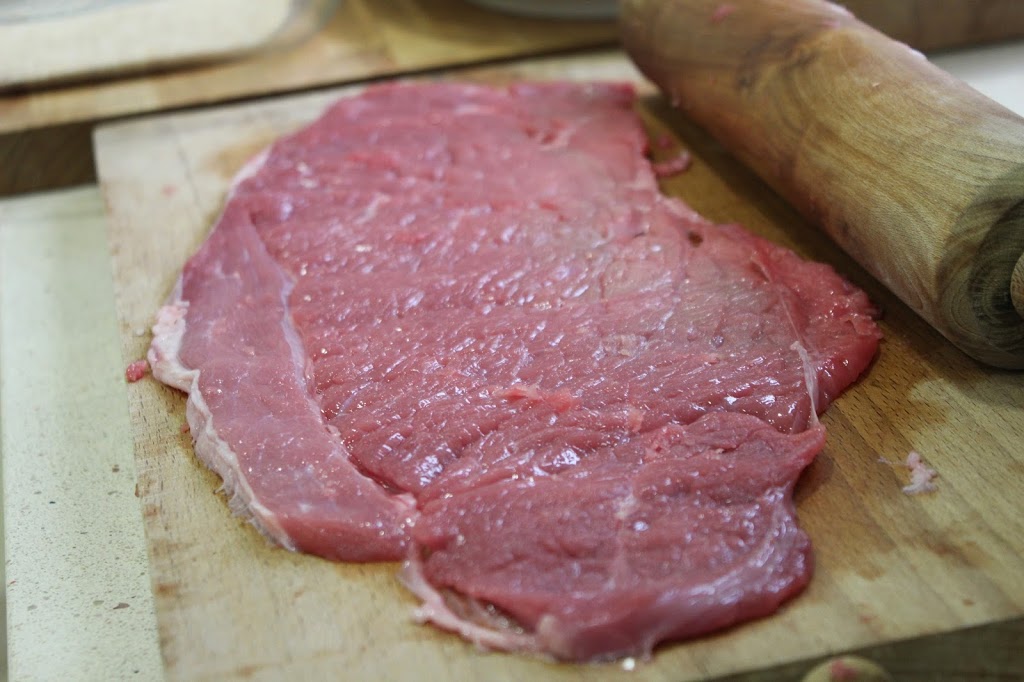
2 very large thin beef steaks - normally rump steak or silverside cuts - in Spain, 'Cadera'. (If you have a meat hammer or a rolling pin, tenderize the meat and thin it out if it is too thick)
Some slices of Serrano ham or cured beef Cecina.
Cheese slices - whichever variety you prefer
Flour, egg and breadcrumbs
Salt and freshly ground black pepper
Extra Virgin Olive Oil
Steps to take:
1.- Season the beef fillets (be careful, don't add too much salt to them than the cheese and the ham or cecina, whichever you decide to use, already have salt and it could become too salty)
2.- Spread out one of the fillets on a cutting board and cover it with the cheese of your choice cut into very thin slices. On top of the cheese add the slices of Serrano ham or Cecina, until it is completely covered. Then place another veal fillet on top. It basically looks like a sandwich with the meat acting as the bread.
3.- Carefully pick up the whole piece and place it on a plate or dish with flour. Turn it over so the meat is covered in flour, then repeat the process with beaten eggs and finally with breadcrumbs. A little trick is to let it rest in the fridge for 1 hour so that all the ingredients cling together well.
4.- Heat up plenty of olive oil to 170-180ºC. Enough to completely cover the Cachopo. After two or three minutes, when it is golden brown, remove it from the oil and place it on some absorbent kitchen paper before serving.
Enjoy!
2
Like
Published at 10:22 PM Comments (0)
Albondigas a la Jardinera - Meatballs!
Friday, February 13, 2026
Meatballs are one of those fantastic dishes for large numbers. It is easy to make in a large batch, it freezes well and who doesn't like them? In Spain, they are normally served with a vegetable sauce and are frequently called "Albondigas a la jardinera". They are one of my staple dishes at home and I thought I would share with you the classic Spanish recipe. Of course, there are many variations and you can modify the recipe as you wish, but this is the standard version you will probably find on a "Menu del dia" most of the year. So, let's crack on...
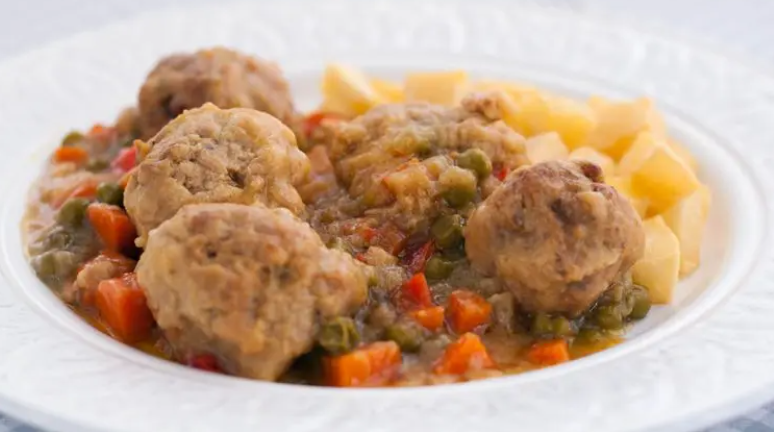
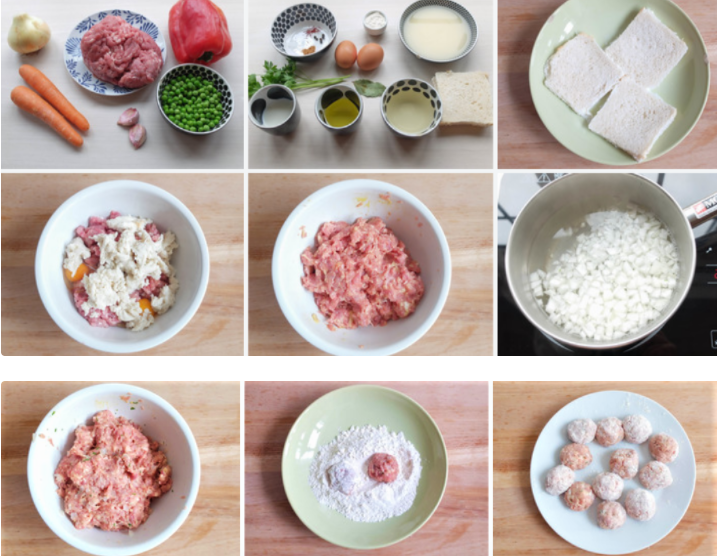
Ingredients for 4 people
For the meatball mix:
750 g. minced meat (pork, beef)
2 medium eggs
150 g. crustless sliced bread and 5 tablespoons milk
1 tablespoon chopped fresh parsley plus a little more for sprinkling
2 cloves of garlic
1 onion
Salt, nutmeg, and freshly ground black pepper (to taste)
Flour to coat the meatballs
Extra virgin olive oil
For the sauce:
1 onion
2 carrots
1/2 red pepper
100 g. peas
400 g. of potatoes
2 cloves of garlic
125 ml of white wine, 1/2 l of chicken broth and water (if necessary)
A few strands of saffron, salt, black pepper and 1 bay leaf
Mild extra virgin olive oil
When it comes to meatballs I always like to mix 50% pork and 50% beef mince. I like to buy my meat at the butcher's and then mince it at home, but any decent mince will do, to be honest. First, we are going to make the meatballs:
1. Season the minced meat, both veal and pork, in a large bowl. and mix together. Crack open the 2 eggs and add them together with the nutmeg, the fresh parsley and the slices of bread without the crust that we have previously soaked in milk for a few minutes.
2. Let the mixture rest.
3. Laminate the garlic and finely chop the onion. Add some water to a pan and poach the onion and garlic for a few minutes. This will help the onion to soften and thus our meatballs will have a more homogeneous texture. It will also slightly reduce the strength of the garlic and the onion.
4. Once poached after a couple of minutes, drain and cool with cold water before adding it to the meat mixture, season with salt and pepper.
5. Add a dessert spoon of extra virgin olive oil to the mixture and mix everything well with our hands until the ingredients are evenly mixed. Cover with plastic wrap and let it rest for an hour in the fridge.
6. . After the resting time, remove the meat from the refrigerator and start making small balls with the meat mix. If you keep your hands wet while you do this, the meat won't stick to your fingers. I normally have a finger bowl with water next to me when I make them.
6. Pour the flour onto a plate and then pass the meatballs through the flour so they have a thin coating all over.
7. Put the floured meatballs to one side on a clean plate. Shake them a little to remove excess flour.
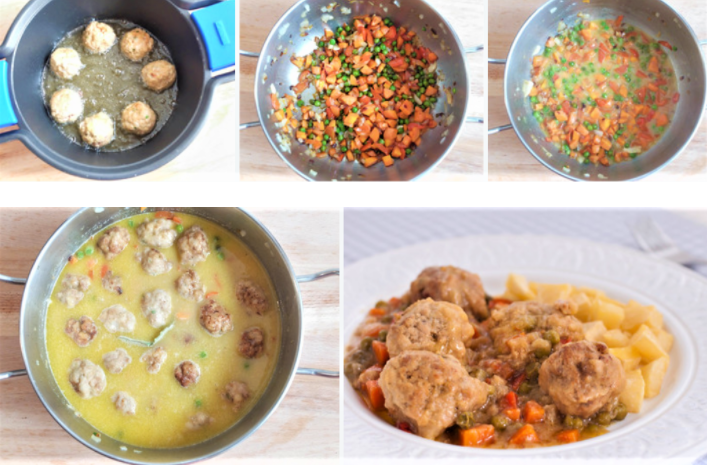
8. Fry the meatballs in hot extra virgin olive oil, for about three minutes is enough. The idea is to seal them and lightly brown them, then put to one side. They don't need to be cooked all the way through at this stage.
Now for the sauce:
1. Wash and dice the onion. Laminate the garlic clove and place in a wide deep pan. Add a dash of virgin olive oil and poach the onion and garlic in a little water for about 3-5 minutes until it has almost evaporated completely.
2. Cut the carrots and the red pepper into small pieces.
3. When the onion has gone transparent, add the rest of the carrots and red pepper and sauté them all together.
4. After a minute or so, add a heaped teaspoon of flour to the pan and toast the flour for a minute, stirring well.
5. Let the ingredients release all their liquids for about 5 minutes. When it has reduced, pour in the white wine and let it cook over high heat to cook off the alcohol and until the wine has reduced a little - about 10 min
6. Now add the meatballs to the pan. Don't put them on top of each other. Try and use a wide pan so they all have their own space.
7. Add the saffron and the bay leaf.
8. Add the chicken stock and the peas and let them cook on medium heat for about 10 minutes. If the stock is too thick you can rectify by adding more water. Make sure the water is boiling so it doesn't stop cooking.
9. Once the sauce has reduced to the right consistency season and taste for salt.
10. Let the meatballs rest for about 5 minutes and serve with fried potato slices, chips, mashed potatoes or even white rice. Or you could just eat them as they are with some crusty bread.
Serve and enjoy!
1
Like
Published at 3:36 PM Comments (1)
Spam post or Abuse? Please let us know
|
|