Abogado vs gestor in Spain: what is the difference, and which do you need?
Friday, June 26, 2026
Within your first few weeks in Spain, you will almost certainly hear the word gestor or gestoría. Your estate agent will mention it, the town hall will mention it, and any expat who has lived here for more than a year will tell you to find one. What is less clear is exactly what a gestor does, how this differs from an abogado (lawyer), and which one you actually need for a given task.

A gestor or abogado will review your paperwork and explain the process step by step. Photo: Magnific
Both professions are central to daily life in Spain, but they serve very different purposes. This guide explains what each one does, where their roles overlap, what they cost, and how to work out which one applies to your situation. If you are looking for a broader overview of how Spanish administration works, our guide to dealing with Spanish bureaucracy is a useful starting point.
What is a gestor in Spain?
A gestor administrativo is a licensed professional who handles administrative paperwork and represents you before Spanish public bodies — the tax office (Hacienda), social security, the traffic authority (DGT), immigration offices, and town halls. There is no direct equivalent in English-speaking countries; the closest comparison is a combination of an accountant, a solicitor's administrative function, and a vehicle licensing agent, all in one person.
Gestores are regulated by the Colegio de Gestores Administrativos and carry professional liability insurance. They are licensed to file paperwork and applications on your behalf with legal authority to act as your representative — which means they can submit forms, attend appointments, and deal directly with officials so that you do not have to.
What do gestors do in Spain?
The tasks a gestor handles fall broadly into a few categories. The most relevant for foreign residents and property buyers include:
Immigration and residency
Tax and fiscal obligations
- Annual income tax returns (declaración de la renta) for residents
- Modelo 210 — the non-resident income tax return required of property owners, even if the property is not rented out
- Modelo 720 — the overseas asset declaration for residents with assets abroad over €50,000
- Quarterly filings for the self-employed (autónomos)
- Declaring rental income, whether you are resident or non-resident
For a fuller picture of what property owners and residents owe each year, our tax guide for expats in Spain sets out the full picture, and a gestor can help with most of the filings it covers.
Vehicles and other paperwork
Read more at thinkSPAIN.com
 0
Like
Published at 9:36 PM Comments (0)
0
Like
Published at 9:36 PM Comments (0)
How to transfer money to Spain safely
Friday, June 26, 2026
Transferring a large sum of money internationally is not the same as sending a few hundred euros to a friend. When buying property in Spain, you may need to send anywhere from a few thousand euros for a reservation deposit to several hundred thousand at completion. The amounts are significant, the timing matters, and there are genuine risks to be aware of — from hidden costs to fraud.
This guide explains how international transfers to Spain actually work, what they cost, how to keep your money safe, and what to expect at each stage of a property purchase.
 Taking professional advice before transferring large sums to Spain can help you avoid costly mistakes. Photo: Magnific
How international transfers to Spain work
Most large international payments travel through one of two systems, and understanding the difference matters both for cost and timing.
SEPA transfers
SEPA — the Single Euro Payments Area — covers 36 countries including all EU member states, the UK, Switzerland, and Norway. If you are sending euros from a SEPA country to a Spanish bank account, the transfer is fast (typically next working day), cheap (often free or a small flat fee), and straightforward. You need the recipient's IBAN (International Bank Account Number) and BIC/SWIFT code. SEPA transfers have no maximum amount limit, which makes them well suited to large property payments.
SWIFT transfers
If you are sending from outside the SEPA zone — the United States, Canada, Australia, or any non-euro currency — your transfer will travel via SWIFT (Society for Worldwide Interbank Financial Telecommunication). SWIFT transfers can involve intermediary banks along the route, each of which may deduct a handling fee before the money arrives. This means the amount that reaches the Spanish account can be slightly less than what you sent. Always ask your bank for a cost estimate and whether you can select a 'SHA' or 'OUR' fee arrangement — the latter means you cover all intermediary fees and the recipient receives the full amount, which is important when an exact sum is required (as it often is at completion).
What details you need
For any international transfer to Spain you will need:
- The recipient's full legal name (exactly as registered with their bank)
- Their full IBAN — Spanish IBANs are 24 characters and begin with ES
- The BIC/SWIFT code of the recipient's bank
- The name and address of the recipient's bank
- A reference or payment description — particularly important for property transactions, where the notary or gestoría may need to match the transfer to the transaction
From October 2025, EU Regulation 2024/886 requires banks to verify that the beneficiary's name matches the IBAN before executing an instant euro transfer. This new name-matching requirement adds an important layer of protection against misdirected payments — if there is a discrepancy, your bank must alert you before proceeding.
Read more at thinkSPAIN.com
1
Like
Published at 9:30 PM Comments (0)
Spain is Quietly Becoming Europe’s Premier Investment Platform
Friday, June 26, 2026
For most members of the Eye on Spain community, the decision to look at the Spanish property market is driven by personal lifestyle: the weather, the food, the slower pace of life, and the warmth of the culture. However, a major macroeconomic shift is taking place behind the scenes, casting Spain in a completely different light on the global stage.
Recent data from international investment summits reveal that Spain is no longer viewed by multinational corporations solely as a top holiday destination or a retirement haven. Instead, it has quietly transformed into Europe’s most strategic platform for corporate investment, technology, and advanced manufacturing.
.jpeg)
For property owners and long-term expats, this corporate influx isn't just a talking point—it represents a powerful economic anchor that structurally supports the value of local investments, drives high-end rental demand, and accelerates the modernisation of regional infrastructure.
The Scale of the Multi-National Influx
The scale of foreign direct investment flowing into the peninsula highlights a massive vote of confidence from global industry leaders. Spain currently ranks as the world’s 12th-largest recipient of foreign direct investment, hosting more than 22,000 foreign-owned enterprises that collectively employ over 2 million people.
Rather than funnelling capital into speculative real estate ventures as they did a generation ago, multinational corporations are choosing Spain as their primary base for European and global operations. The driving forces behind this shift span three distinct sectors:
-
The Digital Giants: Technology leaders are heavily investing in Spain’s digital infrastructure. Google has established its specialised Cybersecurity Centre in Málaga; Microsoft is expanding its major cloud operations in Madrid and anchoring its Digital Sales Hub in Barcelona; Amazon Web Services (AWS) is rapidly expanding its server testing and maintenance infrastructure in Aragón; and Equinix is rapidly scaling its data centre capacity.
-
Advanced Industrial Manufacturing: Major green energy and industrial players are establishing roots on the mainland. For example, industrial pioneer Cummins has constructed one of the world's largest hydrogen electrolyser manufacturing plants in Guadalajara, positioning Spain at the very centre of Europe's transition to sustainable energy.
-
The Biotech Hub: Leading global life sciences and pharmaceutical giants—including Pfizer, Eli Lilly, Johnson & Johnson, and Merck—maintain a massive, highly integrated research presence across the country, supported by Spain's internationally recognised clinical trial networks and healthcare frameworks.
Why the Corporate World is Choosing Spain
This corporate rush isn’t happening by accident. Multinationals are targeting Spain due to a unique blend of strategic advantages:
1. The Talent Pipeline
Spain produces a highly consistent, scalable pipeline of multilingual engineering, tech, and life science graduates. Furthermore, the country's high quality of life makes it remarkably easy for global companies to recruit and retain top international talent, who eagerly relocate to tech hubs such as Valencia, Málaga, Barcelona, and Madrid.
2. A Strategic Continental Gateway
Operating within the European Union gives corporations frictionless access to a single market of nearly 500 million consumers. Simultaneously, Spain serves as a unique geographic and cultural bridge, connecting European operations directly to Latin America, North Africa, and the broader Mediterranean basin.
3. Tighter, Transparent Guardrails
To manage this volume, the Spanish government has modernised its regulatory environment by implementing a streamlined digital reporting framework under recent Royal Decrees to ensure transparency in transactions. While certain large-scale investments undergo rigorous foreign direct investment screening to protect critical public sectors, the system serves as a clear, standardised post-closing mechanism that provides substantial institutional predictability.
The Impact on the EOS Property and Rental Market
While data centres, green hydrogen plants, and corporate hubs might feel disconnected from everyday life in a coastal urbanización, the long-term ripple effects on the property market are highly significant:
-
A New Breed of High-Value Tenant: The expansion of tech hubs like the "Andalusia Silicon Valley" in Málaga or digital centres in Valencia and Barcelona has triggered a massive influx of high-earning professionals, engineers, and corporate executives. If you own rental property near these expanding hubs, demand for premium, long-term corporate lets is outstripping supply.
-
Economic Insulation: Traditional tourist economies are highly vulnerable to seasonal dips and global travel fluctuations. By backing the economy with multi-billion-euro digital and industrial infrastructure, local property values are supported by genuine domestic wealth and employment growth rather than just holiday trends.
-
Accelerated Infrastructure Upgrades: When tech giants move in, local town halls quickly follow with investments in high-speed fibre networks, international schooling options, improved rail connectivity, and modernised public spaces—amenities that directly benefit every resident living in the area.
The Bottom Line
The image of Spain as simply a laid-back, low-cost corner of Southern Europe is being radically rewritten. As global capital increasingly positions the peninsula as Europe’s core operating platform for innovation and industry, those who have already invested in Spanish real estate are sitting on the doorstep of a highly resilient, modernising economy.
Have you noticed the growth of corporate hubs or tech parks in your corner of Spain? Are you seeing more international professionals moving into your local area? Join the conversation on the EOS forums and let us know your thoughts.
1
Like
Published at 9:07 PM Comments (1)
The Hidden Paperwork Trap: The Spanish Tax Obligations Most Foreign Property Owners Discover Too Late
Friday, June 19, 2026
For a growing number of British, German, and Scandinavian homeowners across Mallorca and coastal Spain, the true introduction to the Spanish tax system arrives not with a welcoming handshake, but via an unexpected letter from the Agencia Tributaria (Hacienda).

As the tax authority sharpens its digital focus on non-resident property owners, a wave of foreign second-home owners is learning a stressful lesson: failing to file taxes out of simple ignorance doesn't stop the financial penalties from piling up. Many discover too late that missed obligations from years prior can still come back to trigger hefty surcharges, automated bank account seizures, and intense administrative headaches.
If you own property in Spain but do not live there full-time as a tax resident, there are three critical tax realities you must understand to avoid falling into the non-resident trap.
1. Paying Your Council Tax (IBI) Is Not Enough
The single most common misunderstanding among foreign buyers is assuming that because their local property taxes are paid up, their Spanish tax duties are fully settled.
The Impuesto sobre Bienes Inmuebles (IBI) is a local municipal tax paid directly to your town hall to cover community infrastructure, garbage collection, and local services. It has absolutely nothing to do with your national tax obligations.
Regardless of whether you pay your IBI on time, all non-resident property owners are legally required to file a national return called Modelo 210 (Non-Resident Income Tax) directly with the state tax agency.
2. The "Ghost Rental" Tax: Imputed Income
Many owners assume that if they never rent out their holiday villa or apartment, there is zero income to declare, and therefore no tax to pay. In Spain, this assumption is an expensive mistake.
Spain levies an imputed income tax (a deemed rental tax) on any non-resident property that is kept strictly for personal use or left vacant. The state views property ownership itself as a financial benefit, calculating a fictional rental value based on the property’s valour catastral (official rateable value).
The Part-Time Landlord Complexity
If you rent your property out for three months during the summer and keep it for yourself the rest of the year, you generate two separate Modelo 210 obligations. You must pay tax on the actual rental income collected over those three months, and a separate pro-rata imputed tax for the nine months the property sat empty or was used by your family.
3. The Four-Year Retrospective Clock
If you haven't been filing your Modelo 210, don't assume you have slipped under the radar just because a few years have passed. Under Spanish tax law, Hacienda has a four-year statute of limitations to audit, regularise, and penalise unpaid taxes.
Crucially, this clock does not start ticking from the tax year itself. It begins the day after the legal filing deadline for that year.
Furthermore, the moment Hacienda issues an official notification regarding a specific year, that four-year clock completely resets. If you ignore the letters, the tax authority has the legal framework to automatically freeze and extract the owed funds—plus interest and fines—directly from your linked Spanish bank account.
The Non-Resident Communication Barrier
The real sting of the non-resident trap is logistics. Because second-home owners do not live at their Spanish addresses year-round, paper notifications often sit sitting in empty mailboxes until long after the 15-day appeal window has slammed shut.
While Spain has migrated heavily toward digital notification systems like the Sede Electrónica or DEHú, accessing them requires navigating complex Spanish-language legal portals and holding an active Spanish electronic certificate (such as a digital signature or Cl@ve system).
To safeguard your overseas investment, it is highly recommended to appoint a local fiscal representative (asesor fiscal) or utilise a dedicated non-resident tax service. Having a registered digital recipient to instantly catch, translate, and handle Hacienda correspondence isn't a luxury—it's an essential insurance policy for peace of mind under the Spanish sun.
Were you aware that Spain taxes property owners even if their holiday home is never rented out? Have you ever had to navigate a surprise notification from Hacienda? Share your experiences and advice for fellow property owners below.
4
Like
Published at 8:55 PM Comments (0)
Space to live: Spacious villas for sale in Murcia with garden
Friday, June 12, 2026
Spacious villas with private gardens are among the most sought-after property types in Murcia, offering generous outdoor space and comfortable living at prices that remain competitive compared to other popular regions on the Spanish coast. They appeal to buyers who want more space and privacy than an apartment or townhouse can offer, without the premium associated with other coastal markets.
 A spacious villa with an established private garden in Murcia, where generous plot sizes and year-round sunshine make outdoor living central to everyday life. Photo: Freepik
Why buyers choose villas with gardens in Murcia
In Murcia’s climate, a private garden is more than a lifestyle extra — it is usable outdoor space for most of the year. Combined with generous plot sizes and accessible purchase prices, villas in Murcia offer a level of comfort that is well matched to buyers at many different stages of life.
Key benefits include:
- Private outdoor space for relaxing, dining, and entertaining
- Larger plot sizes, often with space for a pool and landscaped garden
- More internal living space than apartments or townhouses
- Purchase prices that remain competitive compared to other Spanish coastal regions
- Strong appeal for long-term rentals and permanent living
These properties are particularly popular with retirees, families, and international buyers relocating to Spain, thanks to Murcia’s year-round sunshine, well-established residential areas, and strong value for money.
Where to find villas with gardens in Murcia
Villas with private gardens are found across the Murcia region, from established coastal developments around the Mar Menor to quieter inland areas with generous plots and rural views. Buyers typically focus on areas that match their lifestyle priorities, whether that is proximity to the coast, access to amenities, or maximum space for the budget.
The Mar Menor coast — including towns such as Los Alcázares and San Javier — is the most popular area with international buyers, offering well-developed neighbourhoods and easy access to the beach. Further south, Cartagena and the surrounding municipalities offer larger plots at lower prices, while inland areas such as Lorca and Totana suit buyers who prioritise space and value above coastal proximity.
Villa vs townhouse vs apartment in Murcia
For buyers still deciding which property type best suits their needs, it often comes down to how much space, privacy, and outdoor living they want:
Read more at thinkSPAIN.com
0
Like
Published at 10:25 PM Comments (0)
The best neighbourhoods in Valencia for expats in 2026
Friday, June 12, 2026
With some of the best weather in the country, a lower cost of living compared to Madrid and Barcelona, and an unparalleled Mediterranean lifestyle, it’s no secret why Valencia has become a magnet for foreign property buyers and renters. Whether you are a digital nomad seeking a vibrant cultural scene, a retiree looking for seaside tranquillity, or a family wanting excellent schools and green spaces, Spain's third-largest city has a district tailored to your needs.
If you are planning a move this year, here is our comprehensive guide to the best neighbourhoods in Valencia for expats.
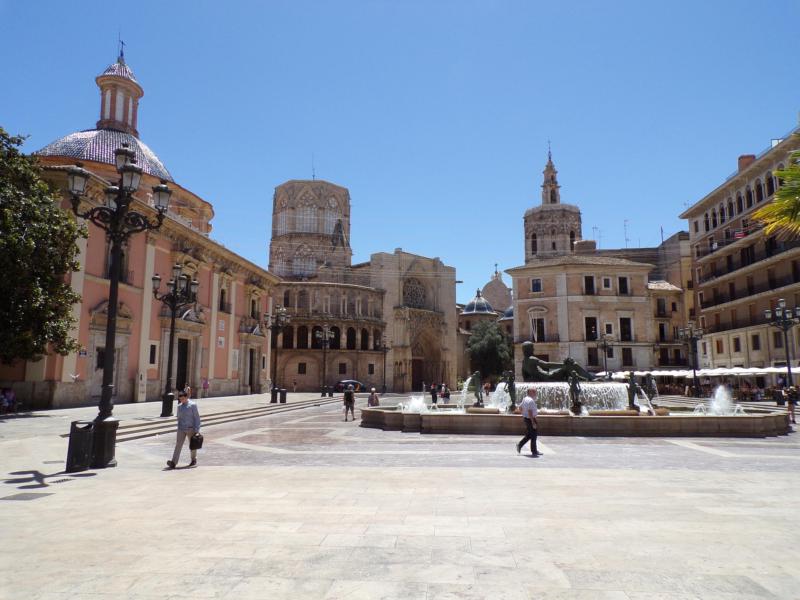
El Carmen neighbourhood is a favourite for newcomers who want to immerse themselves in Valencia's ancient history. Photo: Pixabay
Where do most expats live in Valencia?
Historically, expats have gravitated towards neighbourhoods that offer a blend of authentic Spanish charm and modern international amenities. Currently, the highest concentrations of foreign residents can be found in three distinct districts, each offering a very different style of property:
1. Ruzafa (Russafa)
- The Lifestyle: Often dubbed Valencia’s "hipster epicentre," Ruzafa is undoubtedly the most popular neighbourhood for young professionals, digital nomads, and investors. Once an independent town, it is now famous for its colourful facades, eclectic coffee shops, international eateries, and vibrant nightlife with excellent public transport connections.
- Popular Property Types: Foreign buyers here typically look for classic Valencian apartments housed in elegant early 20th-century buildings. The most highly prized features include soaring ceilings with ornate mouldings, beautifully restored suelos hidráulicos (original geometric mosaic floor tiles), and exposed brick walls. Many of these properties have been stylishly modernised to cater to the international market, offering open-plan living while retaining their historic charm. However, buyers should be aware that some of these older, mid-rise buildings still lack a lift—a crucial consideration when buying on a higher floor.
- Average Price (2026): Because of its immense popularity, Ruzafa sits within the wider L'Eixample district, which is one of the priciest in the city. Property prices in Ruzafa currently average between€3,145 and €3,840 per square metre, depending on the level of renovation and whether the building has a modern lift.
2. El Carmen (Ciutat Vella)
- The Lifestyle: Located right in the historical centre, El Carmen is a favourite for newcomers who want to immerse themselves in Valencia's ancient history. Living here means winding medieval streets, proximity to the Central Market, and having centuries of architecture right on your doorstep.
- Popular Property Types: Purchasing in El Carmen means buying a piece of history. Properties here range from compact, character-filled flats in narrow alleys to grand apartments in centuries-old palatial buildings. Buyers typically fall in love with features such as exposed wooden ceiling beams (vigas de madera), Juliet balconies overlooking bustling plazas, and thick historic walls. Because space is at a premium in the old town, private outdoor areas are usually limited, and underground parking spaces are exceptionally rare.
- Average Price (2026): As a highly protected historical zone with limited housing stock, prices remain consistently strong. Expect to pay an average of €3,570 – €4,736 per square metre, with fully renovated, turnkey properties easily surpassing this bracket.
3. El Cabanyal-Canyamelar (Poblats Marítims)
- The Lifestyle: For those who move to Spain for the sea, this traditional fishing district is the top choice. With its uniquely colourful tiled houses and immediate access to Malvarrosa Beach, and direct public transport tram links to the commercial centre. El Cabanyal attracts a laid-back expat community that loves seafood, sea breezes, and a relaxed pace of life.
- Popular Property Types: The architectural footprint of El Cabanyal is completely unique to Valencia. The most iconic and sought-after properties are the traditional two-storey fishermen’s houses. These homes are famous for their modernista tiled facades, often painted in bright, vibrant colours. Buyers tend to purchase these as complete townhouses or as split flats: the ground-floor properties typically boast private interior courtyards (patios), while the upper-floor flats often feature sunny roof terraces. Many expats buy here with the intention of doing a renovation project to restore these heritage homes to their former glory.
- Average Price (2026): While prices have risen sharply in recent years as the area gentrifies and improves, it still offers a more accessible entry point compared to the city centre. The current average sits around €2,720 – €3,243 per square metre, though fully modernised, detached seaside houses will command a premium.

The Science park in Valencia has given rise to a modern, prestigious and contemporary neighbourhood full of amenities. Photo: Pixabay
Areas becoming more popular with expats in Valencia
Beyond the traditional hotspots, expats are increasingly exploring neighbourhoods that offer specific benefits, whether that is modern convenience, established prestige, or budget-friendly authenticity.
Read more at thinkSPAIN.com
0
Like
Published at 10:20 PM Comments (0)
New build or second-hand property? Key factors in deciding which property to buy
Friday, June 5, 2026
Deciding which type of property to buy in Spain is one of the first steps you should take in your search process. Choosing between a new build and a second-hand property is a common confusion among buyers. Is it better to buy a new build property or a second-hand one? In reality, there is no definitive answer. Both options have their advantages and disadvantages, so the decision will depend solely on your needs and desires.
According to data from the INE (Spanish National Statistics Institute), in Spain in 2024, 134,338 new build properties and 506,063 second-hand properties were purchased. This means that, of the total properties bought in the last year in Spain, almost 80 % were second-hand and 20% were new build properties. There are a variety of factors that can influence this decision. That’s why, in this article, we want to give you the information you need to help you to make the right decision for you.
 In 2024, 134,338 new build properties and 506,063 second-hand properties were purchased. Photo: GettyImages
What is considered to be a new build and what are second-hand properties?
In general terms:
- Second-hand properties: those that have had at least one previous owner.
- New build properties: those that are handed over for the first time and, therefore, have not had a previous owner.
However, the legal and tax classification of a property as “new” can vary depending on specific circumstances. A property is generally considered a new-build when:
- It is a recently built property bought directly from the construction company or developer.
- It is an off plan property, in other words, a property that hasn't been built yet.
- It has been rented out by the developer for less than two years after completion, provided the tenant is the buyer. In this case, Spain’s Tax Agency (Agencia Tributaria) treats it as a first delivery for tax purposes. If the property has been used for two years or more by someone other than the buyer, it will no longer be treated as a first delivery.
- It has undergone major structural renovations, for example, the addition of a new floor. In such cases, a declaration of new construction due to rehabilitation may be formalised in order to register the changes in the Land Registry. However, this does not necessarily affect its tax treatment.
Buying a new build or second-hand property in Spain: Differences, advantages and disadvantages
When talking about the advantages and disadvantages of buying a new build or second-hand property, it is important to bear in mind that each buyer has different needs. What may be considered a benefit by one buyer, may be seen as a drawback by another. For that reason, we want to present you with different factors that may be decisive when it comes to choosing one property over another.
Location of the property
If you want to live in a city centre or a specific neighbourhood, the best option for you is likely to be buying a second-hand property, since you will find more available in these areas. This is because in Spain new build properties are usually located on the outskirts of cities, where there is more land available for building. However, if you would prefer to live in a residential area, away from the hustle and bustle and noise of the city, you will find many more options for buying a new build property.
Waiting time before moving in
Do you need to move house immediately or are you happy to wait a while? The time you have available or can wait to move into your new property will also be crucial in making your decision. In general, second-hand properties are ready to move into. However, in the case of new build properties, it is likely that they are still under construction or they may even only exist in plan form. This means you will have to wait for a few months, or even years, for the property to be ready. Therefore, if you are in a rush to move into your new property, second-hand properties will be the best option for you.
Design and potential renovations
For some people, a renovation is the ideal opportunity to design your home to suit your own taste. If you are one of these people and you enjoy the process, second-hand properties will be perfect for you. However, if you prefer to avoid any renovations, the best option for you would be to buy a new build property. These properties are brand new, with new materials and are more modern, and with no defects caused by use. However, if you buy a second-hand property, there is an increased likelihood of having to carry out some type of renovations, no matter how small they may be.
Read more at thinkSPAIN.com
3
Like
Published at 6:34 PM Comments (0)
What to do when a mortgage is paid off in Spain
Friday, June 5, 2026
Paying off your mortgage is a major financial milestone, marking the end of your loan commitments and the start of full homeownership. However, in Spain, paying off a mortgage is not just about making the final payment. There are several important legal and administrative steps to complete before your property is entirely free from financial obligations.
This guide outlines the essential steps you need to take after your mortgage in Spain has been paid off, ensuring a smooth and straightforward process. Whether you've completed your mortgage term or repaid it early, these steps will help you secure your home, navigate legal requirements, and understand any tax implications.
 Paying off a mortgage is not just about making the final payment. There are several legal and administrative steps to complete. Photo: Freepik
1. Confirm the mortgage is paid off
Your first priority is to confirm that your mortgage is fully repaid. While it might seem obvious, it's essential to obtain official documentation from your lender to avoid misunderstandings or issues down the line. Financial institutions can sometimes make errors in processing, especially with early repayments, and you want to ensure that your records are accurate and up to date.
How to apply for a zero-debt certificate
After making the final payment, request a certificado de deuda cero (zero-debt certificate) from your bank. This document serves as official proof that the mortgage has been fully repaid and no outstanding balance remains. It is a crucial document for cancelling the mortgage in the Land Registry (“Registro de la Propiedad”) and for ensuring there are no lingering financial obligations connected to your property. Ensure that the certificate includes all necessary details, including the loan amount, dates, and confirmation that no penalties or interests are due.
What to do if you've repaid early
If you’ve paid off the mortgage early, it’s important to check your original mortgage contract for any early repayment conditions. Some Spanish banks charge penalties for early repayment, typically a percentage of the outstanding balance. Even though you've repaid early, you must still obtain the zero-debt certificate to formalise the completion of the mortgage. This process helps avoid potential issues that could arise from discrepancies between your expectations and the lender’s records.
2. Cancel the mortgage at the Land Registry
Even after you’ve repaid your mortgage, the mortgage still remains registered against your property at the Land Registry. This step is critical because failure to officially cancel the mortgage can lead to legal complications when selling or transferring the property in the future. The mortgage, although repaid, is still legally considered as an encumbrance until it is removed from the registry.
Steps to cancel the mortgage...
Read more at thinkSPAIN.com
1
Like
Published at 6:22 PM Comments (0)
Spam post or Abuse? Please let us know
|
|