What really drives foreign demand in Spain
Friday, July 31, 2026
What drives international demand in Spain goes beyond traditional assumptions about climate or tourism. For agents, understanding these differences helps tailor conversations, build stronger pipelines and convert international demand more effectively.
Most foreign buyers are lifestyle-driven
A key difference between foreign and domestic demand is that international buyers are often less price-driven when searching for Spanish property, creating stronger, higher-value opportunities for estate agents.
A recent thinkSPAIN buyer trend survey reveals that for domestic buyers, price was the most important factor when choosing a property. For international buyers, location, number of bedrooms and bathrooms, or property features ranked significantly higher.
Their spending reflects this: In H2 2025, foreign non-residents paid an average of €3,242/m², compared with €1,839/m² paid by Spanish nationals. That’s 76% more per square metre, highlighting the value this audience brings to the Spanish market. This difference may also be influenced by the types of properties and locations international buyers tend to target, particularly coastal, island and higher-end markets where average prices are already above the national average.
Foreign buyers are often driven more by lifestyle than necessity: Many already own, or have recently sold, property in their home country and are choosing Spain for reasons beyond immediate housing need. Different segments have very different motivations, priorities and buying behaviours. Our recent buyer survey, where 75% of buyers were foreign non-residents, highlights this clearly:
- 51% of foreign non-residents are buying for retirement.
- 28% are seeking a holiday home or a second residence.
- 15% are relocating for work, family, or a change in lifestyle.
- 6% are buying for investment.
Among foreign residents, motivations are more evenly split between retirement and relocation, while holiday-home and investment demand remain limited.
Foreign resident and non-resident buyers are driven by different goals, timelines and priorities. Source: thinkSPAIN property search, finance and currency insights survey 2026.
The motivations behind international demand vary significantly by buyer type, with each segment bringing different drivers, timelines and opportunities for estate agents.
Retirement buyers: financially prepared, long-term planners
Foreign buyers looking to retire in Spain are often financially prepared, with many using life savings, pension funds, or cash from selling a previous property. As a result, only 5% require a mortgage (thinkSPAIN property search, finance and currency survey 2026) . This reduces financing-related uncertainty and improves lead quality once a property is chosen.
Often viewing Spain as the place where they want to spend later life, healthcare plays a central role in that decision, alongside climate, local services and day-to-day comfort. InterNations has ranked Spain 1st for quality of life for 4 consecutive years, with over 4 in 5 respondents rating Spanish healthcare as:
- Affordable (83% positive ratings, compared with a global average of 59%).
- Easily available (82% vs. 68%).
- High quality (81% vs. 67%).
As a major life decision, buyers looking to retire in Spain usually take longer to commit. Two thirds expect to purchase in 6 months or more as they compare regions, services and long-term suitability. Early-stage enquiries often take a bit longer to convert, making consistent follow up and a clear understanding of international buyers’ decision cycles essential for generating a steady flow of reliable leads.
Holiday home buyers: premium second-home seekers
Buyers seeking a second residence are also strongly driven by lifestyle rather than need, but their preferences differ from retirees. They often want a second home for regular visits, family holidays or longer seasonal stays, so ease of owning, managing and accessing the property from abroad matters as much as the property itself.
Read more at thinkSPAIN.com
 1
Like
Published at 10:38 PM Comments (0)
1
Like
Published at 10:38 PM Comments (0)
Moving to Mallorca: Your relocation guide
Saturday, July 25, 2026
Mallorca is one of Europe’s most desirable places to live — but it is also one of Spain’s most expensive. Understanding whether the lifestyle justifies the cost is the key question for most people considering a move.
What makes Mallorca different is not just the climate, but the rhythm of life: mornings at a café in Palma’s Santa Catalina, year-round outdoor living, and a pace that feels distinctly Mediterranean even in the capital. With a resident population of around 900,000, the island functions well beyond the summer season — but what ‘year-round’ actually looks like in practice is something this guide explores in detail.

Palma de Mallorca combines historic architecture, a large marina, and year-round urban living by the Mediterranean. Source: Freepik
Is moving to Mallorca a good idea?
For the right person, absolutely. Mallorca suits those who prioritise Mediterranean climate and outdoor living, a stable property market, access to international schools and private healthcare, and strong flight connections across Europe. It works particularly well for retirees — there are nine compelling reasons why Mallorca consistently ranks among the best places in Spain to retire. It also suits remote workers, business owners, and those with income generated outside the island.
It may not suit those who:
- Are working to a budget below €2,000/month excluding rent
- Need access to a large corporate or public-sector job market — local salaries in tourism and hospitality are modest relative to the cost of living
- Rely on public transport; a car is essential almost everywhere outside Palma
- Expect fast administrative processes — registrations, residency cards, and bank accounts take longer than most newcomers anticipate
- Are buying property to let short-term: tourist rental licences are now tightly restricted across the island
Language and daily life
Mallorca has two official languages: Spanish and Catalan, specifically the Mallorquí dialect. In practice this means signage, official correspondence, and local bureaucracy often appears in Catalan first. Public schools teach primarily in Catalan. In Palma and heavily international areas, English and German are widely spoken, but outside these zones, Spanish is the working language and Catalan the community one.
This genuinely affects integration. Learning conversational Spanish makes daily life significantly smoother; making an effort with Catalan — even basic greetings — is noticed and appreciated by local communities. For those planning to settle in smaller towns or inland villages, some language capability is less an advantage than a practical necessity.
Climate and the off-season reality
Mallorca enjoys a Mediterranean climate with over 300 days of sunshine per year. Summers are warm and dry — July and August regularly reach 28–30°C — while winters are mild, typically settling between 10–15°C. Spring and autumn are arguably the most pleasant seasons, particularly for hiking, cycling, and sailing.
What the climate figures do not capture is the off-season reality of many coastal and resort areas. Between November and February, a significant number of restaurants, shops, and leisure facilities close. Communities thin out. In heavily seasonal towns, this can feel isolating, particularly for people who moved expecting a permanent version of their holiday experience. Palma and the major inland towns maintain a full year-round rhythm, but buyers drawn to quieter coastal areas should spend time there in winter before committing.
Transport and connections
Palma de Mallorca Airport (PMI) connects the island to 87+ destinations via 36 airlines, with year-round direct routes to London, Frankfurt, Amsterdam, Zurich, and Madrid. Within the island, public transport covers Palma well, but is limited elsewhere.
Key realities:
- Driving from Pollença or Alcúdia to Palma typically takes 45–60 minutes
- Summer traffic on coastal roads in July and August can add significantly to journey times
- Rural areas have minimal bus frequency — often a few services per day at most
A car is effectively essential outside the capital. Budget €200–€400/month for ownership costs including insurance, fuel, and maintenance.
Taxes: what you need to know before you move
Spain’s tax system is complex for new residents, and the Balearics have specific considerations — including a reintroduced wealth tax and strict worldwide income declaration rules. Depending on your circumstances, qualifying newcomers may also be eligible for a favourable flat tax rate under the Beckham Law. If you own a property before establishing residency, you will also be liable for non-resident income tax under Modelo 210, even if the property is unoccupied. Tax planning should happen before you arrive, not after — our tax guide for expats in Spain covers the main obligations in full.
Cost of living in Mallorca
Mallorca is the most expensive region in Spain by property value, but everyday costs remain moderate by northern European standards. The figures below are indicative estimates based on typical costs reported by Numbeo and Freedom Abroad (2025–2026):
Read more at thinkSPAIN.com
1
Like
Published at 8:34 AM Comments (0)
Is Spain safe to live in? 2026 Crime rates and what expats need to know
Saturday, July 25, 2026
When planning a relocation, the Iberian sunshine, Mediterranean diet, and relaxed pace of life are always the initial draws. However, once the romantic dream of moving abroad meets reality, the practicalities of day-to-day security become the ultimate deciding factor.
For any expat looking to buy property, raise a family, or retire abroad, understanding the true reality of local safety is essential. It is easy to get caught up in sensationalised news stories or anecdotal rumours on expat forums, which can make the idea of navigating a new country—and potentially leaving a holiday home empty for months at a time—feel daunting. True peace of mind is what allows you to actually enjoy the lifestyle you are moving here for.
So, cutting through the noise and looking strictly at the data: how safe is Spain to live in, and how does it stack up on a global scale against the countries you might be leaving behind?

Spain is extremely safe and above all feels extremely safe, street crime is rare. Photo: Pixabay
Is Spain safe for foreigners to live in?
Statistically, Spain is incredibly welcoming and secure for foreigners. According to the Global Peace Index, the country consistently ranks in the top tier worldwide for societal safety and low levels of conflict.
The day-to-day reality of living here is that you can comfortably walk through most towns and cities at night without the heightened anxiety found in other major global destinations. For families, retirees, and solo relocators alike, it provides an exceptionally safe environment.
What types of crime actually happen? (Addressing the big worries)
When moving abroad, people naturally worry about specific threats. Here is the reality of the crimes that most concern prospective expats:
- Violent crime at night: This is reassuringly rare. Unlike many northern European or North American cities, Spanish culture revolves around late-night, multi-generational socialising. Streets, plazas, and terrazas are full of families and elderly residents well past midnight, creating a natural community surveillance that keeps violent street crime very low.
- Break-ins and burglaries: Property crime does happen, but it is largely targeted at empty holiday homes rather than occupied primary residences. In popular coastal urbanizaciones, investing in a standard alarm system and secure locks is usually enough to deter opportunistic thieves.
- Pickpocketing & muggings: This is the one area where Spain struggles, specifically in dense tourist hubs like Barcelona, Madrid, and heavily populated coastal resorts. However, these are almost exclusively non-violent, crimes of distraction. If you practice basic situational awareness and keep your belongings secure in busy areas, your risk drops significantly.
The Okupa question: Are there new laws to protect homeowners?
For many expats, the fear of okupas (squatters) taking over an empty holiday home has traditionally been a major anxiety. Historically, the legal system made it notoriously slow to evict illegal occupants. However, a landmark Anti-Okupa Law came into effect in April 2025, drastically changing the landscape and shifting legal power firmly back to property owners.
If you are buying property in 2026, here is how the new regulations protect you:
- Express evictions: Cases of illegal occupation are now processed through fast-track trials, allowing court-ordered evictions to happen in as little as 15 days.
- Immediate police action: If squatters are caught in the act (within the first 48 hours), police have expanded powers to enter and remove them immediately without a judge's order.
- Utility disconnections: The new law explicitly allows owners to legally disconnect water and electricity to squatting occupants.
- Stricter criminal classifications: Breaking into a primary or secondary residence (including foreign-owned holiday homes) is now prosecuted as a serious criminal offence (allanamiento de morada).
Where is the safest place to live in Spain?
If you are analysing national crime statistics, the lowest rates of crime are consistently found in northern regions like Asturias and Cantabria. However, for those looking for established expat communities and warmer weather, there are excellent, secure options.
Read mroe at thinkSPAIN.com
1
Like
Published at 8:22 AM Comments (1)
Where to invest in property in Spain: the best places and what to expect
Saturday, July 18, 2026
Spain is one of the most active property investment markets in Europe. Foreign buyers account for around 14% of all purchases, property prices have risen in 51 out of 52 provincial capitals over the past year, and rental yields across the country average around 5.5% gross — competitive by European standards and significantly ahead of many northern European markets.
That said, investment performance varies enormously by location, property type, and strategy. A coastal holiday let in the Balearic Islands operates very differently from a long-term rental apartment in Valencia or a renovation project in inland Andalucía. This guide focuses on where the strongest investment opportunities are, what the numbers look like, and what foreign buyers need to understand before committing.
 Residential apartment buildings in Spain represent one of the most accessible entry points for property investors. Photo: Magnific
Is investing in property in Spain a good idea?
For many investors, yes — but the answer depends on your strategy, timeline, and how you approach it. Several factors work in Spain's favour as an investment destination:
- Strong and sustained price growth: property prices have risen nationally for several consecutive years, with some cities recording double-digit annual growth. Valencia rose 16.8%, Alicante 15.7%, and Málaga 15.5% in the year to late 2025, according to data published by International Investment
- Rental demand outpacing supply: Spain faces a structural housing shortage — new completions are running at around 100,000 units per year against a peak-cycle demand of 400,000. This imbalance supports both rents and prices
- Strong foreign buyer demand: foreign buyers accounted for 13.5% of all registered purchases in Q4 2025, with the highest concentrations in Alicante, the Balearic Islands, Málaga, and the Canary Islands
- Tourism-driven rental income: Spain's position as one of the world's most visited countries provides a deep pool of short-term rental demand in coastal and urban markets, supporting yields for well-located properties
- Favourable entry costs in many areas: outside Madrid, Barcelona, and the Balearics, purchase prices remain significantly below those of comparable markets in France, Italy, or the UK
The risks are real too. Rental regulations have tightened in several major cities, tourist licence restrictions have been introduced in some municipalities, and net yields after running costs, taxes, and management fees are materially lower than gross figures suggest. For a full picture of the financial and legal considerations, our guide to buying an investment property in Spain covers this in detail.
The best places to invest in property in Spain
Different locations suit different investment strategies. Here is an overview of the strongest markets and what each offers:
Valencia — best for rental yield and long-term growth
Valencia has become one of the most closely watched investment markets in Spain. Property prices remain significantly below those of Madrid and Barcelona, yet rental demand is strong and growing — driven by students, remote workers, and an increasing number of international residents. Gross yields of 6% to 7% are achievable in well-located neighbourhoods, with one-bedroom apartments performing particularly well. The city's price growth of 16.8% in 2025 suggests that capital appreciation potential is also building. For investors seeking a combination of strong current yield and medium-term capital growth, Valencia is currently one of Spain's most compelling markets.
Madrid — best for capital growth
Madrid's property market is driven primarily by capital appreciation rather than yield. Price growth of 18.1% in 2025 — the highest of any major Spanish city — reflects both chronic undersupply and very strong demand from domestic and international buyers. Yields are respectable at 5% to 8% depending on neighbourhood and property type, but the primary attraction here is long-term value growth in Spain's largest and most liquid property market. Entry prices are the highest on the mainland, which raises the capital requirement. Madrid properties suit investors with a longer horizon and a focus on capital preservation and growth.
Málaga and the Costa del Sol — best for tourism-driven income
Málaga has transformed over the past decade from a gateway city into a destination in its own right. It attracts remote workers, digital nomads, and a growing international residential population alongside its traditional tourist base — which gives it a more resilient rental profile than purely seasonal resort markets. Gross yields of 5% to 7% are achievable, with the city centre and emerging neighbourhoods performing strongly. The broader Costa del Sol offers a wide range of price points, from affordable apartments in Fuengirola to premium villas in Marbella, and benefits from one of the longest reliable rental seasons in mainland Spain.
Alicante and the Costa Blanca — best for affordability and yield
Alicante offers some of the best value for money of any Mediterranean coastal city. Property prices are 30% to 40% lower than in Valencia or Barcelona, yet rental demand is solid and growing. Gross yields of 5.6% to 6.6% are consistently achievable, and the city's strong price growth of 15.7% in 2025 indicates appreciation potential too. The southern Costa Blanca — around Torrevieja and Orihuela Costa — offers even lower entry prices, making it one of the most accessible coastal investment markets in Spain, though rental demand and liquidity are also lower than in the city.
Barcelona — best for a balanced urban investment
Barcelona is Spain's most internationally recognised property market and remains in high demand from both investors and end buyers. Gross yields of 5.6% to 7.4% are achievable, and the city's undersupply of housing supports long-term price growth. The key consideration for investors is the regulatory environment: Barcelona has introduced restrictions on new tourist licences and has at various points implemented rental price controls. Any investor considering Barcelona should take specialist legal advice on the current regulatory position before purchasing, as this affects both rental strategy and yield.
Canary Islands — best for year-round rental income
The Canary Islands are unique in the Spanish market for their year-round rental demand. Unlike mainland coastal markets, which have a strong summer season but quieter winters, the islands attract visitors and longer-stay residents throughout the year — which significantly reduces void periods and improves net yield. Gross yields of 5% to 6.5% are achievable across the islands, with Tenerife and Gran Canaria offering the widest range of investment options. The trade-off is higher management complexity for remote investors. For buyers looking at the Canary Islands, professional property management is particularly important.
Murcia — best for high gross yield
Murcia consistently records some of the highest gross rental yields in Spain — up to 8.2% in some analyses — driven by low purchase prices relative to rental demand from students, workers, and tourists using the Costa Cálida. It is a higher-yield, lower-profile market than the destinations above, which means liquidity and resale demand are more limited. For investors focused primarily on income return rather than capital growth or resale flexibility, Murcia warrants serious consideration as part of a diversified portfolio.
What returns can you expect?
Read more at thinkSPAIN.com
0
Like
Published at 12:37 PM Comments (0)
Annual costs of owning property in Spain: a complete guide
Saturday, July 18, 2026
Buying a property in Spain is one thing — understanding what it costs to own one each year is another. Running costs vary depending on where the property is located, whether you are a resident or non-resident, and whether the property is a primary home, a holiday home, or a rental investment. This guide covers every annual cost you should budget for, with indicative figures, worked examples, and practical advice on managing each one.
For a broader picture of what Spain costs day to day, the cost of living guide for Spain covers household expenses beyond property ownership. If you are still at the buying stage, the complete costs of moving to Spain covers the one-off purchase costs in full.

Controlling the fixed costs of your property is key to enjoy it without any financial stress. Photo: DepositPhotos
IBI — Impuesto sobre Bienes Inmuebles (property tax)
The IBI is Spain's annual municipal property tax and applies to all property owners, whether resident or non-resident. It is levied by your local town hall (ayuntamiento) and is based on the cadastral value (valor catastral) of the property — an administrative value assigned by the Catastro, typically 30% to 50% lower than the market price.
How IBI is calculated
Each municipality sets its own rate, which by law must fall between 0.4% and 1.1% of the cadastral value for urban properties (and up to 1.3% in special circumstances). The person registered as legal owner on 1 January of the tax year is liable for the full year’s bill, even if the property is sold during the year. In some provinces, IBI collection is handled by a provincial tax agency rather than individual ayuntamientos — the most notable example for international buyers is SUMA (Suma Gestión Tributaria) in Alicante province, which handles IBI billing and collection on behalf of most of its municipalities. Other provinces have similar arrangements through their diputación provincial. The system works the same way in practice — billing and payment simply go through the provincial agency rather than the local ayuntamiento.
IBI — indicative annual costs
The table below gives a rough guide to what IBI costs annually, based on common cadastral values and typical municipal rates:
| IBI annual costs by property type |
| Property type |
Cadastral value |
Rate (example) |
Annual IBI (approx.) |
| Small apartment |
€60,000 |
0.5% |
€300 |
| 2-bed apartment |
€100,000 |
0.6% |
€600 |
| 3-bed apartment / villa |
€150,000 |
0.7% |
€1,050 |
| Larger villa |
€250,000 |
0.8% |
€2,000 |
Sources: Ley Reguladora de las Haciendas Locales (LRHL); Catastro. Rates vary by municipality — always confirm your specific rate with your ayuntamiento or SUMA.
IBI is typically paid between August and November each year. Setting up a direct debit from a Spanish bank account is the most reliable way to ensure it is paid on time — missed payments attract surcharges and, in serious cases, can result in the property being charged with a lien.
Modelo 210 — non-resident income tax
This is the cost that most surprises international buyers and is frequently overlooked entirely. If you are a non-resident property owner in Spain — meaning you spend fewer than 183 days per year in Spain — you are liable for annual income tax on your Spanish property, even if it is not rented out. This is known as the Impuesto sobre la Renta de No Residentes (IRNR) and is filed using Modelo 210.
Modelo 210 for unlet properties
If the property is not rented out, the tax is based on imputed income — a notional rental income calculated as 2% of the cadastral value per year (or 1.1% if the cadastral value has been revised since 1994). The tax rate applied to this imputed income is 19% for EU and EEA residents, or 24% for non-EU nationals. On a property with a cadastral value of €100,000, the annual Modelo 210 liability for an EU resident would be approximately €380 (2% × €100,000 × 19%). It is filed and paid once per year, covering the full calendar year, with a deadline of 31 December of the following year — so the 2025 tax year is due by 31 December 2026. Payment is made to the Agencia Tributaria, either online via the Sede Electrónica or through a Spanish bank using the generated payment reference.
Read more at thinkSPAIN.com
1
Like
Published at 12:32 PM Comments (0)
What is a 'traspaso' in Spain? How business transfers work when taking over a commercial property
Saturday, July 11, 2026
Many international expats dream of running a café, bar, or boutique in Spain. If you are looking to invest in the Spanish commercial sector, you will quickly encounter the term traspaso.
A traspaso is the transfer of a leasehold business. You do not purchase the commercial property (the physical bricks and mortar, known as the freehold); instead, you buy the right to take over the existing business operations, its assets, and the premises' lease contract.
Understanding the legal aspects and financial mechanics of a traspaso is critical to ensure you are buying profitable operations rather than inheriting someone else's hidden debts. Buying a business in Spain requires a different approach compared to the UK or North America, as it is heavily reliant on local municipal compliance.
 Purchasing a traspaso means taking over the operational rights, terrace permits, and customer base of a functioning business. Photo: Unsplash
What is a 'traspaso' and how is it different from starting from scratch?
When you buy a business as a traspaso, you acquire an operational entity, but you do not own the real estate. If you were to purchase the freehold, you would own the property outright. Conversely, starting from scratch would mean renting or buying an empty property, applying for every municipal license from zero, and building a brand without a safety net.
What is typically included in a traspaso?
When you negotiate the price for a traspaso, you are paying a premium for speed and existing infrastructure. A standard transfer typically includes:
- Fixed assets: Commercial machinery, furniture, fixtures, fittings, and existing stock.
- Intangible assets: The business name, brand reputation, online presence, and established customer base.
- Operational rights: Existing licences (such as the licencia de apertura or opening licence) and permits required to trade.
- The lease: The right to occupy the premises under an existing or newly negotiated agreement.
Starting from scratch vs. traspaso: which is better?
Deciding whether to open an empty commercial property or take over an existing business depends on your budget, timeline, and risk tolerance.
| Starting from scratch vs. traspaso |
| Factor |
Starting from Scratch |
Taking over a Traspaso |
| Time to launch |
6–12+ months (bureaucratic delays) |
1–4 weeks (licences are already in place) |
| Initial costs |
Lower purchase costs, high setup and renovation costs |
High initial premium (the traspaso fee) |
| Licenses |
Must apply for new municipal licences |
Existing licences transfer over |
| Clientele |
Zero; requires heavy marketing |
Inherited, established clientele |
Advantages of a traspaso
The primary advantage is operational speed. Dealing with the Spanish government and local administrative areas to secure a new opening licence can take months or even years, especially for hospitality venues requiring soundproofing, fume extraction, and terrace permits. A traspaso allows you to invest efficiently, bypassing this bureaucratic bottleneck and generating revenue from day one.
How a traspaso works in practice: The lease negotiation
Under Spanish letting law (specifically the Ley de Arrendamientos Urbanos or LAU), a tenant running a commercial business has the right to transfer their lease to a third party without needing the landlord's explicit consent, provided they notify the landlord within one month.
However, in practice, bypassing the landlord is highly ill-advised. The law entitles the landlord to increase the rent by 20% upon a business transfer. Furthermore, the remaining duration of the lease might be too short to recoup your money. Most buyers will sit down with the outgoing tenant and the landlord to negotiate a brand-new lease contract or secure a lease option that guarantees a minimum 5 to 10-year term. Securing the property for a long enough period is vital for the long-term viability of the business.
Required documentation and due diligence
Before you transfer any funds, rigorous due diligence is essential. Never sign a traspaso agreement or buy without independent legal representation. Your lawyer or gestor (a Spanish administrative specialist) should review:
- Proof of ownership: Verifying the seller actually owns the equipment and has the legal right to execute the purchase.
- Licences and compliance: Checking with the local town hall (ayuntamiento) that the opening licence is valid, unrevoked, and matches the business activity exactly.
- Registration certificate: You must check the municipal registration certificate to ensure all safety, health, and fire compliance metrics are up to date. An outdated registration certificate can result in immediate closure by inspectors.
- Corporate standing: Checking the commercial register (Registro Mercantil) if the business is operated by a Spanish limited company (SL) to confirm there are no embargoes or outstanding legal disputes.
Staff transfers and subrogation
If you purchase an ongoing business, Spanish employment law (Article 44 of the Workers' Statute) mandates that existing employment contracts automatically transfer to the new owner. You inherit their seniority, salaries, and severance rights. You cannot simply fire inherited staff without paying standard Spanish redundancy terms (finiquito). Always factor potential redundancy liabilities into the final purchase price.
Read more at thinkSPAIN.com
0
Like
Published at 1:53 PM Comments (0)
Costa Blanca vs Costa del Sol: which coast is right for you?
Saturday, July 11, 2026
The Costa Blanca and the Costa del Sol together account for more international property purchases than any other region in Spain. Both sit on the Mediterranean, both enjoy more than 300 days of sunshine a year, and both have well-established expat communities, international airports, and a wide range of properties at different price points. The question most buyers arrive at is not which one is better in the abstract, but which one is better for them.
This guide covers the key differences across property prices, cost of living, weather, lifestyle, transport connections, expat communities, and investment potential — and ends with an honest assessment of who each coast is likely to suit best.
 A typical Spanish coastal promenade — the kind of setting that draws international buyers to both the Costa Blanca and the Costa del Sol. Photo: Magnific
Two coasts, two distinct characters
The Costa Blanca stretches for approximately 244 kilometres along the coast of Alicante province (Comunidad Valenciana), from Dénia in the north to Torrevieja in the south. It divides naturally into a quieter, greener northern stretch — around Jávea, Moraira, and Altea — and a more affordable, densely developed southern stretch centred on Torrevieja and Orihuela Costa. Alicante province has the highest foreign buyer share of any Spanish province, at around 51.8% of all purchases, according to data from the Colegio de Registradores (2025).
The Costa del Sol runs for approximately 160 kilometres along the coast of Málaga province (Andalucía), from Nerja in the east to Manilva in the west. Marbella and Puerto Banús define its reputation — glamorous, luxury-oriented, and internationally recognised. Málaga province records a foreign buyer share of around 42.9% of purchases. It is consistently one of the most sought-after coastal markets in Europe, with prices to match.
Both coasts have well-established expat communities, international airports, and a wide choice of properties at different price points — the differences lie in price, character, and the lifestyle each coast delivers. For a broader picture of Spain's full coastline, our guide to the Spanish costas covers all the main areas.
Property prices
The Costa Blanca is consistently 35% to 50% cheaper than the Costa del Sol — the single most significant practical difference between the two coasts. The figures below are drawn from thinkSPAIN listing data and Tinsa's Vivienda en Costa 2025 report, and reflect typical asking prices across each area:
| Property prices by coast — 2025–2026 |
| Property type |
Costa Blanca |
Costa del Sol |
| Average price per m² |
€2,500 – €2,600 |
€3,800 – €4,100 |
| 2-bed apartment (typical) |
€150,000 – €300,000 |
€250,000 – €500,000 |
| Villa with pool |
€350,000 – €800,000 |
€600,000 – €2,000,000 |
| New-build apartment |
€200,000 – €400,000 |
€350,000 – €700,000 |
| Entry threshold (approx.) |
~€100,000 (Torrevieja) |
~€180,000 (Fuengirola) |
| Luxury/premium segment |
€800,000 – €2,000,000 |
€2,000,000 – €10,000,000+ |
Sources: thinkSPAIN listing data; Tinsa Vivienda en Costa 2025. Figures are indicative; prices vary significantly by location and property type within each coast.
Within the Costa Blanca, the northern stretch around Jávea and Moraira commands prices comparable to the western Costa del Sol. The best value is consistently found in the south — Torrevieja, Orihuela Costa, and Guardamar del Segura — where beachside property in Alicante remains among the most affordable on Spain's coast. On the Costa del Sol, Fuengirola and Benalmádena offer the lowest entry points; Marbella and Benahavís the highest.
Both coasts have seen strong price growth. Alicante province recorded 16.4% annual price growth in mid-2025 and Málaga 15.5%, according to INE data. A full breakdown of how these figures compare across all of Spain's regions is available in average property prices by region.
Weather and climate
Both coasts have broadly similar climates by European standards. The differences are real but subtle:
Read more at thinkSPAIN.com
0
Like
Published at 1:49 PM Comments (0)
From Cadaqués to Blanes: The best villages to buy property on the Costa Brava
Friday, July 3, 2026
The Costa Brava, stretching from the French border down to Blanes, is arguably Spain’s most visually striking coastline. Defined by its rugged cliffs, hidden turquoise coves, and pine-fringed beaches, this stretch of the Mediterranean has long been a magnet for international buyers.
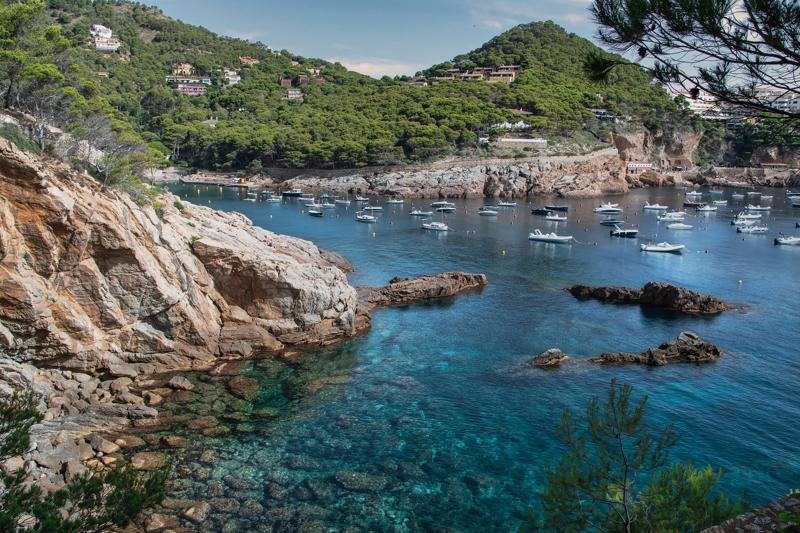
The dramatic, pine-fringed coves around Begur and Calella de Palafrugell are home to some of the most exclusive and highly sought-after clifftop villas in Spain. Photo: Pixabay
However, unlike the sprawling tourist resorts farther south along the Mediterranean coast, the real estate market here is anchored by characterful, historic towns. If you are an expat looking to buy property in Costa Brava, the primary decision is choosing the right coastal village that matches your lifestyle, usage plans, and budget. Whether you are searching for premium luxury villas, historic stone farmhouses, or scanning the market for lock-and-leave apartments, navigating this highly segmented market requires local insight.
What are the best villages in Costa Brava?
The definition of the "best" village depends heavily on what you value most as a buyer: artistic heritage, exclusive privacy, nautical infrastructure, or vibrant year-round amenities. Several iconic locations consistently dominate the premium property market:
- Cadaqués: The bohemian luxury choice. Historically isolated by the Cap de Creus mountains, Cadaqués remains the jewel of the northern Costa Brava. Famous for its whitewashed houses and its association with Salvador Dalí, it offers an exclusive, almost island-like feel. The market is defined by premium historic fishermen's cottages in the town centre, luxury detached homes, and exclusive estates hidden in the surrounding hills. Due to strict building regulations preserving the town's aesthetic, supply is incredibly tight, driving prices to the highest in the region.
- Begur: The exclusive clifftop haven. Perched above the sea with a medieval castle at its centre, Begur and its surrounding upscale coves (such as Sa Riera, Sa Tuna, and Aiguablava) are highly sought after by affluent expats and domestic buyers from Barcelona. Begur is a prime location for ultra-modern luxury villas offering panoramic Mediterranean views, often built directly into the cliffside. It is also an excellent area to search for traditional stone townhouses within the village centre that have been gutted and modernised.
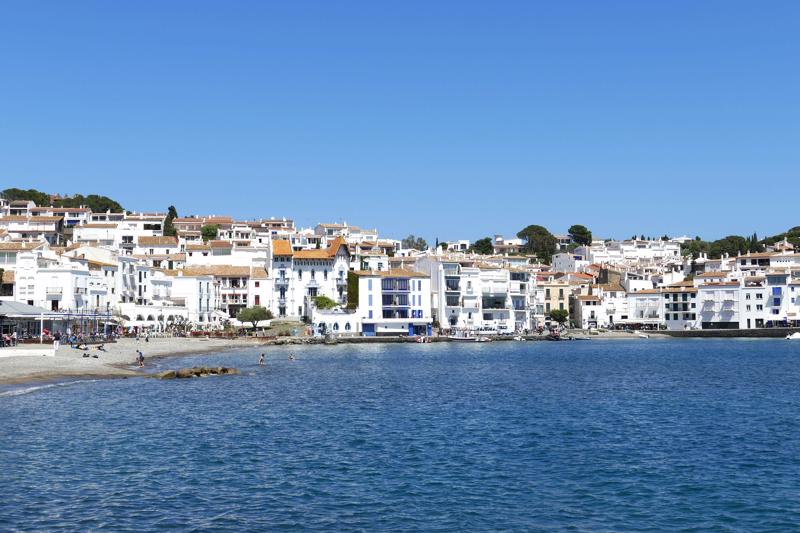
The tightly protected real estate market in bohemian Cadaqués is characterised by historic fisherman's cottages and luxury hillside estates that rarely stay on the market for long. Photo: Pixabay
- Calella de Palafrugell & Llafranc: The prestigious twin coves. Just south of Begur, these neighbouring former fishing villages represent some of the most picturesque and high-demand real estate on the coast. They attract premium buyers seeking traditional charm, pristine beaches, and seafront promenades without the extreme isolation of Cadaqués. Properties here range from highly coveted frontline apartments to sprawling estates hidden in the pine forests immediately behind the coves.
- Empuriabrava: The residential marina. Often referred to as the "Little Venice" of Spain, Empuriabrava is a purpose-built town situated near Roses. It features over 24 kilometres of navigable canals, making it a unique real estate market where buyers can purchase villas with private moorings directly at the bottom of their gardens. It hosts a massive, established expat community and is the ultimate destination for boating enthusiasts.
- Tossa de Mar: The medieval coastal gem. Famous for its impeccably preserved medieval walls plunging directly into the sea, Tossa de Mar offers a unique blend of history and excellent beaches. You will find a robust mix of traditional townhouses within walking distance of the historic centre. The surrounding hillsides offer modern villas overlooking the spectacular bay, providing a quieter retreat from the busy summer centre.
- Roses: The versatile bay. Situated on a wide, sweeping bay just south of Cap de Creus, Roses is larger, flatter, and more accessible than the rugged towns to its north. It boasts a major marina and kilometres of sandy beaches. Roses offers a highly liquid market for seafront apartments, terraced townhouses, and practical holiday homes.
Read more at thinkSPAIN.com
0
Like
Published at 9:45 PM Comments (0)
Where to buy a holiday home in Spain
Friday, July 3, 2026
Spain is consistently one of the most popular countries in the world for holiday home buyers. The combination of reliable sunshine, accessible flights from most of Europe, a wide range of property types, and a well-established international buying market makes it a practical as well as enjoyable choice. The question most buyers arrive at quickly is not whether to buy in Spain, but where.
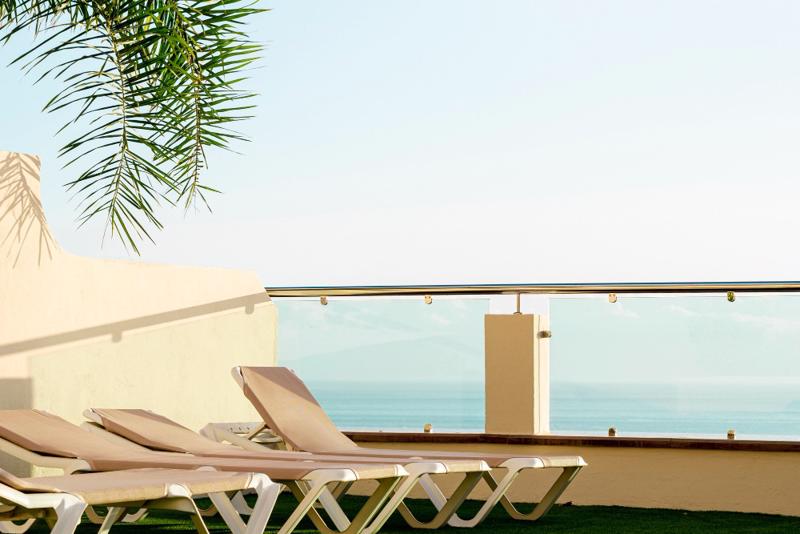
A sunny terrace with sea views — the kind of setting that draws holiday home buyers to Spain's Mediterranean coast. Photo: Freepik
The answer depends on what you are looking for. Spain's coastline stretches over 8,000 kilometres, taking in everything from the lively resort towns of the Costa del Sol to the quieter, more rural stretches of the Costa de la Luz and the island landscapes of the Canary Islands. If you are less familiar with the different coastal areas, our guide to the Spanish costas is a useful starting point. Each area has a distinct character, a different price range, and a different kind of buyer experience. This guide covers the most established destinations for holiday home buyers, and the practical questions you will need to answer before you begin your search.
Is buying a holiday home in Spain a good idea?
For many buyers, yes — though it is worth being clear about what you are buying it for. A holiday home in Spain can offer genuine personal enjoyment, a reliable escape during the colder months, and, in the right location, the option to generate rental income when you are not using it. Property in the most popular coastal and island areas has held its value well over the long term, and whether buying a property in Spain is a sound investment depends largely on location, budget, and how you intend to use it.
That said, a holiday home is a significant financial commitment. Running costs — including the annual IBI (property tax), community fees, insurance, and maintenance — apply whether you are using the property or not. Non-residents also pay an annual Modelo 210 income tax, even on a property that is not formally rented out. If you do plan to let it, you will need a regional tourist licence; the requirements vary by autonomous community, and some areas have introduced restrictions on new licences, so it is worth checking the rules for your specific region before purchasing with rental income in mind. The financial and legal considerations involved in buying a second home in Spain are covered in detail in a separate guide.
How much deposit do you need to buy a holiday home in Spain?
As a non-resident buyer, Spanish banks typically lend up to 60% to 70% of the property's purchase price or valuation — whichever is lower. This means you should plan for a minimum deposit of 30% to 40% of the property value, according to mortgage specialists active in the Spanish market.
On top of the deposit, purchase costs add approximately 10% to 12% of the purchase price, covering transfer tax (ITP), notary fees, Land Registry costs, and legal fees. For new-build properties, ITP is replaced by 10% VAT (IVA) plus stamp duty, though the total upfront cash requirement is broadly similar. Taken together, a non-resident buyer should typically plan for around 40% to 50% of the total purchase price in cash before taking out a mortgage.
The best places to buy a holiday home in Spain
These are the destinations that consistently attract the highest number of international holiday home buyers, each for different reasons.
Costa del Sol — Andalucía
The Costa del Sol remains the most established holiday home market in Spain. Stretching along the southern coast of Málaga province, it offers reliable sunshine for more of the year than almost anywhere else in mainland Europe, excellent international flight connections from Málaga Airport, and a very wide range of properties — from affordable apartments in Torremolinos and Estepona to high-end villas in Marbella and Benahavís. The infrastructure for international buyers is well developed, with English-speaking lawyers, agents, and property managers widely available.
Read more at thinkSPAIN.com
3
Like
Published at 9:40 PM Comments (0)
Spam post or Abuse? Please let us know
|
|