Residency in Spain: How to get a 'green certificate' in 2026, and who needs it
Friday, February 27, 2026
A 'green certificate' is the colloquial (commonly-used) term for a certain type of residence document. It is only held by citizens of the European Union (EU), European Economic Area (EEA), or Switzerland. Family members, spouses, or legally-registered cohabiting partners of these citizens also hold a 'green certificate' as proof of residence.
The official name for this document is a European Union Residents' Certificate of Registration (Certificado de Registro de Residentes de la Unión Europea). It is sometimes abbreviated to 'CUE'.
 A 'green certificate', or CUE, is mandatory for all EU or EEA citizens living in Spain for more than three months. Photo: Picasa
For ease of reading, the citizens described above will henceforth be described as 'Europeans'. However, please note that this definition does not cover citizens of countries in Europe that are not part of the EU or EEA, except Switzerland.
Spanish residency: What is a 'green certificate' for?
A green residency certificate, or CUE, is for Europeans moving to Spain. Europeans can stay in Spain for up to three months without becoming resident. If you plan to stay longer, or permanently, you must register with the foreigners' office (Oficina de Extranjería). When doing so, you will be given a CUE, or 'green certificate'. This is either A4-sized or credit-card sized. It is paper, not plastic, and is pale green in colour.
Can a green residency certificate be used as ID in Spain?
Your CUE or 'green certificate' is not valid as identification (ID), as it does not have a photograph on it. It is merely evidence that you are a resident. You will, however, need to show it for numerous official transactions in Spain. If so, you will usually need to show your passport or national ID card from your country of origin at the same time.
Do you need a NIE to get a green residence certificate in Spain?
You do not need to obtain a NIE (Foreigners' National Identity Number) first. The process of getting your 'green certificate' includes assigning you a NIE number. However, you may already have a NIE if you applied for this earlier for other reasons. This might be because you bought a holiday home in Spain, or opened a bank account, but did not plan to live there. If this is the case, you will not get a different NIE number, as these are the same for life.
Europeans eligible for legal residence in Spain
To be legally resident in Spain, Europeans must fulfil one or more of the following criteria: Read more at thinkSPAIN.com
 1
Like
Published at 3:49 PM Comments (0)
1
Like
Published at 3:49 PM Comments (0)
The best places in Murcia for buying a home
Friday, February 20, 2026
Why buy property in Murcia? In 2026, the Murcia region will have shed its reputation as a mere budget alternative to become a premier investment destination. While property prices in major Spanish hubs have skyrocketed, Murcia remains roughly 35% more affordable than the national average despite its own resilient economic growth. This unique value proposition has turned the "Costa Cálida" into a hotspot for those seeking high-quality Mediterranean living without the inflated price tags of neighbouring provinces.

Murcia offers a mix of coastal and city locations, with different property types that suit expats, second-home buyers, and year-round residents. Photo: Pexels
The region’s ascent is fueled by a connectivity revolution and a highly favourable fiscal landscape. With the AVE high-speed rail linking Murcia to Madrid in under three hours and expanded international routes at Corvera Airport, the area is more accessible than ever. Furthermore, Murcia holds a distinct competitive edge through its tax incentives; with a Property Transfer Tax (ITP) of 7.75%, buyers can save thousands of euros compared to the 10% rates found in Alicante or Catalonia.
| Category |
Best place to buy property in Murcia |
| Expats & Community |
Los Alcázares |
| Cheapest Property |
Camposol (Mazarrón) |
| Luxury & Lifestyle |
Santa Rosalía & La Manga Club |
| Investment Yields |
El Carmen (Murcia City) |
| Nature & Wellness |
San Pedro del Pinatar |
| Golf lifestyle |
Mar Menor |
Top places to buy property in Murcia (by buyer type)
Where do most expats live in Murcia?
The Mar Menor is the defining geographical feature of the region—a saltwater lagoon separated from the Mediterranean by the La Manga strip. For the modern buyer, the towns ringing this lagoon offer a variety of lifestyles, from the bustling tourist strip to the quiet Spanish fishing village.
Los Alcázares: The expat capital
If there is a beating heart of the international community in Murcia, it is Los Alcázares. This town perfectly encapsulates the appeal of the Costa Cálida: accessible, affordable, and alive year-round. While some coastal towns become ghost towns in winter, Los Alcázares retains a vibrant pulse, driven by a resident population that blends locals with Northern European expats. Read more at thinkSPAIN.com
2
Like
Published at 10:24 PM Comments (0)
What visa do I need to retire in Spain in 2026?
Friday, February 13, 2026
If you’re planning to retire in Spain, one of the first questions you’ll face is whether you need a visa — and if so, which one. The answer depends mainly on your nationality.
- EU citizens do not need a visa to retire in Spain.
- Non-EU citizens, however, must apply for a residence visa as part of Spain’s wider visa system for moving to Spain.
For many non-EU retirees in 2026, the Non-Lucrative Visa (NLV) is the main and most appropriate option. It allows you to live in Spain long-term without working, provided you can support yourself financially.
 Your retirement visa for Spain will depend on your nationality and needs. Photo: Unsplash
This guide explains why the Non-Lucrative Visa is generally the retirement visa for Spain, who it’s for, what it implies in practice, and what to expect once you move.
Visa rules and residence requirements in Spain are set at a national level and applied through Spanish consulates abroad. While this guide reflects how the Non-Lucrative Visa is commonly used by retirees, official requirements and interpretation can vary by consulate and may change over time. For this reason, applicants are advised to verify current conditions through Spain’s official immigration authorities, including the Ministerio de Inclusión, Seguridad Social y Migraciones.
Is the Non-Lucrative Visa right for retirees?
The Non-Lucrative Visa is designed for non-EU citizens who want to live in Spain without carrying out any work or professional activity.
It is generally suitable if you:
- Are retired or financially independent
- Do not plan to work in Spain
- Intend to live in Spain for most of the year
- Can meet the financial and healthcare requirements
It may not be suitable if you plan to work, stay only short-term, or do not meet the minimum income thresholds.
For retirees who are also considering where to settle, the visa supports long-term residence across the country, from coastal areas to inland cities, including many of the most popular places to retire in Spain.
Read more at thinkSPAIN.com
0
Like
Published at 7:18 PM Comments (2)
Moving to Alicante: Your essential guide to living on the Costa Blanca
Friday, February 13, 2026
This is your comprehensive and essential guide to successfully navigating a relocation to the province of Alicante, the true heart of Spain's stunning Costa Blanca. This region is renowned globally for its kilometres of beautiful white beaches, a consistently stable and exceptionally mild Mediterranean climate, and a vast, established international community that makes transitioning seamless.
Whether you are a retiree looking for year-round golf and a relaxed pace, a family prioritising high-quality international school education, or a remote worker seeking a high quality of life, this guide provides the vital logistical, financial, and lifestyle information you need to make Alicante your new Spanish home. The Costa Blanca is a welcoming and popular destination for the expat community.
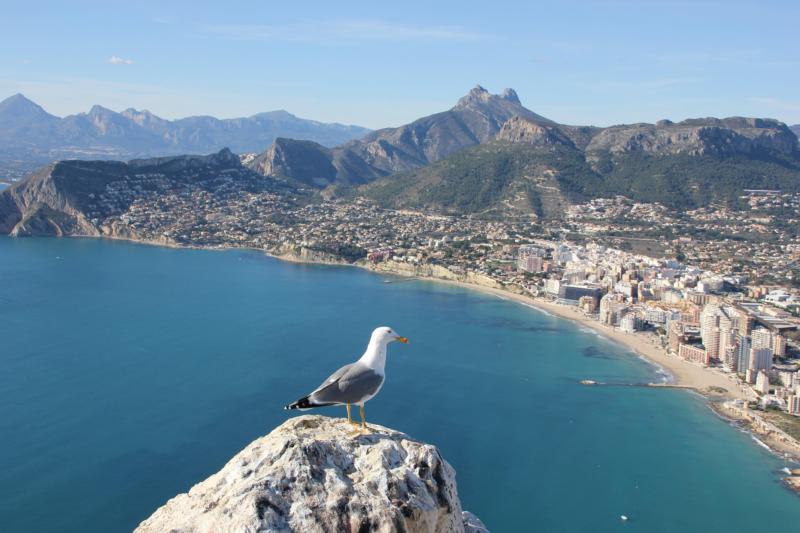
Alicante is the heart of Spain's Costa Blanca and renowned for its micro-climate . Photo: Pixabay
Best places to live on the Costa Blanca
The Costa Blanca stretches over 200 kilometres of coastline in the province of Alicante and is geographically split into the North and South, each offering a distinct lifestyle and appeal to various expat groups.
- Alicante city:The vibrant provincial capital offers an ideal blend of city amenities, historical charm, and coastal life. It is perfect for younger professionals and families who want access to a busy university, a diverse cultural scene, and excellent transport links (including the international airport in Alicante).
- North Costa Blanca (The Marina Alta):
- Jávea (Xàbia) & Denia: Highly sought after by Western and Northern European foreign buyers, these towns offer picturesque, greener environments with mountain backdrops. They are known for high-quality dining, marinas, secluded coves, and a more upmarket atmosphere. Denia also provides a crucial ferry link to the Balearic Islands.
- Altea: Recognised for its stunning white-washed old town perched on a hill, Altea attracts creatives and those looking for a quieter, more sophisticated and bohemian lifestyle.
- South Costa Blanca (Vega Baja del Segura):
- Torrevieja & Orihuela Costa: These Costa Blanca areas boast some of the highest concentrations of foreign residents in allSpain, featuring large, established expat communities. They are popular for affordability, purpose-built golf resort developments, and extensive infrastructure catering directly to international residents, especially British and Scandinavian retirees. This is truly a sought-after retirement spot.
- Inland villages: Towns such as Elche and Novelda offer a more traditional Spanish culture, significantly lower property market prices, and a stronger connection to the local employment markets away from tourist hotspots.
Population and popular expat areas
Alicante is one of Spain’s most highly international provinces. The expat community is well-established, making the transition easier as many essential services (legal, medical, and real estate) are readily available in multiple languages, particularly English, German, and Dutch.
Read more at thinkSPAIN.com
0
Like
Published at 7:15 PM Comments (0)
Where to find luxury property in Spain
Friday, February 6, 2026
Demand for luxury residences in Spain is growing fast, especially among foreign buyers. Fortunately, supply is keeping up with this demand: At any one time, tens of thousands of top-budget homes are for sale nationwide. And the high-end property market is expected to continue to expand throughout 2025, even now the 'golden visa' scheme has ended. Buyers from outside the European Union (EU) can no longer acquire automatic residence by spending half a million euros or more on a property, but this has not, apparently, put investors off. Top-of-the-range villas and élite apartments remain highly sought-after, according to industry experts.
 Spain's fast-growing luxury property market will continue to expand in 2025. Photo: Canva
The majority of buyers of luxury Spanish homes are from Germany and France, and from the UK and Russia, with growing interest from the USA and countries in Latin America and the Middle East.
Exclusive properties can be found anywhere in Spain, but availability is greater in specific areas, as we'll show you here.
What Spain's luxury housing market can offer
Luxury property does not necessarily mean the most expensive. In fact, one reason Spain is so popular with high net-worth buyers is that their money goes further. Whilst a sum in the low millions might get you a small or medium-sized modern flat in many global cities, such as London, New York, or Dubai, it would be enough for a spacious villa with a garden and private swimming pool in most of Spain.
In price terms, Spain's property market considers 'luxury' to be over €1 million, and 'super-luxury' to be over €3m. Compared with many other countries, these figures are really quite low for what they will actually buy you.
Estate agencies say top-budget buyers typically look for uniqueness, quality, energy efficiency, and attractive surroundings. High-demand features include 'Smart home' technology, and private leisure facilities such as an infinity pool, large garden, private beach, cinema room, gym and tennis court.
Privacy and security are frequently a major priority. Often, the wealthiest buyers are instantly-recognisable faces, including global celebrities, for whom Spain has long been a choice destination. Gated urbanisations (residential complexes) with 24-hour patrols, and secluded villas in open countryside, are widely available.
Read more at thinkSPAIN.com
0
Like
Published at 10:57 PM Comments (0)
Modelo 210: Non-resident income tax in Spain (IRNR)
Friday, February 6, 2026
Modelo 210 is the Spanish tax form used by non-residents to declare income obtained in Spain. It applies to individuals who are not tax residents in Spain but earn Spanish-source income, including income related to property ownership, rentals, or capital gains. These obligations form part of the wider non-resident tax framework in Spain.
 Completing Spanish tax paperwork related to non-resident income tax (Modelo 210). Photo: Freepik
For many people, Modelo 210 only becomes relevant after buying property, when ownership itself creates ongoing tax obligations — even if the property is not rented out and generates no actual income.
This guide explains what Modelo 210 is, who must file it, when it applies, how often it must be submitted, and what it implies in practice for non-resident property owners in Spain.
What is Modelo 210?
Modelo 210 is the official form used to declare and pay Non-Resident Income Tax (IRNR – Impuesto sobre la Renta de No Residentes) in Spain. It is administered by Agencia Tributaria (the Spanish Tax Agency) and applies whenever a non-resident receives—or is deemed to receive—income from Spanish sources.
Unlike resident income tax, non-resident income tax is not declared globally. Each source of income is declared separately, which is why a single taxpayer may need to submit more than one Modelo 210 in a year.
For example:
- One form per property
- One form per owner (even for jointly owned property)
- Separate filings for rental income, imputed income, or capital gains
Who needs to file Modelo 210?
You generally need to file Modelo 210 if you are not a Spanish tax resident and you:
- Own property in Spain (even if it is not rented)
- Rent out a Spanish property
- Sell a property in Spain
- Receive other Spanish-source income (such as interest, dividends, pensions, etc.)
This makes Modelo 210 particularly relevant for second-home owners and property investors, even when the property is only used occasionally and does not generate rental income.
When does Modelo 210 apply?
Modelo 210 applies in several common situations where non-residents derive income — or are deemed to derive income — from Spain. The filing frequency, deadlines, and tax treatment depend on how the property is used and what type of income is involved.
Owning a property in Spain (not rented)
If you own a property in Spain and do not rent it out, Spanish tax law assumes a deemed (imputed) income based on the cadastral value of the property, even if no rent is received.
- Declared once per year
- No actual rental income is required
- Filed using Modelo 210
This obligation applies for every year you own the property, regardless of whether you use it personally, leave it empty, or visit only occasionally. It ends only when the property is sold.
Read more at thinkSPAIN.com
4
Like
Published at 10:44 PM Comments (0)
Spam post or Abuse? Please let us know
|
|