The Barcelona property market has entered a phase of mature, stable growth following the record-breaking surges of 2024 and 2025. Barcelona is a city defined by its physical limits—wedged between the Collserola mountains and the Mediterranean Sea. This geographical "ceiling" has created a market driven primarily by scarcity. For the international buyer, it is no longer about finding a bargain, but about securing high-value assets in a global hub that remains significantly more affordable than London, Paris, or New York, yet offers a Mediterranean lifestyle that is second to none.
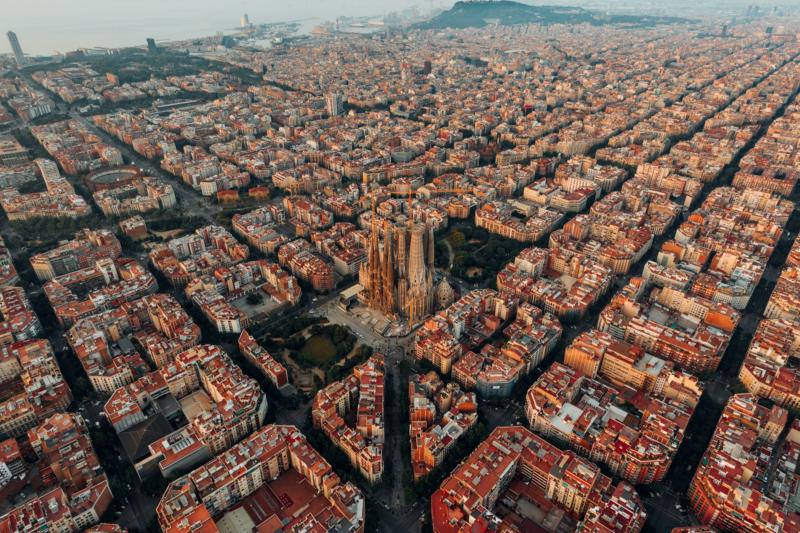
Barcelona's iconic grid system is home to the neighbourhood of Eixample. Photo: Unsplash
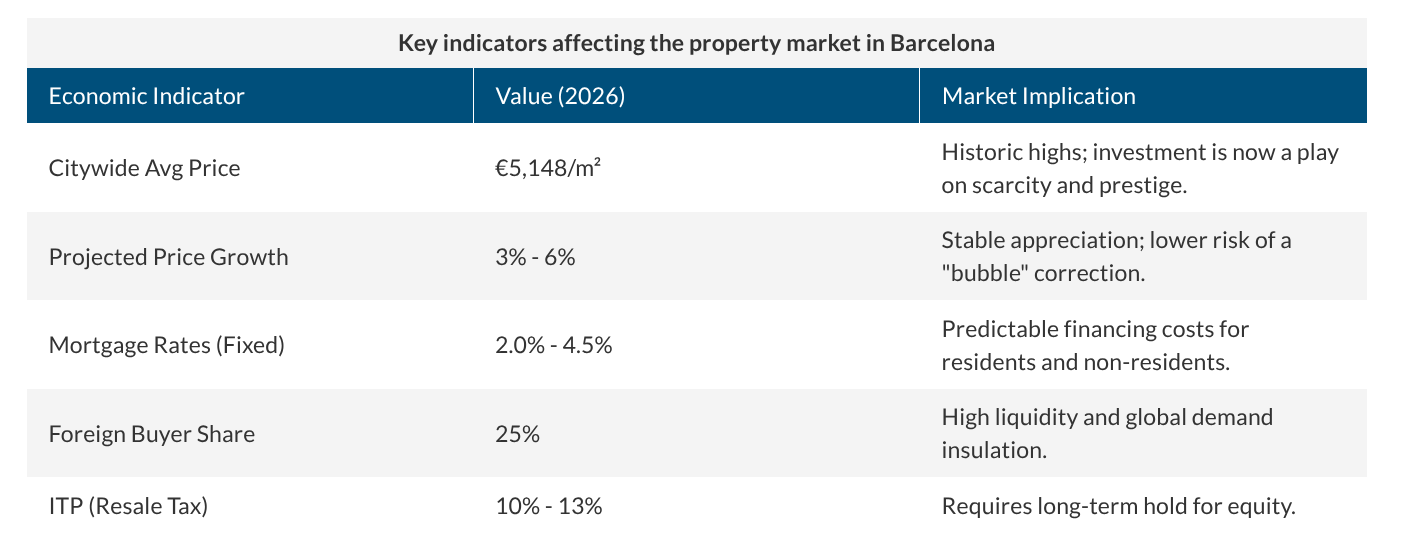
The year 2025 closed with Barcelona reaching a new historic high, with average prices across the capital of Catalonia standing at approximately €5,148 per square metre. While the double-digit appreciation of previous years has moderated, experts from major banks like BBVA and CaixaBank project a steady 3% to 6% growth for 2026. This stabilisation is welcomed by long-term investors, signalling a healthy market where demand continues to outpace supply. For those looking to buy, the window of opportunity is characterised by more predictable mortgage conditions, with the 12-month Euribor stabilising around 2.72%, making financing more accessible than in the volatile early 2020s.
Foreign interest remains the bedrock of the market, accounting for 25% of all transactions in the province—the highest figure on record. The demographic has evolved; while the French, British, and Germans remain active, 2026 is seeing a surge in North American buyers and Asian communities, particularly in the premium and luxury segments. Whether you are seeking a seaside home in Sitges or a modernist masterpiece in Eixample, understanding the distinct "micro-markets" of the Barcelona region is essential for a successful purchase.
The economic indicators for 2026 in Barcelona
Barcelona’s economy continues to outperform the Eurozone average, fueled by a thriving tech ecosystem and a resilient tourism sector that expects nearly 100 million visitors nationwide this year.
Where do most expats live in Barcelona?
Barcelona’s international community is as diverse as it is expansive, with more than 20,000 expats calling the Eixample district home. Ultimately, the 'best' neighbourhood for you depends on your specific professional requirements and lifestyle priorities. Let's explore Barcelona to see which area or neighbourhood might best suit your needs:
Eixample: The professional epicentre
The aerial photo of Barcelona’s iconic grid layout above represents the neighbourhood of Eixample. This is the heart of the city and the primary choice for young professionals and digital nomads. The area surrounding the Sagrada Familia offers a more residential and quieter pace than the core of Eixample.
- Property type: Grand 19th-century buildings with high ceilings, ornate "hydraulic" tile floors, and wrought-iron balconies. Many residents live in beautiful period flats that often feature direct views of Gaudí’s masterpiece, making it a "trophy" location for many international buyers. Buying near the Sagrada Familia ensures your asset is always in demand.
- Prices: Average prices sit around €6,363/m².
- Lifestyle: High walkability, world-class dining, and the iconic "Superblocks" (Superilles), which have reduced traffic and added green spaces.
Gràcia: The village in the city
Ask any long-term expat where the "soul" of the city lies, and they will likely point to Gràcia. Once an independent village, it retains a fiercely local identity and a bohemian atmosphere.
Read more at thinkSPAIN.com