The Golden Rules of Ordering Tapas
Friday, August 21, 2026
For anyone newly arrived in Spain, walking into a bustling, crowded tapas bar can feel exhilarating yet deeply intimidating. There are no menus handed out at the door, no obvious sequence of courses, and the bartender is often shouting orders across a counter packed elbow-to-elbow with locals.
It is easy to make rookie errors—such as sitting down at a reserved table, ordering an entire meal’s worth of food at once, or expecting a free snack in cities where the custom doesn't exist.
To help you navigate the counter with confidence, here are the golden rules of ordering tapas like a seasoned pro.
.jpeg)
1. Always Order Your Drink First
In traditional Spanish tapas culture, food and drink are inseparable partners, but the drink always comes first. When you step up to the bar or grab a spot, your very first move is to catch the bartender's eye and order a beverage—whether that is a small draft beer (caña), a glass of crisp regional white wine, or an aromatic vermouth (vermut).
Ordering your drink sets the tempo, gives you a moment to scan the chalkboard menu, and—depending on which region of Spain you are visiting—might even trigger a complimentary small snack (like olives or crisps in Madrid, or a surprise hot tapa if you happen to be in generous cities like Granada or León).
2. Embrace the Crawl: Never Park Yourself at Just One Bar
One of the biggest mistakes foreign visitors make is treating a tapas bar like a standard sit-down restaurant. They find a table, order six different dishes, and camp out for two hours.
True tapas culture is inherently nomadic. The philosophy is built on movement, variety, and socialising. The authentic routine involves visiting two or three different bars in a single evening, ordering just one drink and one or two signature items at each stop. You sample the house speciality—maybe garlic prawns at the first tavern, followed by crisp croquettes at the next—before moving on.
3. Know the Difference Between a Tapa, a Ración, and a Pintxo
Menu sizing in Spain can catch you off guard if you don't know the terminology:
-
Tapa: A small, bite-sized portion meant to accompany your drink. Perfect for sampling.
-
Ración: A much larger, full-sized sharing plate. If you are dining with a group, order a couple of raciones for the table. Never order an entire ración for yourself unless you are exceptionally hungry!
-
Pintxo: The northern Basque speciality—small pieces of bread piled high with toppings and secured with a toothpick. In many traditional pintxo bars, you keep your toothpicks on your plate at the end of the night so the waiter can tally up your bill.
4. Don’t Order Everything at Once
When hunger strikes, it is tempting to point at half the menu and dump your entire order on the waiter. Resist the urge.
Tapas bars operate at a fast, dynamic pace, and food is meant to arrive fresh and hot in staggered waves. Start by ordering two plates for the table. Once those are finished, assess your hunger levels and order another round. This keeps your food from getting cold, prevents table clutter, and lets you pivot if you spot something incredible passing by on another customer's tray.
5. Pay at the End (and Master the High-Trust System)
Unlike in many countries where you ask for the bill after every round or flag down service for individual checks, Spanish tapas bars operate on an honour system.
You can drink and graze across multiple rounds without paying a cent until you are completely finished. When you are ready to leave, simply catch the server's attention and say, "¿La cuenta, por favour?" (The bill, please). The bartender will mentally tally everything you consumed—or count your toothpicks—and give you a single total.
Mastering the art of the tapas bar is a rite of passage for anyone living in or travelling through Spain.
 3
Like
Published at 11:30 AM Comments (0)
3
Like
Published at 11:30 AM Comments (0)
The Never Ending Cave
Friday, August 7, 2026
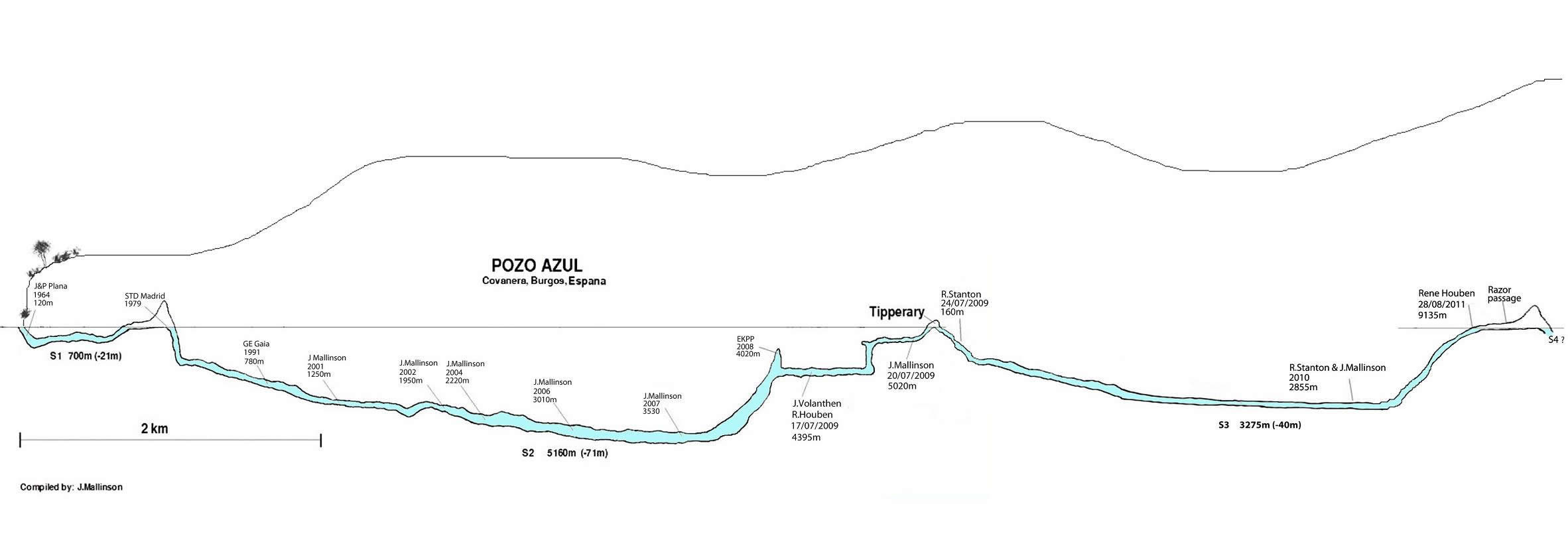
One of the best plans to enjoy free time is to make a getaway to the countryside. Contact with nature greatly reduces stress and anxiety, while strengthening the immune system and increasing self-esteem and the ability to concentrate. In Spain, there are many spots that stand out for their great beauty, and one of the most interesting is the Pozo Azul, a spring with turquoise blue waters.
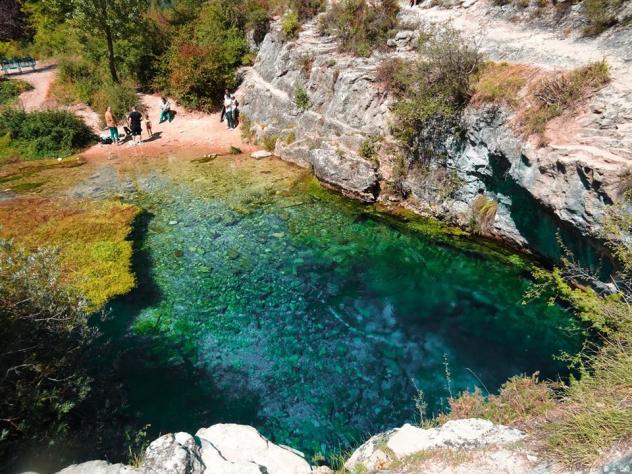
El Pozo Azul is located in the town of Covanera, in the province of Burgos, south of the Cantabrian Mountains. It is one of the main tourist attractions of the Rudrón Valley. The cave is submerged under the mountain, so it is a very popular place for cave divers from all over the world.
So far, 13 kilometres of the tunnel have been discovered, and experts believe (although they have not yet been able to prove it) that it is the longest underwater cave in all of Spain. It was in the middle of the 20th century when they began to explore the Pozo Azul.
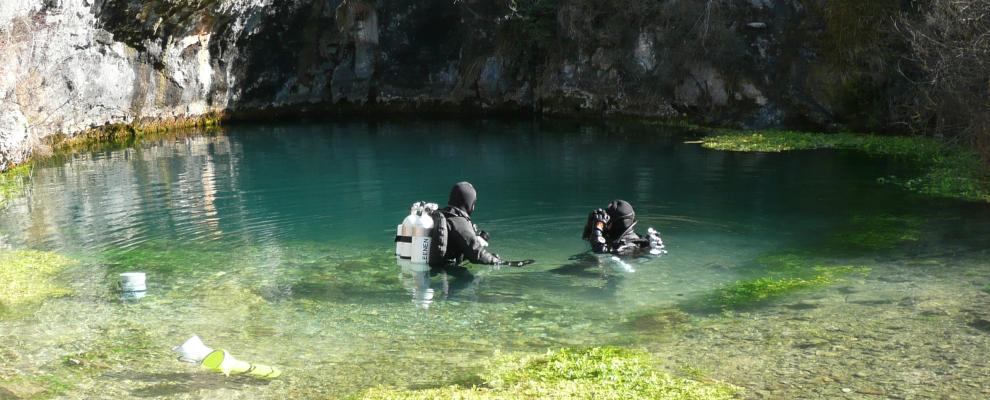
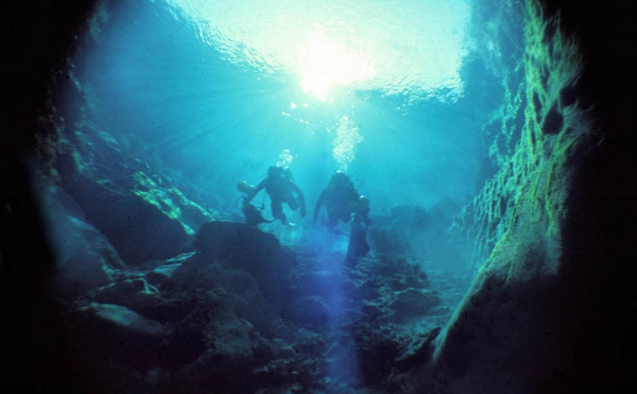
During the spring and summer months, many residents of the area and visitors take advantage of the cold and crystal clear waters of the Pozo Azul to cool off.
Especially noteworthy is the high quality of the waters, and a good example of its purity is the trout that live in the spring. The temperature of the waters does not vary throughout the year, and always ranges between nine and eleven degrees. So very refreshing!
Getting to the Pozo Azul is very simple since there is a route that starts from the town of Covanera. The spring has a diameter of eight meters and a depth of ten meters. In addition, it has several underwater caves whose access is reserved for cave diving professionals.
Another unusual thing about this place is the species of aquatic fauna that have been found since the mid-20th century, accredited by the National Museum of Natural Sciences in 1983.
Covanera is a small town in Burgos, with just 20 inhabitants, which belongs to the municipality of Tubilla del Agua. Its most important monument is the Church of Santa María.
Half an hour by car is Poza de la Sal, one of the most beautiful villages in Burgos. A visit to the Salinas Interpretation Center, which is located in the old Administration House of the Reales Salinas, is essential. It is also interesting to see the Castillo de Los Rojas and the Plaza Nueva.
3
Like
Published at 10:38 PM Comments (0)
The Last Cigarette on the Terrace?
Friday, August 7, 2026
If you have sat down at a traditional Spanish terraza lately, you might have noticed a subtle change in the air. For decades, the clink of a ceramic coffee cup or the pop of a cold cerveza has been accompanied by the familiar blue curl of cigarette smoke. But that defining staple of Spanish outdoor socialising is facing its biggest threat yet.
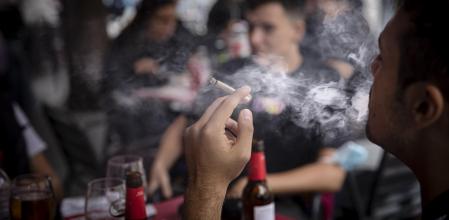
Following a major legislative push by Spain’s Ministry of Health, the government has approved a sweeping new anti-tobacco bill destined to overhaul public spaces across the country. For British expats, property owners, and long-term travellers who love the café lifestyle, it raises a burning question: is the era of smoking on restaurant terraces officially coming to an end?
What Does the New Legislation Actually Propose?
While individual autonomous communities have tinkered with local smoking rules since the COVID-19 pandemic, this new national push represents the most significant tightening of Spain's tobacco laws in over a decade. Spearheaded by Health Minister Mónica García, the draft bill aims to make "clean air the norm in shared public spaces."
The proposed restrictions go far beyond traditional indoor bans, targeting outdoor areas where smokers previously enjoyed total freedom:
-
Hospitality Terraces: Smoking—and vaping—would be strictly prohibited on all bar and restaurant outdoor terraces, regardless of whether they are fully open-air or partially enclosed.
-
Beaches and Parks: Popular sea and river beaches, public parks, and national reserves are marked as smoke-free zones.
-
Buffer Zones: New 15-metre buffer zones will ban smoking and vaping near the entrances of schools, universities, hospitals, playgrounds, and sports facilities.
-
Vapes and E-Cigarettes: Electronic cigarettes, nicotine-free vapes, heated tobacco products, and hookahs will face the exact same restrictions as conventional cigarettes.
-
Minors and Marketing: For the first time, it will be illegal for anyone under 18 to smoke or vape (previously, only the sale of tobacco to minors was banned), alongside heavy crackdowns on online tobacco advertising and social media promotions.
The Battle Lines: Public Health vs. The Hospitality Sector
As expected, the proposals have triggered intense debate across the peninsula, dividing public health advocates and local business owners.
The government defends the aggressive stance with stark health statistics: tobacco use is linked to roughly 50,000 deaths annually in Spain and contributes to nearly 30% of all cancers. Officials argue that closing the legal loopholes on outdoor terraces and modernising the rules for electronic devices is long overdue.
However, the hospitality industry is pushing back hard. National and regional hotel and restaurant associations have warned that banning terrace smoking could severely impact trade, claiming that thousands of independent bars and cafes could struggle if patrons who want to smoke decide to stay home instead of lingering over post-dinner drinks.
How Spain’s Rules Compare to the UK
For British expats who became accustomed to indoor smoking bans way back in 2007 (and comprehensive outdoor venue restrictions across many parts of the UK since), Spain’s relaxed attitude toward terrace smoking has always felt like a throwback to a more permissive era.
While the UK implemented strict indoor workplace and hospitality bans long ago, Spain’s cultural integration of outdoor café life made terraces the last great bastion for smokers. If this new legislation clears its final hurdles in Spain’s fragmented parliament, the country’s outdoor social etiquette will align much closer with northern European standards.
| Public Space |
Previous Nationwide Status |
Proposed Nationwide Status |
| Bars & Restaurants (Indoor) |
Banned since 2011 |
Banned (Stricter enforcement) |
| Café Terraces (Outdoor) |
Allowed (bar-by-bar discretion post-COVID) |
Strictly Prohibited |
| Beaches & Pools |
Regional/Municipal choice |
Banned nationwide |
| Vapes & E-Cigarettes |
Grey area / varied local rules |
Equated entirely with tobacco |
** Keep in mind that while the national bill is making its way through the legislative process, many local councils (ayuntamientos) and regional authorities have already introduced their own strict local ordinances. If you are heading to certain beaches in regions like Catalonia, the Balearics, or Valencia, smoke-free sand zones are already heavily enforced with fines ranging from €30 up to €2,000 for non-compliance. Always check local signage before lighting up outdoors!
The debate over public smoking touches on everything from personal freedom and public health to the economic survival of our local family-run tapas bars.
How do you feel about the proposed terrace smoking ban? Do you welcome the push for clean-air terraces, or do you feel it strips away an essential part of Spain's relaxed outdoor culture? Drop your thoughts and experiences in the comments below...
1
Like
Published at 8:21 PM Comments (1)
Spam post or Abuse? Please let us know
|
|