When most British expats and Hispanophiles picture the classic "Wild West," their minds immediately conjure up images of rugged American plains, ten-gallon hats, and John Wayne. But if you want to find the true birthplace of cowboy culture, you need to look a lot closer to home.
Long before the American frontier was settled, the foundational blueprint for the cowboy lifestyle was being forged right here in southern Spain. Deep in the sun-scorched, water-logged marshes ( marismas ) of the Bajo Guadalquivir and Doñana, an ancient tradition of cattle raising and horsemanship was quietly setting the stage for one of history's most famous cultural exports.
How Andalusian Horses Reached the Americas
The story of the American cowboy actually begins with a cheeky bit of Sevillian opportunism.
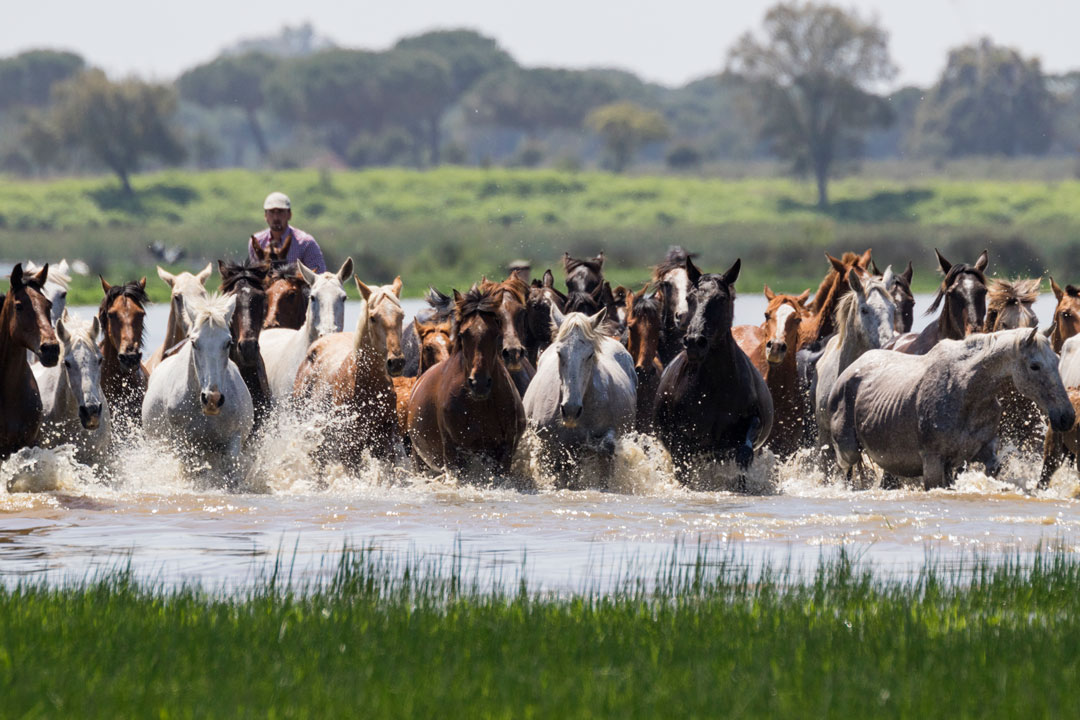
When Christopher Columbus was preparing for his second voyage to the Americas in 1493, the Catholic Monarchs signed a royal decree ordering that 12 magnificent Hispano-Arabian horses be loaded onto the ships. However, according to historical accounts, savvy Sevillian traders pulled off a last-minute swap. Instead of sending the prized royal stallions, they loaded the ships with pencos—scruffy, skinny, and incredibly tough marsh horses known locally as mesteños or retuertas.
While the royals may have been swindled, it turned out to be a stroke of historical brilliance. These resilient Andalusian horses were accustomed to the punishing conditions of the Guadalquivir marshes. They survived the arduous transatlantic crossing and proved exceptionally robust and easy to ride in the harsh American landscapes.
Linguistic Legacy: If the word mesteño sounds familiar, it should. As these abandoned or escaped Spanish horses bred in the wild across the American continent, the English pronunciation of the Spanish word eventually evolved into the iconic American term: Mustang.
The Andalusian Blueprint: Hats, Spurs, and Rodeos
When Spanish settlers expanded into what was then New Spain (the modern-day American Southwest), they encountered vast, dry plains where grass was scarce. To manage their cattle over such immense distances, they had to rely entirely on horseback—a practice they imported directly from Andalusia.
Long before Hollywood rolled its first camera, the cattlemen of the Doñana marshes were already living the "Wild West" lifestyle. They utilised wide-brimmed hats to block the blistering southern sun, wore heavy spurs, and practiced complex rodeos to corral the local mostrenca cows.
The famous gauchos of Argentina, the llaneros of Colombia, and the iconic American cowboys did not invent this rugged, romantic way of life—they merely inherited it from the horsemen of the Spanish south.
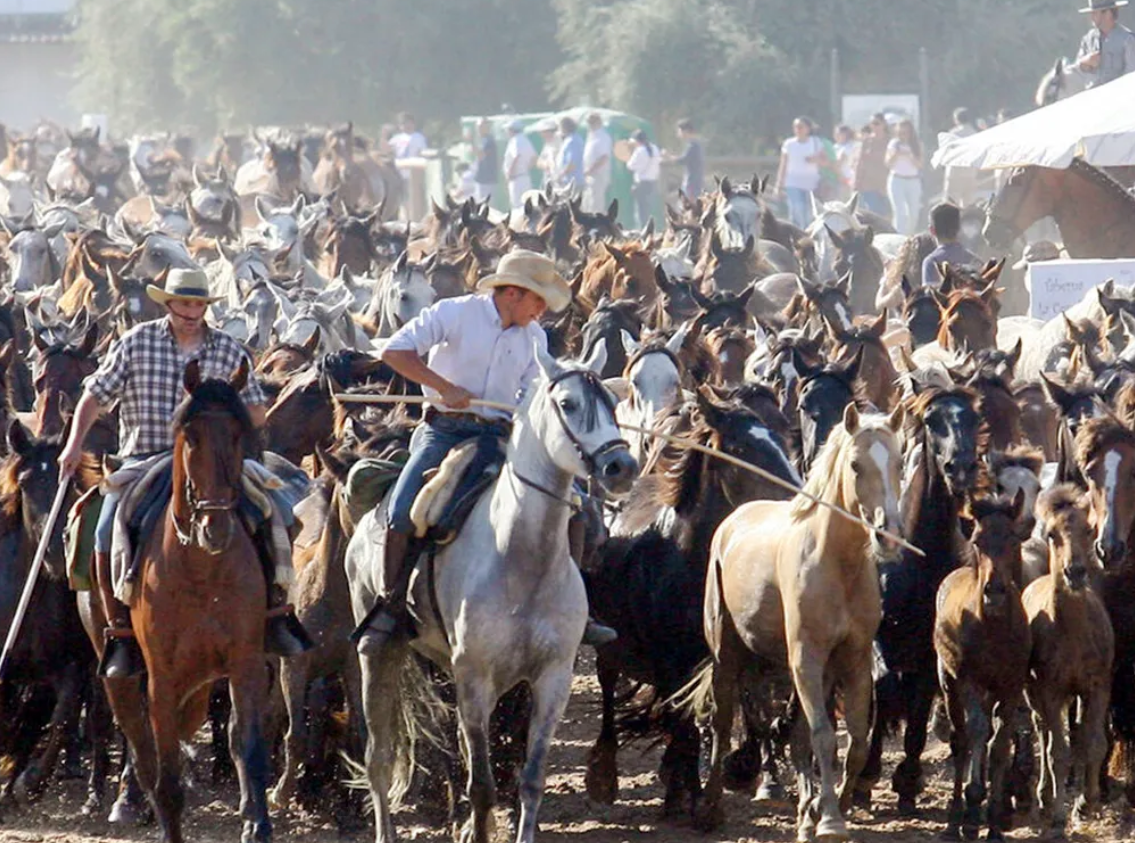
Witnessing History: The Saca de las Yeguas
Incredibly, this ancestral way of life hasn't just been relegated to the history books; it is still a living, breathing tradition that you can witness today in the province of Huelva.
Every year on the 26th of June, the region hosts the Saca de las Yeguas—a spectacular livestock drive whose origins date back well before 1504.
-
The Gathering: Local horsemen ( yegüerizos ) ride out into the wild marshes of Doñana at dawn to round up the free-roaming marismeña mares.
-
The Drive: In a scene straight out of a cinematic western, hundreds of wild horses are driven through the sandy, unpaved streets of the famous village of El Rocío, where they are traditionally blessed by a local priest.
-
The Fair: The majestic herd is finally guided into the town of Almonte for an agricultural and livestock fair, before being released back into the wild marshes days later.
If you are spending the summer on the Costa de la Luz or anywhere near Huelva and Seville, marking the 26th of June in your calendar is an absolute must. Arrive in El Rocío early to secure a safe vantage point; watching hundreds of wild horses thunder past the famous white sanctuary in a cloud of dust is an unforgettable, visceral experience that puts any Hollywood western to shame.