Spain's Most Dangerous Scorpions
Friday, July 31, 2026
There's an intoxicating thrill to encountering the local wildlife whilst venturing the ever-enchanting landscape of Spain. However, within the diverse ecology of this beautiful country, there are a few less-than-friendly inhabitants. The most dangerous of this group? Buthus ibericus, commonly known as the Iberian scorpion.
The Buthus ibericus, or Iberian scorpion's, common locale might surprise you. This particular scorpion species isn't found skulking in remote wilderness or barren scrublands. Contrarily, it's quite associated with human settlements.
Among its favoured habitats are peridomestic areas, meaning environments around human homes and settlements. Rocky walls, fallen logs, leaf litter, or urban waste are common places to find an Iberian scorpion. These creatures are nocturnal and remain hidden during the daylight hours, sneaking out in the cooler evenings to hunt for food.
This species is found mainly in the Iberian Peninsula, hence the moniker, which includes most of Spain and Portugal. Central and Southern Spain are the hotspots for their presence, with a particular prevalence in the Spanish regions of Madrid, Andalusia, and Catalonia. These arachnids are also known to have populations in parts of France, Morocco, and Algeria.
How To Recognise It
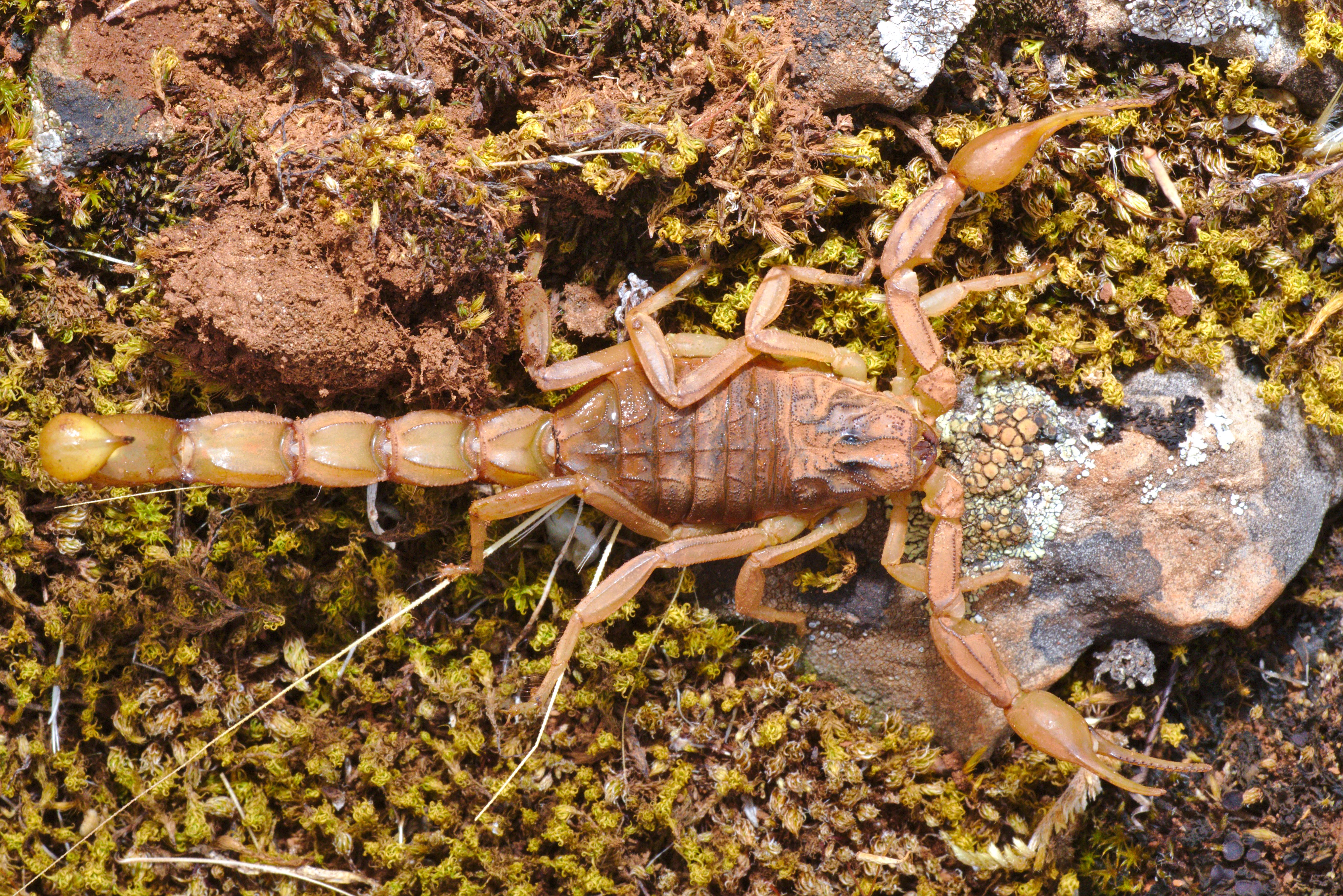
The Iberian scorpion is usually 5-6cm in length, possesses a rather menacing appearance typical of a scorpion, with its pincers and tell-tale stinger-tipped tail arching over its back. It is typically a yellowish-brown or orange in colour. The immature scorpions are smaller, usually only around 3-4cm in length and might exhibit a slightly paler colouration.
Another distinctive factor is the presence of dark spots on the mesosoma, which gives the creature a flecked appearance. Additionally, compared to other scorpion species, the Iberian scorpion has remarkably slender pedipalps (the pincer-bearing limbs) and a slightly elongated and slender metasoma (the tail). Remember, though, while identification is important, all scorpions should be treated with caution.

Threat Level: How Lethal Is It?
Scorpions have spells of fear cast over them due to their venomous sting. But how much should we fear the Iberian scorpion, particularly? The Iberian scorpion does pack a venomous sting, and it does use it to immobilise its prey, and as a defence mechanism when threatened. Its venom is a mix of peptides and proteins, some of which could potentially be harmful to humans.
However, its lethality is somewhat exaggerated. Cases of fatality caused by the Iberian scorpion sting are extremely rare. A sting from this scorpion species is undoubtedly a painful experience, often described to be somewhat akin to a wasp sting. The effects are typically localised, causing swelling, redness, and intense pain lasting for a few hours.
Systemic effects, such as fever, nausea, muscle cramps, and in rare cases, more serious symptoms like tachycardia, hyperglycemia, or hypertension, can occur. However, these are not typically life-threatening. Vulnerable individuals — the elderly, young children, or those with pre-existing health conditions, may be more severely affected. It's always necessary to seek medical attention promptly if stung.
To give a bit of perspective, out of the estimated 2,000 scorpion species worldwide, only 30-40 have venom potent enough to kill a human. Most scorpions, including the Iberian scorpion, come nowhere near this lethal benchmark.
In the grand scheme of things, the chances of encountering an Iberian scorpion in Spain are slim, and the possibility of being fatally harmed by one, is slimmer still. However, knowledge and preparedness are always beneficial tools when venturing into any wildlife habitat. By knowing where the Iberian scorpion dwells, how to recognise it, and understanding the actual threat it poses, you'll be better equipped to appreciate the diverse wildlife of Spain safely.
Remember, respect for all wildlife and their habitat — even our unassuming Iberian scorpion — is essential. After all, they're part of the rich tapestry of Spain's ecological landscape that makes it such a vibrant, intriguing region to explore. So, tread lightly, explore respectfully, and enjoy the wild side of Spain!
This tiny but menacing inhabitant of the Iberian Peninsula provides just a hint of danger to heighten the adventurous spirit in you!
 1
Like
Published at 9:47 PM Comments (0)
1
Like
Published at 9:47 PM Comments (0)
Exploring the Secret Culinary Heart of Los Pedroches
Saturday, July 25, 2026
When most expats think of gastronomy in the province of Córdoba, their minds immediately drift to the sun-baked patios of the city centre, plates of salmorejo, and Moorish architectural marvels. But if you head north into the sweeping, oak-studded valleys of Los Pedroches, you step into an entirely different world—one governed by ancient sheepherding traditions, golden extra virgin olive oil, artisanal cheese-making, and some of the clearest night skies in Europe.
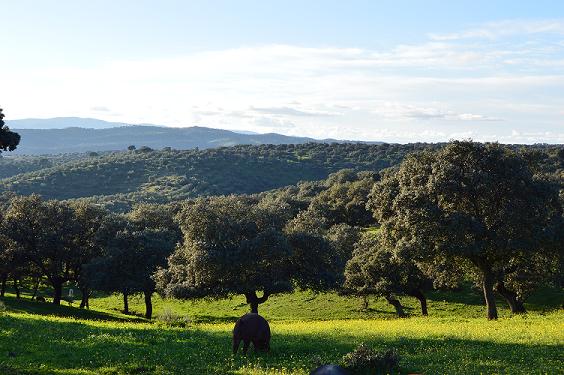
Backed by the European Union’s Sustainable Tourism Plan, this lesser-known corner of Andalusia is quietly becoming a premier destination for food lovers who want to escape the overcrowded coastal hotspots and experience authentic rural craftsmanship.
The Pillars of Los Pedroches Gastronomy
While Los Pedroches shares its broader territorial home with the world-famous jamón ibérico of the Cordoban Sierra, its culinary identity is shaped by a rich ecosystem of pastoral traditions, family-run farming, and centuries-old recipes passed down through generations.
1. The Cheese Journey: From Pasture to Plate
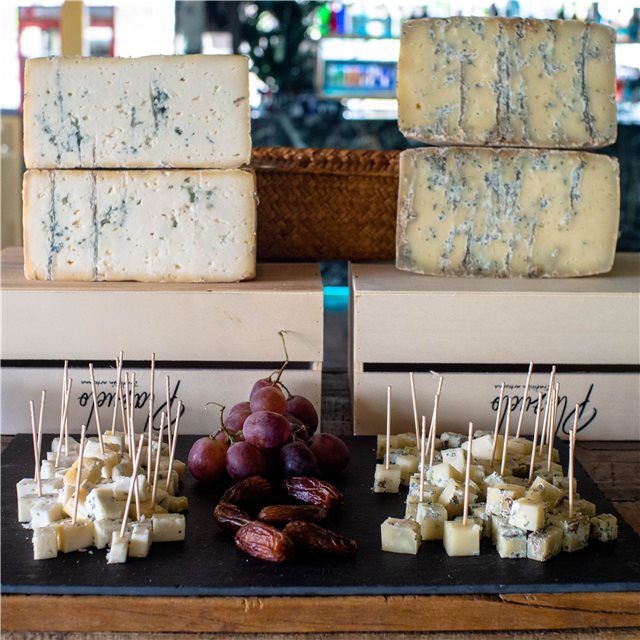
Sheepherding is the economic and cultural lifeblood of Los Pedroches. For food tourists, visiting local farms and family-run cheese factories offers a direct line into the region's agricultural roots.
-
The Experience: Visitors can walk the grazing pastures alongside shepherds, explore traditional dairies, and view the Pastoral Museum.
-
The Tasting: Most farm tours culminate in an outdoor guided cheese tasting, where the rich, complex flavours of local sheep's-milk cheeses take centre stage against a backdrop of rolling green hills.
-
2. Liquid Gold: Sierra Morena Olive Oil
The undulating hills of the Sierra Morena are home to vast groves of olive trees that form the essence of the region's Extra Virgin Olive Oil (EVOO). Local cooperatives, such as Olipe, invite visitors to walk directly among the ancient trees to understand the agricultural heritage and harvesting methods. A professional-led oil tasting opens your eyes to the peppery notes and pungent aromas that distinguish high-altitude Andalusian oils from mass-market supermarket blends.
.jpeg)
3. Sacred Confectionery: The Sisters of Belalcázar
You cannot explore Los Pedroches without indulging your sweet tooth. In the historic town of Belalcázar, the Poor Clares (Hermanas Clarisas) of the Convent of Santa Clara maintain a centuries-old tradition of baking artisanal sweets and pastries. Buying a box of traditional treats directly from the convent’s wooden turntable (torno) is a rare window into monastic culinary history.

Evenings on the Meadow: Dining Under the Stars
What sets Los Pedroches apart from standard food tours is what happens when the sun goes down. Thanks to its low light pollution and vast open landscapes, the region has become a haven for astrotourism.
As twilight falls, local operators combine culinary excursions with astronomical observation. Imagine enjoying an al fresco dinner featuring local artisanal cheeses, cured meats, and regional wines, all while a professional guide points out constellations across a crystal-clear night sky. It marries the rustic earthiness of rural Spain with the cosmic quiet of the northern Cordoban mountains.
If you are planning a weekend trip to Los Pedroches, check in advance whether your visit coincides with the local agricultural calendar or cheese-making workshops. Many of these immersive experiences are tailored for small groups or families, so booking in advance with local municipal tourism offices (Mancomunidad de Municipios de Los Pedroches) is essential to secure your spot.
Venturing inland away from the tourist-heavy costas is one of the best ways to rediscover why you fell in love with Spain in the first place. Whether it is sourcing artisan cheese straight from the shepherd or dining under the stars in the Sierra Morena, regions like Los Pedroches offer a refreshing dose of authenticity.
Have you ever explored the hidden valleys and culinary trails of northern Córdoba? Do you seek out regional cheese routes and olive oil cooperatives on your travels, or do you prefer to stick to the coast? Let us know your favourite off-the-beaten-track foodie discoveries in the comments below!
2
Like
Published at 9:44 AM Comments (0)
Why Spain Will Hum Through Tomorrow's World Cup Final
Saturday, July 18, 2026
The wait is almost over. As we secure our spots at the local terrazas across the peninsula to watch tomorrow's World Cup Final, the pre-match tension will be palpable. But just before the referee blows the starting whistle, you will notice a stark contrast. While the opposing team belts out their national anthem with hands clenched over their hearts, the Spanish squad—from seasoned veterans to the latest prodigies produced by the country's elite international youth academies—will stand stoically, simply humming a rhythmic "lo, lo, lo."

For those of us developing youth talent in international football academies, the psychological unity generated by a roaring pre-match anthem is undeniable. Yet, Spain proves that you do not need words to forge an unbreakable team spirit on the pitch.
So, why does one of the world's greatest footballing nations lack words to its most important song?
The Exclusive Club of Wordless Anthems
If you have ever assumed the television broadcast lost its audio feed during the Spanish pre-match line-up, you are not alone. Spain’s anthem, the Marcha Real (Royal March), is one of only four national anthems in the world completely devoid of official lyrics.
| Country |
Anthem Title |
Reason for No Lyrics |
| Spain |
Marcha Real |
Deep historical political divisions over proposed verses. |
| Bosnia & Herzegovina |
Državna himna |
Designed to avoid alienating any specific ethnic group. |
| Kosovo |
Europe |
Adopted without words to maintain strict ethnic neutrality. |
| San Marino |
Inno Nazionale |
A historical instrumental march that simply never adopted its drafted lyrics. |
From 18th-Century Grenadiers to the World Stage
The melody you will hear echoing across the stadium tomorrow was never commissioned by a king or a political leader to represent the nation. It started as a popular military beat.
-
1761: The tune first appeared in a military handbook as the Marcha Granadera (March of the Grenadiers).
-
1770: Because the grenadiers frequently paraded in front of the royal family in Madrid, King Charles III grew fond of the tune and officially declared it a "March of Honour."
-
The Royal Transition: As subsequent monarchs, like Alfonso XII, began touring the country with the grenadiers, the public began referring to the tune as the Marcha Real. It became the national anthem entirely through popular Spanish custom.
EOS Insider Pro-Tip: In a truly bizarre administrative twist, the modern orchestral arrangement of the anthem was copyrighted by a 20th-century musician named Bartolomé Pérez Casas. Until 1997, the Spanish government had to pay royalties to his heirs every time it was played! The state finally bought the copyright outright for roughly 130 million pesetas (around £650,000 in today’s money) to secure its free use for events like the World Cup.
Why Can't Spain Agree on the Words?
The short answer? Politics. Spain has tried—and spectacularly failed—to add words to the Marcha Real for over 150 years.
-
The 1870 Contest: General Juan Prim launched a national competition for poets and musicians to write lyrics. The jury failed to agree on a winner, claiming the instrumental march was already "artistically the best."
-
The Shadow of Dictatorship: During the 1928 dictatorship of Primo de Rivera, writer José María Pemán penned a set of lyrics. After the Spanish Civil War, these lyrics were slightly modified (changing phrases to align with fascist imagery, like "yokes and arrows") and widely sung during General Francisco Franco's regime. Because of this dark association, those lyrics were immediately scrapped when Spain transitioned back to democracy in 1978.
-
The 2007 Olympic Disaster: To boost Madrid's bid for the 2016 Olympics, the Spanish Olympic Committee launched a massive lyric-writing contest. A winning entry was selected and even rehearsed by opera legend Plácido Domingo. However, it was leaked to the press, aggressively mocked for being "stale" and "banal," and drew such fierce political backlash from regional groups that the committee binned the lyrics before the government could even vote on them.
Cultural Warning: If you hear older Spanish patrons passionately singing actual words to the anthem at your local bar tomorrow, they are likely reciting the Franco-era Pemán verses. These lyrics remain highly divisive and carry heavy right-wing connotations. For expats wanting to join in the stadium camaraderie, it is safest to stick to a universally accepted, enthusiastic "lo, lo, lo, lo."
As the team steps onto the pitch tomorrow for the ultimate test in world football, that familiar, wordless brass melody will ring out. Whether you are watching from a packed sports bar in Alicante or hosting a barbecue on the Costa del Sol, it is the perfect moment to embrace a truly unique piece of Spanish culture.
How will you be watching the World Cup Final tomorrow? Do you think Spain should commission new lyrics once and for all, or is the roaring "lo, lo, lo" tradition better left untouched? Let us know your match-day plans and thoughts in the comments below, and join the pre-game banter over on the Eye on Spain forums!
This clip offers a concise breakdown of the cultural and political hurdles that have repeatedly stopped Spain from adopting official lyrics.
0
Like
Published at 12:53 PM Comments (1)
Beat the 40°C Heat: 5 'No-Cook' Spanish Classics for Your Fridge
Saturday, July 11, 2026
It is July, and depending on where you are on the peninsula right now, the thermometer is likely dancing dangerously close to 40°C. If you have lived in Spain for more than a single summer season, you quickly learn the golden rule of survival: when the heatwave hits, the oven stays firmly switched off.
While visiting holidaymakers might struggle through a heavy roast or a steaming pan of lunchtime paella in the blistering sun, locals know that summer dining is all about the fridge. Spain’s regional gastronomy is packed with incredibly clever, cooling dishes designed precisely for these baking temperatures—meals that require little more than a good blender, some tinned pantry staples, and a few hours to chill.
The No-Cook Heatwave List
Forget the traditional gazpacho for a moment. If you want to eat like a true Spaniard this summer, load your fridge with these regional life-savers. They all share one brilliant trait: they actually taste better if you make them a day in advance.
| Dish |
Region of Origin |
Core Ingredients |
Why it Works in a Heatwave |
| Esgarraet |
Valencian Community |
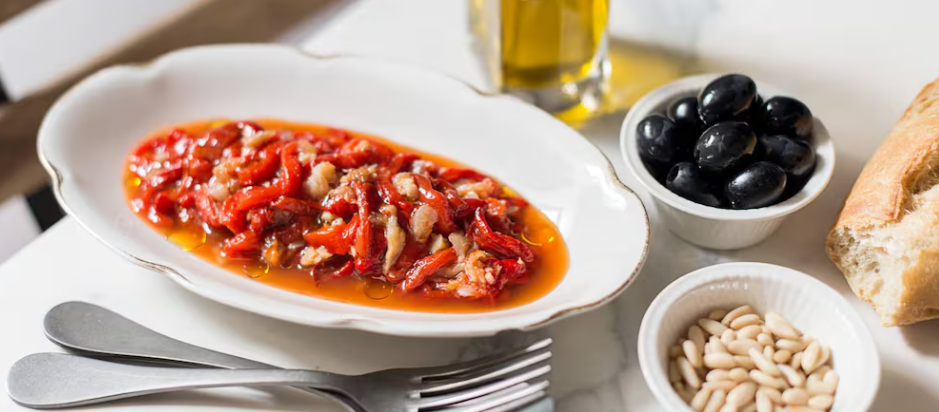
Salt cod (bacalao), roasted red peppers, garlic, olive oil. |
Zero cooking required if you buy high-quality jarred Spanish peppers. Salty and intensely savoury. |
| Ensalada Murciana (Mojete) |
Region of Murcia |
Tinned peeled tomatoes, quality tuna, hard-boiled eggs, sweet onion, black olives (cuquillo). |
No fresh tomatoes needed! It relies on the rich sweetness of tinned tomate pera, making it the ultimate store-cupboard saviour when it is simply too hot to walk to the shops. |
| Empedrat |
Catalonia |
White beans, shredded cod, tomatoes, black olives, vinaigrette. |
The ultimate fridge-raid salad. Tinned white beans make this a 5-minute prep job that provides heavy protein without the heat. |
| Ensaladilla Rusa |
Nationwide (Tapas staple) |
Potatoes, tuna, boiled eggs, carrots, mayonnaise. |
Served ice-cold. If you don't want to boil potatoes, many local mercados sell the veg pre-cooked and vacuum-packed! |
| Ajoblanco |
Andalusia / Extremadura |
Crushed almonds, garlic, olive oil, bread, water, vinegar. |
An elegant, deeply refreshing liquid lunch that hydrates and replenishes salt lost through sweating. |
Esgarraet
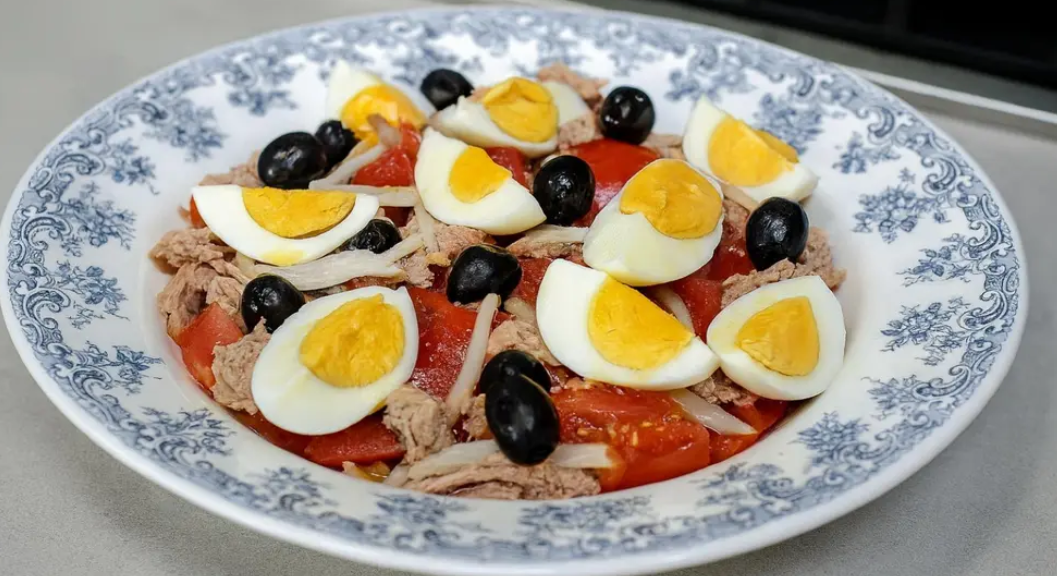
Ensalada Murciana
.jpeg)
Ensladilla Rusa
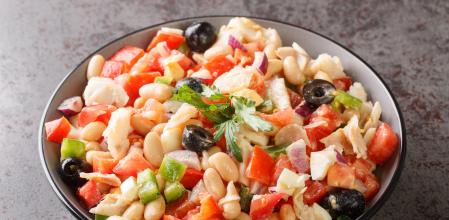
Empedrat
.jpeg)
Ajoblanco
Recipe Deep-Dive: Authentic Andalusian Ajoblanco
If you want to impress your Spanish neighbours, skip the tomato-based salmorejo and master Ajoblanco.
Historical Context: Often called the "mother of gazpacho," Ajoblanco actually predates the arrival of tomatoes and peppers from the Americas. Created by the Moors using the abundant almond groves of Al-Andalus, this elegant soupe froide relies on the magical emulsion of crushed nuts, garlic, and oil.
The Shopping List (Serves 4)
You can source all of these from your local Mercadona or Dia for under £5.00 total.
-
200g Raw, blanched almonds: Do not use roasted or salted nuts! You want plain, skinless almendras crudas.
-
150g Stale white bread: The dense, crusty artisan type (pan de pueblo) from yesterday works best. Avoid sliced sandwich bread.
-
2 large garlic cloves: Peeled and green germ removed to stop it repeating on you.
-
100ml Extra virgin olive oil (EVOO): Use the good, peppery stuff here—it makes a massive difference to the final flavour.
-
3 tablespoons Sherry vinegar: Vinagre de Jerez adds the authentic southern bite.
-
1 litre Ice-cold water.
-
Sea salt to taste.
-
Green seedless grapes or diced melon: Essential for the garnish.
Instructions
-
Hydrate the Bread: Tear the stale bread into chunks (removing the toughest parts of the outer crust) and place them in a bowl. Pour over just enough cold water to soak the bread thoroughly. Leave it for 10 minutes.
-
Blitz the Base: In a high-powered blender or food processor, add the blanched almonds and the peeled garlic cloves. Blend them together until they form a fine, powdery paste.
-
Combine and Emulsify: Squeeze the excess water out of your soaked bread and add it to the blender with the almond-garlic paste. Add a generous pinch of sea salt. Turn the blender on a medium speed and slowly drizzle in the extra virgin olive oil. Take your time here—you want the oil to emulsify with the bread and nuts into a thick, creamy mayonnaise-like consistency.
-
Thin and Acidify: Once emulsified, keep the blender running and pour in the sherry vinegar, followed gradually by the ice-cold water until you reach your desired soup consistency (it should be entirely smooth, like single cream).
-
The Mandatory Chill: Taste for seasoning, adjust the salt or vinegar if necessary, and transfer the soup to a glass jug. Place it in the deepest, coldest part of your fridge for at least 2 hours. It must be served ferociously cold.
-
Serve: Pour the chilled Ajoblanco into shallow bowls. Garnish each serving with a few halved green grapes or small cubes of melon. Finish with a few drops of extra virgin olive oil speckled across the surface.
When the Spanish summer hits its peak, standing over a hot stove is simply not an option. We all end up relying on our fridge-friendly favourites to get us through July and August.
How do you alter your diet when the heatwave strikes? Are you firmly on Team Gazpacho, have you mastered the Ensalada Murciano, or do you have a secret recipe for the perfect Ensaladilla Rusa? Let us know what is keeping you cool in the comments below, or share your own regional heatwave recipes!
1
Like
Published at 1:45 PM Comments (1)
Spam post or Abuse? Please let us know
|
|