Fly2Galicia: The New €19 Budget Airline Shaking Up Spanish Skies
Saturday, August 29, 2026
Just when travellers thought Europe’s low-cost aviation market couldn't possibly squeeze in another competitor, a brand-new airline is officially preparing for takeoff. Headquartered in the dramatic northwestern corner of Spain, a fresh carrier named Fly2Galicia is set to launch operations on December 1, 2026, promising rock-bottom fares starting at just €19.
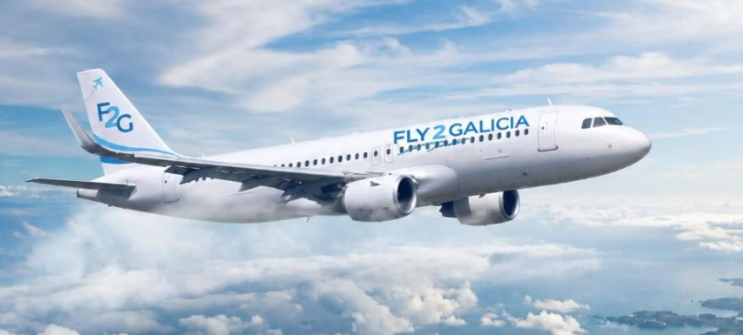
Operating out of Santiago de Compostela’s Rosalía de Castro Airport, the virtual airline plans to roll out 17 weekly departures across a targeted network of domestic and international routes, shaking up regional travel options just in time for the winter season.
Where Will They Fly?
Fly2Galicia’s initial route map focuses heavily on connecting northwestern Spain with key domestic hubs and cultural powerhouses across central and southern Europe.
-
Domestic Spanish Routes: Regular flights will link Santiago de Compostela directly with Alicante, Zaragoza, and Granada.
-
International Destinations: Cross-border connections will stretch to major European cities, including Brussels, Milan, Munich, Prague, and Venice.
The Pricing and Luggage Model
The headline-grabbing €19 starting price applies to select domestic routes, while international hops to destinations like Milan and Brussels will kick off at €39, and longer runs to Munich, Prague, and Venice will start at €49.
Crucially, the airline's launch structure aligns smoothly with evolving consumer expectations regarding cabin baggage. Standard ticket tiers will include two pieces of hand luggage—a personal item plus an 8-kilogram cabin bag—allowing passengers to bypass the aggressive carry-on add-on fees traditionally associated with low-cost carriers.
Behind the Scenes: How the Virtual Airline Works
Aviation buffs will note that Fly2Galicia isn't pursuing a traditional airline operating certificate. Instead, it operates on a "virtual airline" model: the company handles branding, marketing, ticketing, and route organisation, while the physical flights, aircraft, and flight crews are provided by partner operators using an Airbus A320.
The initial flight schedule and pricing tiers are locked in through October 24, 2027, at which point management will review network performance and consider expanding the fleet for the following summer season.
 2
Like
Published at 8:27 AM Comments (0)
2
Like
Published at 8:27 AM Comments (0)
EU Bans Airlines From Charging Extra to Sit With Your Kids
Saturday, August 29, 2026
For anyone who has ever booked a budget flight across Europe with young children, the anxiety hits long before you ever step foot on the tarmac. You select your flights, enter your passenger details, and then face the dreaded checkout screen: the airline’s automated system has deliberately scattered your family across separate rows, flashing a hefty fee if you want to ensure a parent actually sits next to a child.
That frustrating, multi-million-euro practice is officially coming to an end. Following a landmark overhaul of European air passenger rights, the European Union has officially banned airlines from charging extra to seat children next to their parents.
What the New EU Regulation Changes
After over a decade of bureaucratic negotiations, the European Parliament approved a historic update to consumer protection rules. The legislation targets some of the most aggressive and controversial pricing tactics employed by low-cost and legacy carriers alike.
-
Free Adjacent Seating for Families: Airlines must now legally allocate adjacent seats at no extra cost to any adult accompanying a child under the age of 14.
-
Protection for Vulnerable Passengers: This mandate isn't restricted solely to families. Passengers with disabilities, individuals requiring reduced mobility assistance, and pregnant women are also guaranteed access to suitable, adjacent seating without paying surcharges.
-
Baggage Fee Transparency: While initial proposals to completely ban hand luggage fees were dropped, ticket-selling websites and comparison engines must now include the cost of one piece of hand luggage in the baseline displayed price from the very start of a search. This immediately stops artificially low headline fares that balloon with surprise fees at checkout.
-
No More Retaliatory Cancellation Penalties: Airlines can no longer cancel a passenger's return ticket simply because they missed the outbound leg of a journey—a notorious rule that previously caught out countless holidaymakers.
The Death of "Seat-Separation" Upselling
For years, consumer watchdog groups and families have accused low-cost carriers of deliberately engineering seating algorithms to split groups apart. By randomising initial seating assignments, airlines forced parents into a corner: pay an extra £10 to £30 per seat, or risk having a seven-year-old child seated rows away from a guardian.
Airlines defended the fees as part of ancillary revenue models, but European regulators labelled it an unfair financial barrier penalising family travel. Under the new rules, airlines must adapt their booking systems to keep family units together automatically without financial penalty.
What This Means for Expats and Holiday Travellers
For British expats living in Spain, dual-national families, and frequent flyers travelling between the Iberian Peninsula and the rest of Europe, this reform is a major win.
Whether you are flying home to the UK to visit family, booking a holiday to the Balearics, or heading out on a city break, booking a flight will become significantly more transparent. You no longer have to play psychological chicken with airline seating charts, and basic fare comparisons across booking portals will finally reflect what you are actually going to pay.
The EU's crackdown on hidden airline fees and family seating separation marks one of the biggest consumer victories in years, but frequent flyers know the aviation industry adapts quickly.
Have you ever been caught out by airlines separating your family or hitting you with last-minute fees at checkout? Do you think these new transparency rules will genuinely make flying cheaper, or will airlines find other ways to recoup the costs? Let us know your thoughts in the comments below...
1
Like
Published at 7:57 AM Comments (0)
A Four-Minute Heist: Thieves Steal Spain’s Priceless Bronze Age Treasure of Villena
Saturday, August 29, 2026
In a brazen raid that has sent shockwaves through the Spanish cultural heritage community, thieves have successfully stolen one of the most significant archaeological discoveries in European history: the legendary Treasure of Villena.
According to reports from national law enforcement, the high-precision heist unfolded in a matter of mere minutes at the Archaeological Museum of Villena in Alicante, leaving curators, historians, and local officials grappling with an irreplaceable loss.
What Was Stolen?
Discovered in 1963 by archaeologist José María Soler in a dry riverbed near Villena, the collection is widely considered the most important cache of Bronze Age goldsmithing in the Iberian Peninsula and the second most significant in all of Europe, beaten only by the treasures found in the shaft graves of Mycenae.
.jpeg)
The collection comprises 66 extraordinary objects weighing nearly 10 kilograms in total:
-
The Gold Masterpieces: 28 solid gold bracelets and bowls gleaming with remarkable purity, crafted around 3,000 BCE.
-
Silver and Amber: Intricately worked silver bottles, bracelets, and amber-inlaid adornments reflecting advanced ancient metallurgy that predates the Iron Age.
-
Historical Significance: The artefacts offer a priceless window into the wealth, artistic sophistication, and trade networks of Bronze Age Iberian societies.
How the Heist Unfolded
Unlike clumsy burglaries, this operation bore all the hallmarks of a professionally planned, targeted hit.
-
Lightning Speed: Security analyses revealed that the perpetrators bypassed museum alarms and display cases with surgical efficiency, executing the entire theft in roughly four minutes before emergency responders could arrive.
-
The Target: The thieves bypassed standard historical displays, heading directly for the high-security vault housing the primary gold and silver pieces.
-
The Investigation: Spanish national police (Policía Nacional) have launched a nationwide manhunt, deploying specialised art-theft units to track down the stolen bullion and prevent the artefacts from being melted down or smuggled across international borders.
A Devastating Blow to Local Heritage
For the town of Villena and the broader cultural community of the Costa Blanca and interior Alicante, the theft is more than just a property crime—it is an assault on local identity. Local municipal leaders have expressed profound outrage and heartbreak, noting that these artefacts belong to humanity's collective heritage and are virtually impossible to fence on the open art market because of their global renown.
As the investigation continues, art detectives and Interpol are working against the clock, hoping that the sheer uniqueness of the Bronze Age goldwork will make it too hot to handle before these ancient treasures are lost to history forever.
1
Like
Published at 7:45 AM Comments (0)
Spain Introduces Temporary Border Checks on Visitors from Italy
Tuesday, August 11, 2026
A rare diplomatic spat between two Mediterranean heavyweights has spilt over into the travel sector, as Spain implements temporary border checks on arrivals from Italy. The move marks an escalation in a mounting political feud over migration policy within the European Union.
The emergency controls follow a similar move by Rome earlier in the month, leaving travellers navigating sudden spot checks and fueling an intense debate among European leaders regarding open borders and regional security.
The Catalyst: The Ceuta Border Crisis
The friction between Madrid and Rome traces back to an unprecedented mass migration event at the end of July, when tens of thousands of people crossed from Morocco into Ceuta, Spain’s North African territory.
While Spanish authorities quickly mobilised to regain control of the perimeter and returned the vast majority of arrivals to Morocco within days, the dramatic scenes sent shockwaves across the EU. Insisting on a hardline stance against irregular immigration, Italian Prime Minister Giorgia Meloni’s government responded on August 1 by imposing its own temporary border controls on maritime and air arrivals coming from Spain.
Madrid immediately condemned Rome's actions, calling them unfair, discriminatory, and a direct threat to European unity. When Italy refused to lift the restrictions, Spain retaliated by announcing its own mirror-image measures.
How the New Border Controls Work
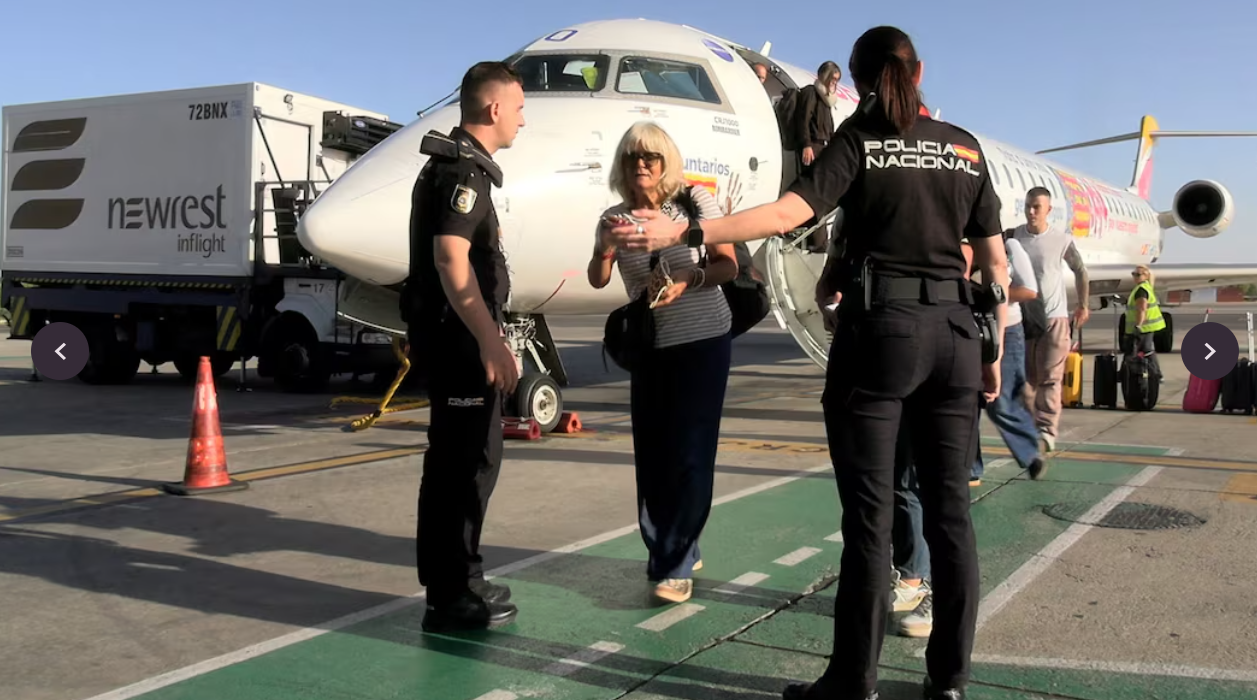
Spain's interior ministry confirmed that the temporary checks began at midnight on Saturday and are scheduled to remain in place until September 7, matching the duration of Italy's restrictions.
While the controls do not dismantle the foundational principles of the Schengen free-movement zone, they have introduced visible friction at transport hubs connecting the two nations:
-
The Scope: The measures primarily target discretionary spot checks, passport verifications, and documentation reviews for third-country nationals entering Spain from Italian air and sea ports.
-
The Justification: Madrid officially instituted the checks citing "persistent irregular migration pressure," mirroring the exact phrasing used by Rome weeks prior, while underscoring the absurdity of the restrictions given that Ceuta sits entirely outside the Schengen zone with no direct transit corridors into continental Europe.
-
The Diplomatic Fallout: Despite interventions by EU migration commissioners urging de-escalation, Italian officials have defended their actions as a necessary safeguard for national security, refusing what they termed "ultimatums" from Madrid.
Impact on Travellers and the Schengen Zone
For long-term residents, frequent flyers, and expats travelling between Spain and Italy, the political stand-off has introduced an unwelcome layer of logistical frustration during the peak of the summer holiday season.
While European officials maintain that these internal border suspensions are strictly temporary and designed to wind down as regional tensions cool, the rare public feud has laid bare the fragile consensus underpinning Europe's passport-free travel framework when member states face sudden political pressures.
3
Like
Published at 9:34 PM Comments (0)
Spam post or Abuse? Please let us know
|
|