All EOS blogs All Spain blogs  Start your own blog Start your own blog 

Live News From Spain As It Happens

Keep up to date with all the latest news from Spain as it happens. The blog will be updated constantly throughout the day bringing you all the latest stories as they break.

The Ultimate Renovation Project? Man Buys Entire Spanish Village for the Price of an Apartment
Friday, February 20, 2026

If you’ve been browsing the Spanish property portals lately, you’ll know that €310,000 doesn’t always go a long way. In Marbella or Madrid, it might net you a stylish one-bedroom apartment. In Barcelona, perhaps a well-located studio. But for American entrepreneur Jason Lee Beckwith, that same amount just bought him an entire village.

The news has sent ripples through the expat community and real estate circles alike. Beckwith, a musician and hotelier from California, has officially become the owner of Salto de Castro, an abandoned hamlet in the province of Zamora, nestled right on the border with Portugal.

From Hydroelectric Hub to Ghost Town

Salto de Castro isn't your typical medieval "pueblo." It was purpose-built in the 1940s and 50s by the electricity company Iberduero (now Iberdrola) to house the families of workers constructing the nearby dam. At its peak, it was a self-sufficient community featuring 44 homes, a church, a school, a bar, a guesthouse, and even Guardia Civil barracks.

However, once the dam was completed and the industry moved on, the residents followed. By 1989, the last doors were locked, and Salto de Castro was left to the elements. For decades, it sat as a hauntingly beautiful "ghost village," eventually landing on heritage watchlists for at-risk monuments.

A €310,000 Vision

While many see ruins, Beckwith saw a "life-changing switch flip in his head." After selling his guesthouse in California to fund the venture, he plans to relocate to the Zamora region with his wife to personally oversee the transformation.

His vision is ambitious. Rather than a private estate, he intends to revive the village as a sustainable holiday resort. The plans include:

  • The "Farm to Table" Experience: Utilizing the fertile Aliste region to highlight local beef, honey, chestnuts, and wild mushrooms.

  • Wine Tourism: Developing a vineyard and winery over the next decade.

  • A Multicultural Hub: Repurposing the village church into a multi-use event space.

  • Local Impact: Beckwith estimates the project will create roughly 35 jobs for local residents, a vital boost for an area struggling with rural depopulation.

If all goes to plan, the first phase—including the hotel, hostel, café, and pools—could open as early as late 2026.

Is "España Vaciada" the New Frontier for Expats?

This sale highlights a growing trend in the so-called España Vaciada (Empty Spain). As coastal prices continue to climb and the "digital nomad" lifestyle makes remote living more feasible, abandoned hamlets are becoming attractive to investors with deep pockets and big imaginations.

Salto de Castro isn't the only one. Other deserted villages, such as Candelago in Galicia (€150,000) and Matandrino in Segovia (€180,000), have also appeared on sites like Idealista, catching the eye of international buyers looking for something more substantial than a villa with a sea view.


The Reality Check

Of course, buying a village for the price of an apartment is just the beginning. The "rack and ruin" state of many of these properties means renovation costs will likely run into the millions. There are also environmental hurdles; Salto de Castro sits within the protected Arribes del Duero Natural Park, meaning every brick laid will be under the watchful eye of local authorities.

For Jason Beckwith, however, the reward isn't just financial. It’s about breathing life back into a corner of Spain that the world had forgotten.


What do you think? Would you trade your coastal apartment for a set of keys to your own village, or is the "Empty Spain" dream a renovation nightmare waiting to happen? Let us know in the comments below!


Like 2        Published at 10:47 PM   Comments (0)


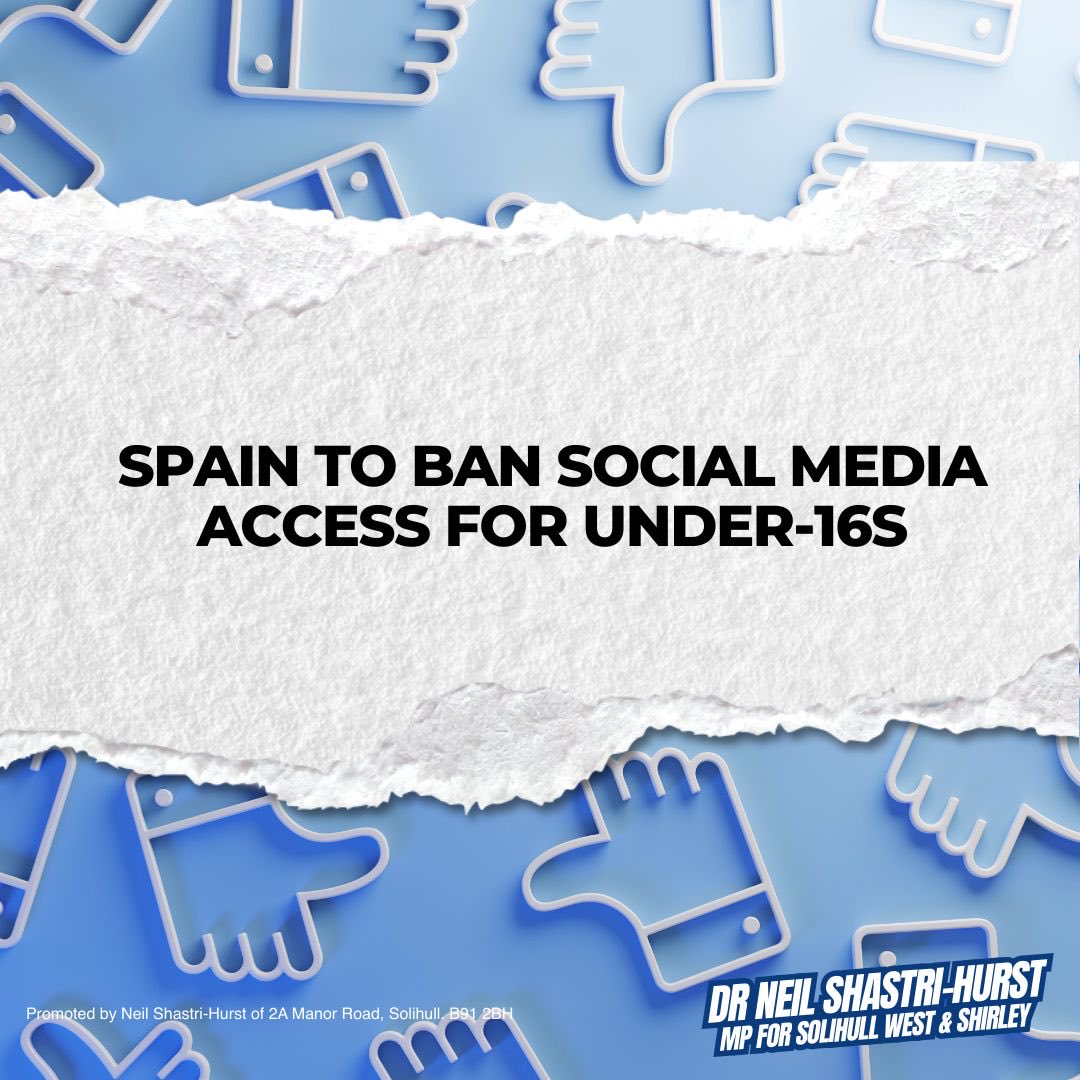
Spain to Ban Social Media for Under-16s: A Move to Tame the "Digital Wild West"
Saturday, February 7, 2026

Spain is set to become one of the first European nations to implement a strict ban on social media for children under the age of 16, as Prime Minister Pedro Sánchez ramps up the government’s efforts to protect minors from the darker corners of the internet.

Speaking at the World Governments Summit in Dubai this week, Sánchez used strong language to describe the current state of the internet, referring to it as a "digital Wild West."


"Today, our children are exposed to a space they were never meant to navigate alone," Sánchez told the summit. He highlighted a list of concerns, including addiction, online abuse, pornography, and violence, stating flatly: "We will no longer accept that. We will protect them."

More Than Just a "Check Box"

The proposed legislation, which Sánchez hopes to see passed as early as next week, aims to move beyond simple age-verification "check boxes" that are easily bypassed. The Prime Minister called for "real barriers that work," acknowledging the flaws seen in other regions—such as Australia—where children have circumvented restrictions using simple workarounds like using photos of adults.

Key measures of the proposed plan include:

Mandatory Age Verification: Platforms must implement robust systems to ensure users are 16 or older.

Executive Accountability: Tech company executives could be held personally responsible for illegal or harmful content hosted on their platforms.

Algorithm Regulation: The laws would criminalise the manipulation of algorithms that amplify illegal content or disinformation for profit.

Anti-Hate Tracking: A new system will be developed to track how digital platforms fuel social division and amplify hate speech.

Targeting Tech Giants

The announcement comes at a time of increasing tension between European governments and major tech platforms. Sánchez specifically mentioned investigations into Grok (X’s AI tool), TikTok, and Instagram.

This move aligns with broader European actions; the European Commission and the UK have already launched investigations into Grok over concerns regarding the creation of sexualized images. Furthermore, the offices of X (formerly Twitter) in France were recently raided as part of a cybercrime investigation.

The reaction from tech leaders has been swift and sharp. Elon Musk, owner of X, reacted to the news by labelling Sánchez a "tyrant and traitor." Meanwhile, social media companies have argued that such bans are difficult to enforce and risk isolating vulnerable teenagers who rely on digital communities for support.

Will the Law Pass?

While Sánchez is pushing for a quick resolution, the path to implementation may be tricky. His left-wing coalition government does not hold a parliamentary majority.

However, there appears to be some cross-party consensus. The conservative People’s Party (PP) has indicated support for the spirit of the ban, noting they have proposed similar restrictions in the past. On the other hand, the far-right Vox party has already voiced its opposition.

A Growing Global Trend
Spain is not alone in its crusade. Australia made history last year by becoming the first country to implement a national social media ban for minors. In Europe, France is leading a similar charge, with President Emmanuel Macron aiming for an under-15 ban to be in place by September. Denmark, Austria, and the UK are also currently consulting on similar age-limit restrictions.

As Spain moves toward a vote, the eyes of the world—and the tech industry—will be on Madrid to see if the government can successfully tame the "Wild West" or if the digital barriers will prove too difficult to build.

What do you think? Is 16 the right age for social media, or is this an overreach of government power? Let us know in the comments below.


Like 2        Published at 12:08 AM   Comments (0)


Spam post or Abuse? Please let us know


This site uses cookies. By continuing to browse you are agreeing to our use of cookies. More information here. x