Emptying the Rental Market: Why Small Landlords Are Pulling Thousands of Homes
Friday, October 30, 2026
For a long time, the traditional advice for British expats seeking a reliable return on a Spanish property was simple: buy an apartment, find a steady long-term tenant, and enjoy the monthly yield.

However, over the last fortnight, the landscape has shifted drastically. According to alarming new data from the National Federation of Estate Agents' Associations (FAI), the Spanish residential rental market is experiencing a mass exodus. In the wake of controversial new government decree-laws—and a highly publicised eviction case in Madrid—small private landlords are pulling thousands of properties from the long-term rental market.
If you are a property owner trying to navigate the current legal framework or a tenant wondering why housing stock has suddenly vanished, here is a breakdown of what is happening across Spain’s estate agencies.
The 10-Day Exodus: What the Numbers Say
The FAI data, gathered from 547 estate agencies nationwide, paints a stark picture of landlord panic driven entirely by "regulatory uncertainty."
In just ten days, more than 5,758 property listings have been directly impacted:
-
4,235 properties have been entirely withdrawn from the market or diverted away from traditional residential leasing.
-
1,523 pending rental contracts have been completely frozen.
-
On average, agencies report 3.78 rental properties being withdrawn per branch, amounting to a direct loss of 2,067 long-term listings across the surveyed agencies alone.
The FAI has issued a stark warning that total rental transactions could plummet by 25 to 30 per cent in the coming weeks as small property owners hit the brakes on new contracts or exit the residential sector permanently.
What Triggered the Panic? The Controversial Decrees
The market volatility stems from the coalition government's aggressive attempt to push emergency housing legislation through parliament via two distinct decree-laws.
-
The PSOE Decree (Socialist Party): This text included a sweeping ban on evictions until 2030, a mandatory two-year extension on existing tenancy agreements set to expire before 2028, and strict new regulations governing holiday lets and room rentals. Crucially, it proposed that seasonal lets would eventually require formal justification or face automatic reclassification as traditional long-term tenancies.
-
The Sumar Decree: Championed by the coalition partner and heavily aligned with tenants' unions, this decree included measures that would effectively make standard lease agreements open-ended.
While neither decree secured majority backing in Congress—a failure that sparked massive social mobilisations and triggered an early general election for 29 November—the government has boldly decided to reissue the decrees and push them through via the parliamentary standing committee ( Diputación Permanente ).
For landlords, the message was clear: the rules of the game are changing rapidly, and property owners feel stripped of legal security.
Where Are the Properties Going?
Private property owners are not simply leaving their properties empty; they are actively re-routing their investments to bypass traditional housing regulations.
-
The Pivot to Outright Sales: Over half of the surveyed estate agencies confirmed that landlords are offloading their assets. Agencies report an average of 2.26 properties per branch (totalling over 1,224 properties nationwide) have been moved directly from the rental sector to the sales market.
-
Alternative Leasing (Seasonal and Room Rentals): To avoid the threat of open-ended leases, owners are pivoting to unregulated formats. An average of 1.76 properties per agency (944 homes total) have been reallocated to seasonal leases (leases tied to a specific short-term need, like a work contract or academic year) or room-by-room rentals, which currently sit outside the strictest confines of the national housing law.
What This Means for the Expat Community
If you are currently looking to rent a long-term property in Spain, prepare for an incredibly tight, competitive market. The immediate withdrawal of thousands of homes means that the remaining stock will be heavily contested, likely driving up prices in the short term.
For property owners, the political landscape is highly volatile. If you are considering renting out your Spanish home, the coming weeks leading up to the snap election will be critical. Before signing any long-term residential lease (a standard contrato de arrendamiento de vivienda), it is vital to consult with a local asesor fiscal (tax advisor) or lawyer to fully understand your legal exposure and rights regarding eviction and contract duration.
Have you withdrawn your Spanish property from the long-term rental market due to regulatory fears, or are you struggling to find a long-term rental as stock vanishes? Do you think the government's decrees protect vulnerable tenants, or do they unfairly punish small property owners? Have your say in the comments below.
 1
Like
Published at 9:04 PM Comments (1)
Severe Flooding Hits Eastern Spain as Storm Adam Meets Storm Austen in the UK
Friday, October 23, 2026
As late October sets in, the tranquil Mediterranean autumn has been violently interrupted. In what has rapidly become a brutal double-whammy of autumn weather across Western Europe, eastern Spain is reeling from catastrophic flash flooding caused by Storm Adam—just as Britain and Ireland take the brunt of Storm Austen, the UK's first named winter storm of the season.
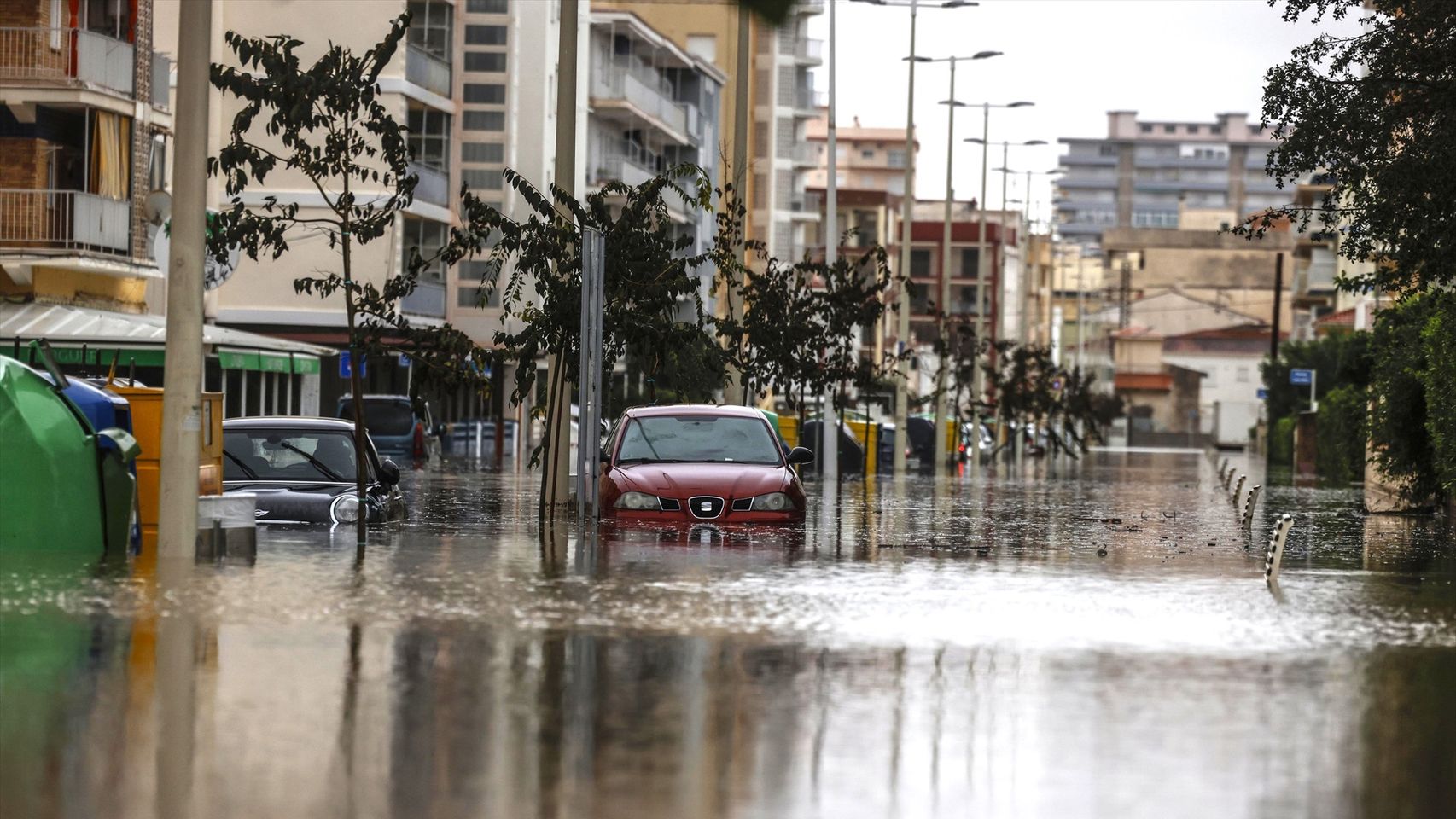
For British expats and holidaymakers travelling between the UK and the Iberian peninsula, the simultaneous severe weather front has created travel disruption on both ends of the flight path. While Storm Austen swept across southwest England and Wales with 60–70 mph gales and power outages, Storm Adam stalled over the Spanish coast, unleashing astronomical rainfall totals that turned coastal resorts and inland market towns into raging torrents.
The Numbers: When an Entire Year’s Rain Drops in Hours
The sheer volume of water dumped by Storm Adam across the Valencian Community, the northern Costa Blanca, and the Balearic Islands has left veteran meteorologists stunned.
A standard autumn gota fría (cold drop or DANA) is an expected feature of the Spanish calendar, but the concentration of precipitation recorded over recent days reached historic proportions:
-
Pego (Alicante): A jaw-dropping 632 mm of rain fell in just 36 hours, with an extraordinary 430 mm falling in a single six-hour deluge.
-
Oliva (Valencia): Approached 600 mm within a 24-hour window, inundating municipal garages, agricultural land, and ground-floor townhouses.
-
Balearic Islands & Ibiza: Torrential squalls and local electrical grid failures forced Ibiza Airport to temporarily halt operations twice, triggering dozens of flight diversions and cancellations during a busy autumn travel week.
-
Emergency Interventions: State emergency helicopters and regional civil protection teams were forced to carry out rooftop evacuations across inundated river basins, while local town halls issued stay-at-home orders covering more than 80,000 residents across eastern municipalities.
Tragically, the extreme weather has claimed multiple lives along the eastern seaboard, including victims swept away by swelling rivers in Catalonia and drowning incidents caused by violent surf along coastal beaches.
Why Autumn DANAs Are Becoming More Explosive
If this sequence of destructive Mediterranean downpours feels increasingly common, it is because it directly connects to the summer climate cycle.
Earlier in the season, marine monitoring buoys across the Balearic Sea and the Spanish port network logged record-breaking sea surface temperatures well above 31°C to 33°C. Meteorologically, superheated coastal waters act like a massive thermal battery. When cold air masses encounter that volatile, moisture-choked maritime air trapped against Spain's coastal mountain ranges, the storm stalls. Instead of passing swiftly over the country, Storm Adam anchored itself over the coastline, dropping catastrophic amounts of water onto ground hard-baked by months of summer drought.
The UK Connection: Navigating Half-Term Travel Between Austen and Adam
Compounding the headache for British second-home owners and families heading out for the October half-term break is the situation back home in the UK.
The Met Office's first named storm of the 2026/27 cycle, Storm Austen, hit Cornwall, Devon, South Wales, and the southern coast with gusts touching 70 mph, downing trees, leaving thousands without power, and disrupting airport ground operations across the UK.
If you are scheduled to travel between the UK and Spain over the coming days, keep the following travel advice in mind:
-
Monitor Flight Statuses Early: While Spanish hub airports (including Alicante–Elche, Valencia, and Ibiza) have resumed normal operations as red alerts are downgraded, airlines such as easyJet and Jet2 are still untangling crew and aircraft rotations following the weekend ground stops.
-
Avoid Driving Near Coastal Riberas and Ramblas: Even as rain clears, Spanish dry riverbeds (ramblas) remain treacherous. Upstream mountain run-off can send a sudden wall of mud and water rushing toward the coast hours after the skies have cleared above your town. Never attempt to drive across standing water or through dipped crossings.
-
Inspect Your Property’s Drainage: For homeowners on the Costa Blanca or in Valencia, check balcony drains, roof terraces (solariums), and lightwells. Torrential mud-laden downpours quickly choke external downpipes (bajantes), leading to immediate interior water ingress.
The Insurance Reality: The Consorcio Rule
For property owners who have suffered flood damage, flooded basements, or waterlogged vehicles from Storm Adam, remember how Spanish catastrophe insurance operates.
Flooding of this magnitude is officially classified as an "extraordinary risk" (riesgo extraordinario). In Spain, compensation for major storm damage is not paid directly by your regular private insurer, but by the state-backed Consorcio de Compensación de Seguros.
However, there is an absolute catch: to qualify for Consorcio compensation, your property or vehicle must have an active, fully paid-up private insurance policy in place at the time of the event. Ensure your policy receipts are readily accessible, document all damage with time-stamped photographs before beginning any clean-up, and lodge your claim with the Consorcio as early as possible.

Join the EOS Community Discussion
While weather agency AEMET has now lifted the highest-tier red warnings and conditions across eastern Spain are stabilizing, the aftermath of Storm Adam is a stark reminder of the sheer power of Mediterranean autumn storms.
Were you caught in the torrential rains along the Costa Blanca, Valencia, or the Balearics this week, or did Storm Austen delay your flight out of the UK? How did your local area hold up against the deluge? Share your experiences and updates in the comments below.
To see on-the-ground footage of the extreme conditions and how emergency crews managed the deluge, this news report covering Storm Adam's flash flooding documents the impact of the heavy rains and water rescues across towns in eastern Spain.
1
Like
Published at 11:14 PM Comments (1)
Watch Out for €200 Fines as DGT Launches Nationwide Surveillance Blitz
Friday, October 16, 2026
If you are navigating the coastal dual carriageways of the Costa del Sol, pottering between villages on the Costa Blanca, or running errands in town, it pays to keep both hands on the wheel and your phone firmly out of reach. Spain’s Directorate-General for Traffic (Dirección General de Tráfico, or DGT) has launched an intensive nationwide enforcement campaign targeting driver distractions—bringing a sharp surge in roadside patrols, automated surveillance cameras, and stiff €200 fines (approx. £170).

The week-long blitz, organised under the pan-European ROADPOL Focus on the Road initiative, mobilises thousands of Guardia Civil de Tráfico officers alongside regional police forces (Mossos d'Esquadra, Ertzaintza) and municipal Policía Local squads. Crucially, traffic chiefs have confirmed they are deploying hundreds of high-definition automated roadside gantries and mobile camera vans capable of peering directly through windscreens.
For British expats, second-home owners, and holiday drivers, assuming you are safe just because you haven't seen a marked patrol car could prove to be an expensive mistake.
The Mobile Phone Trap: Why Holding Is Enough to Be Fined
The DGT’s primary target during this blitz is mobile phone distraction, which traffic statistics consistently show is involved in almost half of all driver distraction offences across Spain.
Under Spanish traffic law, the rules around handheld devices leave zero room for legal wrangling:
-
Merely Holding the Device: You do not need to be texting, speaking, or scrolling through social media. Simply holding a mobile phone in your hand while behind the wheel constitutes a serious offence.
-
The Red Light Myth: Waiting at a red traffic light or sitting in a stationary motorway jam is not an exemption. As long as your vehicle is on an active roadway and the engine is running, checking a WhatsApp message or adjusting a GPS route by hand will land you the exact same fine.
-
The Penalty: A flat €200 fine and the loss of six points from a Spanish driving licence. For British drivers using a UK photocard licence, the monetary penalty applies immediately, and points can be logged on a virtual registry linked to your NIE or passport number.
EOS Practical Warning: If your vehicle does not have built-in Apple CarPlay or Android Auto, ensure your phone is secured in an approved dashboard cradle before you turn the ignition. Operating the screen while touching it in a cradle can still be penalised with a €100 fine if officers judge that your attention was diverted from the road ahead.
The Distraction Hit-List: How Penalties Compare
While mobile phones draw the heaviest enforcement, Spain’s General Traffic Regulations (Reglamento General de Circulación) grant officers wide discretion to sanction any secondary activity that compromises "permanent attention and freedom of movement."
| Driving Behaviour / Infraction |
Legal Severity |
Standard Fine |
Licence Points Lost |
Key Conditions & Application |
| Holding a mobile phone |
Serious |
€200 (approx. £170) |
6 points |
Prohibited whether the vehicle is in motion or stopped at red lights. |
| Using earbuds or headphones |
Serious |
€200 (approx. £170) |
3 points |
Wired or wireless Bluetooth earbuds are banned while driving or riding. |
| Eating or drinking behind the wheel |
Minor |
Up to €100 (approx. £85) |
None |
Applied if it impedes proper, two-handed vehicle control. |
| Resting arm out of the window |
Minor |
Up to €100 (approx. £85) |
None |
Sanctioned if driver's seated posture impairs immediate reaction. |
| Driving in sliders or backless footwear |
Minor / Serious |
€80 – €200 |
None |
Banned if footwear slips or interferes with safe pedal operation. |
Eyes in the Sky and Hidden Lenses
What catches many expat motorists off guard is the sheer depth of Spain's automated surveillance network. You no longer need to be flagged down by a motorcycle patrol to receive an official registered notification from Tráfico:
Spain's Multi-Layered Traffic Net:
├── Roadside Gantries: Automated overhead cameras with high-res optical zoom
├── Unmarked Vans: Mobile DGT units positioned along interurban routes
├── Pegasus Fleet: Traffic helicopters equipped with gyroscopic telephoto lenses
└── Fixed Patrols: Synchronised checkpoints by Guardia Civil & local police
These camera units take multiple high-speed, burst-frame photographs into the cabin. The automated software flags potential violations—such as holding a phone or unfastened seatbelts—before sending the images to the DGT's automated processing centre in León for human sign-off.
The "Pronto Pago" Window: How to Save 50%
If you are stopped by an officer or receive a notification in the post, timing is everything under Spanish administrative law.
-
The 20-Day Discount: Spain operates the pronto pago (prompt payment) system. If you settle the penalty within 20 calendar days of notification, you receive an automatic 50% reduction, dropping a €200 fine down to €100 (approx. £85).
-
The Catch: Paying the discounted rate acts as an immediate waiver of your right to appeal (recurso), bringing the administrative file to a permanent close.
-
Electronic Notifications: If you are a resident registered on the DGT’s Dirección Electrónica Vial (DEV) or use the miDGT mobile app, notifications are delivered digitally. Keep your linked email and phone number current to ensure the 20-day discount clock does not expire unnoticed.
With Spanish roads growing increasingly busy this autumn, keeping your phone tucked away in the glove box is the simplest way to avoid an uninvited dent in your wallet.
0
Like
Published at 9:10 PM Comments (1)
Shorter Stays, Bigger Bills: How Balearic Hotels Smashed Profit Records This Summer
Friday, October 2, 2026
If you tried booking a hotel room across Mallorca, Ibiza, or Menorca this August, your credit card statement likely confirmed what hoteliers have just announced: summer holidays on the islands have never been more expensive.
.jpeg)
Yet, despite widespread cost-of-living caution back in the UK and relentless headlines surrounding anti-overtourism protests across the archipelago, official figures from Spain’s National Statistics Institute (INE) reveal a fascinating peak-season paradox: hotels in the Balearics accommodated record visitor numbers and posted bumper revenues, even though guests are noticeably trimming the length of their holidays.
Across the archipelago, hoteliers welcomed 2.1 million guests in August—a 3.8% jump compared to the same month last year. But rather than languishing on the beach for a fortnight, international visitors are pivoting toward shorter, high-spend micro-breaks.
The Numbers: Less Time on the Sand, More Revenue at the Desk
While overall visitor numbers reached new heights, total overnight hotel stays dipped slightly by 0.2% to 11.3 million. The explanation lies entirely in changing holiday habits: the average length of stay contracted from 5.53 days in August 2025 to 5.32 days this year.
Yet that modest dip in nights did nothing to dent hotelier balance sheets. Backed by sky-high demand, room yields surged across every key performance metric:
-
Occupancy Lead: Balearic hotels achieved a blistering 90.2% bed occupancy rate in August—leaving the Spanish national average of 76.8% far behind.
-
Foreign Market Dominance: International holidaymakers accounted for 89.5% of all hotel guests and 92.1% of all overnight stays. The archipelago captured a staggering 33% of all hotel nights booked by foreign visitors across the entire country.
-
Room Rate Hikes: Hotel prices jumped by 7.5% year-on-year, outpacing the national average increase of 6.3%.
-
Average Daily Rate (ADR): The average daily price per occupied room climbed 9.2% over August 2025.
-
RevPAR Growth: Revenue per available room (RevPAR)—the hospitality industry’s gold standard for profitability—leapt 7.3% across the islands.
Mallorca and Calvia Lead the National Pack
Within the archipelago, Mallorca cemented its status as the absolute powerhouse of Spain's high-season holiday economy. The island alone generated more than 8.5 million overnight stays during August.
On a municipal level, Calvià—home to iconic British and European holiday havens like Palmanova, Magaluf, Santa Ponsa, and Illetes—ranked alongside Madrid and Barcelona as one of the single most visited destinations in all of Spain.
The economic muscle of the sector was on full display throughout the peak month:
-
1,353 open hotels operated across the islands during August.
-
174,519 rooms and 373,276 beds were in active circulation.
-
80,659 hospitality staff were directly employed, underscoring the hotel trade's role as the regional economy’s primary engine.
Quality Upgrades or Inflationary Pressure?
Industry chiefs maintain that the rising bills presented to tourists are justified. As Maria José Aguiló, executive vice-president of the Mallorcan Hoteliers' Association (FEHM), explained, average prices have climbed fastest in properties that have poured millions into four- and five-star renovations, luxury spas, and upscale gastronomy.
However, hoteliers also acknowledge the other side of the ledger: spiralling operational costs—from energy and laundry bills to food supplies and staff wages—mean hotels must drive up room rates simply to protect profit margins.
What This Means for British Second-Home Owners and Private Renters
For our community of second-home owners and property investors, these hotel figures carry crucial market takeaways:
-
A Boost for Private Second Homes: As standard hotel rooms in hotspots like Palma, Alcúdia, and Calvià regularly push past £200 to £350 (€235 to €410) a night in peak summer, owning your own bolt-hole feels more financially rewarding than ever. Second-home owners and their visiting families completely bypass these seasonal hotel spikes.
-
Changing Rental Dynamics: If you hold a fully compliant tourist rental licence (ETV) in the Balearics, take note of booking behaviour. Travellers are actively trading long stays for extended weekends and five-night breaks. Adjusting minimum stay requirements to capture these high-spending short-break travellers can dramatically boost your net seasonal yields.
-
The Shoulder Season Opportunity: With August rates breaking records and sea temperatures staying warm deep into October, holidaymakers are increasingly eyeing May, June, September, and October. Extending property availability outside July and August aligns perfectly with where value-seeking British travellers are heading next.
Over to You: Squeezed Stays or Unstoppable Demand?
Did you visit the Balearics this August? Have soaring nightly room rates forced you to shorten your holidays, or does the Mediterranean pull of Mallorca, Menorca, and Ibiza still feel worth every penny?
1
Like
Published at 8:03 PM Comments (0)
Spam post or Abuse? Please let us know
|
|