The Green and Cultural Pivot to Save Spain from Overtourism
Friday, June 26, 2026
Spain is hurtling toward a jaw-dropping demographic milestone. Driven by a massive postwar travel boom and a shifting geopolitical climate that has seen vacationers pivot away from the Middle East, the country is on track to welcome 100 million international visitors in a single year for the first time in history.
Yet, while these soaring figures look phenomenal on paper—generating billions of euros for the national treasury—the reality on the ground has reached a tipping point. Massive anti-tourism protests, soaring local rents, and intense strain on local resources have made it clear that the "old formulas" of mass, unchecked coastal tourism are fundamentally broken.
.jpeg)
In response, Spain’s Ministry of Industry and Tourism is spearheading a radical change in strategy. Backed by a €3.4 billion modernisation fund, the state is making a high-stakes pivot: deliberately pushing the tourist map away from saturated Mediterranean beaches and toward the country’s rugged, offbeat, and culturally rich interior.
The Saturated Coast vs. The Green Interior
For decades, Spain’s international branding has been tightly bound to a "sun, sand, and sea" model, with beach holidays still making up 37% of all arrivals. However, during the peak summer months, popular hotspots like Catalonia, Andalusia, and the Balearic Islands are operating at absolute maximum physical capacity.
To build a sustainable future, the government is utilising post-pandemic EU funding to heavily market eight underrated, low-density autonomous communities. These "offbeat" regions represent the new frontier of the Spanish travel experience:
- Green Spain (The Atlantic North): Galicia, Asturias, Cantabria, and the Basque Country are being championed for their cooler climates, dramatic cliffs, world-class culinary scenes, and vast hiking networks.
-
The Historic Heartland: Castilla y León and Castilla-La Mancha are leveraging their massive wealth of medieval castles, Roman ruins, and sweeping plains to draw cultural purists.
-
The Untamed Frontiers: Extremadura and Navarre, famous for their rugged natural reserves, deep river canyons, and birdwatching biospheres, are being positioned as premier destinations for eco-travellers.
The Re-Population Strategy
Spreading tourist numbers into the interior isn't just about relieving pressure on coastal cities; it is an economic lifeline for rural Spain. By developing sustainable, year-round tourism in smaller inland pueblos, the government hopes to create stable, long-term employment that stops the exodus of younger generations from the countryside.
The Rise of "Beach Plus" Travel
Market research highlights a fascinating shift in consumer behaviour. Even travellers who arrive in Spain with the primary intention of relaxing on a sun lounger are increasingly demanding what tourism chiefs call "Beach Plus" experiences.
Modern visitors are no longer content with just a pool and an all-inclusive buffet. They are actively seeking localised add-ons: mid-week excursions to nearby vineyards, guided historical walks through inland villages, and experiences that connect them with authentic regional gastronomy.
By enriching the traditional beach holiday with cultural substance, Spain can naturally disperse crowds away from the thin strip of coastal sand and into the surrounding inland municipalities.
.jpeg)
Striking a Balance: Regulation and Limits
While the national government rejects the idea that Spain as a whole is "saturated," it openly acknowledges that local authorities must do their homework to protect the daily life of their residents. Managing 100 million visitors requires strict, localised boundaries.
-
Tackling Tourist Flats: Major cities are leading the charge against housing saturation. Notably, Barcelona has been moving forward with an aggressive plan to phase out and entirely ban tourist apartment licenses by the end of the decade to reclaim housing stock for locals.
-
Local Taxes and Entry Caps: From Venice-style day-tripper discussions to strict entry caps on fragile natural ecosystems (like Mallorca's most secluded coves) and crowded museums, the focus has shifted entirely to managing density over chasing sheer volume.
The Takeaway
Spain's €3.4 billion infrastructure gamble is a blueprint for the future of global travel. The goal is no longer to stop people from visiting, but to change how and where they visit. By transforming the holiday model from a highly seasonal coastal stampede into a decentralised, year-round exploration of culture, history, and nature, Spain can protect its invaluable environment while remaining the world's most welcoming destination.
Would you trade a traditional week on the crowded Mediterranean coast for a slow-travel itinerary through Spain's green and historic interior? Have you explored any of these offbeat regions yourself? Share your thoughts and travel experiences below.
 1
Like
Published at 9:20 PM Comments (0)
1
Like
Published at 9:20 PM Comments (0)
Drownings on the Costa del Sol: Regional Government Launches Crucial Summer Safety Drive
Friday, June 19, 2026
As the Mediterranean summer heat settles across the Costa del Sol, the regional Andalusian government has issued a sobering reminder to beachgoers and pool users: a single moment of water carelessness can change a family’s life forever.
Standing on the sand at La Cala de Mijas, Patricia Navarro, the Andalusian government's representative in Malaga, officially launched the regional emergency agency's (EMA) annual aquatic safety and drowning prevention campaign.
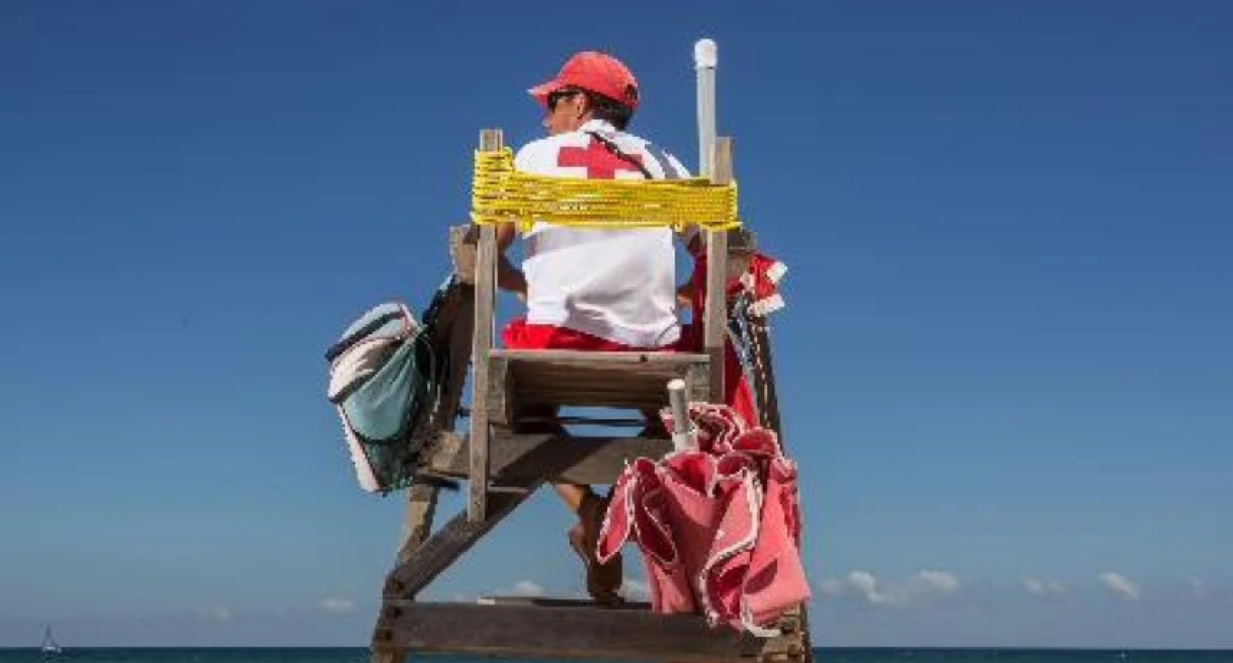
The initiative launches at a critical moment for the province. Last year, the 112 emergency services handled 130 maritime rescue and salvage emergencies across Malaga. The trend is showing no signs of slowing down, with more than 50 emergency water alerts already processed.
The 10/20 Rule: A Life-Saving Standard for Parents
While the campaign addresses safety across beaches, public pools, and inland reservoirs, Navarro placed the heaviest emphasis on protecting the region's youngest swimmers, offering a heartfelt message of condolence to the family of a young child who tragically drowned after a pool fall in Periana.
To help parents avoid a split-second tragedy, emergency services are heavily promoting the globally recognised 10/20 Water Safety Rule:
This simple, proven rule demands that anyone supervising a child near water must visually check on them at least every 10 seconds and physically remain at a distance that allows them to reach the child in less than 20 seconds. Experts emphasise that passive supervision—such as looking at a phone or reading a book while a child is in the water—fails this life-saving protocol.
"Don't Wait to See It on the News"
The official slogan for the summer safety campaign emphasises personal responsibility. Regional authorities stress that while lifeguard resources are at an all-time high, they can never fully replace individual vigilance and respect for the water.
Enhanced Infrastructure and Technical Reinforcements
The campaign is part of a structural safety strategy that the Andalusian regional authority has been steadily rolling out since 2019. This framework supports local town halls in creating comprehensive "Beach Plans" to map out risks, coordinate rescue personnel, and guarantee fast emergency response times.
Key technical and operational upgrades for the summer season include:
The Emergency Network (REJA): Specialised communication networks have been deployed on more remote stretches of the Malaga and Granada coastlines where standard mobile phone coverage is non-existent, ensuring isolated swimmers can still trigger an immediate 112 emergency response.
The 'Andalucía Beach Guide' App: A free, official mobile application designed for tourists and residents to check real-time water conditions, flag warnings, and monitor the presence of jellyfish before travelling to the shore.
Mijas Leading by Example: The launch town of Mijas was highly commended for its exceptionally well-funded coastal defence framework. This summer, the municipality’s beaches are protected by 86 active lifeguards, dedicated coastal ambulances, a highly specialised rescue drone, and an upgraded public address system to communicate hazards directly to swimmers on the sand.
The Takeaway for Expat and Holiday Swimmers
As millions prepare to flock to the Costa del Sol’s world-class beaches, safety officials are asking the public to perform basic, collective due diligence: strictly follow the coloured flag systems on the sand, never swim alone or under the influence of alcohol, and immediately follow lifeguard instructions.
The region's infrastructure is built to protect you—but the ultimate layer of safety always begins on the shore.
Are you planning on using local beaches or community pools on the Costa del Sol this summer? Were you already aware of the 10/20 rule for children's water safety? Let us know your thoughts and local safety tips below.
2
Like
Published at 10:19 PM Comments (0)
The 50 Million Strain: Why Spain’s Infrastructure is Nearing Its Breaking Point
Friday, June 19, 2026
For anyone who has recently spent an hour hunting for an appointment at a local medical centre, watched a commuter train delayed on a major regional line, or felt the sting of rising rental prices in a coastal town, the feeling is becoming hard to shake: Spain is getting crowded.

It is not just an illusion. According to a recent deep-dive analysis by El País, Spain’s population is rapidly closing in on a historic milestone of 50 million people. However, the country's public services, transport networks, and housing markets are fundamentally anchored to a structural framework designed a generation ago for just 40 million.
As population growth outpaces public investment, cracks are beginning to show across the country's infrastructure. For residents, property owners, and long-term renters, navigating these shifts requires understanding where the system is feeling the pinch—and where the state is scrambling to catch up.
The Demographic Surge
The numbers tell a striking story of rapid expansion. Over the last two decades, Spain has grown at a pace that has completely caught urban planners off guard.
This growth hasn't been driven by a sudden boom in the domestic birth rate, which remains among the lowest in Europe. Instead, it is the result of sustained international migration. Spain has become one of the most attractive destinations on the planet for global talent, digital nomads, and workers filling crucial gaps in the hospitality, construction, and agricultural sectors.
However, while the population has grown by roughly 25% since the turn of the century, public spending on vital infrastructure hasn't kept pace. Following the 2008 financial crash, a decade of strict austerity froze major public works, leaving the country with an infrastructure deficit it is still struggling to fix today.
The Three Structural Flashpoints
The strain of this 10-million-person deficit is manifesting in three distinct areas of daily life:
1. The Cercanías Bottleneck
While Spain’s high-speed AVE rail network remains the envy of the world, connecting major cities in record time, the everyday commuter networks—the Cercanías—are under immense stress. Lines in major metropolitan hubs like Madrid, Barcelona, and Valencia are dealing with record passenger volumes. The results are becoming a regular fixture of the morning commute: signal failures, overcrowded platforms, and rolling delays caused by networks operating at absolute maximum capacity.
2. The Primary Care Gridlock
Spain’s healthcare system is justly famous for its high quality, but the front door of that system—primary care (atención primaria)—is feeling the weight of the demographic shift. In fast-growing suburban belts and popular coastal expat havens, the ratio of patients to family doctors has stretched significantly. Getting a non-emergency appointment at a local centro de salud can now take days or even weeks in the worst-affected areas, as medical staff struggle to process a vastly expanded patient register.
3. The Structural Housing Deficit
Perhaps the most urgent crisis is the national housing shortage. Spain is currently facing a deficit of nearly 800,000 homes needed to match current demand. Because new construction ground to a near-total halt after the 2008 property crash, the sudden influx of new residents over the last five years has triggered a fierce bidding war for existing properties. In major cities and tourist hotspots, rents have skyrocketed, outstripping local salary growth and putting immense pressure on young families and incoming workers.
What This Means for Residents and Property Seekers
If you are living in Spain or planning a move, this infrastructure squeeze highlights the importance of location and forward planning:
-
Look Beyond the Saturation Zones: The pressure is not distributed evenly. While Madrid, Catalonia, Mallorca, and parts of the Costa del Sol are feeling the heat, many secondary cities and inland provincial capitals boast exceptional, under-utilized infrastructure, short medical wait times, and highly affordable housing.
-
Build Delays into Your Schedule: Whether it is applying for residency paperwork, waiting for a non-urgent hospital procedure, or commuting during peak hours, building a patience buffer into your routine is essential as public services adjust to the new volume.
-
A Shift in State Priorities: The silver lining is that this crisis is forcing a radical pivot in government spending. The focus is shifting away from building shiny new speculative projects toward reinforcing what already exists—expanding train fleets, upgrading local clinics, and injecting billions into public housing initiatives to bridge the 800,000-home gap.
Spain remains an incredibly vibrant, highly desirable place to live, work, and retire. Its current growing pains are a direct symptom of its immense global success and appeal. The challenge for the coming years is no longer attracting people to its shores—it is building a foundation strong enough to hold them.
Have you noticed longer wait times at your local health centre or more crowded commutes on the trains? Is the infrastructure in your area keeping up with local growth? Share your observations and join the conversation below.
2
Like
Published at 4:43 PM Comments (1)
EU Intervenes Over Spain’s Controversial Tourist Data Rules
Friday, June 12, 2026
For anyone who has checked into a Spanish hotel, collected a rental car, or booked a holiday villa over the last couple of years, the check-in process has felt decidedly more intrusive. The traditional handover of a passport has been replaced by a barrage of questions ranging from your home address and phone number to how you plan to pay for your stay.
This shift was driven by Royal Decree 933/2021, a sweeping piece of domestic legislation that forced tourism businesses to collect up to 17 distinct points of personal data per guest and upload them directly to a centralised Ministry of Interior database.

While the Spanish government championed the framework as a crucial weapon against organised crime and terrorism, it has triggered a massive backlash from the hospitality sector. Now, the row has taken on a significant European dimension. The European Commission has officially stepped into the arena, launching formal infringement proceedings against Spain over concerns that the system breaches EU data protection laws.
Why Brussels is Challenging Spain
The European Commission’s intervention follows years of intense lobbying from a coalition of European travel associations, including the hospitality group HOTREC and the Spanish Confederation of Hotels and Tourist Accommodations (CEHAT).
On June 4, 2026, Brussels sent a "letter of formal notice" to Madrid, marking the first official stage of a legal challenge. The Commission’s primary objections focus on four key areas:
-
Excessive Data Scope: The system demands highly sensitive personal information that goes far beyond standard identification, including guest phone numbers, contact emails, relationship details of accompanying family members, and precise transaction records.
-
Financial Tracking: The requirement to log specific payment methods and financial data has raised major red flags regarding consumer privacy.
-
Unchecked Surveillance Access: Brussels is questioning the broad, sweeping level of access granted to state law enforcement agencies without stricter judicial guardrails.
-
The Three-Year Retention Period: Forcing businesses to store and maintain this vast digital footprint for up to three years is seen as disproportionate and a direct risk to citizens' fundamental privacy rights.
The Hospitality Industry's "Complete Mess"
For hoteliers, travel agents, and short-term rental operators across hotspots like Mallorca, the Costa Blanca, and the Costa del Sol, the EU's intervention has been met with a massive sigh of relief.
From an operational standpoint, industry leaders have long branded the system—often dubbed the "Big Brother" registry—as a logistical nightmare. When the platform first became fully mandatory at the end of December 2024, it was plagued by persistent network crashes, leaving reception staff struggling to upload data within the strict 24-hour legal deadline.
Furthermore, the administrative burden has driven up costs for businesses, who are effectively being forced to act as data-collection agents for the state. Hoteliers argue that turning check-in counters into high-stakes data hubs not only alienates tourists who resent handing over financial details, but it also transforms small businesses into high-value targets for cyberattacks and data breaches. Some regional travel chiefs have gone as far as to label it an "anti-tourism measure" that risks scaring away visitors to more privacy-friendly Mediterranean competitors.
Security vs. Proportionality
The tourism sector has emphasised its full commitment to cooperating with law enforcement to maintain public safety. However, the core of the legal argument is that public security should not require the blanket, automated mass surveillance of millions of innocent holidaymakers.
Under EU law, any state data-harvesting program must adhere strictly to the principles of necessity and proportionality. Brussels’ decision to investigate suggests Spain may have overstepped those boundaries, legislating behind the back of the industry.
What Happens Next?
The issuance of the formal notice puts the ball firmly back in Madrid's court. The Spanish government is now legally required to respond to the European Commission, defending the system and justifying its compatibility with European data privacy standards.
If the Ministry of Interior fails to satisfy the Commission’s concerns, Spain could face heavy financial penalties or be forced to radically strip back the regulation. In the meantime, major hotel federations are already calling for an immediate suspension or total repeal of the decree, urging a return to the drawing board to build a system that balances security with the basic realities of running a hospitality business.
For travellers and property owners, the case will be a landmark precedent. It will ultimately decide where the line is drawn between keeping borders secure and protecting the fundamental right to enjoy a holiday without handing over your digital life.
Have you noticed the extra paperwork during your recent check-ins in Spain? Do you think the government's data laws went too far, or are they a necessary price for security? Share your experiences below.
3
Like
Published at 10:52 PM Comments (1)
Spam post or Abuse? Please let us know
|
|