Approaching 8 Million: Foreign Residents in Spain Surge by Over 7% as British Numbers Hold Firm
Friday, September 18, 2026
If you have spent any time queued outside your local foreigners' office (Oficina de Extranjería) or national police station lately trying to secure an appointment (cita previa), the latest official figures will come as absolutely no surprise. Official demographic data released by the Spanish Ministry of Inclusion, Social Security, and Migration reveals that a record 7,909,008 foreign nationals held a valid residence permit in Spain at the end of June.
.jpeg)
That represents a marked 7.4% year-on-year increase—adding well over half a million legally registered foreign residents to the national census within twelve months. From British retirees holding post-Brexit residency cards to Latin American professionals and international university students, Spain’s magnetic pull as a European lifestyle and economic sanctuary is stronger than ever.
The Legal Breakdown: Who Holds What?
Navigating Spain's labyrinthine immigration categories can give anyone a migraine, but the Ministry’s Permanent Immigration Observatory (OPI) categorises these 7.9 million residents into three distinct legal regimes:
-
General Immigration Regime (Régimen General): 3,885,177 people. This covers third-country non-EU nationals living on work permits, Non-Lucrative Visas (NLV), Digital Nomad Visas (DNV), and family-reunification residency.
-
EU/EFTA Freedom of Movement: 3,825,658 people. European Union and European Free Trade Association citizens holding green registration certificates (Certificado de Registro de Ciudadano de la Unión). Romanians and Italians make up the largest contingents here.
-
Withdrawal Agreement TIE Cards: 198,173 British nationals. These are UK citizens who registered their legal status under the EU-UK Withdrawal Agreement prior to Brexit and hold the coveted biometric Foreigner Identity Card (Tarjeta de Identidad de Extranjero or TIE) confirming their protected rights.
In total, when combining EU/EFTA citizens with British Withdrawal Agreement beneficiaries and their non-EU dependents, the community enjoying European freedom-of-movement rights stands at over 4.02 million individuals.
EOS Insider Context: The 198,173 British residents holding Withdrawal Agreement TIE cards represent the official bedrock of the pre-Brexit expat community. However, total British numbers across Spain are considerably higher when factoring in UK citizens who moved out post-Brexit on Non-Lucrative, Student, or Golden Visas, alongside an estimated 380,000+ UK nationals recorded across various administrative registers.
Where Is the Surge Coming From?
While European and British numbers remain stable and mature, the massive acceleration pushing Spain toward the 8-million mark is largely driven by Latin America:
-
Latin American Expansion: Nationals from Central and South America now account for 35% of all general immigration permits. Over the past year alone, Colombian nationals saw an astonishing 46.6% year-on-year surge, followed closely by Peruvians at 46.3%.
-
The Student Boom: Study-purpose residence permits have exploded by 122.3% over the past five years, reaching 94,465 registered international students. Madrid (32%), Barcelona (19%), and Valencia (11%) absorb almost two-thirds of all foreign student permits.
-
The UK Student Factor: Interestingly, British nationals studying in Spain saw a 20.3% year-on-year jump—one of the largest single increases among non-EU student cohorts alongside the United States (+41.1%).
Behind the Numbers: The Administrative Strain
While the government celebrates this demographic vitality—crucial for sustaining Spain's pension system and filling widespread hospitality and agricultural labour shortages—the strain on the ground is palpable.
Foreigners' offices (Extranjería) across tourist hubs like Palma de Mallorca, Alicante, and Málaga have been forced to extend operating hours to cope with demand. Securing a simple appointment to provide fingerprints (toma de huellas) or collect a renewed TIE card remains a notorious bottleneck for expats, with third-party agencies still charging black-market fees for appointment slots despite crackdowns by the Ministry of the Interior.
Furthermore, these figures land directly in the middle of heated political debates surrounding housing supply. While regional governments—most recently the Balearic administration—have explicitly ruled out restricting non-resident property purchases, the rapid influx of foreign residents continues to keep residential rental markets under immense pressure.
What This Means for British Expats
If you are already living in Spain or finalising your paperwork to relocate from the UK, these statistics highlight three vital takeaways:
-
Protect Your TIE Status: If you hold a Withdrawal Agreement TIE, remember that it provides permanent residency rights after five continuous years in Spain. When your 5-year temporary card expires, upgrading to the 10-year permanent card is purely declarative—the government cannot refuse renewal on economic grounds as long as you have maintained your residency.
-
Apply Well in Advance: With over 7.9 million people actively renewing or updating permits, bureaucratic processing times are stretching. If you are on an annual Non-Lucrative Visa or Digital Nomad permit, file your renewal paperwork (renovación) electronically during the 60 days before expiration.
-
Padrón Accuracy Matters: Town halls calculate local healthcare, police, and infrastructure funding based on their municipal register (el padrón). Keeping your empadronamiento up to date ensures your town receives adequate public services.
Spain remains, without question, the preferred sanctuary for Britons seeking sun, community, and quality of life on the continent. But as the foreign population reaches record heights, navigating its administrative machinery requires more patience and forward planning than ever.
Over to You: Feeling the Strain or Welcoming the Growth?
Have you struggled with foreigners' office appointments or administrative delays in your province recently? How has the shifting demographic landscape affected life in your local town or urbanisation?
Share your experiences in the comments below...
 0
Like
Published at 10:19 PM Comments (0)
0
Like
Published at 10:19 PM Comments (0)
Spain to Allow Automatic Drivers to Switch to Manual Without Re-Taking the Test
Friday, September 11, 2026
For decades, learning to drive in an automatic car came with a serious sting in the tail across Spain and the wider EU. Pass your practical driving test in a vehicle with two pedals, and the traffic authorities promptly stamped a restrictive "Code 78" onto the back of your photocard licence. If you ever wanted to drive a manual car—whether borrowing a friend's runaround or picking up a budget hire car at Málaga Airport—you had no choice but to go through the entire ordeal of booking and passing another practical exam from scratch.
 - Copy 1.jpeg)
Now, that administrative headache is finally on its way out. Under newly approved EU driving licence reforms (Directive 2025/2205), Spain’s Directorate-General for Traffic (Dirección General de Tráfico, or DGT) is preparing to scrap the Code 78 restriction, replacing the re-test requirement with a straightforward seven-hour certified training course.
The Death of an Outdated Rule
The Code 78 restriction was originally designed in an era when automatic gearboxes were expensive, gas-guzzling rarities found only in luxury saloons or adapted mobility vehicles. Across Spain, traditional driving schools (autoescuelas) overwhelmingly taught in small manual diesels, and learning clutch control was viewed as an essential rite of passage.
The motoring landscape has shifted completely:
-
The Rise of Electrification: With pure electric vehicles (EVs), plug-in hybrids, and mild hybrids taking over Spanish showroom floors, manual gearboxes are rapidly vanishing from brand-new model line-ups.
-
Changing Learner Habits: Novice drivers increasingly want to learn in automatics, which eliminate the stress of stalling on steep Andalusian hill starts and allow learners to focus purely on road positioning and hazard awareness.
-
The DGT’s Official Backing: Spanish traffic chiefs openly endorse modern automatics, highlighting that advanced electronic gearboxes accelerate more smoothly, deliver superior fuel economy, and lower carbon emissions compared to human gear-shifting.
As Sergio Olivera, president of Spain’s National Confederation of Driving Schools (CNAE), recently noted, removing this friction will make the automatic car the natural "gateway" to driving rather than a restrictive niche.
How the Seven-Hour Course Will Work
Once the new framework is formally written into Spanish law, the pathway to upgrade your entitlement will be handled directly through licensed driving schools rather than official DGT examiners:
-
No Formal Re-Test: Drivers will no longer have to sit an official practical examination or deal with the notorious waiting lists at regional provincial traffic headquarters (Jefaturas de Tráfico).
-
Targeted Curriculum: The seven-hour syllabus will focus on mechanical vehicle control: mastering the clutch bite point, operating the manual gear stick, executing hill starts, and engine braking.
-
Dual-Control Instruction: The course will combine off-road familiarisation with supervised driving on public roads accompanied by a certified instructor.
-
Direct Administrative Sign-Off: Upon completing the seven hours, the driving school will issue an official certificate, enabling the DGT to reissue the licence without the Code 78 restriction.
When Does It Take Effect? Mind the Bureaucratic Gap
While the European directive received approval in late 2025, the seven-hour upgrade cannot be used just yet.
Before local autoescuelas can begin enrolling students for the conversion courses, the Spanish government and the Ministry of the Interior must formally publish the transposing Royal Decree in the Official State Gazette (Boletín Oficial del Estado, or BOE) and define the technical training protocols. Until that occurs, anyone caught driving a manual car on an automatic-only licence remains liable for prosecution.
What This Means for British Expats and Families
For British residents in Spain, the shift brings practical advantages:
-
Expats Exchanging Licences: British nationals who hold UK automatic licences and swap them for Spanish permits under the post-Brexit bilateral exchange agreement have their Code 78 restriction carried across automatically. Once this scheme opens, upgrading to a full unrestricted manual licence in Spain will be significantly easier.
-
Expat Teenagers Learning to Drive: Getting a 17- or 18-year-old through the Spanish permiso B can be a daunting process, particularly with the notoriously tricky theoretical test. Letting them pass their practical exam in an automatic car—and later taking a low-stress seven-hour manual top-up—will save families hundreds of euros in failed exam fees.
-
Hire Car Flexibility: While automatic hire cars have become far more common at Spanish holiday airports, entry-level manual cars are still generally cheaper to rent during peak summer months.
Over to You: A Sensible Modernisation or a Safety Shortcut?
Do you think a seven-hour course provides enough time to master clutch control and manual hill starts on Spain's winding mountain roads? Or is it high time traffic laws caught up with modern automotive technology?
4
Like
Published at 11:37 PM Comments (0)
Record-Busting Spain: 58 Million Arrivals in Seven Months as the 100-Million Milestone Looms
Saturday, September 5, 2026
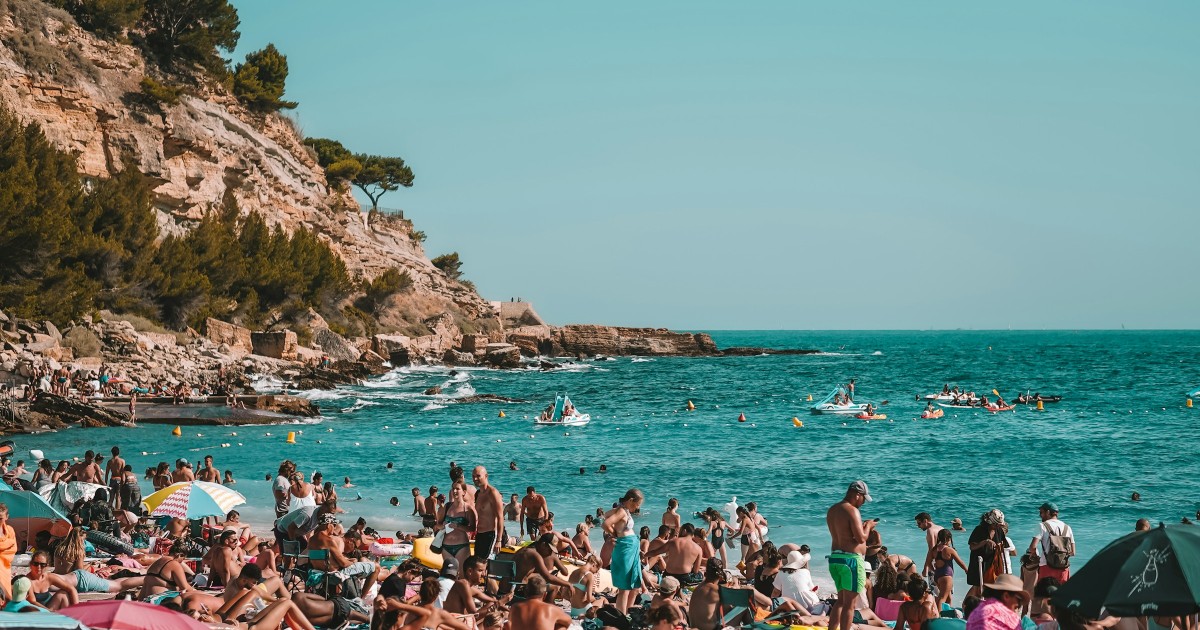
Despite street protests over housing, tightening municipal rules on tourist flats, and soaring hotel rates, Spain’s tourism juggernaut shows zero signs of decelerating. Fresh data published this week by Spain’s National Statistics Institute (Instituto Nacional de Estadística, or INE) reveals that a staggering 58.1 million international tourists touched down across the country between January and July—a 4.6% increase compared to the same record period last year.
With holidaymakers pouring in through the peak summer heat and spending reaching an eye-watering €82.05 billion (roughly £69.8 billion) so far, Spain is comfortably on track to shatter the symbolic threshold of 100 million visitors before the year is out. Leading that charge, once again, are British travellers.
The British Love Affair Remains Unshakable
For all the talk of post-Brexit 90-day Schengen limits and escalating airport queues, the UK market has not flinched. British holidaymakers formed the single largest national contingent by a massive margin, accounting for 11.5 million arrivals in the first seven months—representing nearly one in every five foreign visitors. France followed in distant second with 7.2 million, and Germany third with 6.9 million.
In July alone, Spain welcomed 11.5 million international visitors. What stands out most in the latest Frontur survey isn't just the sheer volume of arrivals, but how much cash they left behind:
-
Total Expenditure (Jan–July): €82.05 billion (£69.8bn), up 7.8% year-on-year.
-
July Spending Surge: Approached €18.22 billion (£15.5bn), a steep 10.9% jump over July last year.
-
Average Spend Per Visitor (July): Reached €1,579 (approx. £1,345), an increase of 5.9%.
-
Average Daily Outlay: Climbed to €218 (approx. £185) per day, up 3.7%.
EOS Insider Context: Tourism now generates nearly 13% of Spain’s total GDP, but the growth pattern is shifting. The fact that tourist spending (+7.8%) is significantly outstripping visitor headcount (+4.6%) shows that rising accommodation costs, higher restaurant bills, and increased airfares haven't deterred visitors—they are simply digging deeper into their pockets.
Where the Crowds Headed: July's Regional Breakdown
The classic coastal destinations absorbed the lion’s share of summer pressure, with the islands and southern coastlines feeling the brunt of peak-season demand:
-
Balearic Islands (22.3% of July arrivals): Mallorca, Ibiza, and Menorca retained the crown for summer holidays, drawn by pristine coves and Mediterranean charm. However, the surge brought familiar friction: severe hire car shortages and strict crackdowns on unlicensed lets and rogue party boats.
-
Catalonia (20.6% of July arrivals): Driven by Barcelona’s cultural pull and Costa Brava beach resorts. The region remains under intense scrutiny as Barcelona begins phasing out all 10,000 holiday let licences by 2028 amid strict water conservation rules.
-
Andalusia (14.6% of July arrivals): The Costa del Sol and Seville saw heavy international footfall for golf and sunshine. In response to rising residential rents, Málaga's town hall has moved to halt new tourist flat registrations in strained districts.
-
Canary Islands (11.8% of July arrivals): Tenerife, Lanzarote, and Gran Canaria continued their robust run backed by reliable direct UK flights, even as widespread local demonstrations called for moratoriums on new hotel permits and limits on mass development.
The Paradox: Economic Goldmine vs. Overtourism Backlash
For those of us who live here year-round or own second homes, these numbers highlight an unavoidable tension playing out across the country.
Recent research conducted jointly by Deloitte and Google projects that Spain will officially overtake France by 2040 to become the world’s most visited country, handling an estimated 110 million annual arrivals. But locally, the seams are straining.
Town halls (ayuntamientos) across Spain are no longer treating tourism purely as an economic victory lap. From Barcelona’s bold pledge to eliminate short-term holiday apartments by November 2028 to Málaga, Alicante, and Seville tightening tourist tax proposals and water usage quotas, the political tide is shifting toward managing capacity rather than blindly chasing volume.
What This Means for Property Owners and Second-Home Seekers
If you own a holiday home in Spain or are weighing up an investment on the Costas, the takeaway is clear:
-
Rental Licence Scrutiny: If your property relies on short-term holiday letting income to cover community fees and mortgage payments, ensure your regional tourist registry number (Vivienda de Uso Turístico / VUT) is fully compliant. Authorities are actively using AI scrapers and local inspections to fine unlicensed operators up to €100,000.
-
Shift Toward the Shoulder Seasons: The traditional June-to-August crush is increasingly expensive and stiflingly hot. Savvy second-home owners are spending peak summer back in the UK or in northern Spain (such as Asturias or Cantabria) and enjoying the Costas during May, June, September, and October, when daily temperatures hover around 24°C and restaurant terraces have breathing room.
Spain’s pull on British holidaymakers remains irresistible. The challenge over the next decade won't be attracting visitors—it will be ensuring the country doesn't become a victim of its own extraordinary success.
Over to You: Has Summer Tourism Reached Its Breaking Point?
Have you noticed the surging crowds and rising prices in your corner of Spain this summer? Do you think Spain should introduce caps on arrivals, or is the economic benefit simply too vital to tamper with?
Tell us your experiences on the ground in the comments below...
0
Like
Published at 2:26 PM Comments (0)
Can Laptops Save "Empty Spain"? Inside Benarrabá’s Digital Nomad Experiment
Saturday, September 5, 2026
While coastal hotspots from Málaga to Palma make headlines with protests over holiday rentals and rising rents, a quiet mountain village tucked into the Andalusian interior is taking a completely different approach. Faced with the relentless demographic drain that threatens over 40% of rural municipalities across la España vaciada (Empty Spain), Benarrabá—a whitewashed haven of roughly 450 souls in the Serranía de Ronda—is actively rolling out the welcome mat to international remote workers.
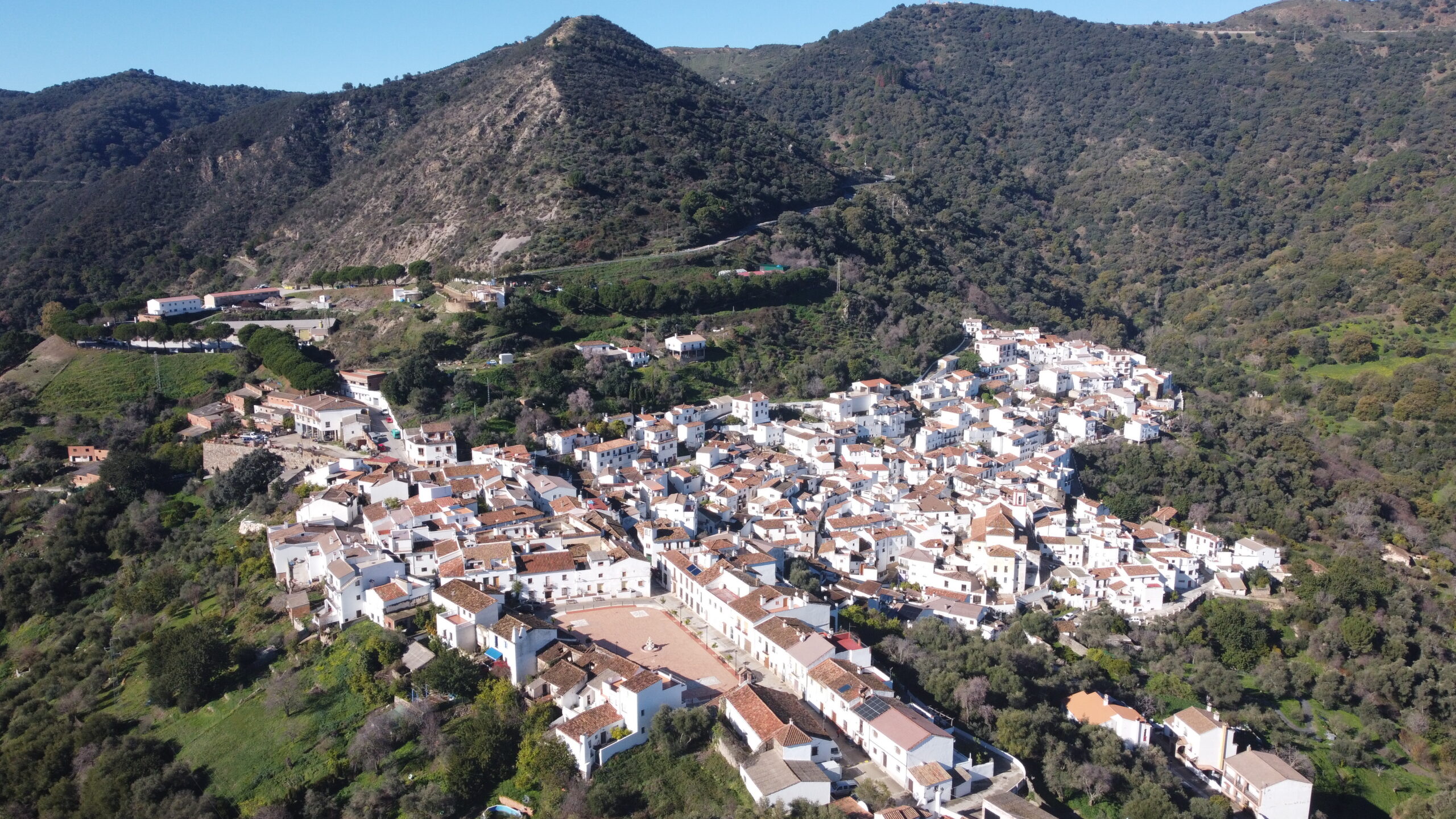
Through grassroots initiatives like Rooral and the Benarrabá WorkValley project, this sleepy enclave in the Genal Valley is proving that digital nomads and rural communities don’t just have to coexist—they might just save each other.
Moving Beyond "Laptop Wallpaper" Tourism
For years, the phrase "digital nomad" has conjured images of twenty-somethings ordering oat milk flat whites in Madrid or lounging on Costa del Sol beaches. But as major cities tighten regulations on short-term holiday lets, rural town halls (ayuntamientos) are stepping up.
In Benarrabá, the strategy avoids turning the village into a generic co-working resort. Instead, the initiative organises curated, small-group residencies (typically 6 to 12 people) lasting anywhere from two weeks to two months during the spring and autumn shoulder seasons.
Nomads don't hide away in isolated villas. They rent village houses, work out of the municipal innovation hub, shop at the local carnicería, and take part in intergenerational workshops—from oil harvesting and painting to traditional crochet with local pensioners.
EOS Insider Context: Rural flight has hollowed out the Spanish interior since the 1960s. Today, roughly half of Spain’s 8,131 municipalities have fewer than 1,000 residents. Benarrabá's model is intentional: by capping group sizes and mandating minimum stays, the village ensures newcomers become temporary neighbours rather than disruptive tourists.
The Economics: What It Costs and Where the Money Goes
Unlike mass tourism, which often enriches absentee landlords, rural remote work keeps capital directly in the village economy.
According to data from the Diputación de Málaga and project organisers, remote workers spend an average of €1,524 (approx. £1,300) per month locally. A two-week all-inclusive package—covering private village accommodation, high-speed co-working access, and cultural activities—typically starts around €890 (approx. £760).
| Factor |
Bustling Coastal Hubs (e.g. Marbella, Málaga City) |
Benarrabá & The Genal Valley |
| Typical Monthly Rent |
£1,200 – £2,000+ (€1,400 – €2,300+) |
£450 – £750 (€525 – €880) |
| Local Sentiment |
Growing tension over housing availability |
Welcoming; viewed as vital economic lifeline |
| Internet Connectivity |
Ubiquitous fibre optic |
Fibre optic & high-speed 4G/5G in village core |
| Pace of Life |
High-octane, tourist-dominated |
Slow living, community dinners, mountain trails |
| Transport Dependency |
Walkable, metro, trains, ride shares |
Car essential; winding mountain roads |
Is Village Life Right for British Remote Workers?
For British nationals holding Spain’s Digital Nomad Visa (DNV) or EU passport holders seeking an escape from the UK winter gloom, inland villages offer pristine natural surroundings, local produce, and a fraction of coastal overheads. However, ten years of living in Andalusia teaches you one golden rule: rural Spain is not a manicured theme park.
The Realities of Benarrabá Living:
Connectivity: Solid fibre in the co-working hub; occasional patchy mobile signal out on hiking tracks
Language: Basic conversational Spanish is essential to integrate at the local bar or bakery
Amenities: No 24-hour supermarkets or food-delivery apps; pharmacy and GP clinic operate set hours
Roads: Twisting mountain routes (the A-369); a 40-minute drive to Ronda and 90 minutes to Málaga Airport
The Legal & Tax Watch: If you plan to transition from a temporary nomad stint to buying a rustic village home, bear in mind that rural property purchases carry specific legal hurdles. Always verify that rustic land (suelo rústico) has regularised paperwork (such as an AFO certificate in Andalusia) and factor in regional purchase taxes (ITP), which currently sit at 7% across Andalusia.
The Ripple Effect Across the Serranía de Ronda
Benarrabá’s experiment is not happening in a vacuum. Neighbouring villages—including Genalguacil (renowned for its open-air art museum), Algatocín, and Gaucín—are watching closely. By banding together across the Genal Valley, these communities are laying down the infrastructure for a connected network of remote-work sanctuaries, proving that sustainable regeneration comes from people, not tour buses.
Over to You: Would You Swap the Coast for the Countryside?
Could you see yourself trading the seaside promenades of the Costa del Sol for the quiet cork forests of the Genal Valley? Or do the practicalities—driving mountain roads and leaving city conveniences behind—put you off making the leap inland?
Share your thoughts, experiences, or questions in the comments below!
1
Like
Published at 12:00 PM Comments (1)
Spam post or Abuse? Please let us know
|
|