Best Campsites Across the Valencian Community
Friday, September 18, 2026
While the package hotels of Benidorm and city-centre Airbnbs in Valencia tend to dominate travel headlines, a quiet transformation has swept across the eastern coastline. The days of battered frame tents and cramped wash blocks are long gone; today, Spain's campsites (campings) frequently rival four-star hotels for amenities, offering sprawling water parks, wellness spas, and designer timber lodges alongside traditional touring pitches.
Whether you are touring down from the UK in a motorhome, planning a multi-generational family holiday, or scouting locations for an eventual property move, the Valencian Community (spanning Castellón, Valencia, and Alicante) boasts some of the finest holiday parks in southern Europe.
1. La Marina Camping & Resort (La Marina, Alicante)
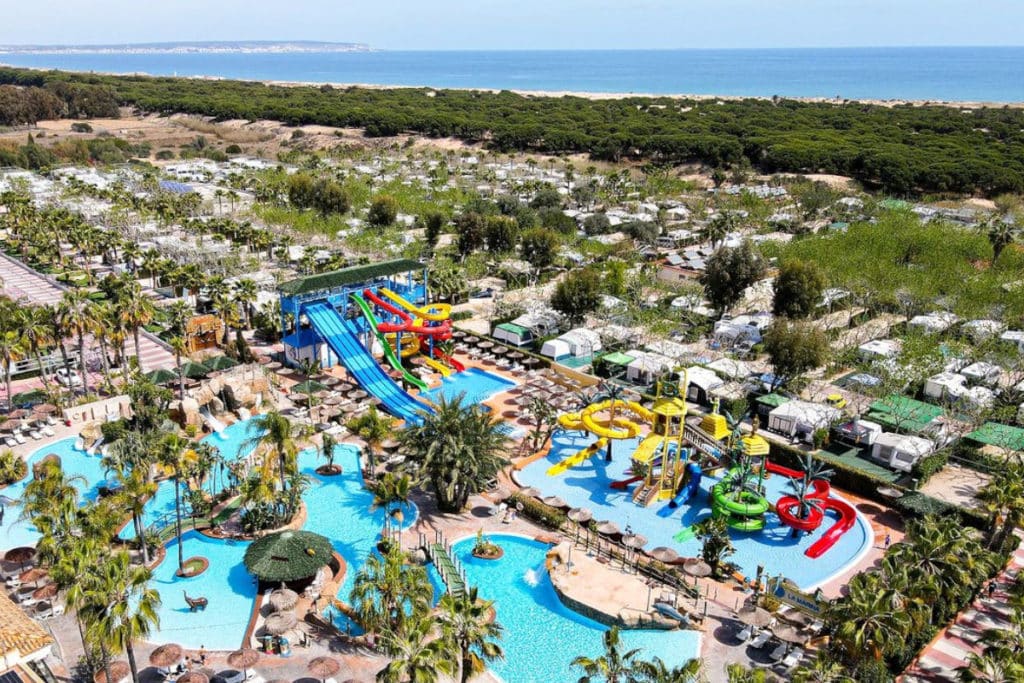
Voted the Best Campsite in Spain at the prestigious ACSI Awards, La Marina is less of a campsite and more of a full-scale Mediterranean holiday village.
-
The Highlights: A massive themed aqua park with towering slides, an 800m² gym, a comprehensive wellness spa, and multi-sport pitches.
-
Accommodation: Over 447 touring pitches for caravans and campervans, alongside 70 fully equipped bungalows and 75 premium safari-style villas.
-
Best For: Families with energetic children and teens who want an all-in-one resort base minutes from the sandy dunes of Elche.
2. Alannia Resorts (Crevillente & Guardamar, Alicante)
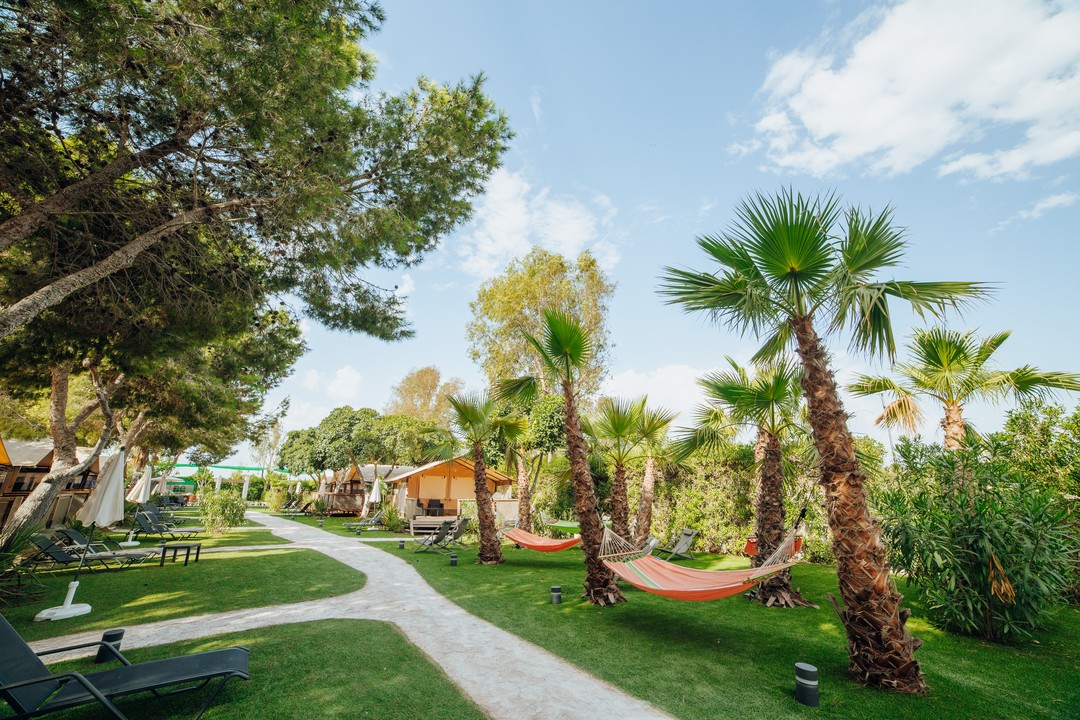
Operating flagship sites across the Costa Blanca (notably Alannia Costa Blanca in Crevillente and Alannia Guardamar), this group represents the pinnacle of modern "glamping" and winter sun touring.
-
The Highlights: Massive tropical outdoor lagoons in summer, heated indoor pools in winter, on-site supermarkets, medical clinics, and even hairdressers.
-
Accommodation: More than 1,000 spacious gravel and grass pitches catering to large British motorhomes, plus upwards of 200 Polynesian-style chalets.
-
Best For: Snowbirds looking for vibrant winter-sun communities and families wanting resort-grade entertainment programmes.
3. Camping Villasol (Benidorm, Alicante)
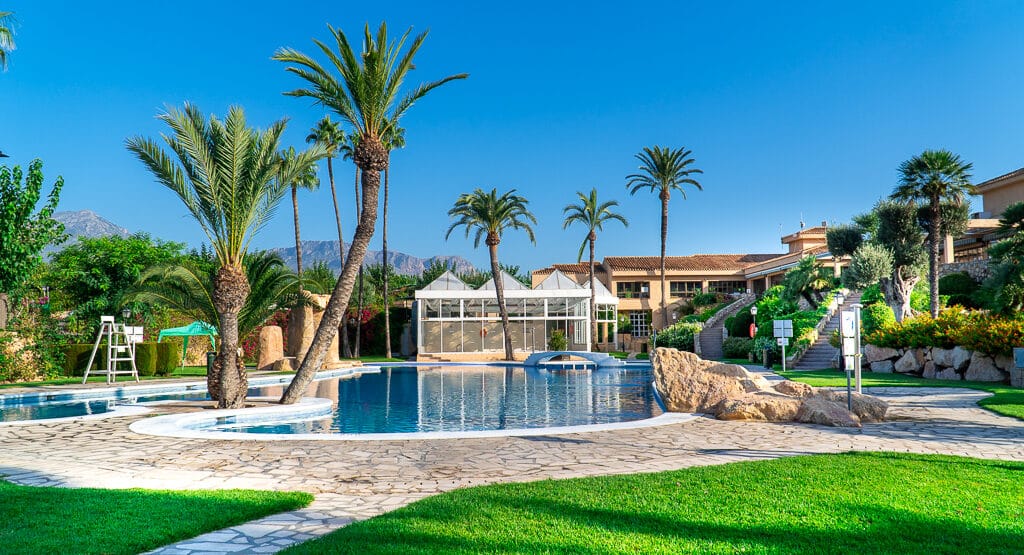
Tucked within striking distance of Levante Beach, Villasol strikes a clever balance between traditional camping charm and modern holiday conveniences.
-
The Highlights: A resort-style outdoor swimming pool surrounded by subtropical gardens, seasonal children’s clubs, and crucially, a heated indoor swimming pool for cooler winter months.
-
Accommodation: Shaded gravel pitches for caravans, as well as distinct "resort suites" and traditional Spanish wooden chalets.
-
Best For: Holidaymakers who want the entertainment, dining, and nightlife of Benidorm on their doorstep without having to stay in a high-rise hotel.
4. Camping Valencia – Bungalows (Puçol, Valencia)
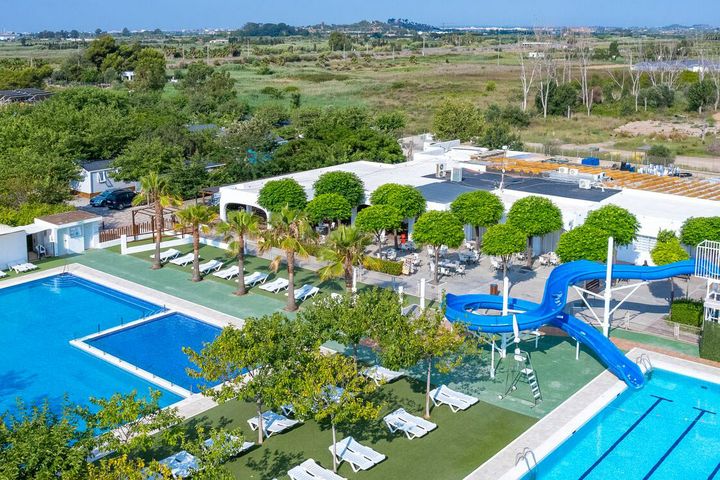
Located just 15 minutes north of Valencia city centre, this coastal retreat in Puçol provides an idyllic beachside base with fast commuter-train access right into the heart of the regional capital.
-
The Highlights: Tennis and padel courts, outdoor pool complex with waterslides, and direct pedestrian access to the beach.
-
Accommodation: Includes four tiers of bungalows; the flagship Open model stretches across 45m² and features two flat-screen TVs, a dishwasher, and a dedicated shaded veranda with chill-out loungers.
-
Best For: Culture seekers who want to explore Valencia’s historic Old Town and City of Arts and Sciences by day while sleeping to the sound of the sea at night.
5. Ribamar Camping & Bungalows (Alcossebre, Castellón)
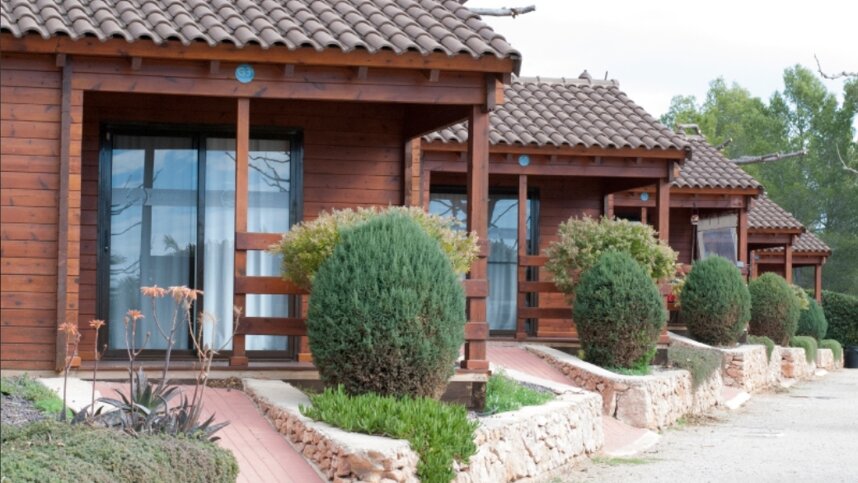
For those who prefer birdsong and pine scent over water slides and evening cabaret, Ribamar is nestled inside the protected Sierra de Irta Natural Park.
-
The Highlights: An environmentally conscious site that prioritises low light pollution, tranquil walking trails, and electric vehicle charging points.
-
Accommodation: Modern wooden lodges blended seamlessly into natural Mediterranean scrubland, alongside secluded touring pitches.
-
Best For: Hikers, mountain bikers, and nature lovers keen to explore Spain's unspoilt Costa del Azahar.
6. Camping Los Llanos (Dénia, Alicante)
Situated on the northern fringes of the Marina Alta, Los Llanos offers easy access to Dénia’s world-renowned culinary scene and dramatic rocky coves.
-
The Highlights: A relaxed, family-run atmosphere with a sparkling swimming pool, a traditional bar-restaurant serving daily paellas, and a children's playground.
-
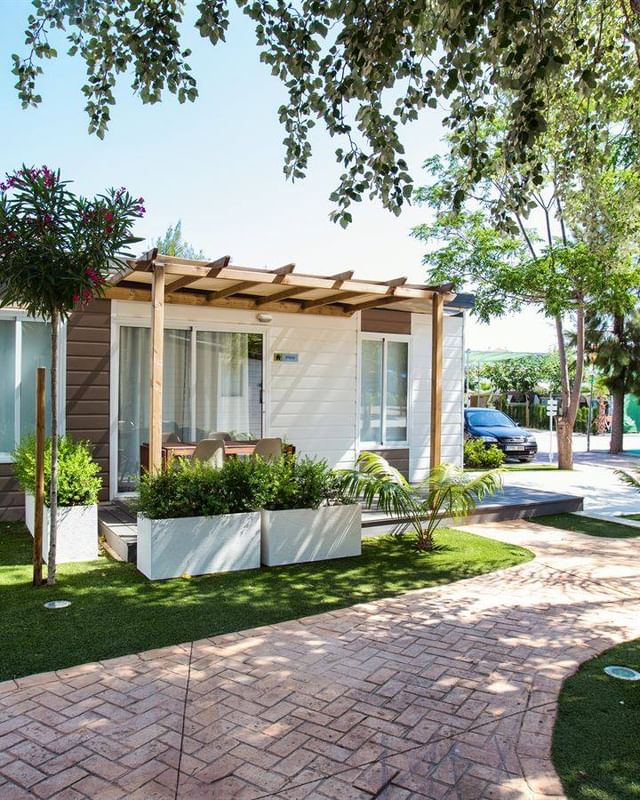
Accommodation: Flat, well-shaded camping plots set under mature mulberry trees, complemented by air-conditioned family bungalows.
-
Best For: Couples and foodies looking for a peaceful springboard to Dénia’s Michelin-starred restaurants and ferry links to Ibiza.
7. Camping Armanello (Benidorm, Alicante)
A perennial favourite among British motorhomers, Armanello is one of the most tech-forward campsites in the region, offering robust high-speed Wi-Fi across every pitch.
.jpeg)
-
The Highlights: Two outdoor pools, an artisan café-bar, bike hire, and an on-site supermarket stocked with both local specialities and familiar British essentials.
-
Accommodation: Pitch sizes up to 100m² with individual water and drainage hook-ups, alongside safari tents and Scandinavian timber chalets.
-
Best For: Digital nomads working from the road and winter tourers who require top-notch connectivity and spotless facilities.
Whether you prefer pitching a tent under the pine trees of Castellón or relaxing on a sun lounger in a five-star Alicante holiday park, the Valencian Community proves that outdoor holidays in Spain offer luxury to suit any budget.
 1
Like
Published at 10:12 PM Comments (0)
1
Like
Published at 10:12 PM Comments (0)
No More Flip-Flops on Two Wheels: Spain’s Strict New Motorcycle Rules and €200 Fines
Saturday, September 5, 2026
If your vision of Spanish summer living involves hopping onto a 125cc scooter in shorts and flip-flops for a quick run down to the beach or the local supermarket, you will need to rethink your wardrobe immediately. Starting from 1 October 2026, Spain’s Directorate-General for Traffic (Dirección General de Tráfico, or DGT) is implementing sweeping nationwide reforms to the General Traffic Regulations (Reglamento General de Circulación).
.jpeg)
Approved under Royal Decree 518/2026, the new legislation outlaws open footwear on all two-wheelers, mandates protective gloves on open roads, and introduces hefty €200 fines (approx. £170) for non-compliance. Crucially, these rules apply equally to both drivers and pillion passengers—and police will not be turning a blind eye to British holidaymakers or visiting second-home owners.
Why the DGT is Cracking Down
Spain has long had an open love affair with two wheels. In cities like Barcelona and Palma de Mallorca, mopeds and motorbikes make up nearly one in three vehicles on the tarmac, while along the Costas and across the Balearic and Canary Islands, scooters remain the ultimate antidote to coastal traffic jams.
However, accident statistics tell a sobering story. Motorcyclists consistently account for a disproportionate share of road fatalities and severe trauma injuries in Spain. The DGT's updated strategy shifts the regulatory focus away from road infrastructure towards protecting "vulnerable road users"—specifically pedestrians, cyclists, and motorcyclists.
At 30°C in the shade, ditching protective gear is undeniably tempting. But as the traffic authorities have pointed out, tarmac behaves like an industrial belt sander in a fall, even at modest urban speeds.
Practical Warning: Ignorance is no defence under Spanish law. Even if you hold a UK driving licence and have hired a 50cc moped for a three-day holiday in Ibiza or Marbella, local Policía Local and Guardia Civil de Tráfico officers will enforce these rules from day one.
The New Regulations at a Glance
The reform introduces several specific changes that every rider must understand before turning the ignition key:
| Requirement |
What the Law States |
Where It Applies |
Vehicles Affected |
| Closed Footwear |
Shoes covering the entire foot; no flip-flops, sliders, or open-toe sandals |
All roads (urban streets, town centres, dual carriageways, and motorways) |
Motorcycles, mopeds, sidecars, quads, and three-wheelers |
| Protective Gloves |
Mandatory approved motorcycle gloves |
Interurban roads only (outside built-up city/town limits) |
Both rider and passenger on all motorcycles and mopeds |
| Homologated Helmets |
Must carry recognised EU homologation seals (not just generic certification) |
All roads |
All riders and passengers |
| Traffic Jam Shoulder Use |
Riding on the right-hand hard shoulder (arcén) permitted during jams |
Only where signposted, strictly capped at 30 km/h (18 mph) |
Motorcycles and mopeds |
| Reflective Vests |
High-visibility vests mandatory at all times |
All roads |
Professional riders only (delivery couriers, e-scooters, commercial bikes) |
The Breakdown: What Changes on the Tarmac?
1. The Total Ban on Open Shoes
From 1 October, riding in flip-flops, espadrilles, Birkenstocks, or any open-toed footwear is officially a serious traffic offence.
-
The Rule: Footwear must cover the entire foot. Sturdy trainers, ankle boots, or purpose-built riding boots are acceptable, but any footwear leaving heels or toes exposed is banned.
-
The Scope: This applies everywhere. Slipping down a residential side street in Mallorca to buy milk in flip-flops carries the exact same penalty as cruising down the A-7 coastal motorway.
2. Mandatory Gloves on Open Roads
Gloves are now legally required on all interurban routes—any stretch of tarmac outside town or village boundary signs.
-
While urban commuters can technically ride within town limits without gloves, the moment you hit the open road connecting two resorts or towns, both rider and passenger must wear certified protective gloves.
-
The DGT has granted a transition grace period regarding the final technical homologation standards for gloves, meaning standard protective motorcycle gloves already sold across the UK and EU remain fully compliant.
3. A Sensible Rule for Spanish Traffic Jams
There is, however, one very welcome concession for riders. Anyone who has sat sweltering in baking August traffic on the approach to Málaga or Alicante knows how punishing stationary queues can be on a bike.
Under the new decree, motorcyclists are legally permitted to use the right-hand hard shoulder (arcén) to filter past gridlocked traffic. However, there are two crucial caveats:
-
It is only legal on sections specifically signposted and authorised by the highway authorities.
-
Riders must never exceed 30 km/h (18 mph) and must give absolute priority to emergency vehicles, broken-down motorists, and cyclists.
Gear Up for the Spanish Climate
For expats living here year-round, investing in summer-specific motorcycle gear is no longer an optional luxury—it is an administrative necessity. Modern lightweight mesh riding trainers and ventilated summer gloves with carbon-knuckle protection keep you cool while ticking every legal box.
Before heading out onto Spanish tarmac this autumn, check your kit, equip your pillion passenger, and leave the flip-flops packed safely in your beach bag.
2
Like
Published at 2:13 PM Comments (0)
Spam post or Abuse? Please let us know
|
|