Diving Into Hell’s Throat
Friday, July 31, 2026
When summer temperatures across the Spanish peninsula soar past 35°C, tourists flock in droves to the crowded beaches of the Mediterranean, fighting for towel space on golden sand. But seasoned expats and local nature lovers know that the absolute best way to beat the heat is to head inland, high up into the rugged mountain folds of Extremadura, where Mother Nature has carved out something far more refreshing.
.jpeg)
Tucked away in the northern reaches of Cáceres province, the Garganta de los Infiernos (Hell’s Gorge Nature Reserve) sounds terrifying. Yet, despite its dramatic name, this protected wilderness in the heart of the Valle del Jerte is nothing short of paradise.
The Geology of "Hell’s Gorge"
Spanning nearly 7,000 hectares between the Sierra de Gredos and the Sierra de Tormantos, the reserve is a landscape of stark contrasts. Formed by ancient glacial activity and thousands of years of relentless water erosion, the terrain drops dramatically from jagged high-mountain peaks—reaching over 2,200 metres—down into lush, deciduous forests filled with chestnut, oak, and cherry trees.
The crown jewel of this natural reserve is Los Pilones: a stunning series of giant circular granite pools (marmitas de gigante) carved smooth like a giant’s staircase into the riverbed. Over millennia, swirling pebbles and rushing snowmelt from the peaks have hollowed out the rock, creating a natural waterpark complete with smooth stone slides and deep, crystalline plunge pools.
.jpeg)
Exploring the Reserve: What to Expect
Whether you are looking for a gentle hike or an unforgettable summer swim, the Garganta de los Infiernos offers some of the most striking scenery in central Spain.
| Trail / Attraction |
What to Expect |
Best For |
| Sendero de Los Pilones |
A linear 6km return walking trail winding uphill through oak forests and mountain streams. |
Walkers and families looking for moderate hiking. |
| Los Pilones Natural Pools |
A cascading series of 13 crystal-clear granite baths fed by ice-cold mountain water. |
Summer swimming, sunbathing on warm rocks, and adventure lovers. |
| Chorrero de la Virgen |
A dramatic, towering waterfall plunging down the high mountain slopes. |
Scenic photography and remote wilderness views. |
The Expat Survival Guide to Los Pilones
If you plan on visiting this natural wonder during the peak of summer, a little preparation goes a long way.
1. Timing Your Visit
While the Jerte Valley is world-famous in spring for its million-and-a-half cherry trees bursting into a blanket of white blossom, summer is when the gorge truly comes alive. Aim to arrive early in the morning. Parking at the visitor centre fills up fast, and beating the midday heat makes the 3-kilometre uphill trek to the pools much more manageable.
2. Footwear is Crucial
Do not attempt the walk in flimsy flip-flops. The granite rocks around the pools are notoriously slippery when wet, and the trail from the entrance requires sturdy walking shoes or trainers.
3. Pack Light and Smart
There are no snack bars or kiosks once you reach the pools. Pack plenty of water, a picnic, and a quick-drying towel. Most importantly, remember that the water comes straight from mountain snowmelt—it is shockingly brisk, even in August!
.jpeg)
Pro-Tip: If you prefer to skip the uphill walk in the sweltering heat, local active tourism companies near the reserve entrance offer guided 4x4 excursions that will shuttle you up the rugged mountain tracks, dropping you right near the entrance to the pools. Afterwards, make sure to stop by one of the nearby villages—like Jerte or Cabezuela del Valle—to sample local Extremaduran delicacies and cold local craft beer at a traditional terrace bar!
Escaping the coast to discover Spain’s inland natural reserves is one of the greatest perks of living long-term on the peninsula.
Have you ever traded the sandy beaches for the icy mountain rivers of Extremadura? Have you braved the granite pools of Los Pilones, or do you have another secret swimming spot hidden in the Spanish hills? Let us know your favourite wild-swimming escapes in the comments below...
 2
Like
Published at 10:27 PM Comments (0)
2
Like
Published at 10:27 PM Comments (0)
Four Fast Spanish Tapas (Plus One Warm Crowd-Pleaser) to get you out of trouble...
Saturday, July 25, 2026
We have all been there. It is a warm Sunday afternoon, you are relaxing on the terrace, and suddenly your Spanish neighbours or old friends pop by unannounced. In the UK, unexpected company might send you scrambling for a box of dry biscuits and a kettle. In Spain, however, hospitality is an art form, and you are expected to pull together a spread of mouthwatering tapas in a matter of minutes.
If you need to whip up something impressive before your guests even settle into their chairs, skip the complicated cooking. Here are four classic, lightning-fast Spanish recipes—plus a bonus warm comfort classic that always saves the day.
1. Pan con Tomate (Catalan Tomato Bread)
.jpeg)
The absolute king of quick Spanish bites. It requires fewer than five ingredients, but the secret lies entirely in the quality of your components. Do not use supermarket sandwich loaves; you need a crusty artisan loaf (pan de pueblo).
The Shopping List
-
1 loaf of rustic country bread: Cut into thick slices.
-
Ripe plum tomatoes (tomates de pera): Cut cleanly in half across the equator.
-
Extra Virgin Olive oil (EVOO): Reach for a bold, pungent oil here—it makes all the difference.
-
1-2 garlic cloves: Peeled.
-
Flaky sea salt (sal Maldon).
Instructions
-
Toast the Bread: Toast your bread slices until they are golden and crisp on the outside, but still soft in the centre. You can use a toaster, a dry frying pan, or the grill.
-
Rub the Garlic: While the bread is still warm, take a peeled garlic clove and lightly rub it across the surface of the bread. (Go lightly if you don't want it overpowering!)
-
Apply the Tomato: Take a halved plum tomato and rub it vigorously cut-side down against the rough toasted bread, crushing the pulp into the crumbs until the bread is stained red and soaked in juices. Discard the remaining tomato skin.
-
Finish: Drizzle generously with high-quality extra virgin olive oil and sprinkle with a pinch of flaky sea salt. Serve immediately.
2. Gambas al Ajillo (Sizzling Garlic Prawns)
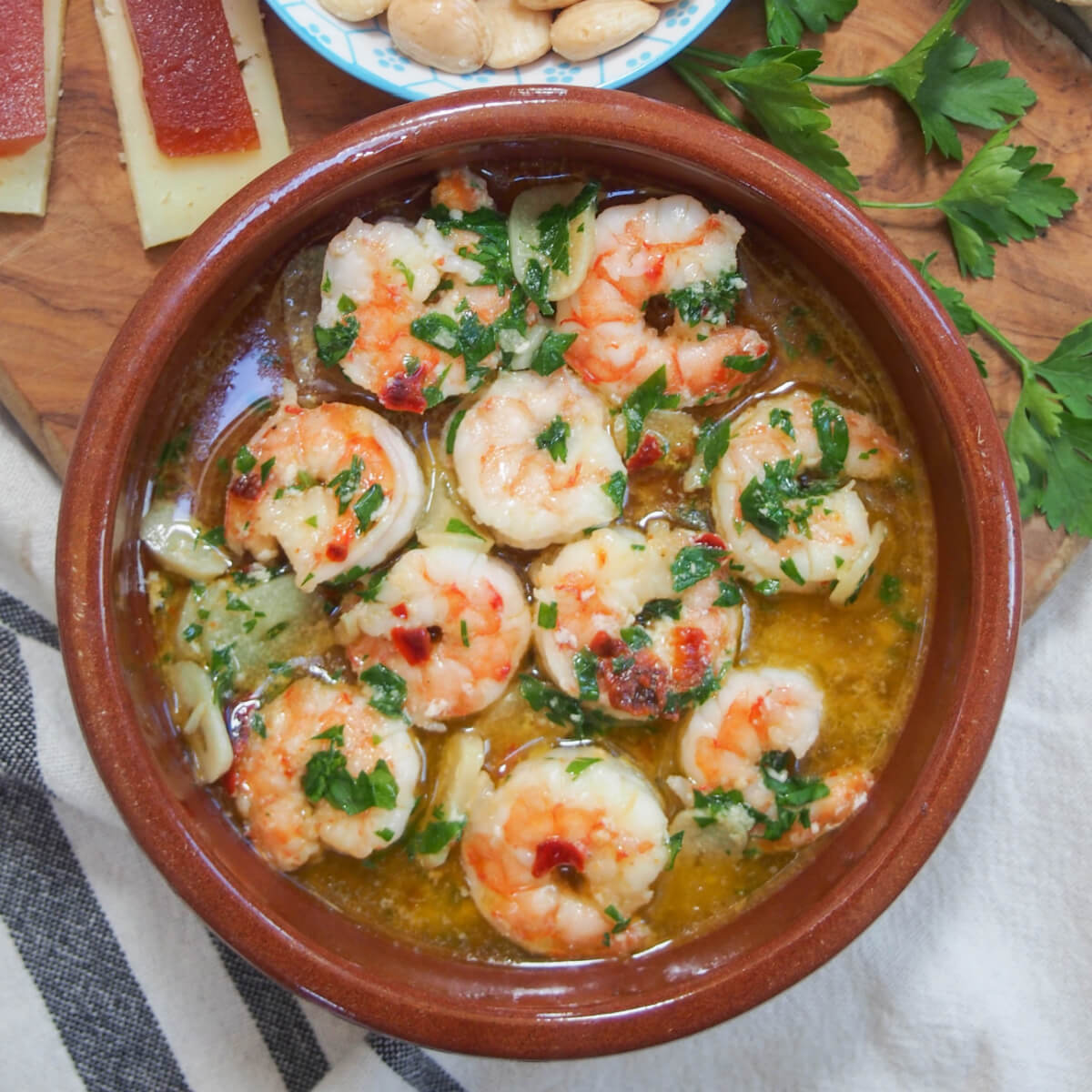
Nothing says "luxury tapas" quite like the smell of garlic and chilli sizzling in olive oil. This classic Andalusian dish takes less than five minutes from fridge to table, provided your prawns are thawed.
The Shopping List
-
300g Raw king prawns (gambas): Peeled and deveined (fresh or successfully defrosted).
-
4–5 garlic cloves: Thinly sliced.
-
1 small dried red chilli (guindilla): Sliced into rings (optional, for a kick).
-
Extra virgin olive oil: Enough to generously coat the bottom of your pan.
-
Fresh parsley: Finely chopped for garnish.
-
Sea salt to taste.
Instructions
-
Infuse the Oil: Place a traditional earthenware clay dish (cazuela) or a small frying pan over medium heat. Add a generous pour of olive oil, the sliced garlic, and the chilli. Let them gently sizzle until the garlic turns golden and fragrant—do not let it burn!
-
Add the Prawns: Turn the heat up slightly and add your raw prawns and a pinch of salt.
-
Cook Rapidly: Toss the prawns in the hot, garlic-infused oil for roughly 2 to 3 minutes until they turn pink and opaque.
-
Serve Sizzling: Remove from the heat immediately, garnish with chopped fresh parsley, and bring it straight to the table while it is still bubbling furiously. Make sure you have a basket of crusty bread ready to mop up the remaining garlic oil!
3. Gilda (The Ultimate Basque Pintxo)
.jpeg)
Invented in San Sebastián and named after Rita Hayworth's sultry film character, the Gilda is the ultimate no-cook toothpick pintxo. It is salty, briny, slightly spicy, and pairs ice-cold with a crisp beer or a vermouth.
The Shopping List
Green olives (aceitunas gordal or manzanilla): Pitted.
-
Salted anchovy fillets (anchoas): Rolled up individually.
-
Basque pickled guindilla peppers (piparras): Whole pickled green chilli peppers.
-
Good quality toothpicks or small skewers.
Instructions
-
Thread the Base: Take a long toothpick and slide a green olive onto the bottom.
-
Add the Anchovy: Fold a salted anchovy fillet lengthways and thread it onto the skewer.
-
Top with the Pepper: Finish the skewer by piercing a whole pickled piparra pepper near its stem.
-
Arrange: Line them up on a small slate or ceramic plate. No cooking, no mess—just pure, instantaneous Basque flavour.
4. Pan con Alioli and Ali-Oli Dippers
.jpeg)
If you want something creamy, rich, and intensely garlicky to accompany a cold drink, quick homemade garlic mayonnaise with crunchy bread or crisps is a foolproof crowd-pleaser.
The Shopping List
-
1 egg at room temperature.
-
1 to 2 cloves of garlic (adjust based on how brave you feel).
-
200ml Sunflower or mild olive oil.
-
A squeeze of fresh lemon juice.
-
Sea salt to taste.
Instructions
-
Blend the Base: Place the egg, peeled garlic, a pinch of salt, and a splash of lemon juice into the tall cup of a stick blender.
-
Pour the Oil: Pour the oil directly on top. Let it settle for a few seconds so the oil rests above the egg mixture.
-
Emulsify: Insert the blender all the way to the bottom of the cup, turn it on high, and do not move it until you see the emulsion forming at the bottom. Once the thick white sauce begins to climb, slowly tilt and pull the blender up and down until fully smooth.
-
Serve: Spoon into a small dipping bowl, surround with rustic breadsticks or potato crisps (patatas fritas), and serve.
5. Berenjenas Rellenas (Spanish Stuffed Aubergines)
.jpeg)
If you have a few extra minutes and want to transition from cold bites to a warm, comforting crowd-pleaser, traditional Spanish stuffed aubergines (berenjenas rellenas) are an absolute household favourite across the peninsula.
The Shopping List
-
2 medium aubergines (berenjenas): Cut in half lengthwise.
-
300g minced meat (traditionally a mix of pork and beef, or beef and chorizo): Raw.
-
1 medium onion and 2 garlic cloves: Finely chopped.
-
200g Strained or crushed tinned tomatoes (tomate triturado).
-
Béchamel sauce: Either homemade or a quick store-bought brick (bechamel en brik).
-
Grated cheese: For melting over the top.
-
Extra virgin olive oil, salt, and black pepper.
Instructions
-
Roast the Base: Score the flesh of the aubergine halves in a crosshatch pattern, drizzle with olive oil and salt, and bake at 180°C for about 35 minutes until the flesh is completely tender.
-
Scoop and Reserve: Scoop out the soft flesh with a spoon, leaving a sturdy shell. Chop the scooped flesh roughly and set aside.
-
Make the Filling: In a frying pan with olive oil, sauté the onion and garlic until soft. Add the minced meat and brown thoroughly. Stir in the chopped aubergine flesh and crushed tomatoes, letting it simmer for 10 minutes until rich and thick. Season with salt and pepper.
-
Fill and Sauce: Stuff the aubergine shells generously with the meat mixture. Pour a layer of warm béchamel sauce over each one and top with grated cheese.
-
Gratinate: Place under your oven grill (gratin) for 5 to 8 minutes until the cheese is bubbling and golden brown. Serve warm.
Pro-Tip: Keep a jar of good Basque piparras, a tin of quality Cantabrian anchovies, and a block of Manchego permanently stocked in your pantry or fridge. With those three ingredients, plus a bag of potatoes and some eggs, you can survive any sudden influx of expat guests like a seasoned local!
3
Like
Published at 10:51 AM Comments (0)
The Expat’s Guide to White Sangría: Spain’s Crisp Summer Secret
Friday, July 3, 2026
While holidaymakers on the costas are happily parting with £12 a glass for sugary, neon-red concoctions poured from pre-mixed supermarket cartons, seasoned expats know a better way to survive the relentless mid-summer heat. Enter sangría blanca (white sangría)—a lighter, crisper, and infinitely more sophisticated alternative that lets Spanish produce shine without the heavy afternoon hangover. If you have spent any length of time living in or travelling across Spain, you know that July terrace lunches demand something chilled, vibrant, and effortless to share with friends.
.jpeg)
The Anatomy of a Proper White Sangría
The beauty of homemade white sangría lies in its balance. Unlike heavy red sangría—which often relies on brandy or dark spirits to mask inferior wine—white sangría uses the natural acidity of Spanish white grapes to cut through the summer humidity. It is light, aromatic, and relies on the natural sweetness of seasonal stone fruit rather than heaps of refined sugar.
To get it right, your choice of base wine matters. You need a grape with enough character and acidity to hold its own against citrus juice and melting ice. Here is how the most common Spanish supermarket varietals stack up for sangría making:
| Wine Varietal |
Ideal Spanish Region |
Typical Cost (UK Sterling) |
Best Flavour Profile for Sangría |
| Verdejo |
Rueda |
£4.00 – £6.00 |
Dry, crisp, with hints of fennel and green apple; cuts through sweet fruit brilliantly. |
| Macabeo (Viura) |
Rioja / Catalunya |
£3.50 – £5.50 |
Floral and balanced, a great neutral canvas that lets peach and grape flavours dominate. |
| Albariño |
Rías Baixas |
£7.00 – £11.00 |
High acidity with mineral notes; luxurious, but perhaps too delicate to drown in fruit juice. |
The Shopping List & Prerequisites
You do not need an artisan larder to assemble a world-class white sangría. In fact, you can pick up everything required for a generous 1.5-litre pitcher for roughly £6.50 total during your weekly run to Mercadona or Consum.
Ingredients (Serves 4–6)
-
1 bottle (75cl) dry or semi-dry Spanish white wine: A chilled Rueda Verdejo or Macabeo is perfect.
-
3 to 4 fresh lemons: You want the squeezed juice only.
-
A generous splash of sweet wine: Look for a local Moscatel (Muscat) or even a sweet Málaga wine to add depth.
-
2 large fresh peaches (melocotones): Peeled and chopped into rustic chunks.
-
A handful of seedless white grapes (uvas): Halved or left whole.
-
1 tablespoon sugar: Optional, depending on the ripeness of your fruit.
-
1 can of soda water or lemon soda: Optional, if your guests prefer a gentle fizz.
-
High-density ice cubes: Buy a bag of solid hielo from your local petrol station or supermarket—home-frozen cubes melt too quickly and water down the drink.
-
Fresh mint leaves: For garnishing each glass.
Insider Pro-Tip: Never use your finest £15 estate wine for sangría, but strictly avoid the £1.20 bottom-shelf carton wine as well! If you wouldn't happily drink a glass of it on its own, adding fruit won't magically save it. Additionally, always buy your peaches firm from the local mercado or town hall market stalls—overripe supermarket fruit will disintegrate into a mushy pulp once submerged in alcohol.
Step-by-Step Preparation Logic
Creating the perfect pitcher is all about timing and temperature. Follow this sequence to ensure your flavours integrate cleanly without bruising the fruit.
-
Create the syrup base: If you are using sugar, dissolve it in 50ml of warm water first. Dumping raw sugar crystals directly into cold wine will just leave a gritty, sweet sludge at the bottom of your pitcher.
-
Combine the alcohols: Pour your chilled bottle of white wine and the splash of sweet Moscatel into a large, sturdy serving pitcher. Stir in your dissolved sugar syrup until fully blended.
-
Add the citrus kick: Squeeze your fresh lemons directly into the wine mixture and give it a thorough stir. The sharp lemon acidity is essential to balance the sweet wine and stone fruit.
-
Prep and drop the fruit: Peel your peaches and cut them into bite-sized wedges. Drop the peaches and grapes into the pitcher.
-
The essential maceration: Place the pitcher in the fridge to rest for 45 to 60 minutes. Do not skip this! Maceration allows the fruit to soften slightly, releasing its natural nectars into the wine while soaking up the alcohol.
-
Assemble and serve: Just before serving, fill highball glasses or large balloon wine glasses to the brim with dense ice cubes. If using soda water for fizz, stir it gently into the pitcher now. Pour the sangría over the ice, ensuring every guest gets a spoonful of drunken fruit, and slap a sprig of fresh mint against your hand to release the oils before placing it on top.
We all know that every expat kitchen in Spain has its own secret twist on summer drinks—some swear by adding a shot of Cointreau, others swap out peaches for local flat nectarines (paraguayos), and a few rebellious souls use Cava instead of still white wine!
What is your go-to summer refresher when the Spanish heat sets in? Do you stick to a classic tinto de verano, or have you mastered your own house sangría? Drop your recipes, regional variations, and thoughts in the comments below!
1
Like
Published at 10:42 PM Comments (0)
Spam post or Abuse? Please let us know
|
|