Deaf as a Post
Saturday, June 27, 2026
I may have given the impression over this long and normally enjoyable life that I was a little distrait with my family, my closest friends, my circle and with the nice man in the tax office. The thing is, like many people over the age of, let us say fifty, I am stone deaf.
 My grandmother had an ear trumpet which she would point towards whoever interested her. The result was that the whole family tended to raise their voices which in my opinion is a good idea, especially here in Spain where ‘the dog that doesn’t bark doesn’t get fed’. My grandmother had an ear trumpet which she would point towards whoever interested her. The result was that the whole family tended to raise their voices which in my opinion is a good idea, especially here in Spain where ‘the dog that doesn’t bark doesn’t get fed’.
And thus, like many a slightly vague senior, I eventually gave up and admitted to myself that I am a trifle hard of hearing – a bit like the Twelve Steps:
‘My name is Lenox, and I’m deaf’.
‘Speak up, we can’t hear you’, they shouted back.
I happen to have a Spanish connection. These are very common between our hosts, but quite rare for Johnny Foreigner. There will normally be a sister-in-law who is a judge, a brother who works in the city hospital, a school friend who is now a Guardia Civil and so on. Almost everybody has a useful contact either through the extended family or by happenchance. They like to say: ‘It’s not what you learnt at school, it’s who you sat next to’.
A very fine system it is too. In Spain, everyone is in with a chance.
For we foreigners, this is a lot harder, but I’ve been here for a long time: almost sixty years (cough cough!) and, anyway, where I’m going with this is I know someone in the hearing aid business, or rather I did as she has since moved to Tenerife. Long story short, I got some staggeringly expensive pinganillos for a song. Fifty percent off the listed price.
Spain is very noisy, and one may be tempted to soldier on without a listening device (sorry, that’s the best the Thesaurus could come up with apart from ‘a vacuum-tube hearing aid’). The ambient noise, the drills, the shouts, the tricked-out mopeds, the horns and sirens. It’s not so bad when you’re deaf, for sure, but then you need to hear what your darling says too.
The main drawback to my hearing aids is that they faithfully pick up all kinds of noise that I would rather not hear – the folk at the next table, the coffee-grinder behind the counter, the television and the waiter shouting ‘dos cañas y una Fanta limón’ to the woman working the bar. I can always take one out of my ear, unplug myself on one side as it were, to better hear what’s going on the other side where my neighbour is seated. Unless it’s not interesting, in which case I can more or less manage what my grandmother used to do with her ear trumpet, which was to point it the other way.
Spain is the second-noisiest country in the world, only behind Japan – and that’s because they have paper walls (useful in an earthquake) whereas ours are made of machimbrado: thin brick and plaster. The sound travels through them, and once it has arrived, it bounces off the tiled floor and naked walls.
Which is why I like a carpet and a painting or two in my quarters.
Hearing aids are not as easy to remember as glasses. I will have reached for my specs right from the start, while clambering out of my pit, but I may be behind the steering wheel before I remember the hearing aids, blast them.
Still, I probably won’t need them just to do the shopping and to have a beer and a tapa afterwards. Deaf people are very good at saying ‘fancy that’ and ‘well, I never’ when they can’t hear you.
I’m feeling better now. Barman, bring me another caña!
 3
Like
Published at 10:11 PM Comments (3)
3
Like
Published at 10:11 PM Comments (3)
English is The Language of Diplomacy
Sunday, June 21, 2026
Aren’t we lucky speaking, reading and writing in English? We either managed to be born in an English-speaking region, or we learnt it as a child (easily) or as an adult (more difficult). There are those who don’t speak the language and they doubtless will have found themselves at a disadvantage as they go through life in the West.
Like Alberto Núñez Feijóo, Isabel Díaz Ayuso and Santiago Abascal for example.
English has become the lingua franca, the common tongue, even though it’s not the first official language in any country of the EU-27: and then only in Eire and Malta, which make up between them just 1.3% of the European Union’s total population. Nevertheless, around 43% of the EU speaks English, led (after the aforementioned Eire and Malta), by the Netherlands, Croatia and Austria.
Probably using subtitles rather than dubbing on the films and TV shows is a help.
Disappointingly, around 77% of Spaniards, says the INE, speak no English whatsoever. Yes, despite the tourism.
General Franco didn’t help, banning all languages to be spoken other than Spanish (hence the subtitles). This included Catalan, Euskera, Galego and even signing for the deaf.
English of course does better elsewhere, thanks to the USA, the UK, Australia, Canada, and a host of other countries around the world. If you are thinking of going into business, the hospitality sector or politics, it’s a vital tool to acquire.
Which brings us back to Alberto Núñez Feijóo (not an easy name, and I say this in sorrow, for English-speakers to remember on indeed pronounce).
Feijóo was on a TV chat show the other day – on one of the commercial channels: needless to say, he won’t go on the national TVE. He told Pablo Motos on ‘El Hormiguero’ that he doesn’t speak English at all (he blames his childhood school rather than Franco) but he says that he can always translate something, when necessary, on his handy mobile phone.
There’s the memory of Mariano Rajoy refusing to answer a question put by the BBC in English at a meeting in Brussels back in 2017.
The lack of English in (most) Spanish politicians came to light back in 2013 with Ana Botella, the mayoress of Madrid (José María Aznar’s wife) and her promotion for Spain’s capital city with a: “Relaxing cup of café con leche in Plaza Mayor”.
Today, with the departure of Alberto Casado from the PP, no one in that party particularly speaks what the Spanish fondly like to call ‘the Language of Shakespeare’ (not many of us do either, but that’s another story). Over at Vox, Feijóo’s putative partner Santiago Abascal speaks a little broken French (apparently), but that’s as far as it goes. 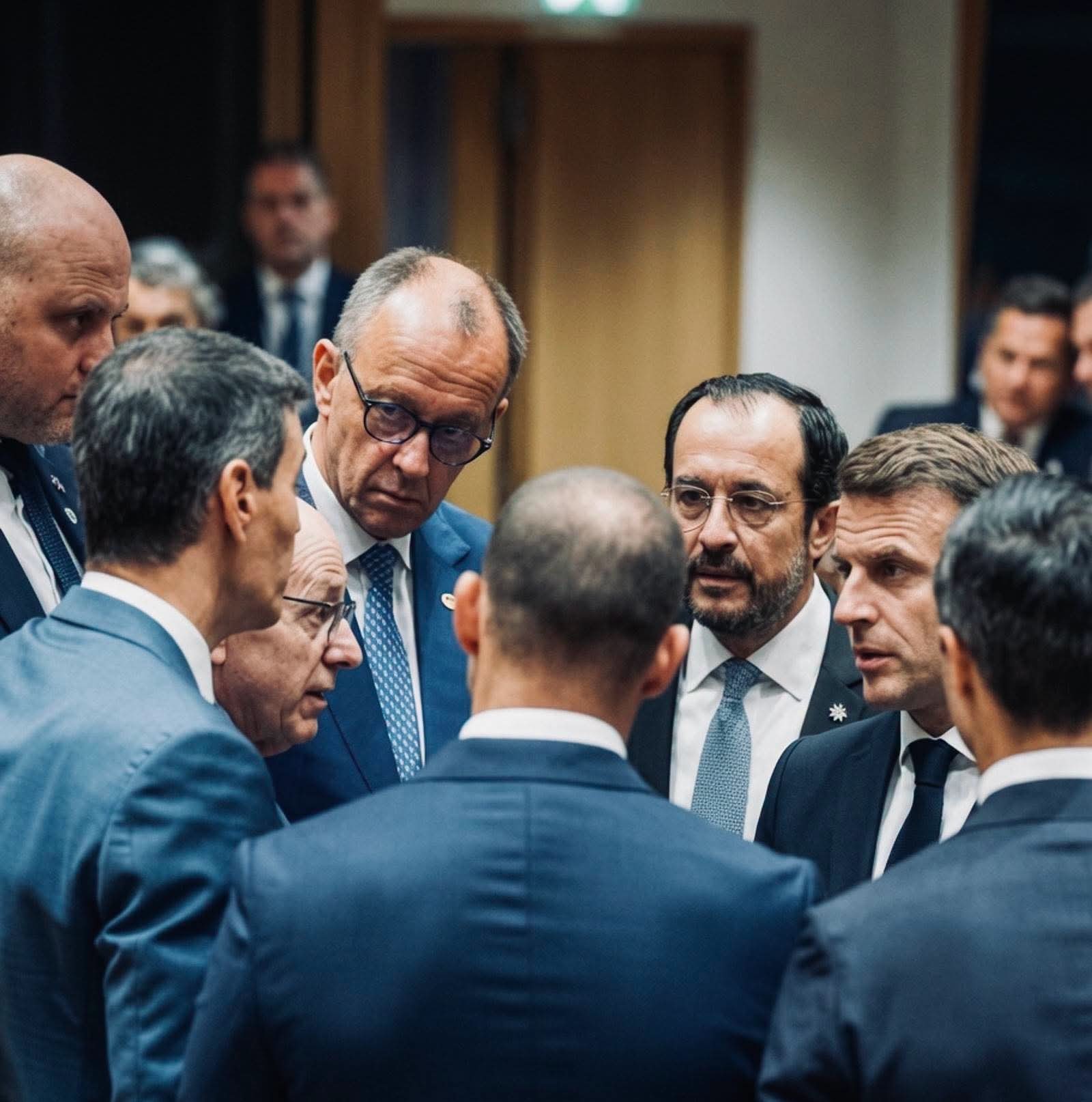
Thus, once again, Pedro Sánchez and his team have the advantage in Brussels, at the UN in New York and elsewhere. Sánchez speaks good English and French; the Minister of the Economy Carlos Cuerpo has English, French, plus adequate Mandarin and Japanese. The Minister for the Environment Sara Aagesen Muñoz is fluent in English. The Foreign Minister José Manuel Albares Bueno has fluent French and English. The Defence Minister Margarita Robles Fernández has ‘good’ English and French. The Minister for Hacienda Arcadi España García has some English (and presumably a lot of Math). The clever Minister for Transport Óscar Puente speaks good English and so on (Thanks to Google AI for the foregoing).
Returning to Feijóo, who won’t remain the leader of the Partido Popular for much longer (says El País), we can look at the two leading rivals for his position.
The president of the Madrid Region, Isabel Díaz Ayuso speaks some English (she worked as an intern on a radio station in Dublin), but she has acute political problems with her boyfriend now finally coming to roost. The other is Juanma Moreno from Andalucía, who says he is currently taking lessons from ‘a native teacher’.
Thus, once again, the difference in professionalism between the current government and the competing PP/Vox politicians is evident.
2
Like
Published at 7:20 PM Comments (3)
Zap the Zapper
Tuesday, June 16, 2026
Let’s see – we’ve had Felipe González (sometimes known in those days as Señor X) and his… at the very least… improper war against the Basque nationalists with the GAL (27 state-murders); José María Aznar who blamed the same Basque group, the ETA, for the Al Qaeda train explosions in Madrid in retaliation for his war with Bush Jr and Blair in Iraq (192 deaths) – plus having some of his ministers ending up investigated for corruption; Zapatero and his peculiar eyebrows; followed by the mysterious M.Rajoy (any Spaniard knows where I’m going with this) and his departure precisely for corruption; and now Pedro Sánchez, who we are told has both a shifty brother and a dodgy wife.
While the far-right, the media-whores, the conservative judiciary, the CIA and the Mossad are doing what they do best – character assassination – the pickings are a trifle thin. The brother and the wife are – as we all know full well – both squeaky clean (as was the attorney general, not that it mattered much) and anyway, there’s the far more traditional fare of the ex-ministers Santos Cerdán and José Luis Ábalos to keep the courts happy.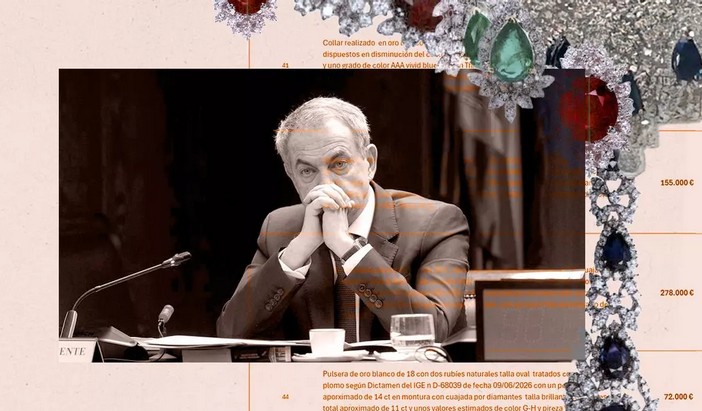
But Zapatero a crook? He is a benevolent and slightly forgettable ex-president who nevertheless got Spain out of Iraq, ended ETA (through dialogue rather than retaliatory assassinations), legalised mixed-marriages and brought about both women’s rights in the workplace and parity in politics. A piece from The Economist says ‘…the judicial probe centres on Mr Zapatero’s controversial ties to the dictatorship in Venezuela, and in particular the €53m bail-out by Mr Sánchez’s government of Plus Ultra, a Venezuelan-Spanish airline, during the pandemic. The judge claims that payments of around €2m to Mr Zapatero and his daughters for consultancy work were mainly a commission for arranging the rescue…’
This following a timely leak from the CIA, via Homeland Security, of the contents of a phone held by Rodolfo Reyes, a Venezuelan partner of Plus Ultra airways, confiscated at the US border and cloned back in 2021 (the use of any information extracted in such a way would be illegal under Spanish law). Whether Washington wanted to poke the Spanish hornets’ nest and whether Zap’s work in the dreaded Venezuela had anything to do with the sudden release of the damning documents is open to surmise.
The other day, the Guardia Civil were searching his offices (all live on TV of course) while looking for proof of corruption and found some expensive jewellery in his safe. Zapatero it seems took bribes, -oh how are the mighty fallen!- and was paid in gold and rare stones (rather than the more traditional transfer of funds to the Cayman Islands). The baubles have been assayed (by a Madrid jeweller’s shop – belonging by chance to the ex-PP minister Ana Mato), and valued at over a million euros. Well, there’s no arguing with that!
Zapatero told the judge on Wednesday that he did not contact any authority to influence the Plus Ultra bailout and denied receiving bribes. Later on Wednesday, Zapatero gave a written statement insisting on his innocence and granting ‘a voluntary universal authorization to facilitate the tracing of his money and accounts’.
He further stated that he would fully explain the jewels found in his safe at a later time.
The question of whether the contents of a cloned phone can be used in this inquiry will of course be down to the judge, the judiciary and the opinion-piece writers.
Not that this would matter one way or the other – Zapatero’s reputation is now in shreds.
‘…Beyond radio, television, or internet talk shows’, writes Ana Pardo de Vera for Público: ‘journalists are spending a lot of time in newsrooms discussing everything related to the former PSOE prime minister of Spain between 2004 and 2011. Because it's surprising that the only head of government who didn't have a single corruption case in his ranks would so wildly overturn the chessboard—his party, his family, and himself—as some would have you believe, with sentences handed down here and there without even having listened to José Luis Rodríguez Zapatero’.
It’s a lot easier for columnists when they are at odds with the government – those of us who support Pedro Sánchez must always bring up the fast-growing Spanish economy and the various advances introduced, higher pensions and minimum wage and so on – while for an opposition writer, well, the subject is an easy one: corruption! They may be right, but one must remember the last Partido Popular government fell precisely for this reason, and there are still plenty of the old guard around today.
3
Like
Published at 4:51 PM Comments (0)
If the Boot Fits: The FIFA-Cup
Sunday, June 7, 2026
I’m told the FIFA-Games began this Thursday. Gracious me, what exciting times we live in, the Pope, Mr Bunny and now footie. Since the Spanish are playing, then they are of course my team (Go Spain!), but then I’m told that little Cabo Verde is doing well (they play Spain on June 15th) and that they will need our support.
Indeed, may the odds be ever in your favour.
I’ve never cared much for soccer (as you will probably have guessed by now). The sports master put me on the left wing at my first school, since I was tall and fast, but as I learned out much later, when trying to ski in a straight line, my left leg is a fraction smaller than my right, which meant I kept missing when shooting at the goal (that, and crashing into a tree). At my second (and last) school, they made us play rugger, and my inclination was to keep as far away from the ball as possible.
Since then, my only sport has been walking around in giant circles.
I’ve only ever watched one soccer game as an adult, when I was dragged to an Almería – Granada game after attending a political rally in the city bullring (you see how useful these things can be?). I genuinely thought they were teasing me, all the way to my seat high above the pitch, and this in the days before Facebook. God, it was boring.
I did join a game on one interesting occasion just after I had finally left school. I was seventeen and the foreigners (we were neither called either ‘expats’ or ‘immigrants’ – or guiris – in those days) decided to play against the cream of our village in a ‘friendly’, the losers to stump up for a jolly barbeque following the adventure.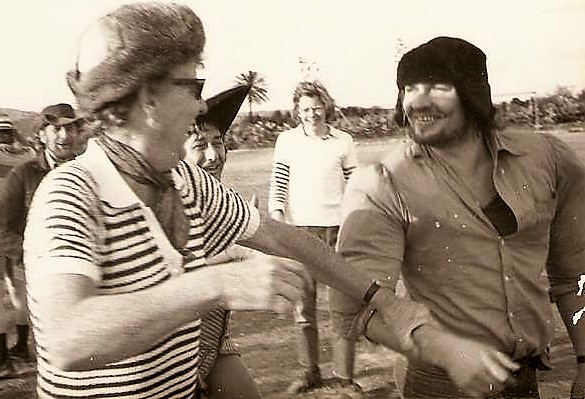
Their side took it a bit more seriously than ours, with a final score of 11-1 (I think the Mojaquero team scored an own goal just to cheer us up). I remember that, as the final whistle went, five of our stalwarts were seen to be standing off the pitch and surrounding my mum who had at that moment arrived with a freezer-box full of beer.
But enough of this, the gentle reader wants to hear about the World Cup (Yay!).
It’s being played in various stadia scattered across Mexico, the USA and Canada. It’s apparently very expensive to go there, cripplingly expensive to stay there (while not being arrested or deported by Trump’s goons), and nothing short of a King's Ransom to travel from one game to the next, if the inclination to do so should tempt you.
For me, having just watched the first day of the Pope’s visit to Spain on the telly, plus listening to Bad Bunny on the radio (he’s still performing in Madrid), we now face six full weeks of endless footie (104 games says the webpage). No news, just penalty shoot-outs.
Luckily, I’ve just loaded up with some thrillers at our English library.
This may all be good for Pedro Sánchez, as the attention of the electorate is swung to other distractions, and it may even be good for Donald Trump (the American 250th celebrations will be held on July 4th, half-way through the games).
So, if you like soccer, have a great time, don’t drink to many beers or eat too much popcorn, and may your team make it to the finals.
If you don’t, I could lend you a book about fishing once I’m through with it.
3
Like
Published at 8:41 PM Comments (2)
Our Local - Concerts, Meals and Space
Saturday, June 6, 2026
One day, my late wife brought home a foal she had acquired from a gypsy. Barbara loved horses and always rode bareback, When she was a child in California, she would ride to school on her horse and, as they said in those times: a hundred dollar horse and a five hundred dollar saddle.
Well, the horse was the important thing.
The stable, for want of a better word, was an old building near our house in Mojácar (Almería), across the street from the camposanto. A couple of years later, a Madrid doper and his British girlfriend moved in, put up a plank of wood across some bricks, and opened a bar: La Venta del Olivo. It wasn't a great success perhaps, but on the plus side, management didn't object if the customer rolled himself a joint.
Carlos (known to all as Karlangas) tended to stock whatever he could find, which was often a fraction skimpy. You mean, he told me once, you've never tried Kahlua, reaching for the one lonely bottle in evidence upon the shelf behind him.
Life went on, and the place was taken over by a famous artist from Águilas (Murcia) via Mallorca called Manuel 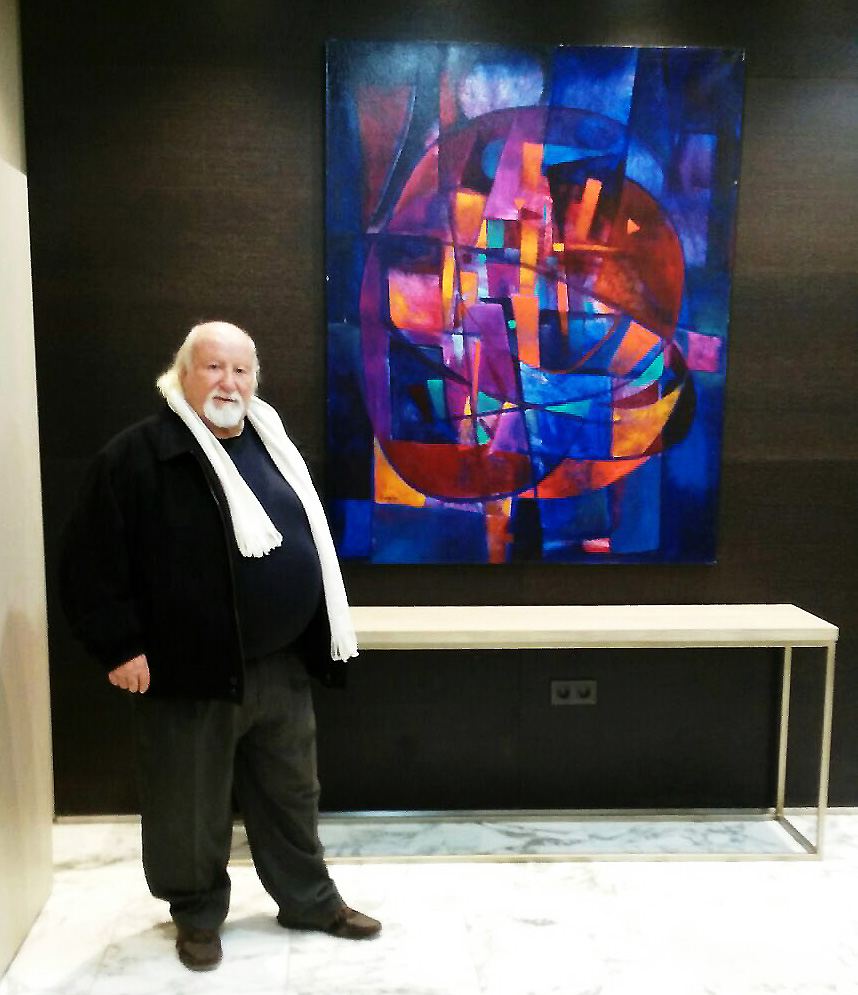 Coronado who renamed it as El Delfos. He put a young Mariano - a skinny gent with long hair (he now runs a successful flamenco tablao in Mojácar pueblo) - behind the bar, covered the walls of his now greatly extended building with his paintings and set out to enjoy life in Mojácar as we all strive to do. Manuel ('Manolo') was indeed famous, and he created the Premio Delfos, with candidates who would come down for a few days and stay in the Parador hotel. These included José María Álvarez de Manzano, the mayor of Madrid for over a decade; Manolo Pimentel, a cabinet minister under Aznar, and one or two others... Coronado who renamed it as El Delfos. He put a young Mariano - a skinny gent with long hair (he now runs a successful flamenco tablao in Mojácar pueblo) - behind the bar, covered the walls of his now greatly extended building with his paintings and set out to enjoy life in Mojácar as we all strive to do. Manuel ('Manolo') was indeed famous, and he created the Premio Delfos, with candidates who would come down for a few days and stay in the Parador hotel. These included José María Álvarez de Manzano, the mayor of Madrid for over a decade; Manolo Pimentel, a cabinet minister under Aznar, and one or two others...
The town hall, an early enthusiast of the if-it-ain't-one-of-ours doctrine currently known as La Prioridad Nacional, would have nothing to do either with Manolo Coronado (they still don't have one of his paintings in the municipal collection) or indeed with his Premio Delfos. Manolo eventually threw in the towel when a couple of local people from next-door Turre 'borrowed' a horse of his for the village fiestas, and managed through inattention to strangle its foal.
Mariano was left running the Delfos. Besides several brave attempts to open a restaurant, hold exhibitions and run the bar, the fact is that it is a little off the beaten path being neither on the beach nor up in the village. As such, it never attracted the custom it deserved.
Now it's run by a new group, including the indefatigable Angeli van Os. I had got to know Angeli while we were both living in Paris in around 1984, and she must have remembered me talking about Mojácar, as a few years later, to my 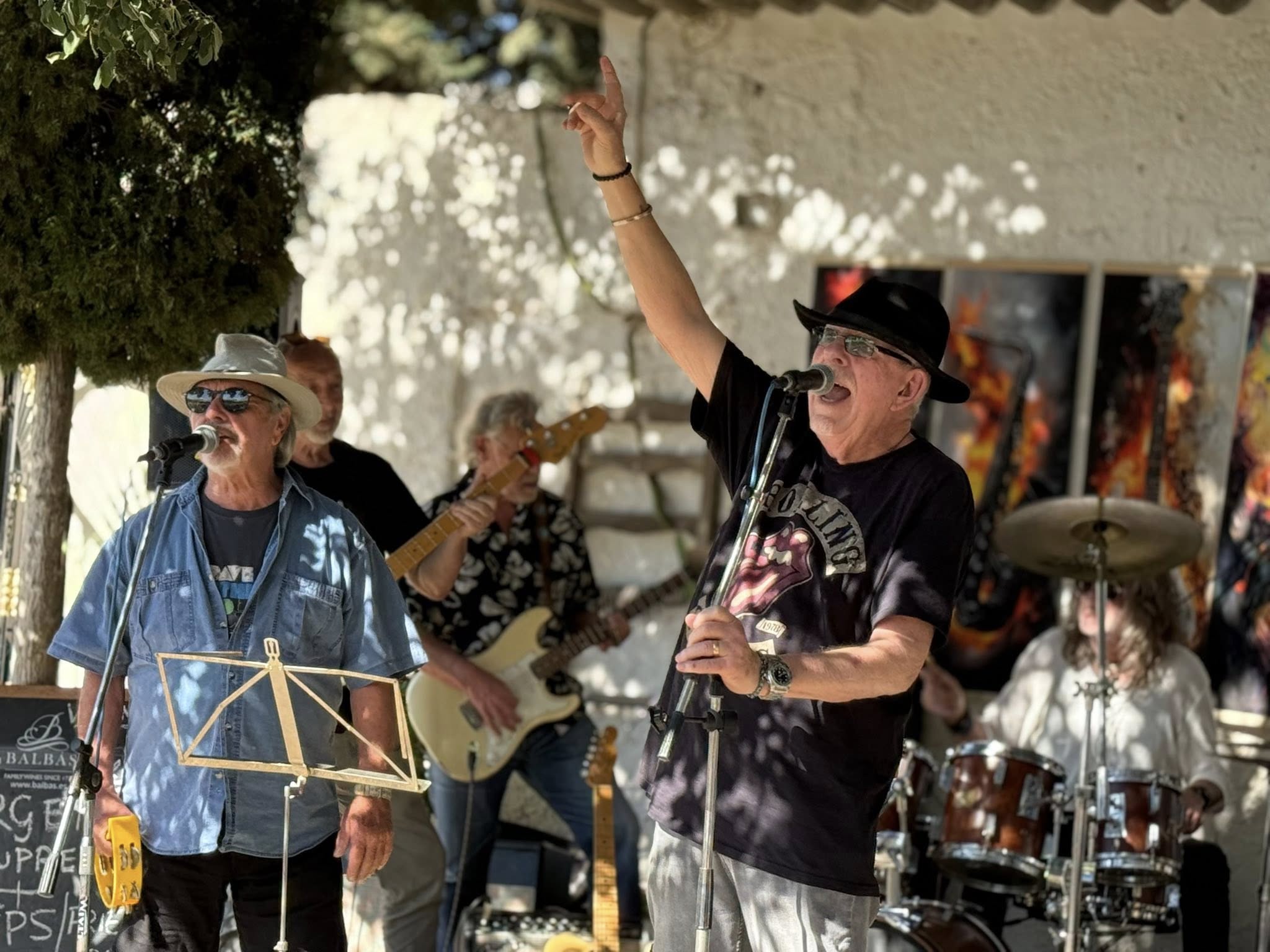 surprise, I bumped into her here. Angeli was a successful model before she retired and settled locally. She is one of those lucky people who remembers everybody's name, which makes her ideal for the front-person of the Delfos. The bar and restaurant is now very much a place to visit, while enjoying the advantage of being off the tourist radar. There are concerts and other events going on regularly. It's a fun place with plenty of outside tables, empty views and amusing regulars. I have to say - I've still yet to see anyone from the town hall there. surprise, I bumped into her here. Angeli was a successful model before she retired and settled locally. She is one of those lucky people who remembers everybody's name, which makes her ideal for the front-person of the Delfos. The bar and restaurant is now very much a place to visit, while enjoying the advantage of being off the tourist radar. There are concerts and other events going on regularly. It's a fun place with plenty of outside tables, empty views and amusing regulars. I have to say - I've still yet to see anyone from the town hall there.
The Delfos is located on the left, down from the cemetery on the Mojácar road to Turre.
3
Like
Published at 4:19 PM Comments (1)
Spam post or Abuse? Please let us know
|
|