All EOS blogs All Spain blogs  Start your own blog Start your own blog 

Spanish Shilling

Some stories and experiences after a lifetime spent in Spain

The Attorney General is Canned
Sunday, November 23, 2025

The headline from Politico pretty much sums up the bombshell – practically up there with Franco’s infamous “bando de guerra’’ announcement as the beginning of Spain’s Civil War – ‘Spain’s top court ousts the Attorney General, escalating the prime minister’s feud with the judiciary’.

This is all to do with the lack of the Constitutional presumption of innocence; plus the coincidence that the ruling came out precipitously on November 20th (the 50th anniversary of Franco’s death and – by chance – the very day when the Almería PP collapsed in yet another scandal). The announcement of ‘Guilty’ itself a filtration (of all ironies), since the ruling itself hadn’t been written: the five conservatives in the Supreme Court voting according (apparently) to their politics rather than their understanding of jurisprudence and furthermore without proof of guilt beyond accusations from various far-right groups including Vox and the hate groups Manos Limpias and Hazte Oir.
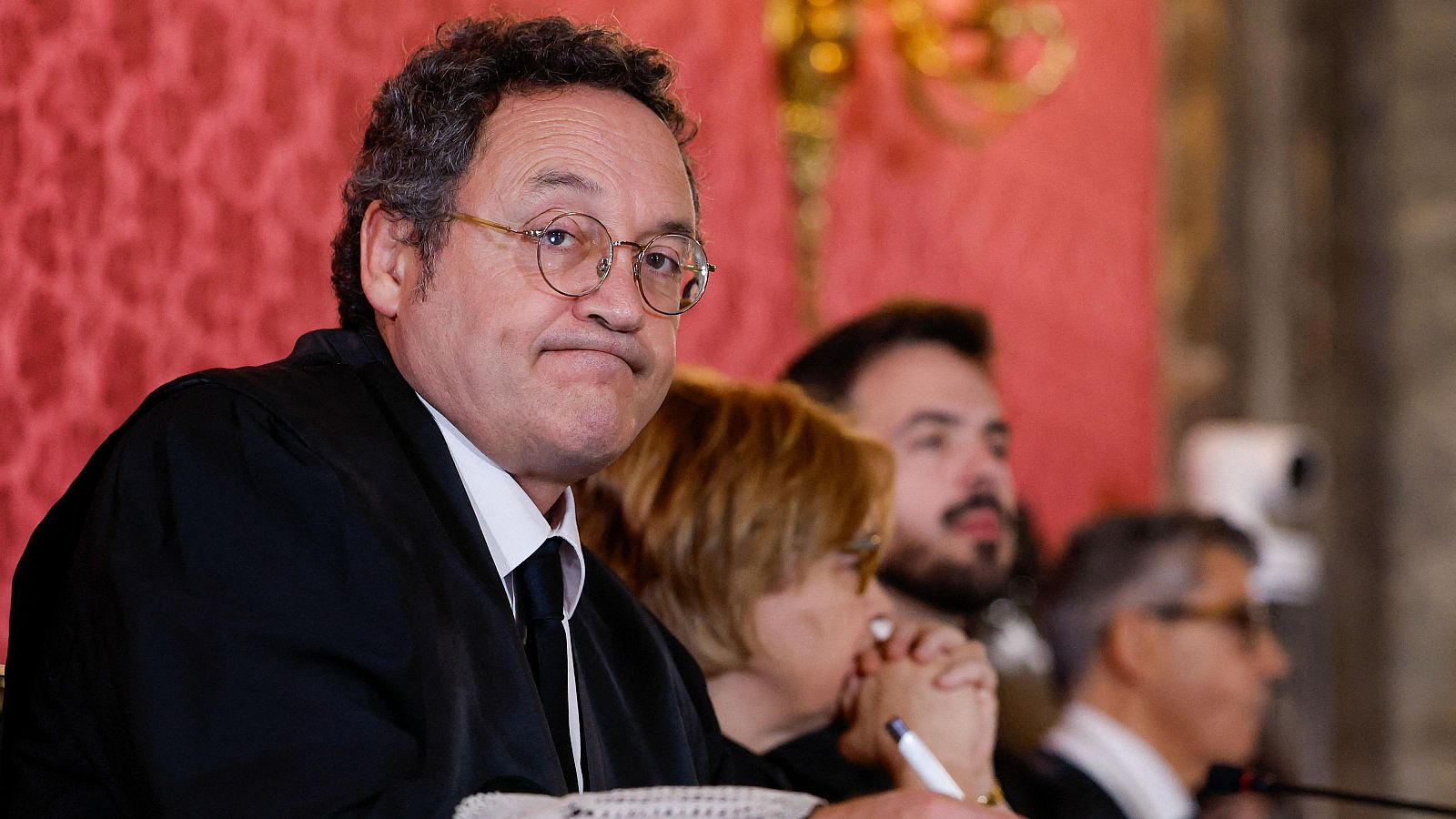
The court banned the Attorney General Álvaro García Ortiz from holding public office for two years for allegedly leaking details of a tax probe involving the partner of Madrid’s regional leader Isabel Díaz Ayuso, a rising star among the country’s conservative voters. It further fined him 7,500 euros and ordered him to pay ‘the boyfriend’ (‘el Novio de Ayuso’) as Ayuso’s companion Alberto González Amador is habitually called, 10,000 euros for his troubles.

An opinion piece from the director of elDiario.es begins: ‘The lies of Miguel Ángel Rodríguez (Ayuso’s adviser) and Isabel Díaz Ayuso, the far-right accusations, the hoaxes, and those who published those falsehoods have won. The fraudulent middleman has won. Journalism that verifies the news has lost, the Attorney General has lost, the truth has lost. And justice has lost as well. Its image in the eyes of the public is once again tarnished by a conviction that is very difficult to explain…’

To further quote Politico: ‘Justice Minister Félix Bolaños said that the government was obliged “to abide by the sentence” and appoint a new attorney general. But he stressed the executive’s disagreement with the conviction and reaffirmed its belief in García Ortiz’s innocence’.

Cadena Ser has: ‘The president of the Progressive Union of Prosecutors says that "The Supreme Court has convicted an innocent man, and this will have profound consequences for trust in the justice system"’.

José Antonio Martín Pallín, emeritus magistrate of the Supreme Court, says "The ruling is the closest thing to a coup d'état".

Pedro Sánchez, speaking from Johannesburg on Sunday, said he accepted the sentence of the Supreme Court, but profoundly disagreed with it.

Indeed, everyone on the left is equally sure of the Attorney General’s innocence. The Podemos far-left leader: ‘First they went for Podemos, then they went for the Catalonians and now they’ve gone for the PSOE in a further example of a judicial coup’.

The previous mayor of Madrid Manuela Carmena says that ‘the ruling is deeply unfair’.

The Minister for Public Administration, Óscar López, expressed feeling a sense of "desolation, weariness and disbelief in many things," and announced that the Government will activate whatever mechanisms are necessary.

Yolanda Díaz (Sumar) says that the sentence is a judicial resolution without any incriminating evidence and that the ruling is directed against the coalition government.

Gabriel Rufián from ERC said, “The message is clear: Ayuso is untouchable”.

The five-to-two ruling of the seven judges within the tribunal, says elDiario.es, shows that ‘the division within the court inevitably raises doubts about the independence of the judiciary or its politicization. The PP's methodical strategy with the General Council of the Judiciary (CGPJ) has allowed it to control Supreme Court appointments for decades, giving the right wing an overwhelming majority in all its chambers’.

Finally, a legal opinion, made a day before the sentence was given: ‘This is the first time in Spanish history (this is truly historic, unlike the trivialities of Núñez Feijóo, for whom everything is historic) that a court has tried the Attorney General. And given that he is being tried, one would think it would be for a very serious crime. But we have become accustomed to trivializing crimes, always within the sphere of the Government and its President. We have become accustomed to victimless crimes fabricated from newspaper clippings that certain judges seize upon as if they were the most important professional matter of their lives, and which they investigate as if the Holy Inquisition would. The crime, if it exists, is insignificant, and only a diabolical mind could have transformed an official statement into a crime of revealing secrets. But that is the level of justice we have in Spain today, thanks to the alliance of judges and right-wing politicians…’

Let us not forget José Maria Aznar and his famous ‘Let him who can do something, do something!’

On the other hand, the president of the Community of Madrid – Isabel Díaz Ayuso – says that it had all been an attempt by Pedro Sánchez to "undermine" the separation of powers and an "attack by the State apparatus" against her boyfriend Alberto González Amador. El Huff Post asks: ‘Do we need to be reminded of what happened to Pablo Casado (the previous leader of the Partido Popular) when he accused Isabel Díaz Ayuso of bribery? Does anyone even know what has become of Pablo Casado? Do we also need to be reminded of what just happened to the Attorney General, who was accused by Ayuso's boyfriend?’
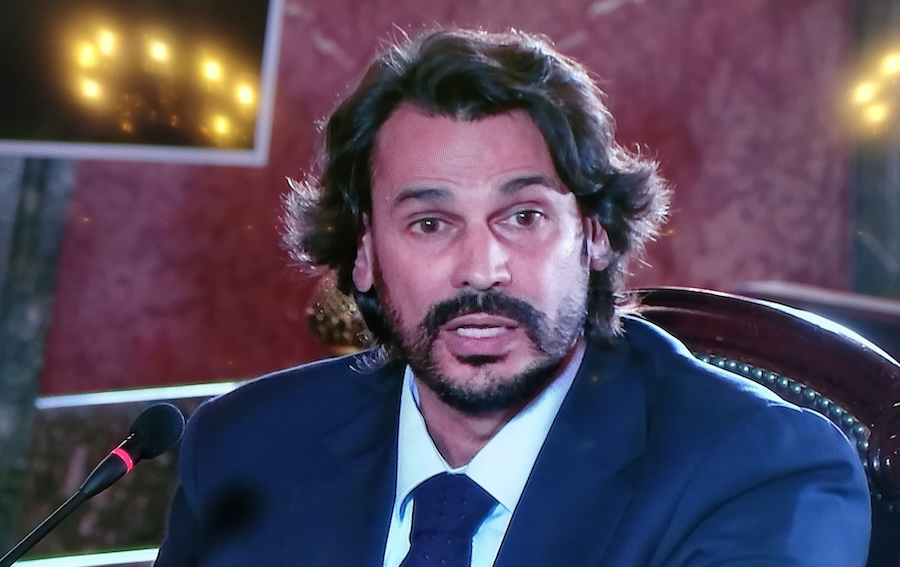
An opinion piece from La Sexta says that ‘According to Ayuso, the Supreme Court's ruling demonstrates that things typical of a "dictatorship" happen in Spain. A dictatorship in which she can freely spout whatever nonsense she pleases; her partner has been able to take an Attorney General to court and win; and the government has said it will abide by the ruling.

Indeed, it would appear that Ayuso's boyfriend decided on sober reflection neither to commit suicide nor to leave Spain (as he had threatened while speaking as a witness during the court case); on the contrary, he buys a luxury penthouse in the toniest part of Madrid (with, and excuse the joke, the AG providing the down-payment).

And what says the leader of Vox, Santiago Abascal? On Twitter he writes: “Álvaro García Ortiz is the first Attorney General to be convicted in the history of Spain. Pedro Sánchez will also be the first president in the history of Spain to end up in prison”.

On Sunday, hundreds of people demonstrated in front of the Palacio de Justicia in Madrid shouting ‘golpistas con toga’ (something like: ‘treacherous judges’).

On Monday, García Ortiz sent his letter of resignation to the Minister of Justice Félix Bolaños. It said in part: “Though my decision stems directly from the ruling, I’m convinced that I’ve faithfully served the institution to which I am honoured to belong, with an unequivocal vocation for public service, a sense of duty and institutional loyalty.”

Tuesday began with the proposal of a new attorney general: Teresa Peramato.

President Sánchez is becoming used to the lawfare by the judiciary against his wife, without any wrongdoing discovered after eighteen months despite a judge’s mediatic and continuous fishing attempts, and his brother, who obtained his rather unimpressive job as a music teacher in Badajoz before Sánchez was voted in as president.

The questions ordinary people might be considering include – If the Attorney General is convicted before the person who billed millions for masks with false invoices… what message does that send to anyone who investigates those in power? González Amador – a mere health technician – allegedly earned over two million euros selling face masks at the height of the pandemic and attempted to avoid paying any tax on the profits.

What is lawfare – I’m glad you asked: From Google IA: ‘Lawfare is "war through the courts," that is, the instrumental use of legal procedures to persecute, weaken, or harm political adversaries’.

The theory is that Franco may be fifty years dead, but Francoism is still a runner.

We are beginning to enter into election territory.

While Feijóo and Abascal, the leaders of the right and the far-right, need each other in a partnership (one which with Vox as the junior member no doubt wagging the tail of the dog), an alternative and vastly more attractive and bombproof leader waits in the wings: Ayuso.

This is what all the fuss is about. Ayuso is commendably far to the right, while still within the Partido Popular. She’s pretty and – unlike the inept Feijóo – she’s a vote-catcher.


Like 5        Published at 10:09 PM   Comments (0)


Franco Gone These Fifty Years
Sunday, November 16, 2025

There’s a Spanish word which has a very special meaning – or had at least, half a century ago – and it sounds odd to British ears: El Generalísimo, which might mean something like ‘the generaliest of all the generals’ practically a (what comes next – a field marshal?).

Anyway, I’m talking about El Caudillo, the Spanish dictator Francisco Franco, who after forty days and nights in the comfort of the intensive care unit at the Hospital de la Paz in Madrid, finally succumbed to his woes on November 20th these fifty years ago.

Not that you’d think it with all these fascist idiots still running around the city squares half a century on and giving what used to be called a Hitler salute.

There’s a story I like: Franco is in his hospital bed and there’s a crowd outside shouting. Franco – who is losing his facilities by this time – asks the doctor, ‘What are they saying?’ The doctor goes: ‘They’re saying adiós, adiós’.

‘Really?’ says Franco, ‘Where are they all going?’

In those times, Mojácar where I lived with my parents (when I wasn’t travelling somewhere) was a quiet and forgotten village with just a sprinkle of eccentric foreigners.

We never thought about Franco, and the Guardia Civil were chummy enough.

My father used to drop off a case of wine in the police barracks in next-door Turre every Christmas. It never hurts to have friends with silly hats and a pistol.

One day a few years before, back in 1971, the cops had come by on their mopeds and sorrowfully told my father and me that we would have to report to the local lock-up in Vera – a cavernous room under the ayuntamiento – as punishment for sawing down Mojácar’s first billboard, which had been erected by a Corsican fellow who had just opened the pueblo’s first souvenir shop.

He could obviously see which way things were going.

All we had with us was a bottle of Spanish lemonade (filled with vodka), a change of underwear, a couple of Ian Fleming novels and my dad’s radio. He liked to listen to the BBC’s World Service and appeared to be very disappointed when they failed to mention our incarceration.

We spent three days in the clink (I was just seventeen) and were due to face further punishment, but the British ambassador saved the day, and we were forgiven and our names removed from the records.

In Franco’s time, it helped to have un enchufe – a ‘good friend’ – and the ambassador had been to school with my dad. A few words in the right ear…

By 1975, Franco was on his last legs, and word reached us from the far-away outpost of Jávea in Alicante that the Swedes (I may be wrong about this) had decided to have a demonstration of their love and respect for Spain and so held a celebration with the famous, albeit fascist slogan Arriba España, which they had unfortunately translated on a large banner as ‘Up Spain’.

At last, El Caudillo finally died, and Spain entered into strict mourning. The bars were closed for three days, and solemn music was played on the radio and the one TV channel.

My father and some other foreign residents, being appraised of this tender moment in Spain’s history (as above, they found the pueblo’s only bar was unexpectedly shut), decided the thing to do would be to go to mass in our local iglesia and show our respects.

The priest was surprised to see us, as there was (as usual) no one else in Mojácar’s house of worship except a few old girls in black.

As we left, pulling off our neckties (those that still owned one) we found the mayor and a collection of irate locals waiting for us. Y’see, Mojácar had been a communist holdout during the civil war, and consequently, no one was sorry to see the old gangster go to his reward, such as it no doubt was.

‘Oops’, said my dad.

The tension grew until the Mayor Jacinto saved the day. ‘Antonio, go and unlock the bar. The foreigners are thirsty’.

I’m not sure, after all it was exactly fifty years ago, but I think we all drank champagne.


Like 5        Published at 8:31 PM   Comments (10)


I Always Wear a Seatbelt (I'm wearing one now)
Sunday, November 9, 2025

I needed a rag to check the oil on my old banger, so I was looking under the kitchen sink for a discarded tee-shirt.

There’s a pile of them down there, maybe my wife thought slinging them under the sink was easier than chucking them in the washing machine. Especially the sillier ones which I appear to have collected over the years.

This one was from some restaurant and had a large black diagonal stripe on it, looking like – if one was driving – a seatbelt. A treasure from back in 1975 when the new law came in.

I took it down to the restaurant to tease them, but it fell apart in my hands. After a mere half a century of neglect plus the work of a few moths: I call it poor quality.

Since I was there, I stayed for lunch.

Had a few drinks with the owner, Juan, and a couple of others.

Driving home (yes, yes, with my seatbelt fastened), I thought I’d take the secret back-route that only I (and a handful of local boozers) are familiar with. It’s a bit bumpy some of it, and I know I need to slow down on a particularly nasty stretch, but I got home safely, while my friend Ángel (not his real name, he’s actually called Eluterio) who took the main road got charged by the cops for driving with his eyes crossed. In Spain the legal limit is 0.5mg of alcohol per ml of blood (they want to drop it to 0.2mg). To compare, in the UK the limit is 0.8mg. I know, they claim Spain is a tourist paradise. Poor Ángel: five hundred euros, (250 if he pays up sharpish) and four points docked from his driving licence.

He’s a changed man these days…

Indeed, we sometimes call him up to be the designated driver. These days, he sits there in the corner twitching gently while playing with his mobile phone looking for the WhatsApp police-control warning page.

One day, they’ll invent self-driving cars and I’ve started a savings jam-jar in the kitchen to be ready. Imagine: ‘Helloo Car, my old mate (hic!), take me home via the liquor-store’.

Up in The Smoke, the traffic-tzar is an old blue-stocking who has been tightening the screws on all aspects of driving for several decades. Right now, as far as he’s concerned, a capful of una clara (beer with lemonade) will pretty much do the trick.  

It’s all right for him though – he has a chauffeur. He can loll around in the back singing some popular number from Manolo Escobar (perhaps his catchy 'Somebody's Stolen my Donkey and his Cart') while the driver grinds his teeth and negotiates the M-30 in the rush-hour.

Mind you, and to make a point – you don’t need to drive ‘under the influence’ or indeed even completely sober for that matter if you live in Madrid or any other city in Spain. They have buses, taxis, trams and metros. You don’t even need to own a car.

And besides, there’s always a bar downstairs. Just use the lift (it’s free) to get home.

No, it’s us country-folk that have to take our lives (and everybody else’s) in our hands every time we go out shopping or to have lunch with a friend… and answer me this – how are the country-restaurants, with their reduced number of clients and their high social security outgoings, expected to make a dollar on their cheap menu del día and a glass of water?

So before you go drinking, always remember to plan ahead for your trip home.

My niece, who is a lawyer, tells me I must put a postscript here to say that I created the whole above story out of the cloth of fiction and that I don’t associate with drinkers and indeed I haven’t myself had a drop myself since the English won the World Cup: an admission which (except for the bit about the diagonal tee-shirt) I am happy to do.


Like 1        Published at 9:13 AM   Comments (2)


Jumanji - Sánchez' Ordeal in the Senate
Saturday, November 1, 2025

El Senado de España, the Senate, is the Upper House – although perhaps more in the spirit than the reality: ‘…with more limited functions than elsewhere, as it is a chamber of second reading. Currently, it is composed of 208 elected senators and 58 senators appointed by the legislative assemblies of Spain's regions’, says wiki. In consequence, the senators – fine people all – are not necessarily in Spain’s front-rank of politicians.

Over at El Senado, the Partido Popular has the majority, and the president of the house, Pedro Rollán, is from that august party. Indeed, of the 266 senators, only 92 are members or supporters of the Socialist Party, the PSOE.

Thus, the scene was set on Thursday in the Senate for a parliamentary committee hearing – something that is not a parliamentary debate and the questions are not those of a critical interview. A parliamentary committee hearing is an interrogation where the questioner's objective is not so much to seek the truth but rather to showcase their own skill in the fine art of tearing apart the person being questioned. So, on Thursday 30th October, for five hours, Pedro Sánchez was obliged to simply keep his composure while being asked, cross-examined and bullied regarding the various affronts of him, his family and his party – towards the Gracious and the Good.

Questions like – ‘answer ‘yes or no, did you…’ – straight out of a Peter Fauk TV show.

We remember last week’s delirious anticipatory remark from Feijóo: ‘if he lies, he’ll end up in court: if he tells the truth, then also’.

And yet… and yet… Pedro Sánchez came away after the ordeal, untouched. ‘This isn’t an examination, this is a circus’, said Sánchez at one point, making his opinion clear regarding the Senate's Commission of Inquiry into the Koldo case and other supposed issues. 

Here's Gabrial Rufián on the interrogation: ‘The PP's handling of the Senate investigation went so well that the real news is that Sánchez has reading glasses. Yes, at 53 years old, our presi has to use spectacles (unless it was just a cunning ploy to distract us all along).

El Mundo (a leading conservative newspaper) writes: ‘Sánchez emerged unscathed from the circus; there was noise, but no wild beasts. The President's appearance before the Senate to answer questions from the Caso Koldo commission turned into an embarrassing political quagmire where the PP squandered the opportunity to shake up the PSOE’.

One question from a UPN senator was about the trips in his car with (the three villains) Koldo García, José Luis Ábalos, and Santos Cerdán. "Are you asking me how many people were riding in my Peugeot? Really? Well, Your Honour, it depended on the day", he answered to general laughter.

As somebody says – it was like an early and unwelcome Halloween for the opposition. 


Like 1        Published at 9:22 AM   Comments (0)


nothing
Saturday, November 1, 2025

So, ahem, here's a picture.

The Mojácar village square in 1970 - the old Hotel Indalo, where it cost 60 ptas a night to stay, and about 5 ptas for a beer, 12 for a gin and tonic (Green Fish or Larios were the two brands in those days). 


Like 0        Published at 9:13 AM   Comments (1)


Spam post or Abuse? Please let us know


This site uses cookies. By continuing to browse you are agreeing to our use of cookies. More information here. x