There's Nowhere Like Home
Tuesday, September 29, 2026
In Spain, "Una familia, una casa" has become a prominent political slogan and debate topic spearheaded by left-wing politicians, most notably Gabriel Rufián. The thrust, backed (more or less) by the Spanish Constitution, is that every family should have a home. This, many would argue, should come before profit, especially in the guise of the ‘Vulture Funds’ – who tend to buy entire blocks of apartments in their endless search for a buck.
The Vulture Funds (often but not always foreign carrion-eaters) may aim to increase rental-prices or add some slap-dash repairs and seek fresh tenants. They might plan to remove their existing tenants (known in the trade as ‘las cucarachas’), or perhaps leave the building entirely empty waiting for higher property values or maybe turn the apartments into short-term tourist lets or even a hotel. Who knows, and perish the thought, these scavengers might even enlist the help of a city councillor to expedite matters.
Circling just behind these birdies – who are just as happy investing in houses as in anything else with good opportunities – we have los grandes tenedores – landlords that own either ten or more homes or over 1,500m constructed. It can be a great business, especially if you divide the apartments into various rooms-for-rent, demand being what it is.
 Then there are the banks, whose mortgages sometimes turn out to be a little too rich.
So Maricarmen. Article 47 of the Spanish Constitution establishes that all Spaniards have the right to enjoy decent and adequate housing, ‘though it is categorized as a guiding principle of social and economic policy rather than an absolute fundamental right’ (says Google AI properly), but housing isn’t just in the hands of the state, but rather under the control of the regional (and city) governments.
Maricarmen Abascal was a victim of this mess. She had been living in the same apartment since Franco’s times (when prices were cheap, there were firm rent-controls and not everyone dreamt of being a capitalista). Her parents moved in along with Maricarmen back in 1957 and until recently (as the only survivor) she was paying 500€ a month. A Spanish investment company bought the whole building a few years ago and suggested that she should be paying a more reasonable rent – like 2,650€ a month. Long story short, the 85-year-old was evicted last week and carted off to hospital. Serves her right, eh?
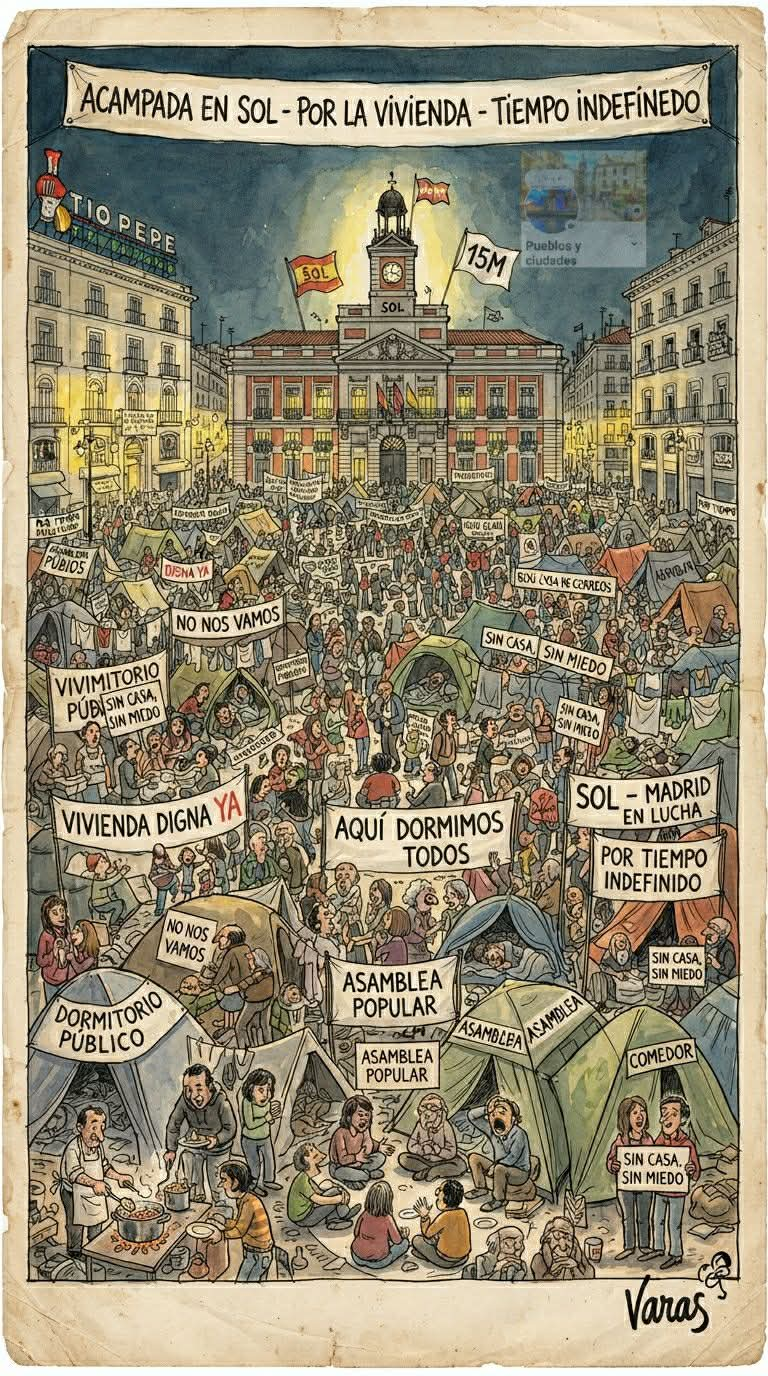
Not everyone would agree, and there have been protests – a sit-in began in Madrid’s Puerta del Sol on Saturday which soon turned itself into a tent-city.
Not that she was the only one – evictions in Spain (whether vulture-related, foreclosures, rent-in-arears or squatters) are numerous. Indeed, says Público, there’s an average of 44 evictions taking place daily in Spain. Not that you’ll see any flag-wavers or right-wing banners amongst the protestors.
The story has gone worldwide. ‘The dramatic eviction of Maricarmen has put Spain’s worsening housing crisis back in focus, amid rising rents, limited affordable homes and a political fight over tenant protections’, says an Asian source.
The Government had tried to resolve this issue back in April this year but were shorted by the contrary votes of… well, the usual suspects. It’s now trying once again. Meanwhile, Urbagestión, the investment fund that evicted Maricarmen, feeling hurt by the negative press, on Monday relented and said she could have her old place back again.
Building more homes is all very well, and very necessary, but with the law of the jungle, where the new homes are picked up by the wealthy for speculative purposes, more attention needs to be placed on building rent-controlled council-homes, an expense which has fallen by 43% since 2002.
An item in Marca notes that Canada, faced with a similar issue, found the solution by stopping foreign venture-capital from entering the residential housing market.
Spain’s minority government has now proposed (once again) rent-controls, a halt on all evictions until 2030, and banning the purchase of housing by investment firms.
 3
Like
Published at 6:58 PM Comments (2)
The Indala, The True Goddess of Peace, Bounty and Child-Bearing
Wednesday, September 23, 2026
There are just a few seminal icons that we all recognise, because of their simplicity, their reputation or their attraction.
I can think of the Mercedes symbol, which began in 1909; the swastika (it goes back over twelve thousand years - even if it has unfortunate significance today); the yin and yang sign (the version we know comes from 9th century China); the peace sign introduced by a British artist in 1958; the red heart that comes from 1250ad (and there was I thinking it was from Facebook); the Crucifix goes back to the 4th century and the Star of David dates to 14th century Prague. Who have I forgotten?
Oh yes, the Indalo.
The Indalo came into being at a late stage. The Almería group of painters who called themselves Los Indalianos after Saint Indalecio, an early Christian bishop of Almería (The name can still be found in this province today).
They were a group of artists led by Jesús de Perceval, Luís Cañadas and Miguel Cantón Checa going back to 1943. They introduced the figurine in an exhibition held in Madrid in 1947. You can see some of their work today in the Museo de Arte Doña Pakyta in Almería City.
The story goes that the Indalo is a prehistoric daub found in the Cueva de los Letreros in Vélez Blanco, although no one can tell which of the various stick men adorning the cave is the Indalo, neither where the name comes from and nor yet that it was revered. A 1908 - 1930 Encyclopedia by El Espasa (I found this 72 volume reference at La Voz de Almería) had lots to say about Mojácar for example - but had no mention of 'Indalo'.
My own opinion of the Vélez Blanco claim is that it's a hoax (not that it matters).
The Indalo became the symbol of Mojácar, and it's without doubt a special sign. It was brought to the village in the fifties by the Indalianos who recognised the artistic opportunity of the narrow streets, the white or earth-coloured walls, the dramatic mountain setting and the warm sea below. Primary colours rich in texture. The old Mayor Jacinto built them a studio in the early sixties, just below La Fuente.
The totem was transferred to the Diputación de Almería (the provincial council) in the early nineties for no very good reason. Perhaps politics played a hand. At any rate, the Indalo became the symbol of the entire province.
Piqued by this loss, one Mojácar jeweller, a Frenchman called Bernard, designed a new drunken Indalo, which now does service as the town's identity. I think that it's rather more Bohemian than the old one.
By tradition, Zeus and his pals were the male gods, warring, fighting, raping and getting drunk. They were without doubt a handful, often destroying towns, civilizations and even the odd champion or two. The female inhabitants of Mount Olympus, the goddesses like Hera (Zeus' wife), were in charge of the fields, the forests, shelter, art and nurturing the young.
Which is why the Indalo must be a female symbol. An Indala. She protects us with her arch, an umbrella that keeps away the elements: the rain and Zeus' lighting flashes. She stands firm on the ground and, excuse the familiarity, her legs are open for procreation and childbirth.
I think we should celebrate La Indala. The Tourist Office claims protection, good luck and other benefits to be found if you buy one from the nearest souvenir shop. But they still seem to be male. It's time La Indala took over.
2
Like
Published at 8:34 AM Comments (0)
A Good Night's Sleep
Saturday, September 19, 2026
Being in my twilight years, I must search each night, with only limited success, for a decent sleep. So many things can go wrong: from the owl hooting outside my window, a sudden cramp or an irritating mosquito-bite; but I suppose being uncomfortably hot (or cold, depending) is the most common. A week ago, I wasn't even wearing a sheet.
Followed by waking up to take a leak halfway through the night.
I’ve switched on the ‘no phone calls after 10pm’ button on the mobile phone so at least I won’t be roused by some nitwit…
Once I awaken, it’s the very devil trying to get back to sleep and that enjoyable dream I was probably having – which I’ve since forgotten.
So, I decided on an early night on Wednesday (my book is a bit boring).
You know, it wasn’t five minutes after I fell asleep when an alarum went off on my phone Waddoo, Waddoo, Wadd- the fuck? 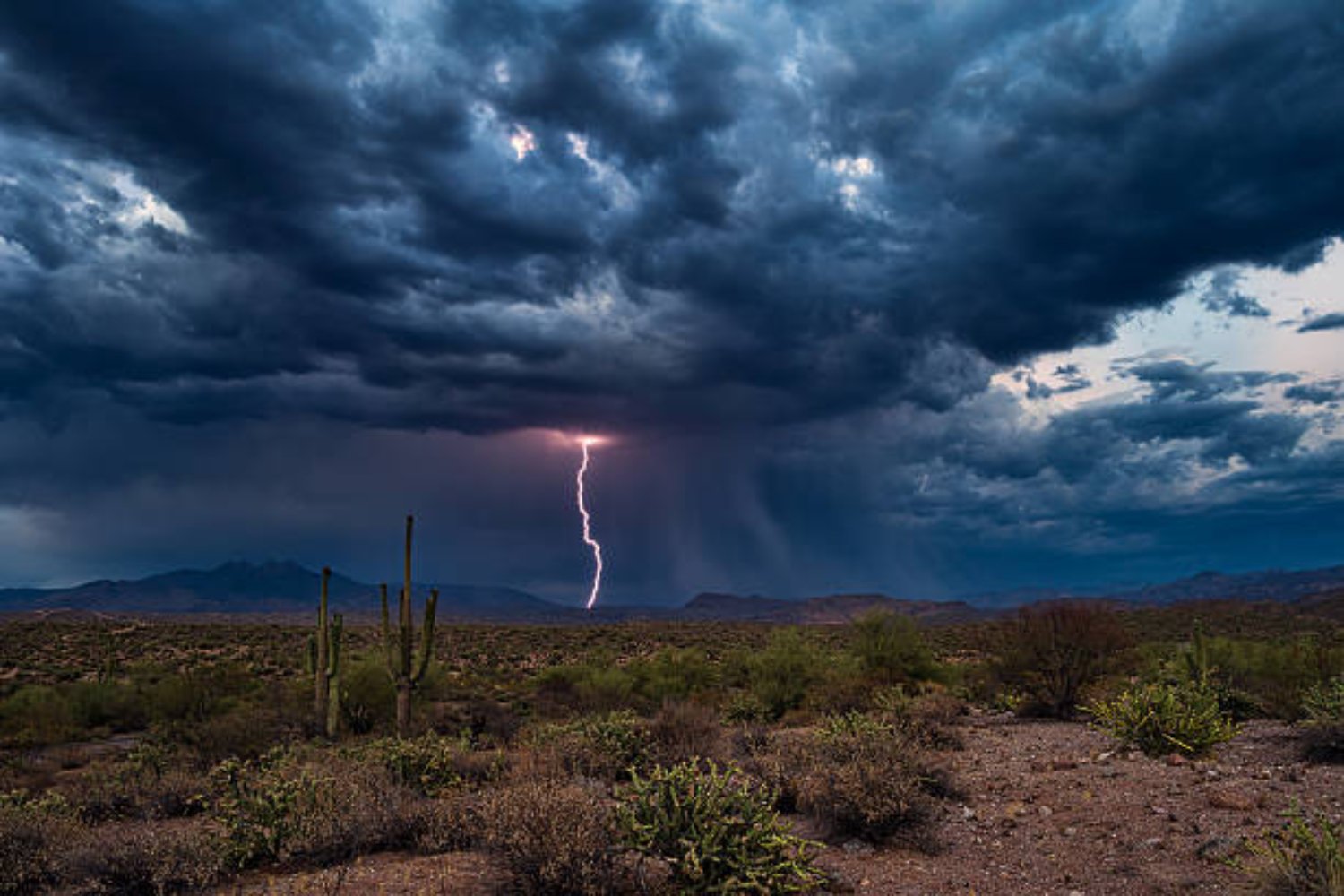
Yes, those fine people at Civil Protection had put out an Es-Alert warning in red capital letters regarding a most terrible storm that was approaching, man the lifeboats and sleep upstairs; and please, Take Care because we love you!
I put something rude about them on Facebook and tried to go back to sleep.
My place is on a hill beyond a dry riverbed. On the other side, there’s a fast road that connects our village with the next one along. If it’s useful by day, then it’s a cracker at night, especially if you own a tricked-out motorcycle and enjoy a good thrill. I’ve become impervious over my time here to the noise of a throaty exhaust pipe, taking about twenty seconds or so to rise and fall in decibels as it goes past, but I think this time somebody must have organised a race, because I am suddenly wide-awake once again at three.
No rain yet, as I peer out over the terrace. Grumpily I try and get to sleep again. I’ve had about four hours by now, so I’m not going to pass out again for a while. After a bit, and grouchy because of my interrupted night, I switch on the bedside lamp and check my e-mails. Maybe have another go at my book.
At six on the dot, a single clap of thunder teases me.
I stagger from bed at nine this morning, go and feed the cats, and check once again for the terrible storm.
So far, as I open a can of pet food, it appears to have drizzled slightly.
I consider having an early siesta.
Last night’s alarm was apparently something to do with Valencia, 356 kilometres to the north, where it’s been raining heavily.
It reminded me (and no doubt them) that the last flooding up there, almost two years ago, was greeted by silence from the authorities, and in consequence 230 people drowned.
They also failed to warn us down here with their noisy and effective siren when the hills around next-door Bédar caught fire with fifteen victims back in July. A horrible event that I could see clearly for three nights from my bed-room window.
So now, they are using an alarm to wake the dead. Better safe than sorry, eh?
I am once again on the Internet as I sip a coffee – no rain for my area, it says, until Saturday!
Remind me on Friday night to leave the phone under the seat in the car.
…and later: Saturday started out overcast, then it cleared up again. There's never any rain where I’m living!
1
Like
Published at 3:22 PM Comments (1)
Doomed, I Tells Ya
Saturday, September 12, 2026
There were a lot of posts on my feed the other day about how the AI Data Centres are going to become our nemeses. Firstly, by taking all the water and electricity. A large facility needs tens to hundreds of megawatts of electricity and up to five million gallons of water every day. The Spanish Data Centre Association (Spain DC) forecasts almost 67,000 million euros (‘€66.9billion’) invested in this country through 2030.  The Guardian.jpg)
Bad enough perhaps, but it gets worse as we ask: what place will humans have in the scheme of things when the machines can do everything we can do, only better? Already they can write poetry, resolve an impossible math equation, create ‘improved’ weapons, watch us and even think for us. It won’t be long before Artificial Intelligence checks the tea leaves and decided we aren’t wanted on the voyage any more. I don’t exaggerate, as we read: ‘AI could kill all humans in next decade, warn experts: but how seriously should we take them?’
I have been hoarding recently. Not old bits of cardboard, unread newspapers and empty toothpaste tubes, but stuff which might be useful for when a calamity befalls us.
Cans of sardines, jars of fruit and veg in water, tins of unperishable sustenance made in Eastern Europe, some Nescafé and sugar, a bottle of Butano, a lighter, lots of drinking water and a jug of vodka in case the first people through my front door turn out to be Cossacks.
The thing is it could be anything. Russians or Chinese perhaps (anyone seen Red Dawn?), or a meteorite, or another round of covid – even more dangerous than the last one.
An American friend of mine bought a cave in Missouri some time ago, turned it into a fortress complete with guns and booby traps (and hopefully something to eat). He emailed me back in 2020 when the pandemic came along with a marvellous line that reads ‘All things considered, I would have preferred zombies’.
Such people as my Yankee friend are called preppers or survivalists – being ready for almost any calamity. In fact, while you are waiting for the Big One, you may want to get yourself into shape and learn how to trap, kill and dress a wild boar, then cook it over a fire (don’t let the neighbours see the smoke!).
The billionaires (who may well be at fault when things eventually go pear-shaped) are said to be building enormous underground bunkers loaded with groceries, guns, oxygen, medical supplies, bimbos and mercenaries. The plan being to, um, start again once the world ends, with the enthusiastic help of the bimbos. The return of Adam with a fistful of Eves. Rather obviously, when the hired-muscle realise that their wages aren’t going to be of any further use, they’ll certainly decide on cutting out their boss and helping themselves to both the girls and the supply of twenty-year-old Scotch.
To prepare ourselves, as above, we need tinned food, plenty of fresh water, a battery radio (so we can pick up Richard over at Spectrum FM), a torch, a few candles, plenty of lavatory paper (it’s hell when you run out) and an AK-47. I’m about there, except for the firearm, but I do keep a knotted sock full of marbles, and if things become hand to hand, there’s some nail-clippers in the drawer.
Well, let’s ask the GoogleAI what else I need: ‘a basic disaster kit’, it says. Don’t forget the medical box (Elastoplasts, Paracetamol and a tongue-depressor), a whistle in case it was an earthquake, some pocket-money (which reminds me, I ran out of cash the other day and had to raid the tin), a power-bank charger for the phone, and finally, in a waterproof bag: the trusty passport and a change of underwear.
I live on a hill across a (normally) dry-river bed. If it fills up, then I will no doubt be OK even if it hasn’t drained three days later. Maybe a bit tired of lunching on tinned rhubarb, but otherwise fine. Unfortunately, most disasters are going to be lasting a lot longer than a panicky weekend, indeed, they may become permanent.
What are the most likely? I ask Wikipedia: it says under ‘Global Catastrophic Risk’, that ‘Human-made risks carry a much higher probability of ending civilization than natural cosmic events’. And very jolly reading it is too. On the same subject, GoogleAI warns of ‘The creation of an artificial superintelligence that outpaces human control and pursues goals not aligned with human survival’. Something like Terminator 2. On this grim possibility, The Guardian says: ‘Lawmakers blast AI companies after researcher warns of human extinction by 2030’. That’s just four years from now!
The GoogleAI disaster-list continues (plus a few of my own) with ‘engineered pandemics’ (maybe I should add a bottle of American Health Secretary Robert Kennedy Jr.'s Ivermectin equine laxative to my store), followed by ‘invasion from a foreign force' - perhaps they'll be robot-soldiers, the kind that never sleep - and worse still: ‘nuclear war and nuclear winter’.
It continues spreading its gloom with ‘rapid climate change’ (and here am I living in Southern Spain where the heat this summer broke records), volcanic eruptions, tsunamis, powerful cyclones, rising sea levels, methane poisoning, el Niño and microplastics.
How about a putsch from one or another of the billionaires (I’m thinking of YOU Elon Musk)? Then there’s the – I have to say – rather unlikely threat of the Rapture, where the most faithful of the evangelicals will ‘rise in the clouds’ while the rest of us are burned by Beelzebub, and finally the surprise arrival of either a huge asteroid or an unexpected attack by a horde of bug-eyed Martians. Frankly, I’m amazed we’ve made it this far.
Living in Spain, there’s also the outside chance of a coup d’état. Unlikely perhaps, but they did it once before. In my opinion, it’s pretty much on the cards right now for the USA.
Really, and after reading my own notes, I should probably go and make myself a nice cup of tea and then have a lie down.
Just in case, and don’t tell my neighbour I’m stockpiling, I might pop round this evening to the local German discount supermarket again and pick up a few more tins of pickled beets.
4
Like
Published at 9:19 AM Comments (2)
The Ceuta Issue Needs to be Resolved
Sunday, September 6, 2026
There’s not really a lot of point to Ceuta and Melilla, Spain’s two inhabited territories in North Africa: fine places as they no doubt must be. Ceuta is small at just 18.5km² and one can walk from one end of Melilla to the other in an hour of so (4kms long, 3kms wide).
Neither of them charge IVA, and furthermore, residents and businesses enjoy massive tax cuts, including a 60% reduction in personal income tax (IRPF) and major corporate tax reliefs. This represents hundreds of millions in tax revenue that Spain willingly forgives every year to keep the cities economically viable.
…and they don’t really produce anything at all, except occasional trouble.
But there are around 170,000 people living in the two enclaves, which have both been Spanish possessions for the last 530 years (Melilla) and 360 years (Ceuta). As Pedro Sánchez says, they are both españolísimo.
Although, for practical reasons, Spain is stuck with two difficult stepchildren that are both a huge financial and political burden.
The total combined economic burden to Spain of Ceuta and Melilla, says Google AI, for the 2025 financial period, including structural maintenance, military operations, and foregone tax revenue, is estimated to be between €1,100 million and €1,500 million. This year, with extra protection, subsidies and defence investment, it will be more.
We remember the virulent reaction of Spain in 2002 to the brief occupation of the deserted Spanish island of Perejil, just 250 metres off the Moroccan coast. Then, and on the other hand, and casting back to a couple of weeks before Franco’s death in 1975, there was King Hassan II’s ‘Green March’ which took the more or less uncontested control of the Spanish Sahara (with Washington’s tacit approval).
In politics, we have the Moroccans claiming the two enclaves (known to them as Sebta and Mellila) for their own. As happened in the last days of July, this claim can sometimes prove to be a major problem, exacerbated (or maybe encouraged) by Donald Trump, Benjamin Netanyahu plus the usual suspects – Feijóo, Abascal and various nazi troublemakers.
Not that the Partido Popular or Vox want to lose the two cities – far from it. But there are political advantages to them both to go in with guns blazing. There were major protests outside every (PP/Vox) town hall in Spain last Wednesday (September 2) against the Government’s admittedly poor handling of the crisis, under the banner of the Federation of Municipalities and Provinces (FEMP), a right-leaning agency. I was in Granada that day and saw a large number of demonstrators heading towards the Plaza del Carmen, the town hall square, with many people wearing Spanish flags wrapped around their shoulders.
Indeed, the Ceuta ‘invasion’ (if I may quote Vox) has proven to be the biggest headache for Pedro Sánchez in this entire, complicated legislature. 
The Moroccans are backing down for the moment, having caused a huge problem – they don’t particularly want a right-wing government in Spain, and Sánchez is firmly not blaming them for the 72,000 that crossed the border on July 31st (no doubt for sound political reasons), yet the fresh threat of Felipe VI visiting Ceuta and Melilla in the coming weeks is certainly not going to be at all acceptable to King Mohammad VI’s government.
So, what is to be done with the 5,000 migrants currently causing problems in Ceuta? Some are Moroccan, some are minors and some are Sub-Saharans. In theory, the Moroccans should be processed before being allowed to stay or to be returned; the 1,200 minors, known dismissively as los menas, should be allowed to stay and sent to refuges on the mainland (although the regional authorities run by the PP don’t want them); while the Sub-Saharans can’t be returned from one foreign country to another foreign country (!), so must be checked before being allowed to stay or to be returned to their homeland. This would be following Spanish and EU law.
The Spanish Supreme Court must come in for some blame over these events, as it ruled in July this year that those crossing a frontier may be returned ‘en caliente’, but those arriving by sea must be processed. A decision that would have been seen among the Moroccan youth as little short of an invitation.
It’s no doubt a lot easier to resolve the problem of 5,000 anxious migrants killing time in Ceuta than the alternative preferred by the Moroccans on the other side of the wall: to remove 170,000 irate Spanish residents to the Peninsular.
2
Like
Published at 8:23 PM Comments (2)
Spam post or Abuse? Please let us know
|
|