All EOS blogs All Spain blogs  Start your own blog Start your own blog 

Spanish Shilling

Some stories and experiences after a lifetime spent in Spain

The Print Run
Monday, November 9, 2026

I got an invite last week from Jon Clarke the editor of The Olive Press to come along to his lair on the Costa del Sol and celebrate the twentieth anniversary of that august publication.

It’s a longish drive down there from my corner of Almería, especially in my elderly banger with no heating (that early morning start) and only the one cassette to stimulate me on the in-flight entertainment. It’s a bugger actually, as everyone says that oh, they just threw out a box of them only last month.

Coincidentally, the festivities fall on my birthday which is the very day that my Spanish driving licence goes phut.

I had a newspaper once, back in the eighties and nineties. It was based in Mojácar and eventually ran to three weekly editions in English plus a monthly in Spanish. Times were harder then – the local businesses weren’t so open to advertising as they appear to be now, and the national companies didn’t want to know – even when my wife would squeeze into a business suit and do the rounds in Madrid. Turned out that the large companies exclusively use agencies who get a cash chuck-back from the newspapers and magazines where they place the advert. One lives and learns. 
A second problem in those days was that no one had heard of desk-top publishing. We had to type out texts, print them up on bits of paper, cut them to size on a light-box, paste the whole thing together and fit a black and white photo here and there. Fiddly enough when it’s an article – but then along comes the client who wanted a special decoration on his advert, good for one insertion and was there a discount? That was the only income you would find from a free-sheet, so – as usual – the customer was always right.

Once the pages had been completed, we would haul the whole jim-cracker to the printers, 90 minutes away. Three times a week, usually me in the company Lada. Listening to a cassette. A few hours later, say six in the morning, the paper was ready, in bundles, to be whisked away to favoured locations.

At least, and unlike its successor, it had news, articles and entertainment within.

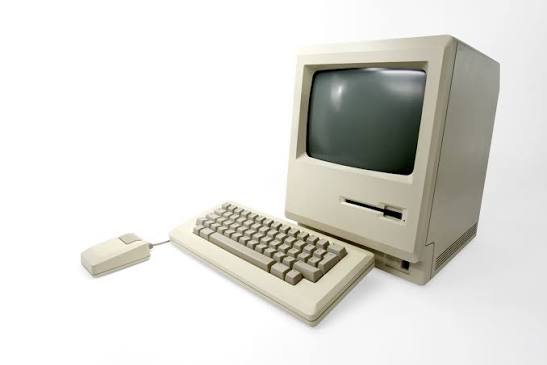
Then one day we got a tiny Macintosh computer, where you could create a page on the screen. Then a year or two later, colour arrived. No more blue-splash on the front and back, we suddenly had a full palette (unless the printers cocked it up). If that wasn’t enough, after a million trips taking the whole paper along to the city on a diskette, the Internet arrived (with that whizz, buzz whoosh noise as the phone was connected) and instead we could send the whole thing down the wire. It still took a long time, but the Modern Age was arriving for sure.

There were a few other problems too, employees can be crafty and a couple of them ended up with the paper, such is life.

I retired to do other stuff and here we are, twenty-five years later. Newspapers are pretty-much dead now, with the national titles losing sales every year and the kiosks closing down, with everybody moving to the Internet where there’s no limit to the page-size, or the links, or the ease-of-access or (above all) the incredible savings in production costs.

The Olive Press employs professional journalists (unlike its competitors) and produces a now monthly print-edition across Spain with a number of useful supplements. But its strength is in its Internet edition, its investigative reporting and its attention to the subject at hand: Spain.

Thus, they will be celebrating later this month, but I like to think that I was there first.      


Like 0        Published at 12:17 PM   Comments (1)


The Train-Wreck
Tuesday, November 3, 2026

Last week Spain suffered its second serious rail accident of the year, this time with 69 dead. The earlier incident on the high-speed line between Madrid and Seville occurred back in January where 46 people lost their lives. 

When you are doing anything up to 200kph on a line where swerving is not an option, coming to a dead stop brings on a whole new and tragic meaning.

Pedro Sánchez lamented that ‘We can’t allow this to happen in a country like ours’.

The excuse from the Minister of Transport Óscar Puente after the January accident in Adamúz: ‘The chances of this happening again are remote, almost impossible’.

This time, they talk of human failure but one can’t blame a single employee when a whole system has failed – especially since the unions and train-personnel have been complaining for years about the antiquated control system. High-speed trains run on a network of special rail track owned and managed by ADIF, and the one carrier on the high-speed rail system is now three, with Renfe now joined by Ouigo España, owned by the French national rail company (SNCF), operating as a popular low-cost high-speed option, and Iryo – a private consortium backed by Italy's Trenitalia (Ferrovie dello Stato), Air Nostrum, and Globalvia. 

Has trust been broken by this second accident? Would you take the AVE to Madrid right now – or rather use the regular train which takes four times longer? The Guardian makes this point: ‘Spain’s prime minister, Pedro Sánchez, has admitted “trust in high-speed rail has been broken” after Wednesday’s train collision that killed at least 69 people, injured more than 100 and prompted a national debate on the safety of the country’s rail network’.

Sitting with your back to the engine may be a small safety-recommendation, but it is clear that no one will currently be able to relax fully on the fast journey from one city to another.

Regardless of the excuses, we are in an election month and the public needs to be satisfied quickly. Puente has already offered to resign, and Pedro Sánchez said no – that he maintained his confidence in his transport minister. The Partido Popular, after the three days of official mourning, have been campaigning on the events, while Vox didn’t even bother to observe the time-out after the accident, noting that Santiago Abascal maintained that the rest of the parties "wanted to use mourning to silence" the criticism about the state of the infrastructure and assured that Vox would not join that strategy, a procedure he also adopted after the Adamúz accident.

A conservative friend writes in Diario de Almería: ‘Criminal liability is a matter for the courts. Political accountability is of a different nature and follows a different timeline. One need not wait for a court ruling to demand explanations, parliamentary appearances, or decisions regarding the continued tenure of those who lead an essential public service. A minister’s resignation does not equate to an admission of guilt; rather, it can be a way of accepting the institutional consequences of an extraordinary crisis’.

On Tuesday, the Minister of Transport Óscar Puente gave his report, recommendations and decisions to the standing committee regarding Spanish rail. Following his report, he resigned both his post as acting-minister and also from further activity in party politics.

The famous Atocha train-bombing in March 2004 put an end to the Aznar regime. Could the same be true for the candidature of Pedro Sánchez 22 years later?


Like 1        Published at 8:49 PM   Comments (3)


Spam post or Abuse? Please let us know


This site uses cookies. By continuing to browse you are agreeing to our use of cookies. More information here. x