The £4 Million Butrón Castle
Friday, May 27, 2022
Castles are one of the great tourist attractions in any country, and in some, such as Ireland or Scotland you can see some of the most spectacular in the world, ideal places to enjoy an incredible building in a magical setting. However, there is one practically unknown castle in Spain that is one of the most spectacular that you can visit, perfect for a magical getaway...
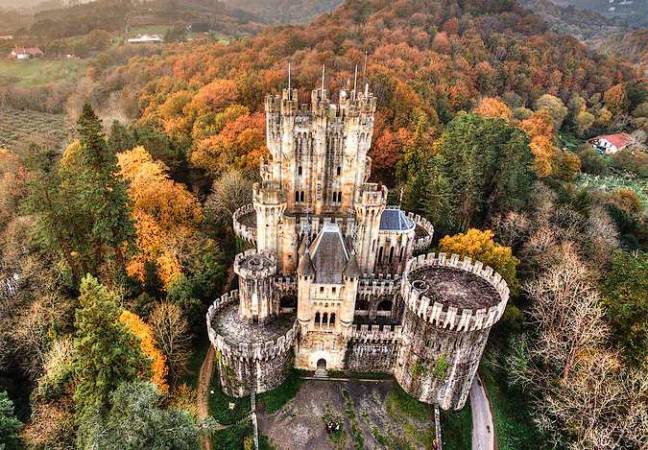
In Spain, it is estimated that there are more than 20,000 castles, although many of them are practically in ruins and 10,200 are officially counted in the Spanish Association of Friends of the Castles. Without a doubt, these are places with charm and a lot of history that are worth discovering, especially those that you can visit inside.
Butrón Castle, is one of the most impressive in Spain, a building that takes you back to the Middle Ages as soon as you approach it. It is located in Gatika, halfway between Bilbao and San Juan de Gaztelugatxe, on top of a rocky hill, in a spectacular setting that surrounds it with a century-old forest.
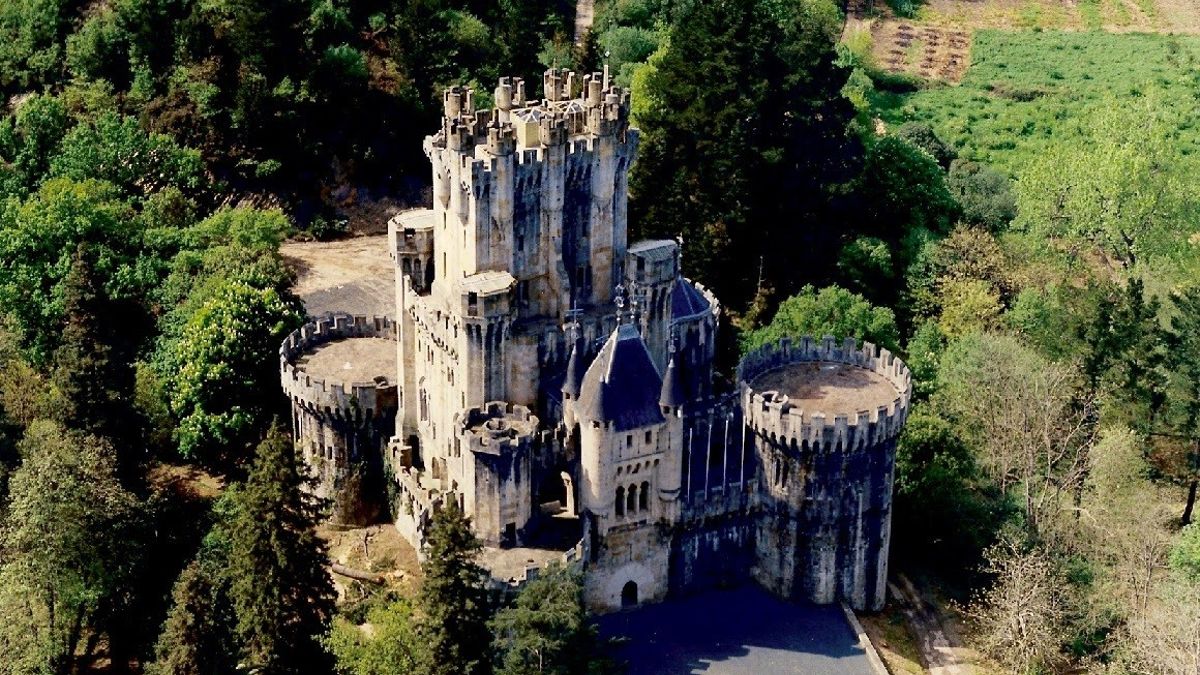
Since the 16th century, this imposing castle has witnessed battles between two groups of nobility from the province of Vizcaya, with the lords of Butrón taking refuge in the castle to exercise their power in the territory.
Before those battles, back in the 13th century, this castle was a tower-house, which was transformed into a castle in the 14th century by the V Lord of Butrón.
Butrón Castle was abandoned in the 16th century, which caused it to deteriorate until the end of the 19th century it was completely restored to what can be seen today. An impressive castle of 2,400 square meters.
At the end of last year, the sale of the castle was sold for 4 million euros to an individual whose identity has not been revealed beyond the fact that he is a foreign investor who wants to use it for private use. The new owner is committed to properly conserving its important historical value, something that undoubtedly makes it unique.
 0
Like
Published at 6:31 PM Comments (0)
0
Like
Published at 6:31 PM Comments (0)
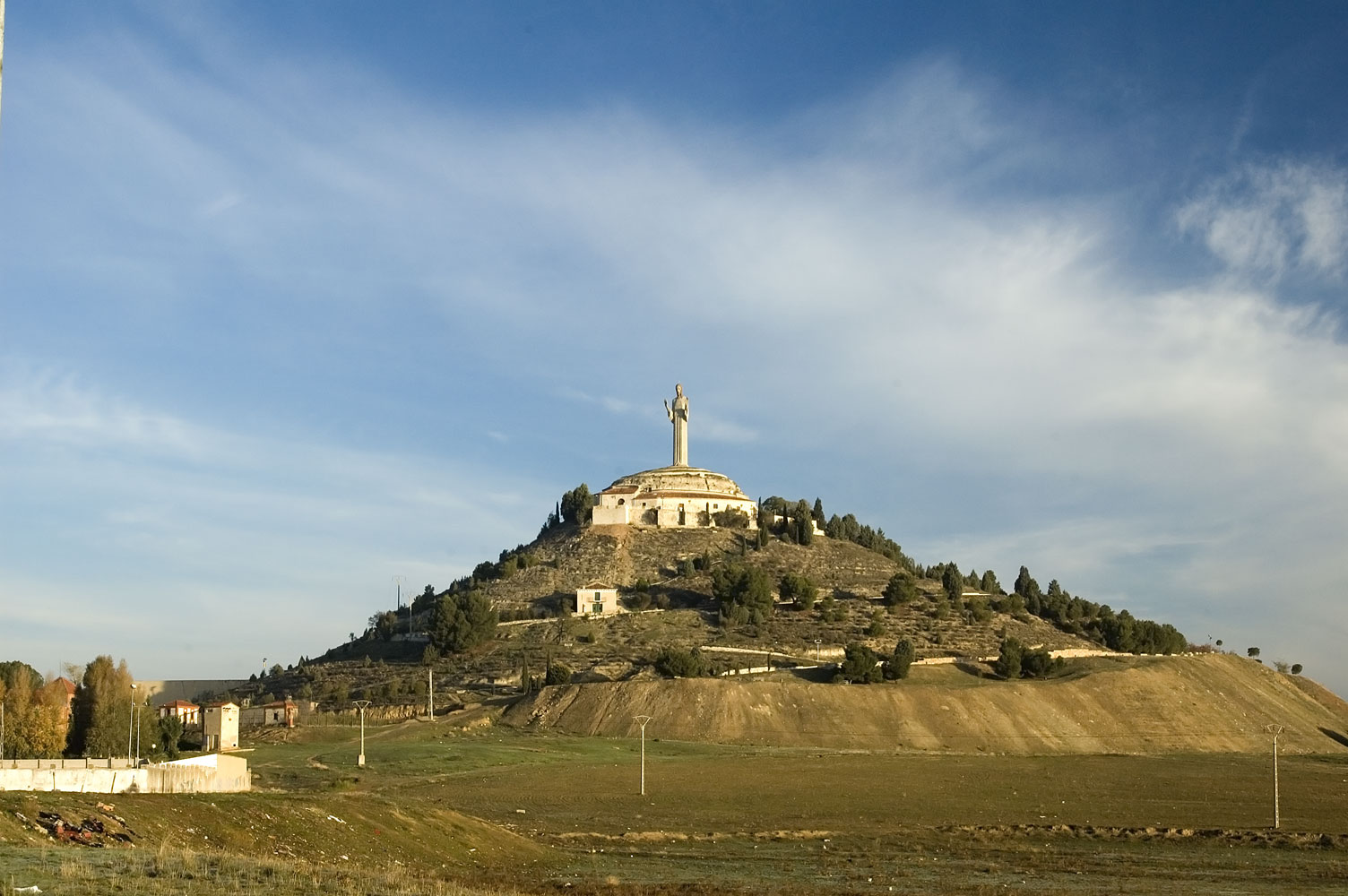
The Cristo del Otero
Wednesday, May 18, 2022
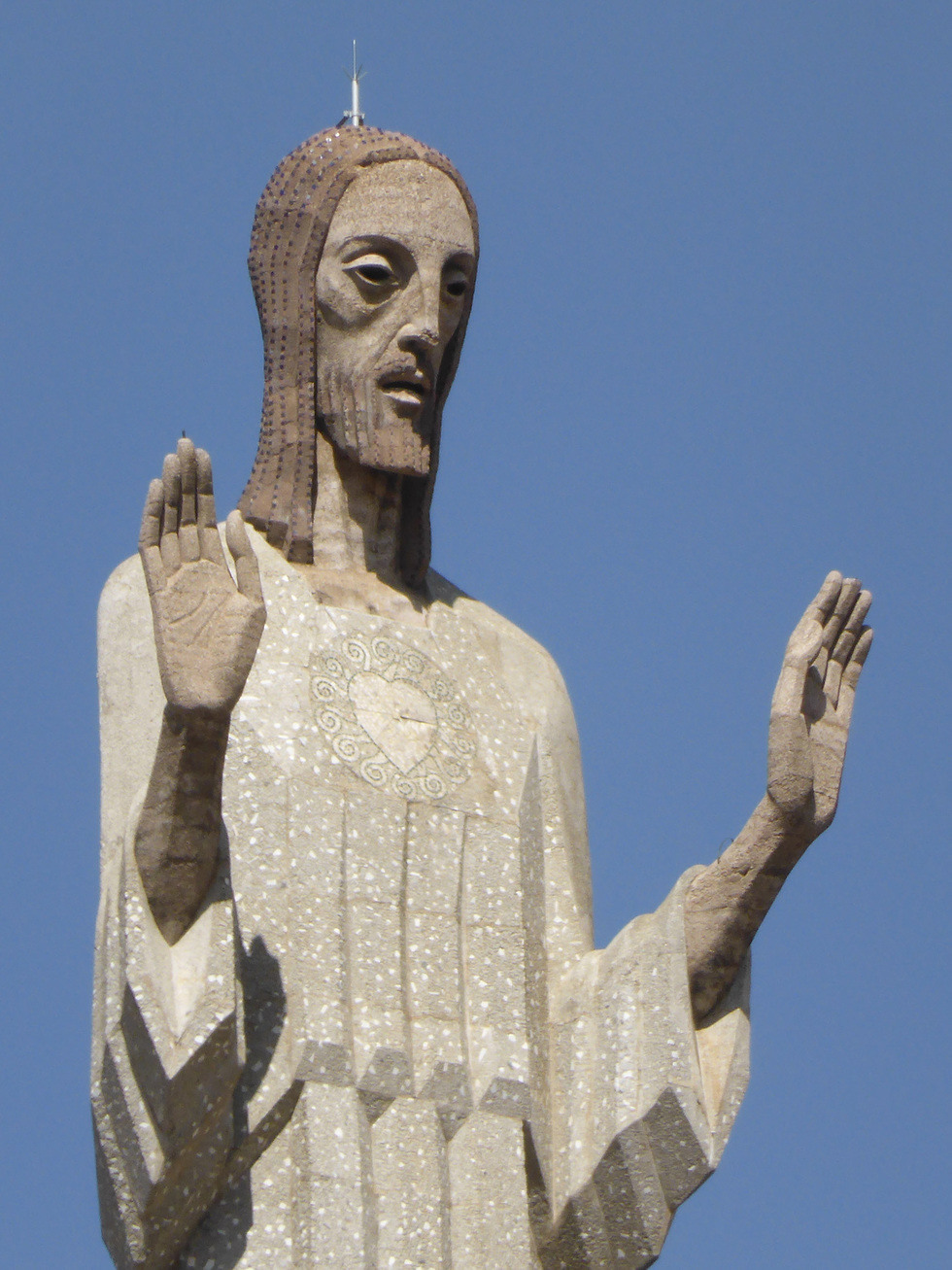 In the proud tradition of such colossal Christs such as the Christ of the Ozarks and the Christ of Vung Tau, in Palencia, Spain's Cristo del Otero (Christ of the Knoll) is a huge stone messiah that looks out over the city in benevolence and supplication, however, the harsh modern style of this statue is far more frightening than enlightening. In the proud tradition of such colossal Christs such as the Christ of the Ozarks and the Christ of Vung Tau, in Palencia, Spain's Cristo del Otero (Christ of the Knoll) is a huge stone messiah that looks out over the city in benevolence and supplication, however, the harsh modern style of this statue is far more frightening than enlightening.
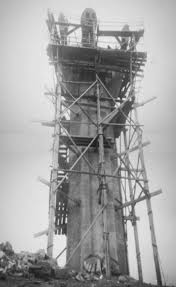
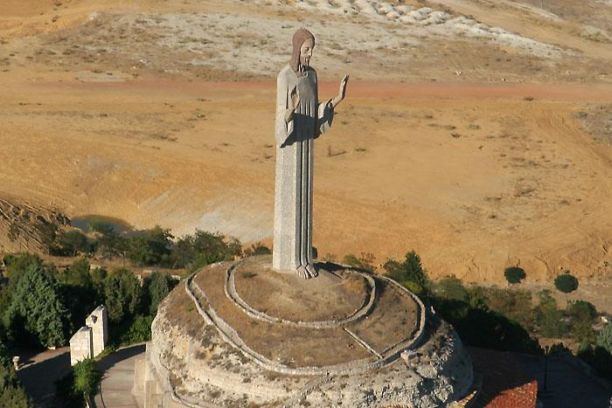
Built in 1931 by famed local sculptor, Victorio Macho, the giant Jesus was inspired by brutalist art deco lines and sharp modern angles. The saviour's face is sunken in and as opposed to the more standard pose of open-armed acceptance (which also mirrors the crucifix), Macho's figure has his hands up in almost halting motion, either displaying his stigmata or in a signal of caution. The odd pose is a result of a compromise meant to make the entire statue lighter. Other than the stark forms, the figure is largely free of decoration save for a lightly etched sacred heart on his chest.
Though the most striking feature of the Christ is his hollow eyes. Staring like bottomless pits, the eye sockets were originally supposed to be filled with ivory and marble, but in yet another budgetary compromise they were simply converted into windows. However, from the exterior they tend to simply look empty.
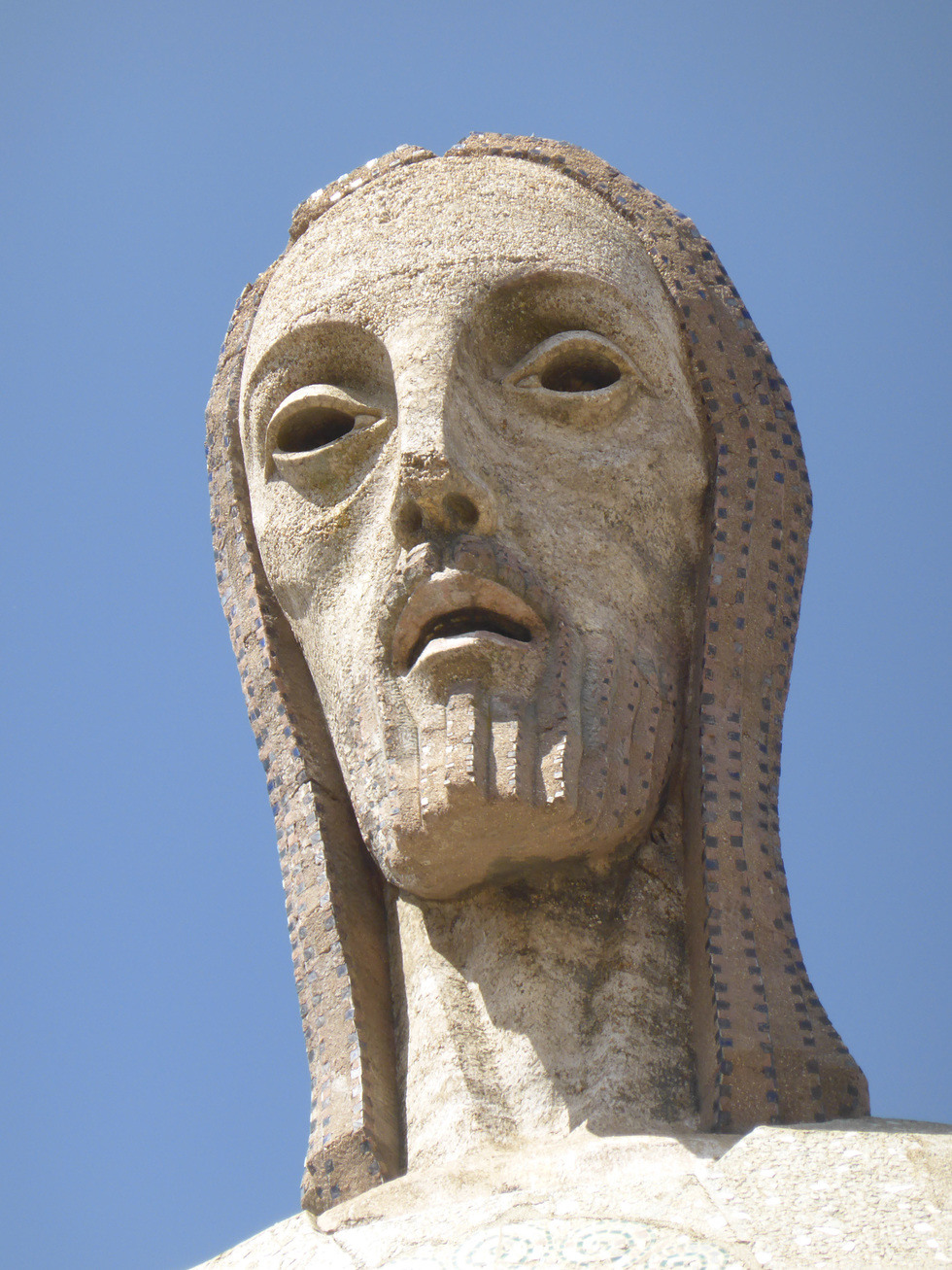
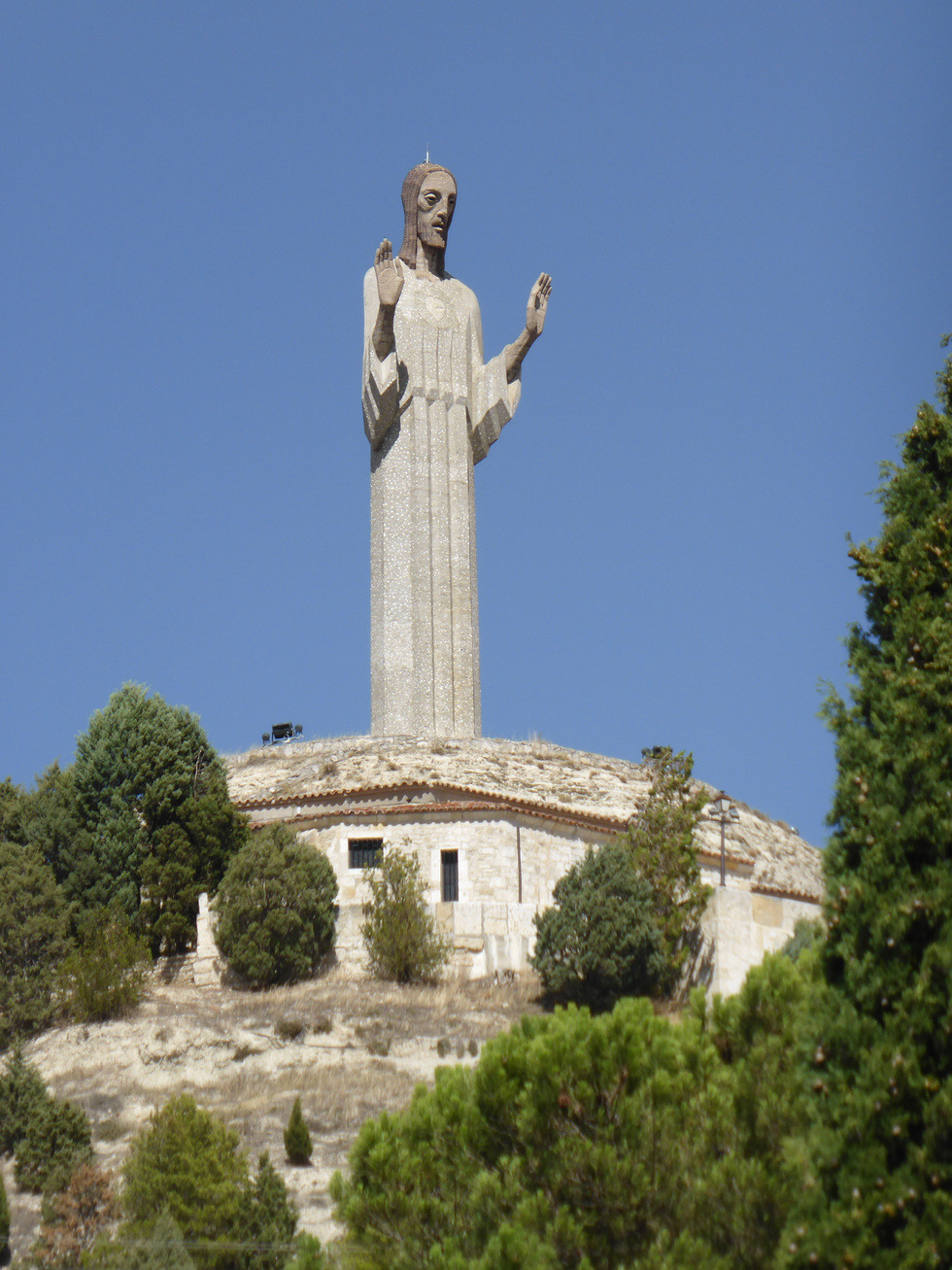
Despite the strange design of the Christ figure, it is still one of the tallest of its kind in the world topping out at over 70 feet tall. The Cristo del Otero is also beloved by the city over which it watches, acting as a symbol of Palencia. The base of the statue also features a museum to the statue's history and Macho's works in and around Palencia.
Victorio Macho was born into a family of modest means in Palencia, Spain in 1887. His parents enrolled him in the school of Fine Arts and Crafts of Santander, where he learned to sculpt. In 1903, at the age of 16, he moved to Madrid continuing his studies at the Academy of Fine Arts of San Fernando. He first became famous with a monument to Galdós. It is a consecrated from his exhibition at the Museum of Modern Art, 1921.
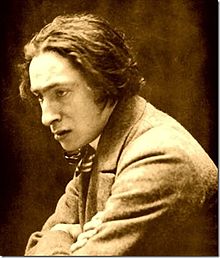 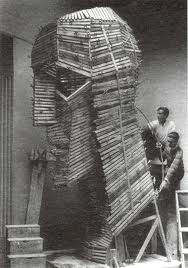 
 He left Spain during the dictatorship of Primo de Rivera and went to live in Hendaye, just over the border in the Basque region of France. He sculpted monuments for Unamuno and Ramón y Cajal. In 1936 he was elected into the Academy of Fine Arts of San Fernando. The outcome of the Spanish Civil War pushed him to exile in France, Russia, and finally to America. After living six months in Colombia, he began an extended stay in Lima in Peru, where he married Zoila Barrós Conti. He finally returned to Spain in 1952. He left Spain during the dictatorship of Primo de Rivera and went to live in Hendaye, just over the border in the Basque region of France. He sculpted monuments for Unamuno and Ramón y Cajal. In 1936 he was elected into the Academy of Fine Arts of San Fernando. The outcome of the Spanish Civil War pushed him to exile in France, Russia, and finally to America. After living six months in Colombia, he began an extended stay in Lima in Peru, where he married Zoila Barrós Conti. He finally returned to Spain in 1952.
He established his home and workshop in Toledo in central Spain. Since 1967 this same building houses the Victorio Macho Museum, created from Zoila's generous donation to the Spanish State. The name of the house is Tarpeian Rock.
In 1964 he received the Grand Cross of the Order of Isabel la Católica. He died in Toledo on July 13, 1966, and his remains were returned to Palencia, the city of his birth. He was buried at the foot of his Cristo del Otero.
0
Like
Published at 10:13 PM Comments (0)
What is the furthest point in Spain from the sea?
Wednesday, May 11, 2022
Located near the "triple border" between Ávila, Toledo and Madrid, a small municipality of 800 inhabitants has the peculiar condition of being the furthest point from the sea in the entire peninsular territory. A recognition that does not coincide with that of the geographic centre of the Iberian Peninsula, located in the municipalities of Getafe or Pinto, according to the different existing interpretations and measurements in this regard.
In the case of the furthest point from the sea in all of Spain, the experts agree on placing it in the municipality of Nombela. It is located near the confluence of three autonomous communities, specifically the provinces of Madrid, Ávila and Toledo. It also happens that the cities of Ávila, Toledo and Madrid are, in turn, the three provincial capitals farthest from the sea in all of Spain. In the case of the city of Madrid, for example, the closest beach, located in Valencia, is 372 kilometres away. This is Playa Las Arenas-Malvarrosa.
In the case of the municipality of Nombela, which is the furthest point in Spain from the sea, it should be noted that it is an enclave whose foundation could be Iberian or even Hebrew. Historically it is a municipality that has based its economy on agriculture. As far as its population is concerned, until the 1960s it maintained a census of around 2,000 inhabitants. However, since then it has steadily lost population, reaching, according to 2021 data, 877 residents.

Why does it not coincide with the geographical point of the peninsula?
As the Iberian Peninsula is an irregular territory, the furthest point from the sea does not have to coincide with the geographical centre of the peninsula. This other recognition is, according to most experts, in the Madrid municipality of Getafe, specifically in the Cerro de Los Ángeles. However, based on historical documentation, there are also those who maintain that the geographical centre of peninsular Spain is in the municipality of Pinto, whose Latin name "Punctum" refers precisely to this condition. In recent decades, some measurements and studies have given way to alternative theories that would place the geographical centre of the peninsula in the Toledo municipality of Méntrida.
0
Like
Published at 7:50 PM Comments (0)
Spam post or Abuse? Please let us know
|
|