If you have spent any time sitting on a sun-drenched terrace in Spain, you will know that the humble plate of cured ham is practically a cultural institution. Yet for many newly arrived expats and holidaymakers, navigating the local jamón menu can be deeply bewildering.
You can walk into a local neighbourhood bar (bar de barrio) and order a generous plate of cured ham for just £5.00, only to sit down at a high-end restaurant down the road and watch a waiter slice up a translucent, marbled masterpiece that costs upwards of £25.00 to £35.00 for a single plate.
So, what exactly justifies the astronomical price gap? The secret, as seasoned food lovers across Spain will tell you, lies entirely in the breed, the curing time, and—most importantly—what the pig was having for dinner.
Jamón Serrano vs. Jamón Ibérico: The Great Divide
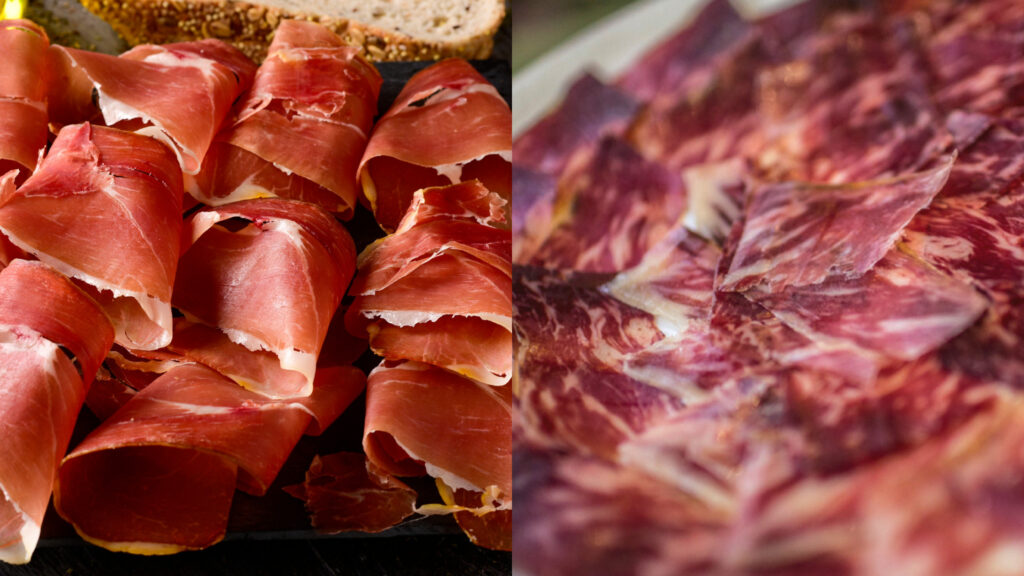
To understand Spanish ham pricing, you first have to separate the two major families of cured ham on the market. They stem from entirely different worlds of farming, breeding, and agricultural tradition.
-
Jamón Serrano (Mountain Ham): Accounting for the vast majority of ham consumed daily across Spain, Serrano comes from white-coated pigs (such as Duroc or Large White breeds) raised on standard grain diets in intensive farming setups. It is cured in mountain air for roughly 12 to 18 months, resulting in a lean, savoury, highly accessible ham that is a staple of everyday tapas and bocadillos.
-
Jamón Ibérico (The Black-Footed King): This is Spain’s crown culinary jewel. Sourced exclusively from the native black Iberian pig (perdiz ibérica), these animals roam the ancient oak pastures (dehesas) of southwestern Spain. Their muscles develop rich marbling, and their diet dictates the final, legendary tier of quality.
It’s All in the Acorns: Decoding the Label System
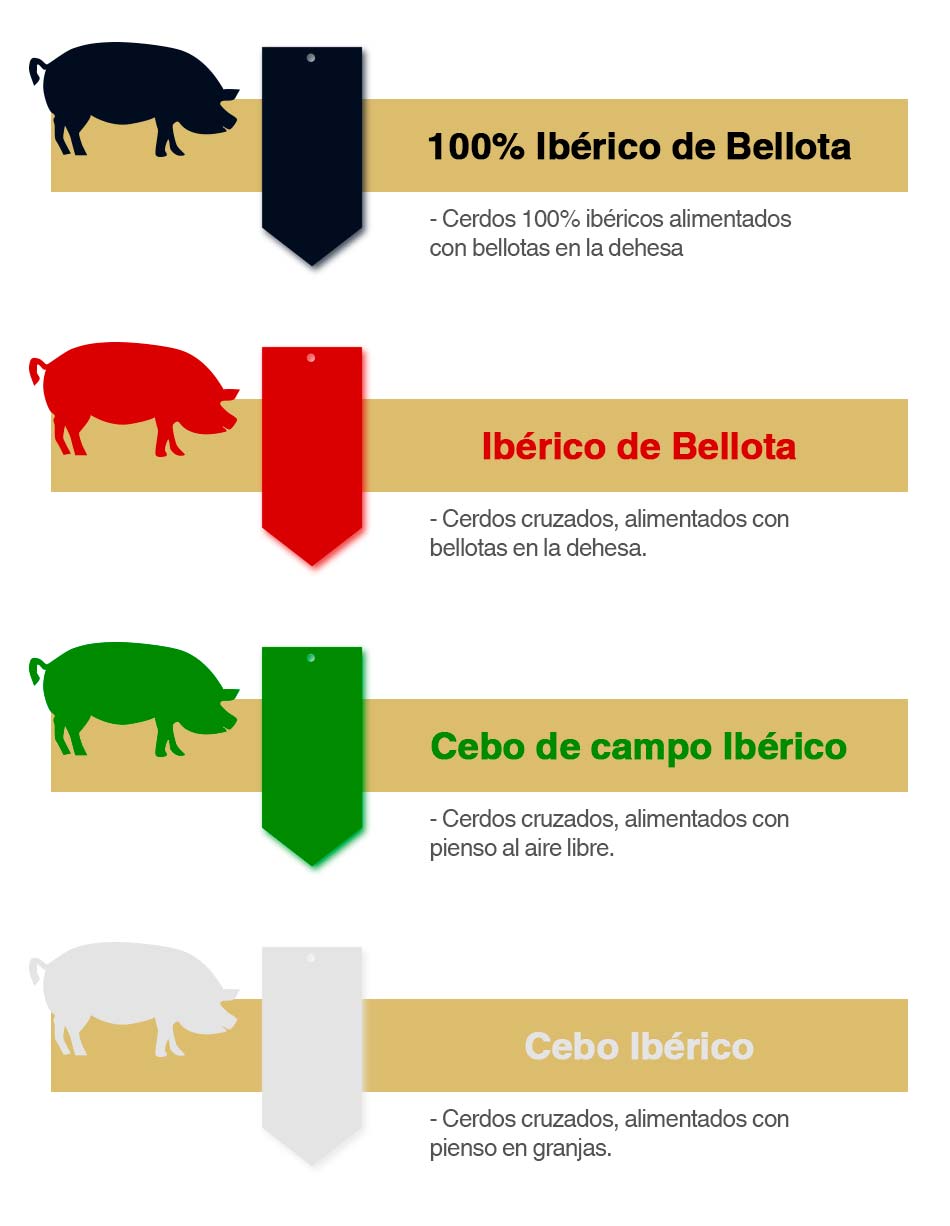
If you want to know why a top-tier Jamón Ibérico can cost over £500 to £800 for an entire leg (or command staggering restaurant prices), you have to look at the colour-coded plastic tags mandated by Spanish law. Not all Iberian hams are created equal:
-
The Black Label (100% Ibérico de Bellota): The undisputed monarch of hams. These pure-bred Iberian pigs spend their final months roaming freely through the oak forests during the montanera (acorn-season), gorging exclusively on fallen acorns (bellotas) and natural grasses. This acorn diet infuses the fat with oleic acid (the same healthy fat found in olive oil), causing the ham to literally melt at body temperature on your tongue.
-
The Red Label (Ibérico de Bellota): Cross-bred Iberian pigs (usually 50% or 75% Iberian lineage) that also finished their lives feeding on acorns in the pastures.
-
The Green Label (Ibérico de Cebo de Campo): Free-range Iberian pigs fed on a combination of natural field grasses and high-grade compound feed.
-
The White Label (Ibérico de Cebo): Iberian pigs raised in indoor feedlots on standard grain diets.
The Art of the Slice: Why Technique Matters
Price isn't just about the pig; it is also about the person holding the knife. In Spain, professional ham carving (cortador de jamón) is treated almost like a martial art.
A master cortador knows how to navigate the complex fat-to-meat ratios of an Iberian leg, producing paper-thin, bite-sized ribbons that release the maximum amount of flavour. Cutting it too thick destroys the delicate melt-in-the-mouth texture; cutting it too thin robs the palate of its deep, nutty complexity.
Whether you are enjoying a casual plate of Serrano with your morning café con leche or indulging in a celebratory plate of 100% Bellota paired with a bold Rioja, Spain's cured ham remains one of the greatest culinary triumphs on the planet.