Sundays in Spain belong to a single, sacred ritual: family and friends gathering around a large, shallow pan to share a freshly simmered dish of rice.
While international tourist traps have spent decades pushing the idea that a paella must be piled high with chicken, rabbit, or king prawns, locals know a different secret. One of the country's absolute finest variations contains no meat or seafood at all. The Paella de Verduras (Vegetable Paella) is a true masterclass in maximising the natural sugars and earthy depths of local garden produce.
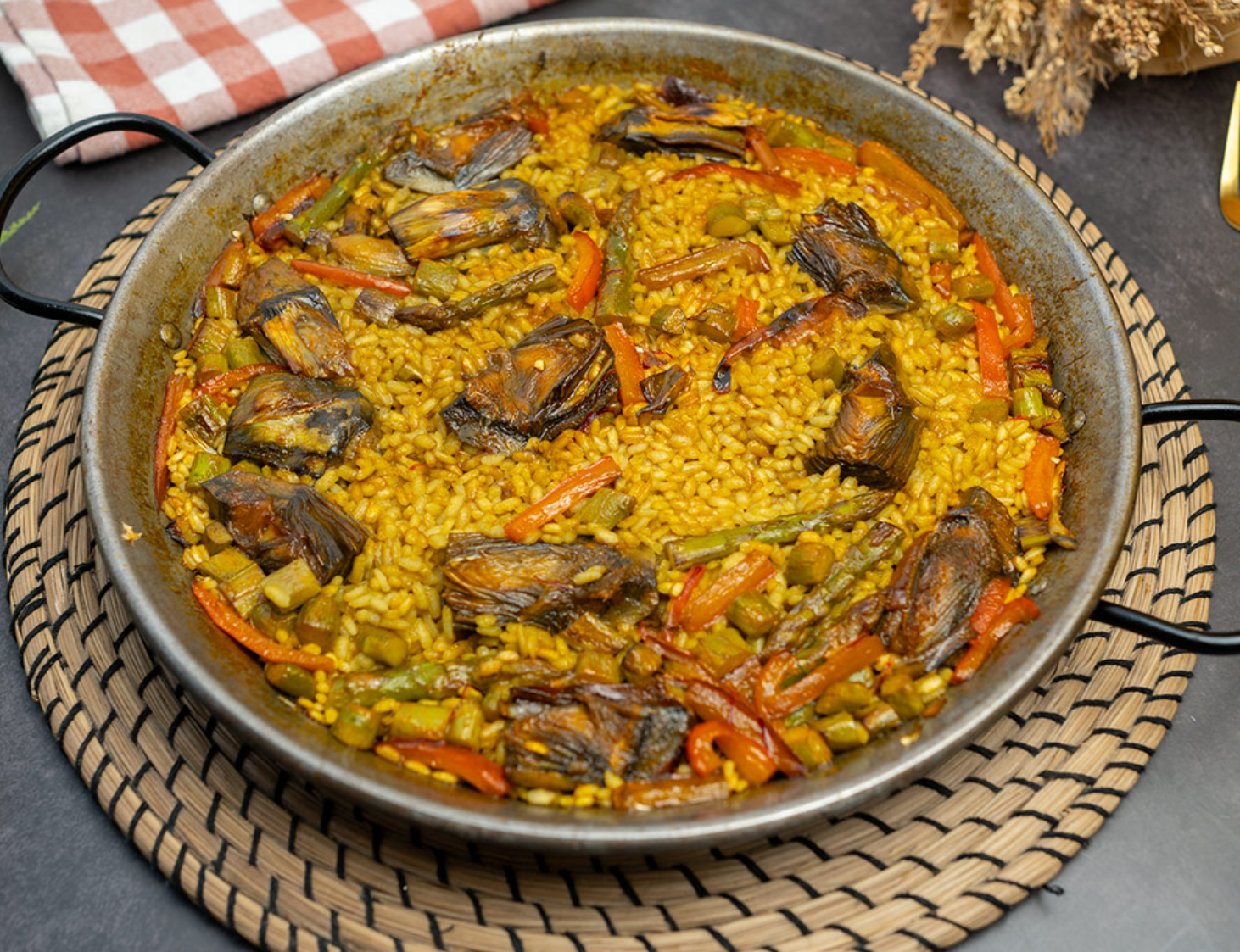
Instead of relying on heavy animal fats for flavour, a great vegetable paella challenges the cook to build a rich, savoury foundation entirely out of aromatic roots, wild mushrooms, and a slow-simmered vegetable stock.
The Anatomy of the Perfect Veggie Base
The ultimate downfall of a subpar vegetable paella is a lack of depth. Without meat bones or shrimp shells to enrich the liquid, you have to extract flavour through a highly deliberate, layered cooking technique.
The process begins with the sofrito—the aromatic baseline of Spanish cooking. Finely diced onions and green bell peppers are gently fried in a generous ladle of high-quality extra-virgin olive oil for a full 20 minutes over medium heat. This long, patient sauté is non-negotiable; it coaxes out the vegetables' natural sugars until they melt into a sweet, rich paste.
Only then do you stir in minced garlic, grated fresh ripe tomatoes, and a heavy dust of pimentón dulce (Spanish sweet paprika), flash-frying it just long enough to activate the spices without burning them.
Choosing Your Garden Inventory
The brilliance of a vegetable paella is its versatility, adapting easily to whatever is freshest in the local market. However, certain structural vegetables provide an essential contrast in textures and flavour profiles:
Earthy Umami: Quartered mushrooms (such as white button, cremini, or wild oyster varieties) are added directly into the hot sofrito, absorbing the aromatic oil and releasing a deep, savoury juice that mimics the richness of meat.
The Crunch & Colour: Flat green beans, tender broccoli florets, and fresh artichoke hearts split completely down the middle are added immediately after the boiling stock is poured. They simmer directly on top of the cooking rice, steaming to a perfect tender-crisp finish.
The Starches: Traditional variations frequently incorporate large, buttery garrofó beans (lima beans) to add a creamy, substantial bite that balances the short-grain rice.
3 Golden Rules for Cooking the Rice
Once your ingredients are assembled in the paellero (the traditional wide, flat pan), the execution requires strict restraint. To ensure your rice turns out perfectly dry and loose rather than a sticky, overcooked porridge, commit these three rules to memory:
Trust the Liquid Ratio: For a classic, dry Spanish rice dish, you want a strict 1-to-2 ratio of rice to high-quality vegetable stock (e.g., 400 grams of short-grain rice to roughly 1 litre of broth). If you prefer your rice with a slightly juicier, wetter bite, push the ratio closer to 1-to-3.
Step Away From the Spoon: The single biggest mistake home cooks make is stirring the pan like a risotto. Once the boiling vegetable stock is poured over the rice and the grains are spread into an even layer, do not touch it again. Stirring releases amylose starch from the grains, turning the dish uncomfortably gummy. Let it boil completely undisturbed over medium heat for 16 to 20 minutes.
The Silent Rest: When the liquid has been fully absorbed, and the rice is just al dente, pull the pan off the heat entirely. Throw a clean kitchen towel over the top and let it rest for 10 minutes. This traps the residual steam, settling the starches and allowing the complex, smoky flavours of the saffron, paprika, and garden vegetables to completely meld together.
Serve your finished masterpiece family-style right out of the pan, accompanied by plenty of fresh lemon wedges and a generous bowl of homemade, punchy alioli (garlic mayonnaise) to fold into the hot grains.