 "If you switched from French or German to Italian, Russian or Spanish, we could make you a lower offer." So started my "Spanish" journey aged 17 and which has still not come to an end 58 years later.
[Wikipedia]
I was at interview for a place at university to study languages when Professor Juan Sager made me this offer.
I chose Spanish and in that moment my journey commenced.
Off to university
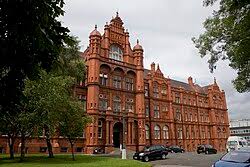 I achieved the grades required and in October 1968 our crash course in Spanish began.
Designed to get us to A-level standard in a year, it was taught by Ken Mason, a grammar school teacher, "requisitioned" for that specific task.
Sadly, Sager and Mason are no longer with us and nor are some of my peers.
University of Salford [Wikipedia]
I floundered to start with. Eight classes a week, the pace was relentless and I struggled to keep up. Everybody else seemed much better than me (I later discovered that they were also finding it tough!)
In the Part One exams after a year I passed in Spanish but failed the Linguistics paper. I took a year off!
When I returned, having satisfied the powers-that-be regarding Linguistics, I was in year 2, but obviously with a different group of peers.
After two more terms of high-speed Spanish tuition it was time for our year abroad - Easter 1970 to San Sebastian, Spain.
Six months in Spain
 We flew to Barcelona and stayed in the catalan capital for a couple of days and nights.
Well, what a shock! Blatant prostitution; everything at full pelt, including spoken Spanish; noisy and grubby; but ridiculously cheap and so, so exciting!
[YouTube]
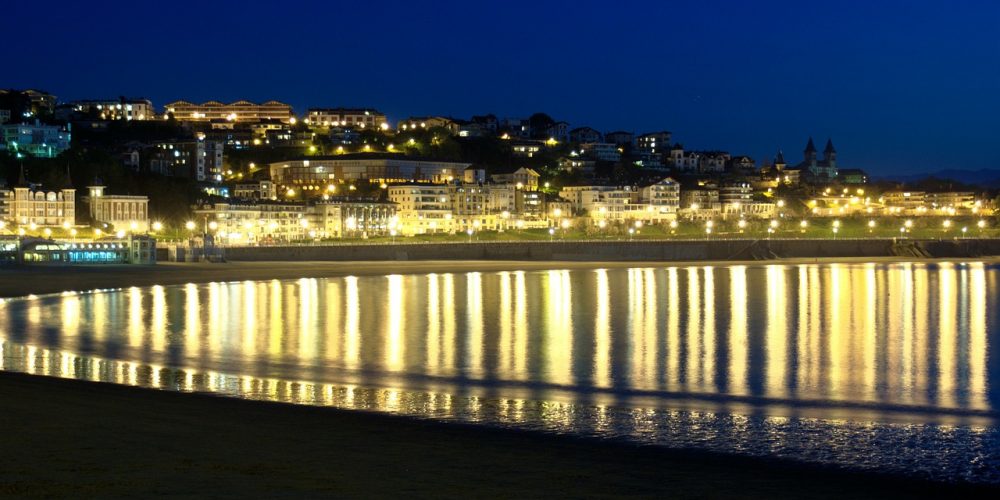 After a road journey across northern Spain to San Sebastian, which took all day, we arrived in darkness and immediately found ourselves in-at-the-deep-end linguistically.
Thank God for Miss Pickering who had done A-level Spanish and was much better than the rest of us. She "picked up the baton" and sorted us all out with digs.
San Sebastian by night [Alamy]
Our stay in San Sebastian
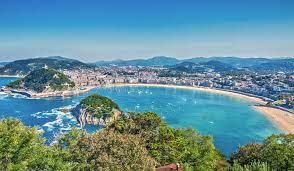 The plan in San Seb was three months on a course at the university (EUTG), after which we were left to our own devices. Some went travelling, but a couple of us found jobs in the town.
As for the course, I found it enlightening and my Spanish started to improve.
[Civitatis]
My job was with a local tour operator, DORFE, which involved dealing with the company's various suppliers: coach company, drivers, excursions, hotels and their staff, etc. After a while I was promoted from the office to become a tour guide/rep which gave me even more opportunities to practice my Spanish.
In those three months my Spanish came on a treat, because, basically, it had to!
Back at university and off to college
After six months in Germany it was back to uni for four more terms before Finals.
Degree in hand, off I went to Sheffield City College (now Sheffield Hallam University) to do a PGCE (Postgraduate Certificate in Education).
[APS.org]
Career in Education
A year later (1976) I started my first teaching job as a Spanish Teacher.
Two schools later, having been appointed Head of Spanish in my second school and Head of Modern Languages in the third ..... I left the classroom for a career in the local education authority (LEA).
 I worked for two Merseyside boroughs, first St Helens for six years and then Sefton for 10.
With responsibility for Modern Foreign Languages and Europe, I had plenty of opportunities to keep my hand in with Spanish.
[Alamy]
Highlights included EU-sponsored study visits to Jaca (Aragon), Oviedo (Asturias) and the European Parliament in Brussels, as well as working trips to set up and monitor a Work Experience project for post-16 students in El Prat de Llobregat (Barcelona).
On a personal level, the family were regular visitors to Spain and her islands for two decades. In 2000 my wife Jeryl and I celebrated our silver wedding anniversary with a parador tour of Andalucia. The following year we bought an apartment in Ronda (Malaga) and two years after that a house.
Early Retirement
In 2005 I and several other advisors were made redundant. Jeryl divorced me around the same time. I suffered a nervous breakdown (hardly surprising!)
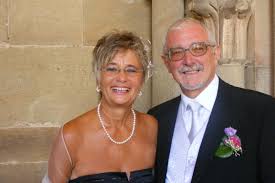 After three years "in the wilderness" I emigrated to Spain to be with my new girlfriend, German Rita, who had moved to Spain a couple of years before.
Rita and I married in 2010 and I've now clocked up 18 years as a resident.
Wedding in Maulbronn, Germany [HMR]
 I speak Spanish on a daily basis; read the Sunday papers in Spanish - AS, Malaga Hoy, SUR, XL Semanal; watch the Spanish news on TV every day; and listen to Spanish radio in the car.
I also dabble in translation and interpreting from Spanish into English. Yesterday I had an interpreting job from German into Spanish and back again.
[EL PAIS]
Endpiece
I reckon my Spanish is better now than when I sat for my degree finals, despite the shaky beginnings.
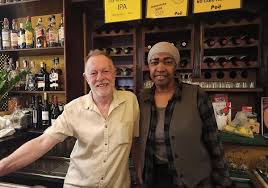 The important points for learning a language to a high standard are:
- be in a conducive environment;
- work at it every day;
- do a course (face-to-face, not online);
- seek contact with Spanish people - eg a coloquio or just in your local bar;
- just have a go.
[Ideal]
¡Suerte!
© Paul Whitelock
Pictures:
Alamy, APS.org, Civitatis, EL PAIS, HMR, Ideal, Wikipedia, YouTube
Thanks:
Paul Whitelock, Wikipedia
Tags:
Alamy, Andalucia, APS.org, AS, Brussels, Civitatis, DORFE, EL PAIS, El Prat de Llobregat, EUTG, European Parliament, HMR, Ideal, Jaca, Jeryl, Juan Sager, Ken Mason, Malaga Hoy, Oviedo, parador, Paul Whitelock, PGCE, Ronda, St Helens, Sefton, Sheffield City College, silver wedding anniversary, Spanish, study languages, study visits, SUR, translation and interpreting, university, Wikipedia, Work Experience, XL Semanal, YouTube