Tucked high among the jagged peaks of the Aragonese Pyrenees, just a few kilometres from the French border, stands one of Europe’s most astonishing architectural spectacles. Stretching nearly 250 metres across a narrow alpine valley, Canfranc International Railway Station looks less like a rural transport hub and more like a grand Parisian palace accidentally dropped into the mountains.
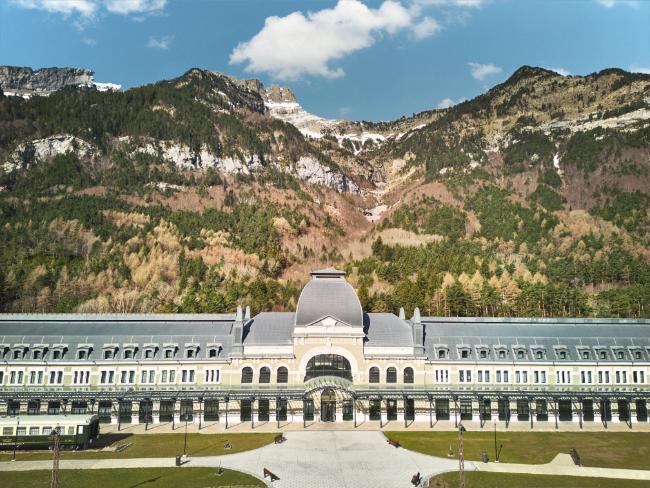
Recently crowned Spain’s most beautiful railway station by travellers, Canfranc is far more than a pretty Beaux-Arts façade. For nearly a century, it has stood as a monument to grand European ambition, wartime intrigue, catastrophic bad luck, and—at long last—a triumphant modern rebirth.
A Grand Vision of European Unity
In the early 20th century, crossing the Pyrenees between Spain and France was a logistical nightmare, forcing rail traffic to hug the distant Atlantic or Mediterranean coastlines. Canfranc was conceived to smash straight through the middle.
Inaugurated on 18 July 1928, the station was the crowning jewel of an extraordinary feats-of-engineering project that required dozens of mountain bridges and the drilling of the Somport railway tunnel beneath the Pyrenees. Because Spanish and French rail networks used different track gauges, Canfranc had to be colossal: passengers and freight had to disembark, clear customs on both sides, and transfer trains.
Designed in opulent Beaux-Arts style with steep slate roofs and hundreds of symmetrical windows, the station was built to impress. It was meant to symbolise a bold new era of Franco-Spanish trade, tourism, and cross-border harmony.
"Europe’s Unluckiest Train Station"
Locals and historians eventually nicknamed Canfranc the "Titanic of the Mountains"—a nod not only to its immense scale and luxury, but to its uncanny run of misfortune. Almost from the moment the ceremonial ribbon was cut, disaster struck in waves.
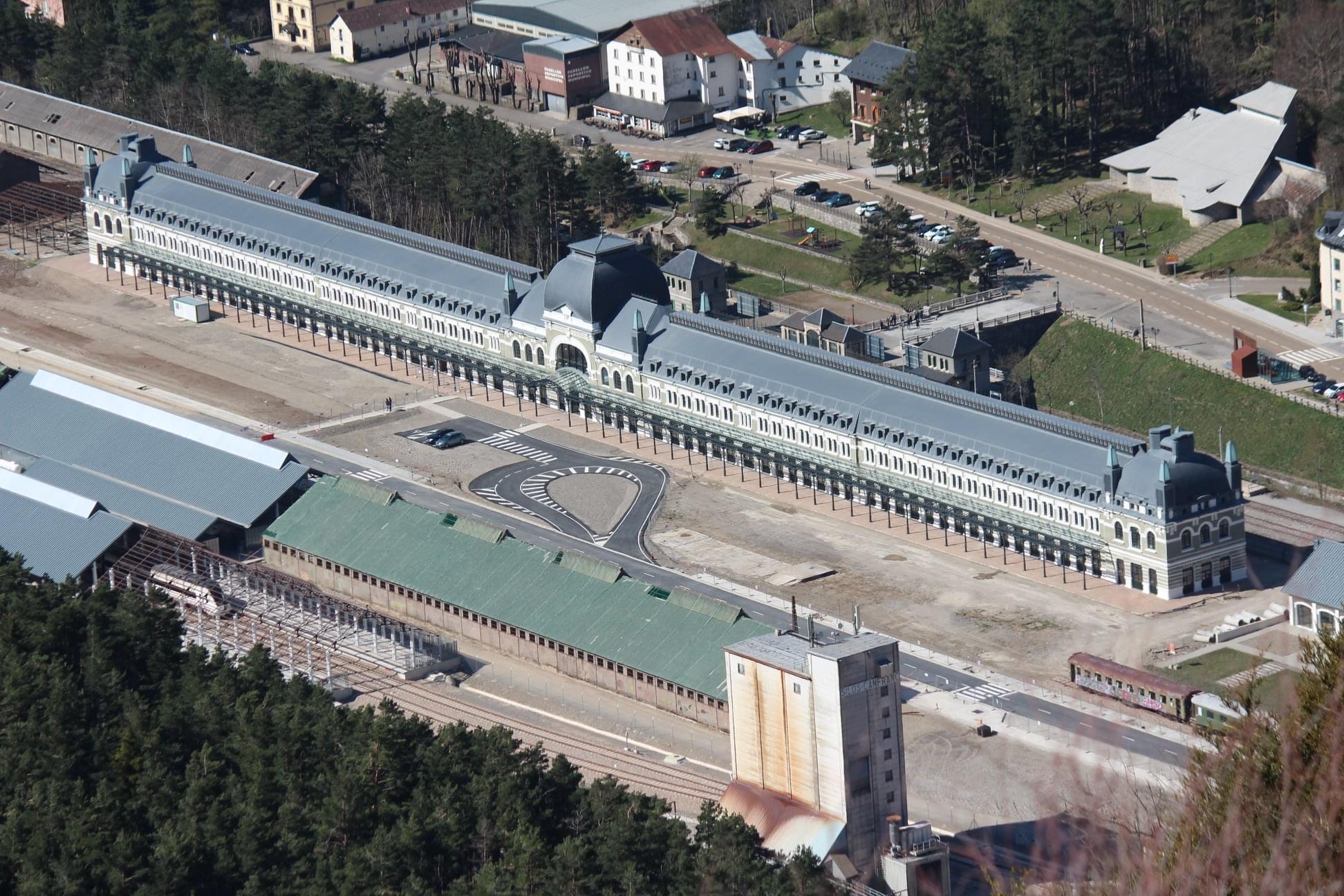
Following its grand inauguration in 1928, when it opened with immense fanfare as a flagship international rail gateway between Spain and France, Canfranc’s fortunes unravelled almost immediately. The Wall Street Crash of 1929 triggered a global economic depression that strangled the cross-border trade the station was built to handle, and just two years later, in 1931, a devastating fire tore through the building, causing extensive structural damage. Worse still, the consecutive upheavals of the Spanish Civil War and the Second World War between 1936 and 1945 closed borders, disrupted services, and turned the remote mountain hub into a tense frontier post. The final blow arrived in 1970 with the L'Estanguet derailment, when a freight train crashed on the French side and destroyed a vital bridge, prompting France to close the international line for good.
Because of its isolated borderland setting, Canfranc became a magnet for Second World War myths—including exaggerated tales of Nazi gold trains and swastikas flying over the Spanish platforms. While historians clarify that German forces never occupied Canfranc itself (they operated the customs post on the French side), the station did play a genuine, dramatic wartime role. Throughout the conflict, it served as a vital, high-stakes crossing point for refugees—including Jewish families—fleeing Nazi-occupied Europe into neutral Spain.
Fifty Years of Decay—and a Five-Star Resurrection
When the 1970 derailment collapsed the L'Estanguet bridge in France, French authorities seized the opportunity to abandon the costly mountain line permanently. Overnight, Canfranc lost its purpose.
For decades, the colossal station sat boarded up and slowly decaying in the harsh Pyrenean winters, served only by two modest daily regional trains chugging up from Zaragoza. Yet its ghostly grandeur refused to fade. Declared a Site of Cultural Interest in 2007, it became a pilgrimage site for urban explorers, photographers, and industrial heritage enthusiasts.
.jpeg)
Today, the "ghost station" has finally been brought back from the dead:
-
A New Transport Hub: In April 2021, a sleek, modern railway station opened in the former goods halls behind the historic building, keeping regional rail links to Zaragoza alive while freeing up the original monument.
-
A Luxury Five-Star Hotel: Following an ambitious restoration, the iconic 1928 Beaux-Arts building reopened in 2023 as Canfranc Estación, a Royal Hideaway Hotel (operated by Barceló Hotel Group), transforming the grand waiting halls into a world-class alpine retreat.
-
The Dream of Reopening France: Backed by European Union funding and persistent lobbying from both Aragón and southwestern France, plans remain in motion to eventually rebuild the missing French track and restore the full international Pau–Canfranc–Zaragoza rail line.
You do not need to book a five-star suite to soak up Canfranc’s magic. Take the scenic regional train (El Canfranero) up from Zaragoza—the journey winds through dramatic Pyrenean gorges and is one of the most underrated rail trips in Spain. If you visit in late autumn or winter, you will see the station framed by snow-blanketed peaks, looking every bit like a scene from a classic European spy novel.
Canfranc is a rare reminder that Spain’s architectural treasures aren't just found in medieval cathedrals or Moorish palaces—sometimes they are hidden in the industrial marvels of the 20th century.