Chupa Chups - The Original Lollipop
Friday, May 22, 2026
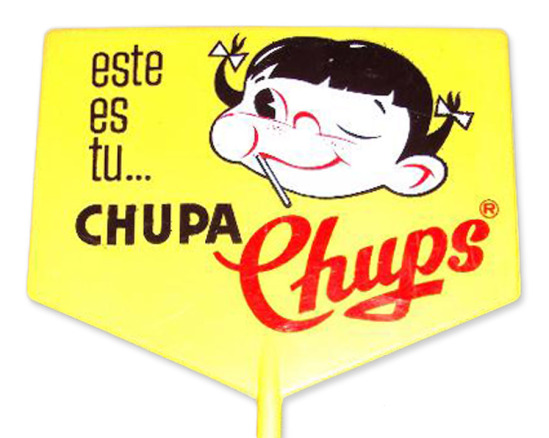
Up until the late 1950s, sweets were different shapes and colours. But children, being children, would pop them in and out of their mouths regularly to examine them, to talk to friends, to hide them from parents or to put them in their pockets for later. This meant that kids and sweets were a messy mix.
In 1958 Enric Bernat created a universally appealing sweet that would make kids and parents happy.
In the early 1950s, Bernat worked for an apple jam factory called "Granja Asturias". After he proposed the idea of making lollipops, the investors left so Bernat took over the company in 1958. He built the production machines and sold a striped bonbon on a wooden stick for one peseta each.
Bernat’s original idea was a piece of candy on a fork. After several experiments with small forks, Bernat saw the opportunity for production on a larger scale. Before the first Chupa Chups lollipop hit the market, however, the fork was substituted with a wooden stick as a safer and less expensive alternative
Bernat got the idea of a "bonbon with a stick" from a cursing mother as her child got sticky hands from melting sweets. Bernat felt that at that time, sweets were not designed with the main consumers — children — in mind. Shopkeepers were instructed to place the lollipops near the cash register within reach of children's hands, instead of the traditional placement behind the counter and Chupa Chups stood out from other sweets with displays that were cute, curious and creative.


At first, he decided to call it “GOL”, imagining the sweet was a bit like a football and an open mouth was a bit like a football net.
But it wasn’t quite catchy enough, so he hired an advertising agency to come up with a creative new name for him, Chups.
Then, consumers stepped in. The catchy jingle used to market Chups proved so successful, that it changed the name of the sweet!
Get something sweet to lick, lick, lick, like a Chups.
Get something sweet to lick, lick, lick, like a Chups.
It’s so round and it lasts so long.
“Lick, lick lick a Chups” [“Chupa, chupa, chupa Chups”]
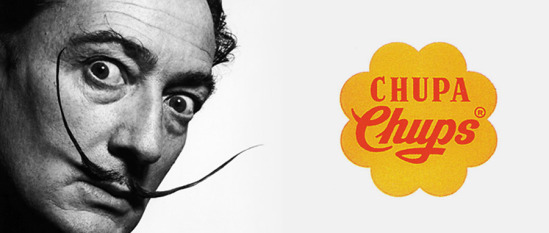
Sales of Chupa Chups lollipops abroad prompted the need for a modernised wrapper design. For this important task, a visit was paid to Salvador Dalí, who, in less than an hour created the famous daisy logo. He also changed the logo to only two colours and insisted that his logo be positioned on top of the lollipop so that it could be seen perfectly from every angle. This very logo is still pretty much the logo in use today. And these little changes made it iconic.
In 1988 it was revamped a little and that is the design that has stuck till today. Bright, cheerful and unique, it has proven universally popular with the public. It has become the definitive icon for a world famous brand.

The Chupa Chups Company was a success. Within five years Bernat's sweets were being sold at 300,000 outlets. After the end of the Francisco Franco dictatorship (1939–75), the self-funded private company went international. In the 1970s the lollipops appeared in Japan and Southeast Asian countries such as Indonesia, Singapore, Philippines and Malaysia, as well as Australia. In the 1980s it expanded to the European and North American markets, and in the 1990s to most Asian countries, including South Korea and China. Nowadays billions of lollipops a year are sold in over 150 countries.

 1
Like
Published at 11:35 PM Comments (0)
1
Like
Published at 11:35 PM Comments (0)
Silent Pride: The Surprising History of Spain's Wordless National Anthem
Saturday, May 16, 2026
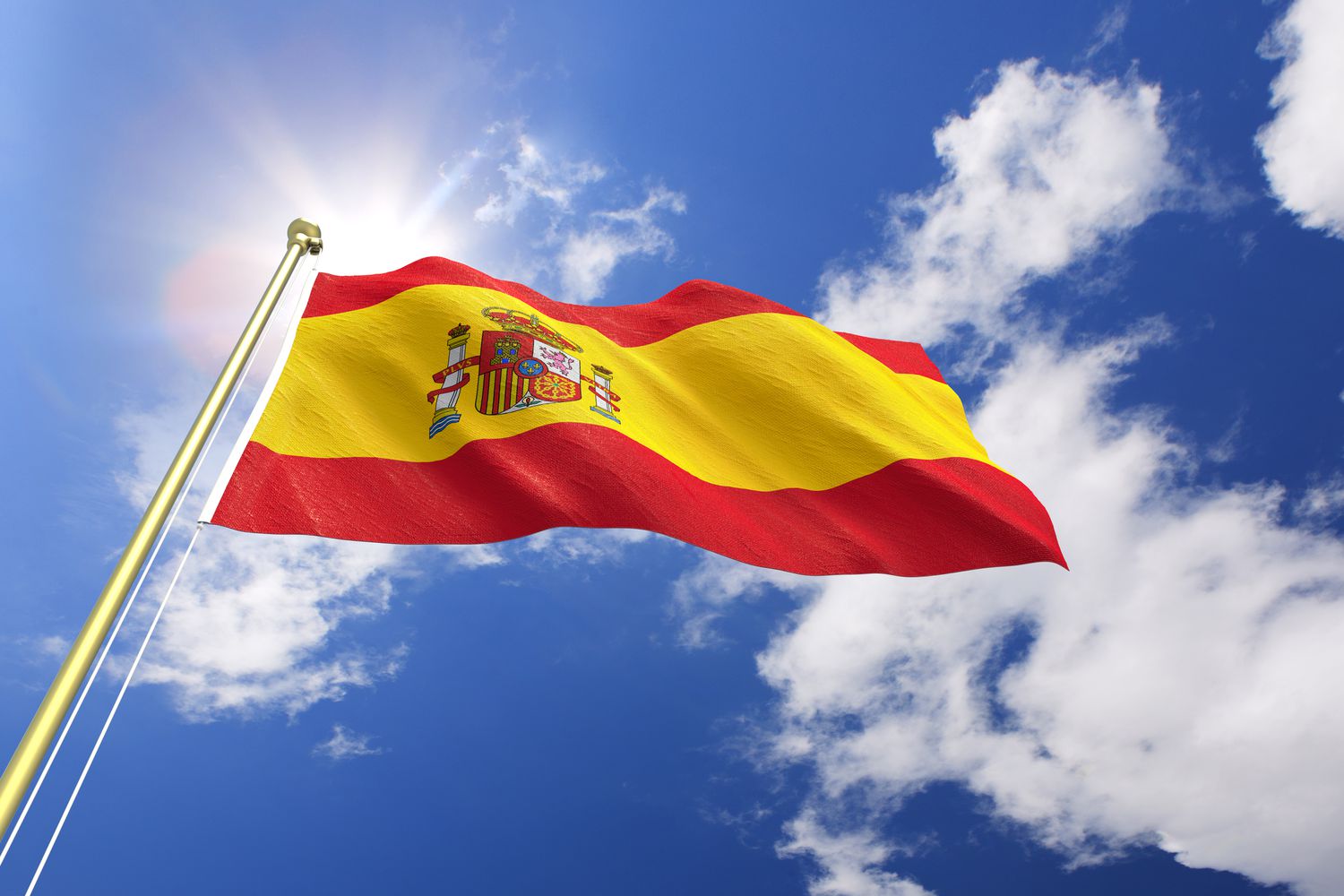
For foreign property buyers and expats settling into Spanish life, there is a distinct moment of cultural curiosity that usually happens during a major sporting event or a national holiday. The Marcha Real (The Royal March) strikes up, the crowd swells with pride, but instead of a roaring chorus, everyone is simply humming along with a collective "lo-lo-lo."
Spain’s national anthem is one of only four in the world that has no official lyrics (alongside San Marino, Kosovo, and Bosnia and Herzegovina). Its journey from an 18th-century military tune to a wordless symbol of a modern nation is a fascinating tale of survival, politics, and a unique compromise.
The Military Origins: The "Grenadier March"
The melody we know today wasn't originally intended to be a national anthem at all.
-
1761: The tune first appeared in a book of military bugle calls compiled by Manuel de Espinosa, titled the Marcha Granadera (March of the Grenadiers).
-
1770: King Charles III was so taken by the stately, rhythmic composition that he declared it the official "Honorary March" to be played at public events and royal appearances.
-
The People’s Choice: Over time, the public simply associated the melody with the concept of the Spanish state. Without a formal decree, it became the de facto national anthem through sheer popularity.
The Missing Words: A Century of Failed Attempts
The lack of lyrics isn’t due to a lack of trying. Over the last 150 years, various governments, poets, and musicians have tried to pen words to the Marcha Real, but Spain’s complex regional identities and political history have made finding a consensus nearly impossible.
During the dictatorship of General Francisco Franco, official lyrics were introduced (written by poet José María Pemán). However, following the transition to democracy in the late 1970s, these words were promptly dropped due to their close association with the regime, returning the anthem to its purely instrumental state.
The 2008 Anthem Crisis
The most recent attempt to give the country something to sing occurred in 2008. The Spanish Olympic Committee launched a high-profile competition to choose official lyrics, aiming to give Spanish athletes something to chant on the podium.
Out of over 7,000 entries, a winning set of lyrics was selected, beginning with the line "¡Viva España! Cantemos todos juntos..." (Long live Spain! Let's all sing together...). However, before the song could even be officially presented, public criticism erupted. Critics argued the lyrics felt too traditional, while regional nationalist groups felt unrepresented. The project was swiftly abandoned within days, proving once again how sensitive the subject remains.
Why the "Silence" Works for Modern Spain
Understanding the anthem’s silence is a great window into the Spanish mindset. In a country with distinct regional languages and identities—from Catalonia and the Basque Country to Galicia and Andalusia—a wordless anthem serves as a functional neutral ground.
When the Marcha Real plays, it doesn't favour one regional language over another. It allows everyone to project their own version of what it means to live in Spain onto the music.
2
Like
Published at 12:20 AM Comments (0)
One of the most beautiful castles in Spain
Friday, May 1, 2026
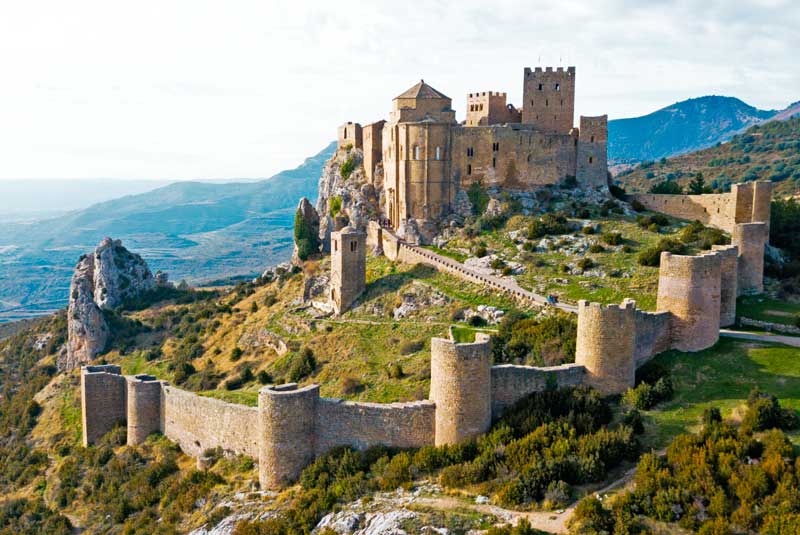
In Huesca, on a very big rock, the castle of Loarre has resisted the passage of time for a thousand years. It is one of the best-preserved medieval castles in Aragon and, furthermore, it can boast of being one of the best-preserved Romanesque fortresses in Europe. It has been a castle, a fortress, a royal residence, a monastery and even a movie set, so it could tell us stories of kings, clergymen, nobles and movie stars.
At 1,070 meters high, it has a fantastic panoramic view over the Hoya de Huesca region. It is a watch-post castle although it lost its military character a long time ago as the Reconquest progressed. Its good state of conservation allows us to imagine what life would have been like within its walls, taking us to another time thanks to its particular beauty. In fact, according to a macro-survey carried out by the Lonely Planet travel guide in which more than 60,000 travellers participated, Loarre Castle has been recognised as the most beautiful castle in Spain, even ahead of the Alcázar of Segovia, the Castle of Cardona, in Barcelona, and Butrón, in Vizcaya.
Loarre Castle can tell us about ten centuries of history. It began as a royal palace, later it became a monastery and, currently, it is one of the most striking tourist attractions in Huesca.
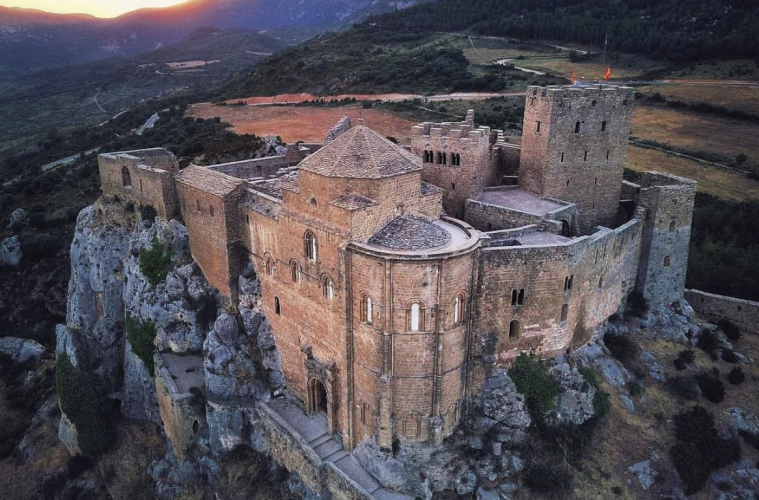
To understand its evolution, we must go back to its beginnings, when in the year 1020 King Sancho III "El Mayor" of Pamplona decided to build it at the gates of the Pyrenees to turn it into a defensive bulwark against the Muslim power. The central nucleus of the castle belongs to this period. A religious component was added with the founding of the monastery of San Agustín towards the year 1071 this involved adding buildings to the initial construction. On the death of the monarch, his son Pedro I built Montearagón as head of the congregation, because of this, Loarre was left without its monastic essence. During the 12th century, the crown fell into oblivion and from this moment on it passed into the hands of different nobles. In the 13th century, it was entrusted to the Order of St John and in the 16th century its inhabitants moved to lower lands and the castle was effectively abandoned.
In 1906 Loarre Castle was declared a National Monument, today it is also classified as an Asset of Cultural Interest, in 1913 it received a restoration that helped to preserve its integrity and between 1996 and 2009 important maintenance works were also carried out, allowing it to shine today in all its glory and, without a doubt, proud of the fact that it is one of the most beautiful medieval castles in Spain.
The castle wall dates from the 13th century and surrounds the entire enclosure, except where the rock acts as a natural defence. Its perimeter is 172 meters and it is defended by circular towers and a rectangular one. Once inside the castle, the first thing that catches your attention is not the construction itself, but the views over the plain of La Hoya de Huesca. Only then do you fully understand the reason for its location.
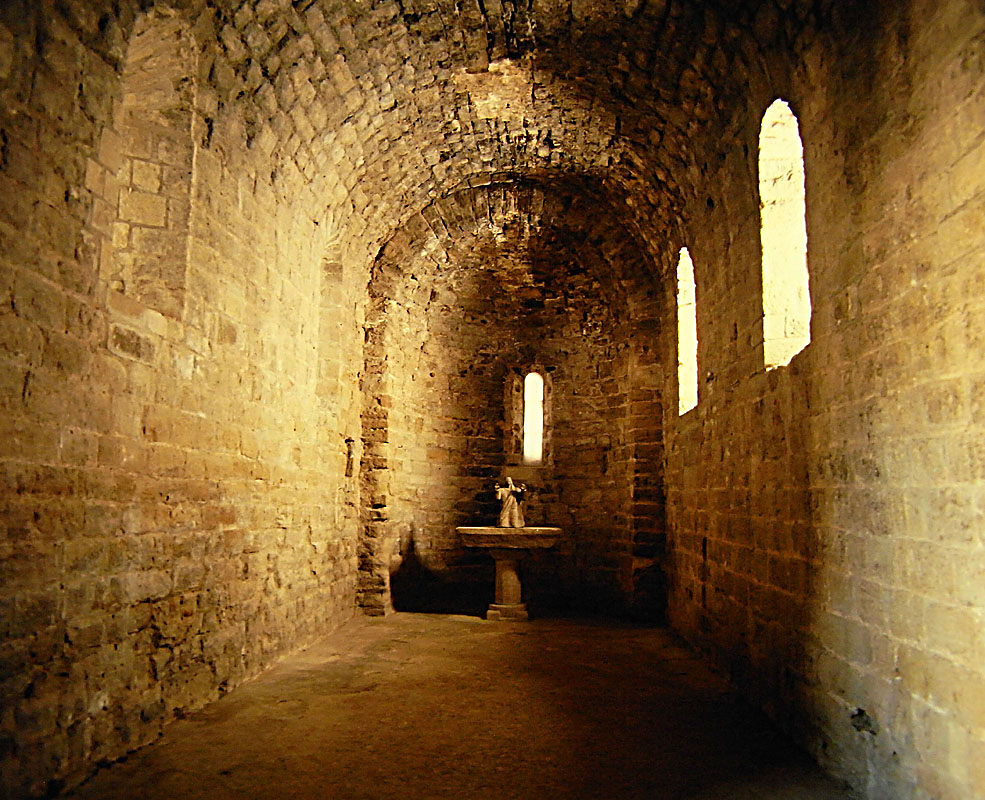
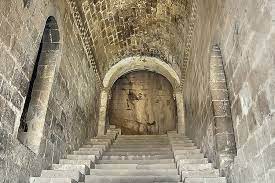 After leaving behind the old Albarran tower that belongs to the monastic extension and which at the end of the XI century served as the watchtower over the horizon, we reach the main door that gives us access to the military compound through a staircase covered by a vault. As we go up, to our right is the crypt of Santa Quiteria, a small space for worship and burials with access to the church. The church of San Pedro, from the end of the 11th century, is the space that best tells the story of the old monastery and maintains its Romanesque style in all its splendour. Inside you will undoubtedly notice that the columns are decorated with fantastic figures, plants and scenes from the bible. After leaving behind the old Albarran tower that belongs to the monastic extension and which at the end of the XI century served as the watchtower over the horizon, we reach the main door that gives us access to the military compound through a staircase covered by a vault. As we go up, to our right is the crypt of Santa Quiteria, a small space for worship and burials with access to the church. The church of San Pedro, from the end of the 11th century, is the space that best tells the story of the old monastery and maintains its Romanesque style in all its splendour. Inside you will undoubtedly notice that the columns are decorated with fantastic figures, plants and scenes from the bible.
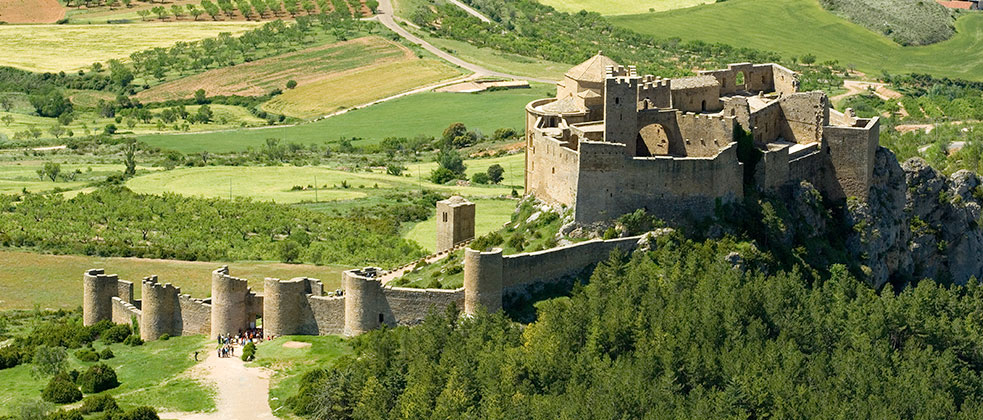
From the church, you can continue on to the monastery pavilions where there were first monks and then noblemen. Like any good castle, there is no shortage of dungeons or weapons rooms either. And finally, we come to the door of the old castle, that of Sancho III El Mayor going back to the 11th century. This will lead to the weapons courtyard where we can visit the church of Santa María, the Mirador de la Reina and the wells, with a capacity for 80,000 litres of water. And finally, you will reach the Torre del Homenaje, the highest point of the castle which is 22 meters high and the one of the most difficult to access, constructed with five floors and designed to be a refuge in case of a siege as it is connected to the castle only by a drawbridge and designed to be impenetrable.

If you want more information check out the castle website
http://castillodeloarre.es/en/
1
Like
Published at 4:51 PM Comments (0)
Spam post or Abuse? Please let us know
|
|