If you are spending your first December in Spain, you are in for a delightful cultural shock. Back in the UK, the festive frenzy peaks on Christmas Day, winds down over Boxing Day leftovers, and is practically boxed up in the loft by 2 January. In Spain, however, Christmas is a glorious, three-week marathon that refuses to lose steam until the evening of 6 January.
Beyond the winter sunshine and illuminated town squares, the Spanish festive calendar is packed with centuries-old rituals that can leave newly arrived British expats scratching their heads—from national television pranks in late December to medieval sword-wielding chants and smiling wooden logs. Whether you have just bought a holiday home on the coast or have lived here for years, here are ten uniquely Spanish Christmas traditions worth knowing (and embracing) this season.
The Spanish Festive Calendar at a Glance
Before diving into the regional quirks, it helps to map out the key dates that anchor the season nationwide:
| Date |
Spanish Name |
What Actually Happens |
| 22 December |
Sorteo de Navidad (El Gordo) |
The nation stops to watch schoolchildren sing out the winning Christmas Lottery numbers. |
| 24 December |
Nochebuena |
The main family feast, followed by Midnight Mass (Misa de Gallo) and regional folk rituals. |
| 28 December |
Día de los Santos Inocentes |
Spain’s equivalent of April Fool’s Day—trust no one, not even the local newspapers. |
| 31 December |
Nochevieja |
Red underwear, twelve grapes on the stroke of midnight, and parties until dawn. |
| 5–6 January |
Cabalgata & Día de Reyes |
The Three Kings’ Parade, gift-giving for children, and the all-important Roscón de Reyes. |
1. The Christmas Lottery: When the Season Truly Begins
For millions of Spaniards, Christmas does not officially start until the morning of 22 December. Across the country, families, office colleagues, and regular patrons of local bars pool together to buy décimos (tenth-share tickets) for the Lotería de Navidad.
While people go about their morning routines, radios and televisions remain tuned to the draw, where students from Madrid’s San Ildefonso School famously sing out the winning numbers and prizes—culminating in the grand prize, El Gordo ("The Fat One"). If luck doesn't strike in December, Spain gets a second bite at the cherry on 6 January with the renowned Sorteo de El Niño.
.jpeg)
2. The Belén (and Catalonia’s Cheeky Squatting Shepherd)
While Christmas trees have become increasingly common in Spanish living rooms, the true centrepiece of festive home décor is the Belén—an elaborate nativity scene recreating the birth of Jesus. Many towns and town halls construct sprawling, miniature villages complete with running water and moving figurines.
If you visit a nativity scene in Catalonia, however, look closely behind the stable or tucked into the bushes. You will almost certainly spot the caganer—a traditional figurine of a Catalan shepherd with his trousers down, squatting to relieve himself. Far from being disrespectful, this quirky figure is a cherished symbol of fertility, good luck, and earthiness.
3. Día de los Santos Inocentes: Spain’s December April Fool’s Day
Mark 28 December in red ink on your calendar. Known as the Day of the Holy Innocents, this is Spain’s answer to April Fool’s Day. Friends, family members, and even serious Spanish news outlets spend the day playing elaborate practical jokes (inocentadas) on the unsuspecting public.
The classic emblem of the day is a small white paper cut-out doll (monigote), which pranksters attempt to stick onto the backs of gullible victims. If you hear an outrageous local news story on the morning of the 28th, double-check the date before sharing it!
4. Twelve Grapes, Twelve Chimes
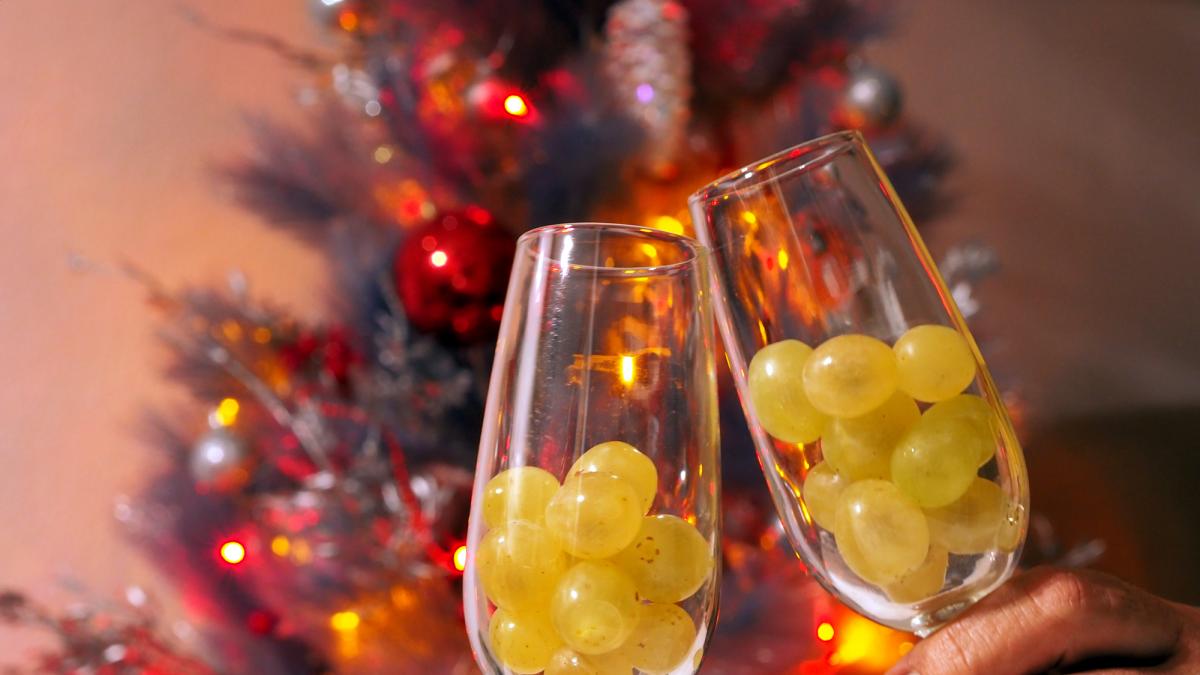
New Year’s Eve (Nochevieja) in Spain comes with a high-stakes culinary challenge. Dating back to the 19th century and popularised in the early 20th century, the tradition of the uvas de la suerte (lucky grapes) requires you to eat exactly twelve grapes—one for each chime of the clock at midnight—to guarantee twelve months of good fortune.
Whether you are huddled around the television at home or braving the crowds beneath the famous clock tower at Madrid’s Puerta del Sol, the chimes come far faster than you expect.
5. Red Underwear for Good Fortune
Before you even reach for your bowl of grapes on 31 December, there is a sartorial rule to follow: wear red underwear or lingerie. Across Spain, red is viewed as a powerful magnet for passion, happiness, success, and good luck. Local lore dictates that you must put on your red undergarments before eating the twelve grapes if you want your New Year's wishes to come true.
6. The Cabalgata de Reyes: Spain’s Real Gift-Givers
Although Santa Claus (Papá Noel) has gained a foothold in recent decades, the undisputed stars of the Spanish festive season are the Reyes Magos (the Three Kings: Melchior, Gaspar, and Balthazar).
On the evening of 5 January, towns and cities across Spain erupt into colour for the Cabalgata de Reyes—a dazzling parade of illuminated floats, music, and royal pages who shower excited children with thousands of kilos of sweets. Children who have written their letters and behaved well wake up on the morning of 6 January to find their presents waiting.
.jpeg)
7. The Christmas Feast and the Roscón de Reyes
Spanish festive dining leans heavily into luxury produce: platters of fresh seafood, carved jamón, roast suckling pig, and tender suckling lamb dominate the main tables. Dessert is equally decadent, with trays of turrón (almond nougat), marzipan, crumbly polvorones, mantecados, and sugared almonds (peladillas) circulating after every meal.
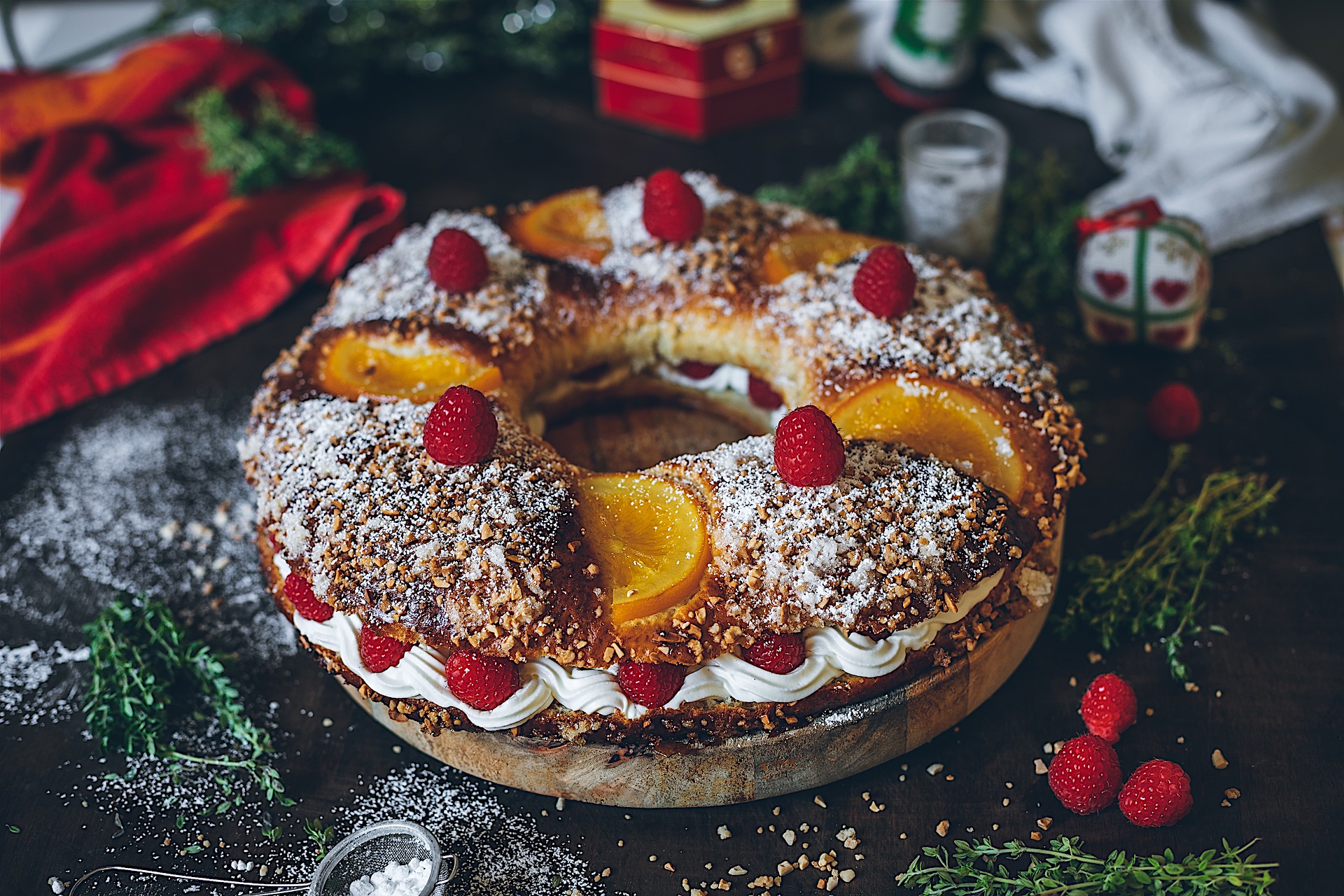
The grand culinary finale arrives on 6 January with the Roscón de Reyes—a sweet, ring-shaped brioche decorated with candied fruit to resemble a jewelled crown, enjoyed for breakfast, dessert, or afternoon merienda. Hidden inside the dough are two surprises:
-
The Tiny Figurine: Whoever finds the little figure in their slice is crowned King or Queen for the day (hence the cardboard gold crown supplied with every cake).
-
The Dried Bean (Haba): Whoever bites into the dried broad bean has to pay for the roscón!
"Do not wait until the afternoon of 5 January to buy your Roscón de Reyes or your New Year's Eve grapes. Artisanal bakeries (pastelerías) sell out fast, so pre-order your roscón several days in advance (decide early whether your household prefers it plain, or filled with whipped cream or truffle). As for the grapes, Spanish supermarkets sell handy little tins of twelve pre-peeled, seedless grapes—it might feel like cheating, but it will save you from choking as the midnight chimes accelerate!"
8. La Pastorela in the Mountains of Madrid
Venture away from the big cities and you will uncover wonderfully preserved village customs. In Braojos de la Sierra, a picturesque mountain village in the Community of Madrid, locals celebrate La Pastorela every 24 and 25 December. This centuries-old shepherd dance brings the community together with traditional regional dress and live folk music—a charming, rarely seen glimpse of rural Castilian heritage.
9. Mallorca’s Canto de la Sibila
If you spend Christmas Eve in Mallorca, attending Midnight Mass (Misa de Gallo) offers one of the most atmospheric—and haunting—traditions in Europe. Churches across the island host the Canto de la Sibila (Song of the Sibyl), a medieval Gregorian chant prophesying the Day of Judgement.
Declared an Intangible Cultural Heritage by UNESCO and a Bien de Interés Cultural, the chant is performed a cappella by a lone singer—often a child—dressed in a ceremonial robe and cloak, holding an upright sword throughout the performance.
10. Spain’s Regional Gift-Bringers (and a Man With 365 Noses)
Across Spain’s diverse autonomous communities, neither Santa nor the Three Kings hold a monopoly on festive magic. Depending on where you live, you might encounter these beloved local characters:
-
Tió de Nadal / Cagatió (Catalonia & Aragón): A smiling, four-legged wooden log wearing a traditional red Catalan hat (barretina). From 1 December until Christmas Eve, children feed him scraps and tuck him under a warm blanket. On 24 December, they tap him with sticks while singing traditional songs so he "expels" sweets and small gifts from beneath his blanket.
-
Home dels Nassos (Catalonia): Literally translating to the "Man of Noses," legend says this mysterious character starts 1 January with 365 noses—losing one every single day of the year. By 31 December, he only has one nose left, allowing him to stroll unnoticed through the city streets looking just like everyone else.
-
Olentzero (Basque Country & Navarre): A sturdy, charcoal-burning woodsman who lives deep in the Basque forests away from the crowds, descending into towns on Nochebuena (24 December) to deliver presents to local children.
-
Apalpador (Galicia): Another gentle mountain coalman who visits Galician children on the nights of 24 and 31 December. He checks their bellies to ensure they are well-fed for winter, leaving behind gifts and warm handfuls of chestnuts.
Adapting to Spain’s festive calendar is one of the great joys of expat life—even if it does mean keeping the fairy lights up well into January and mastering the art of swallowing twelve grapes in thirty-six seconds.
Which Spanish Christmas traditions have you adopted in your own household? Have you ever been caught out by a prank on 28 December, found the dreaded bean in your Roscón de Reyes, or witnessed the Canto de la Sibila in Mallorca? Share your festive stories and local village customs in the comments below!