 The small Canary island of Lanzarote was subjected to the world’s longest ever volcanic eruption back in 1730. Lasting six years and covering about a third of the land in lava. And ever since Lanzaroteños have proved extremely adept at turning this adversity to their advantage.
The epicenter of the eruptions is now Lanzarote´s top tourist attraction – with the Timanfaya Volcano Park drawing nearly one million visitors a year. And the islands vintners cleverly use volcanic chippings, called picon – to help irrigate their vines. In a process unique to the island.
Homeowners and developers have been equally resourceful too. Creating a wide range of unusual properties – built into the side of spent volcanoes or on top of lava flows. A unique architectural approach best epitomized by the incredible home of the island born artist Cesar Manrique – owner of what is undoubtedly the most famous property in Lanzarote.
Back in the 1960´s Manrique created a house within a series of five volcanic bubbles, which still blows visitors away to this day. This ingenious feat of architecture was Manrique´s first major piece of work on Lanzarote and encapsulates his organic approach and desire to create a perfect symbiosis between man, art and nature.
In the early 1960´s Manrique was studying art in New York and rubbing shoulders with the likes of Andy Warhol. But as tourism started to take off back on his native island he felt the urge to return. Afraid that his beloved Lanzarote could be buried beneath a sea of four star hotels and apartments.
With the help of influential friends such as Pepin Ramirez – leader of the island government – he championed an ecological approach towards development.
But he needed a flagship project to convince his skeptical fellow islanders.
Manrique discovered his site by walking the lava fields that surround much of Tahiche. A small village, which is centrally located on Lanzarote. Here, the green tip of a fig tree caught his eye growing just above the sea of black volcanic rock. And on closer inspection he found that this emerged from one of five large bubbles that had been created within the flow.
Work commenced, the five underground chambers were interconnected, and by the end of 1968 Manrique´s creation was complete. Providing him with the perfect work and display space and Lanzarote with a blueprint for future development.
 On completion Manrique´s house won numerous architectural awards and plaudits. Which helped to draw the rich and famous – such as Peter Sellers, Rita Hayworth and Omar Sharif – to this new and exotic holiday destination.
Indeed Sharif was so impressed when he visited Cesar’s palace that he immediately commissioned the artist to build him a similar holiday property.
So Manrique constructed a breathtaking home just up the road from his own. In a small village called Nazaret. However, Sharif promptly lost the property in a high stakes game of bridge. And left the island in a fit of pique - never to return. Today his old house – known as LagOmar (Omars lake) is one of Lanzarote´s leading restaurants.
Manrique´s house sits on two levels. The upper floor looks pretty much like a large traditional white washed island home from the exterior. But inside massive windows give incredible vistas to the lava fields whilst also incorporating bits of the flow in places. So uniting indoor and outdoor space effectively.
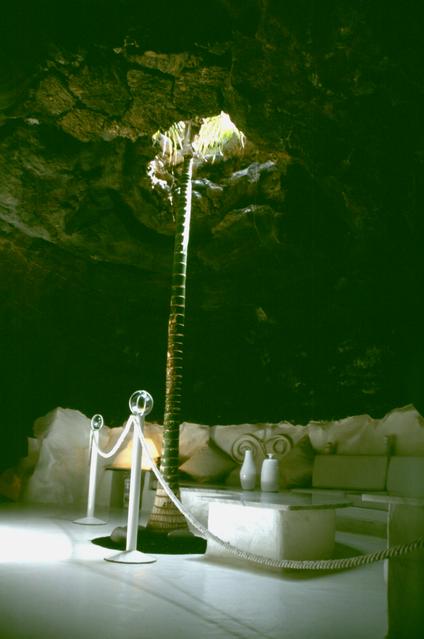
Underground, each volcanic bubble – measuring around 5 m (16 ft) in diameter – has been transformed into an elegantly designed room, with its own distinctive character, furniture and colour.
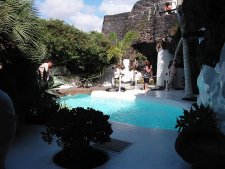
In one space visitors find a Zen-like, gently trickling fountain; in another, a palm links the lower with the upper level. The outdoor barbecue and dining area features a traditional grill alongside an open-air pool, which is filled by a waterspout reminiscent of the work of Mexican artist Louis Barragan.
As with all of Manrique´s later creations the planting is impeccable and inventive, creating form and providing splashes of colour that contrast perfectly with the white walls and black lava.
After a few years Manrique tired of the sea of VIP guests knocking on his door. And left his house for a quieter home in the northern village of Haria. But his creation remains incredibly popular, welcoming on average some 300,000 visitors a year.
Today housing the best art gallery on the island as well as the HQ of the Cesar Manrique Foundation, a non-profit body established to promoting his work posthumously.