
McGarbage meets La Serranía. Photo © Karethe Linaae
When I was young, I was mortally embarrassed by my father’s reaction to someone littering. Whenever he saw anyone drop even a gum wrapper, he would yell after them, “Hey, you lost something!" And if his booming voice didn’t lead them to repent and pick up their “lost” item, his large stature and threatening demeanour would.
Thankfully, it wasn’t a daily occurrence, as I grew up in Norway, where littering (other than snuff pouches …) is considered a “national sin”. In fact, when we brought some Spanish friends to Norway one summer, they looked around, asking, “Where’s the rubbish?” However, this is not the case in our present home country, Spain—or at least in the Andalusian mountain town where we live: the beautiful Ronda.
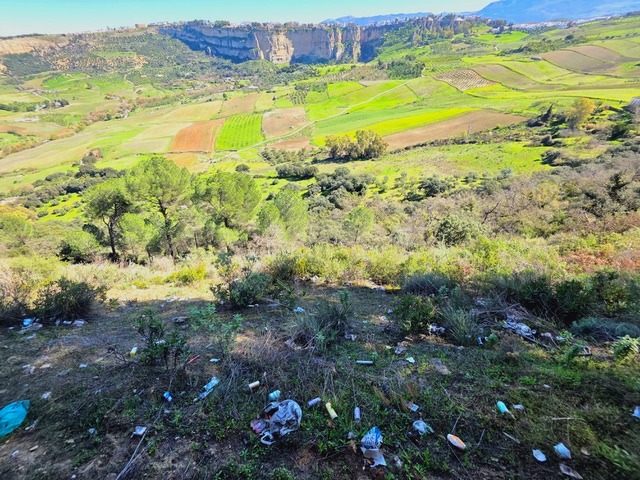
Our beloved Ronda - world-class view with third-world littering. Photo © Karethe Linaae
The other day, I spent my customary midday work break walking in the campo. I usually choose the path to Virgen de la Cabeza, surrounded by olive groves, with glorious nature on all sides. On this particular day, a large RV was parked at the end of the road, which is not allowed. I decided to be my father’s daughter for once and say something about it. I usually avoid doing this, especially with Spaniards, who might turn around and tell me to go back where I came from.
I noticed the vehicle’s F-sticker, so I waved to the couple and told them, in my rather rusty French, that camping is strictly interdit. As I walked on, the man jumped out of the vehicle and hurried after me. Madame, madame! I explained that it was nothing personal, but that because of littering, camping is illegal. He looked at me rather indignantly and said that they certainly do not litter, and that where they come from, nobody does. He pointed around at all the rubbish along the sides of the road, spilling into the surrounding countryside, and said it was incroyable! He did not understand how the town allowed such a beautiful place to be treated this way.
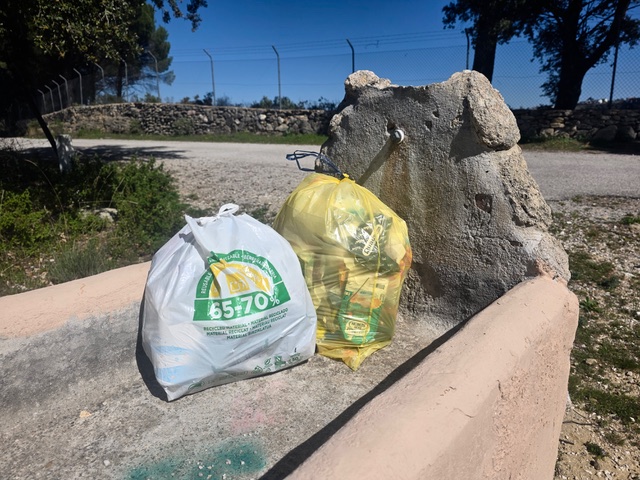
A traditional stone water trough used as a garbage deposit. Photo © Karethe Linaae
Well, they do say that Andalucía is like North Africa…, he mumbled, but I pointed out that I have never seen the amount of littering that we see here in Spain along Moroccan roads and highways. It is, in fact, more like what I have witnessed near Indian shanty towns.
I assured him that I agreed that something ought to be done. However, as an adoptive rondeña, I felt compelled to apologise on behalf of the town and its inhabitants, who, unfortunately, are responsible for most of the litter. The gentleman made it clear that they had seen no sign prohibiting camping and that they nevertheless had no intention of doing so. They had come to see the rock-hewn church they had read about in their guidebook. Perhaps I knew where they could find it? Once again, I had to apologise for our hometown, explaining that since the town hall seems to show as little interest in protecting our cultural heritage as our natural surroundings, littering is rampant, and the church in question is only open once a year.
We parted with que dommage! (what a pity) and wishes for better times to come. As I walked back, I thought of all the simple things our municipality could do to ensure that the town’s stunning surroundings are preserved. But that would probably require not only a change of municipal leaders, but an entire shift in mindset. It saddens me that visitors from other countries often leave Ronda with a parting image that includes discarded wrappers from McDonald’s—Happy Meals included. One can only hope that the generations to come will act differently, though I strongly doubt it, as littering—or the act of not littering—starts at home.
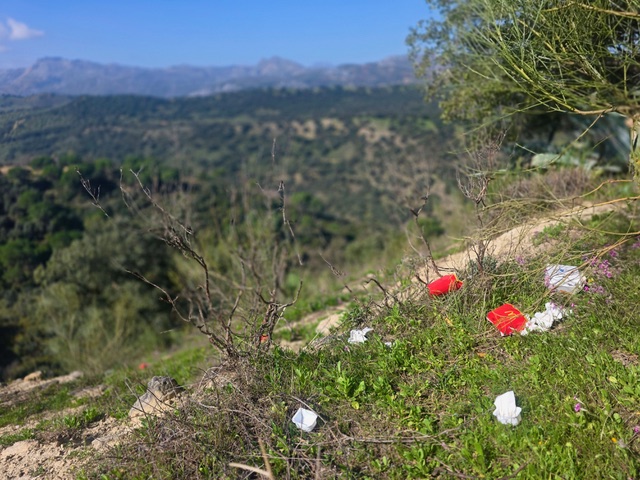
Never an “unspoilt” view? Photo © Karethe Linaae
At the point where the country road began, I noticed that the No Camping sign was so faded and overgrown with branches that nobody could read it anyway.
When will we ever learn…?
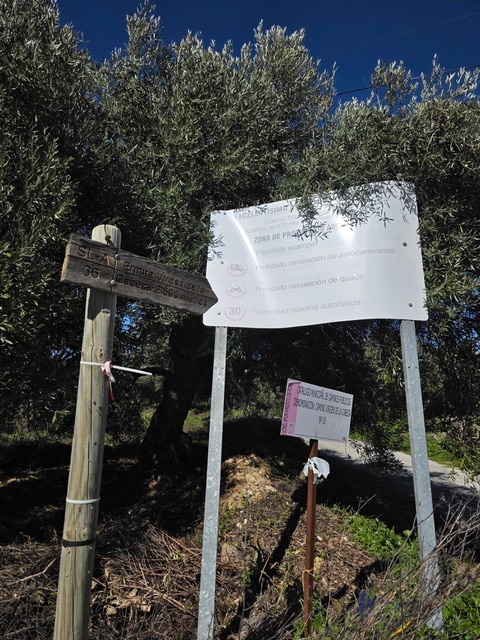
Ronda signage. Photo © Karethe Linaae