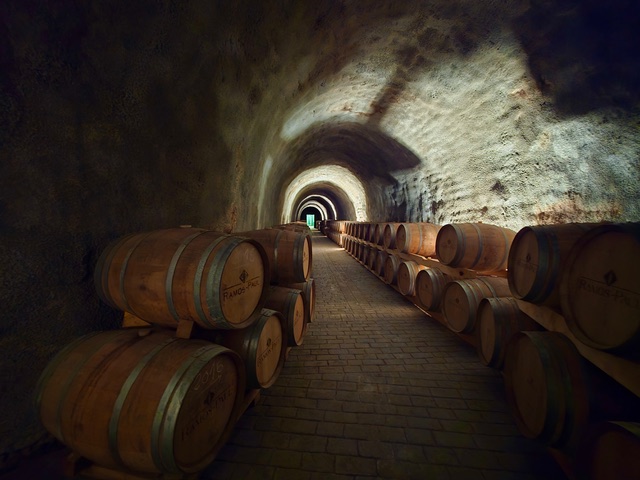
The 150-meter tunnel where Ramos Paul wines are aged. Photo © Karethe Linaae
Most people come to Spain for the climate, culture, nature, and, not least, food and wine. One activity that combines all these elements is a visit to a bodega. Winemaking requires open plains and sunny hillsides, often set against beautiful natural surroundings. At the same time, it is a tradition-bound process deeply rooted in the country’s history, culture, and gastronomy.
The province of Málaga has many commendable bodegas, and today we visit Ramos-Paul in the Serranía de Ronda. At this unique bodega, the wine cellar is a tunnel dug into the mountain itself, and the tour does not include the usual tasting of last year’s wine, but a vintage from 2006! If you are a wine lover, winter is a lovely time to visit, when the hosts light the fire and invite you into their cosy kitchen for an intimate meal, exquisite wine, and a fascinating story.
Beneath is a Roman theatre
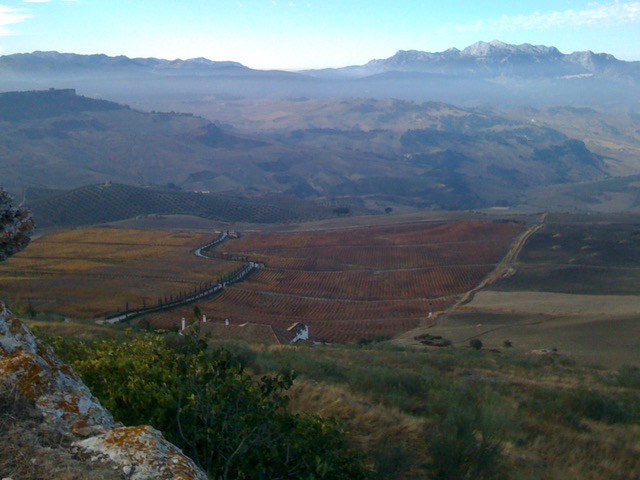
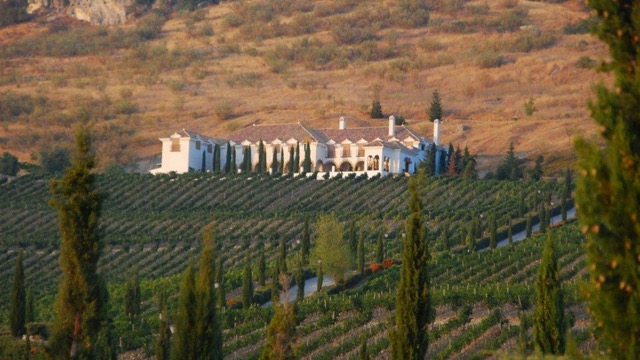
The view of the bodega from Acinipo. Photo © Karethe Linaae
The first time I saw the bodega was from above. We visited the ruins of the 2,000-year-old Roman legionary city of Acinipo, located on a mountain plateau between Ronda and Setenil de las Bodegas. From the cliff edge, you have an incredible view of the Andalusian mountain landscape, and far below us, we could see a bodega with vines in the most beautiful autumn colours. We must go there one day, I said.
Bodegas Ramos-Paul produces wine at around 1,000 metres’ altitude in the renowned DO region of Serranía de Ronda. Here, the exceptional location and microclimate favour both grape growing and wine ripening. No matter the season, it is a sight that takes your breath away. The estate itself has a spectacular location facing the Sierra de Grazalema. True to its surroundings, the place appears to have been here for centuries, even though wine production began in 1999 and the bodega, inspired by both Roman and classic Andalusian architectural styles, was completed in 2006.
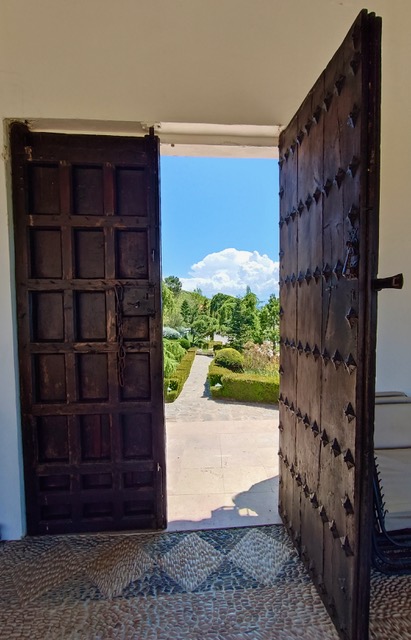
Welcome. Photo © Karethe Linaae
On the steps of the beautiful finca, the owners, the couple Nané Ramos-Paul Ruano (57) and Pilar Martínez-Mejías Laffitte (56), are waiting. Every season is busy at the winery. In addition to tending the grapes and producing wine, they offer private tours for small groups around the vineyard. The day before we arrived, they had also had an English commercial film crew on site, who had recreated a Tuscan vineyard in a few hours.
Today, they are also expecting guests, so we head into the kitchen. Nané cuts lomo ibérico and goat cheese for the wine tasting, and Pilar makes coffee while we chat – because the unique thing about this bodega is that the hosts do everything themselves. Today, their daughter, the 27-year-old Inés, is also home from Marbella to assist.

Inés, Nané and Pilar at Bodegas Ramos-Paul. Photo © Karethe Linaae
– Our guests usually find us through recommendations. They know that they are getting a different experience, because this is both our home and our business, says Pilar. – Here they can enjoy the kitchen, the lounge or the terrace, while also getting a personal experience. Many appreciate the added value of us serving them ourselves and sitting at the table with them and telling our story.
The legacy that became a passion
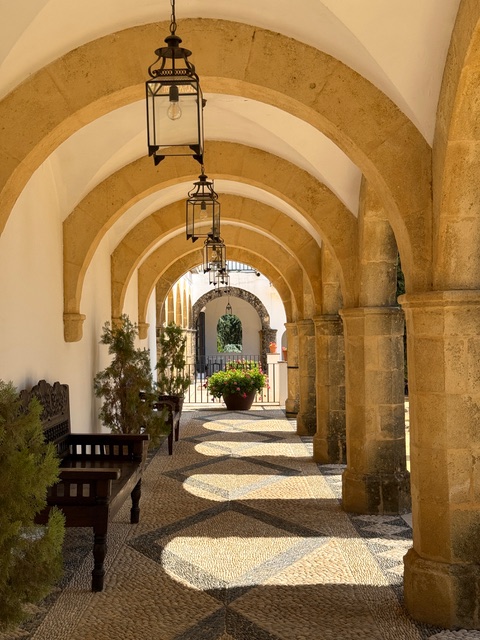
Classic style. Photo © Bodegas Ramos-Paul
The history of the winery began as an inheritance. In the time of Nané's grandfather, the family owned the entire 850-hectare valley. When the property was divided between his seven children, one piece of land went to the eldest grandson, Nané. That is why the bodega bears the name Ramos-Paul, his grandfather's surname.
Pilar's roots lie in beer, not wine. Her mother is a cousin of the Osborne family in Jerez. Over a hundred years ago, two of the brothers started the family business, Cruzcampo. The brewery was sold to Guinness and later Heineken, which is the current owner. When Pilar received the inheritance from her grandmother, she and Nané decided to create this project together.
– When we arrived here, there was absolutely nothing. But in 1999, we were younger and had more energy, so we took over the land, planted and built everything from scratch, recalls Pilar.
– Inés was only eighteen months old when we started. We dropped her off at school at 9.00, then went here to follow the work and picked her up again at 17.30 - every day. When she started university, we realised that this was our life now, so we moved here.
Building a bodega on a cliff, with a Roman theatre of great conservation value, was a demanding process. The authorities had already expropriated the ruins of Acinipo in 1974 and assumed responsibility for preserving the site.
«It’s actually more of a lifestyle than a business, because our philosophy is about time». Photo © Bodegas Ramos-Paul
– However, the ruins are still on the family property, because they are not something you can just move, jokes Nané, and continues: – We got a special building permit because our project was declared of public and social interest for Ronda. That also made the approval of the tunnel easier. The only condition was that we had to have an archaeologist employed during the entire construction period to check for any discoveries. The tunnelling work lasted one year, three months and 24 hours. Everything had to be done by hand, that is, with a hammer, chisel and impact drill.
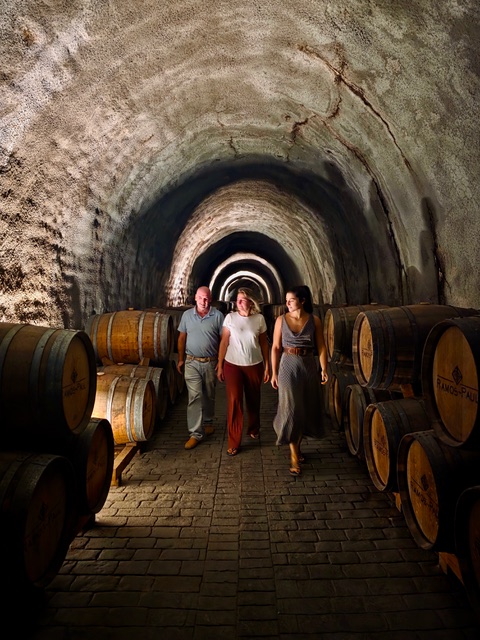
«The tunnelling work lasted one year, three months and 24 hours. Everything had to be done by hand, with a hammer, chisel and impact drill». Photo © Karethe Linaae
No experience in the industry
When they started, Pilar worked as a veterinarian, and Nané worked in the financial markets with Morgan Stanley.
– They were jobs we did but didn’t love, he admits. – Then this opportunity came along, and some coincidences fell into place, and here we are. We started from scratch, with no knowledge. A close friend, who is an excellent wine consultant, helped us immensely. He was the CEO of two of Spain’s most famous bodegas, Marqués de Murrieta and Castillo de Ygay, for 30 years. After many years here, we have obviously learned an incredible amount thanks to him.
– The bodega is more of a lifestyle than a business, because our philosophy is about time, adds Pilar. – Twenty-five years is young for a bodega. We are the first generation, and projects like this often take several generations before you see the light at the end of the tunnel. We intend that the next generation take over one day.
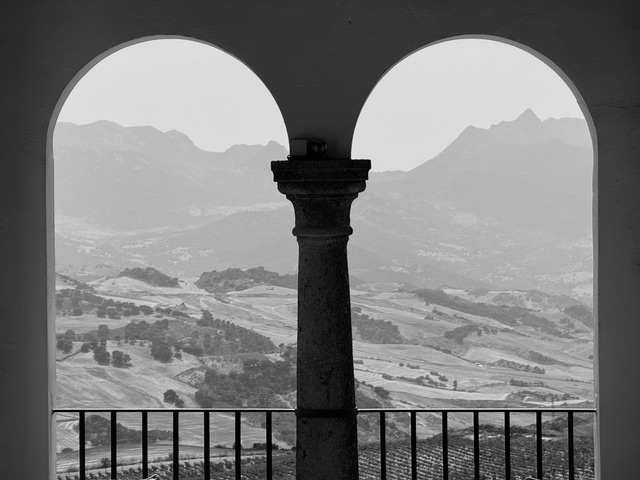
Terrace with a view. Photo © Bodegas Ramos-Paul
Inés is an architect in Marbella, but as an only child, she knows that one day the bodega will be her responsibility. She is the designer for the family’s future project on the neighbouring plot, which also belongs to the family. There, they plan to grow more vines and build a hotel with 15 rooms.
– My dream is to start my studio up here and work on both, says Inés. – This is a beautiful business, and since I grew up here, I would love to be able to make a living from it.
The hotel idea came from their customers, who have often expressed a desire for accommodation. Some come in their own car, others by minibus or taxi, but what they all have in common is that they visit a bodega where most people consume alcohol.
– Many ask Oh, dear, don’t you have rooms we can rent so we can stay here? We must simply apologise and explain that we must finish this project first, before starting the next one, Pilar says.
The plan is to expand the bodega with the boutique hotel, allowing guests to finish their meal and go straight to their room.
– We are in a somewhat remote location, and that is something I love.
Respect for tradition and quality
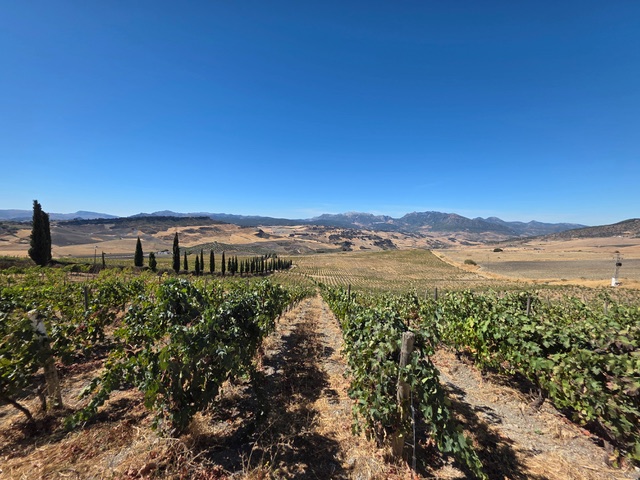
View towards Sierra de Grazalema. Photo © Karethe Linaae
Bodegas Ramos-Paul's philosophy is minimal intervention. The winery primarily grows four grape varieties: Tempranillo, Cabernet Sauvignon, Syrah and Merlot. The grapes are harvested by hand, so only the finest fruit is selected.
– This year we produced 50,000 bottles, while in an exceptional year, we can reach up to 125,000. However, the quality this year is brilliant, so 2025 could be a fantastic vintage, Pilar promises.
This year's wine will neither be on the market nor available for wine tastings at the bodega for many years. If I calculate correctly, we will probably have to wait around 15 years before we can taste it!
– We prefer to wait two winters before we put the wine in barrels, so that the cold does its job with a natural clarification, explains Nané. – And for every year in barrels, our wines are in bottles for about twice as long. So, if they spend, let’s say, four years in the barrel, they will spend at least eight years in the bottle before reaching the market. Bottle maturation is as important to us as the time in the barrel itself.
The quality comes from their terroir. The vineyard is located about 20 km from the Strait of Gibraltar and benefits from a special microclimate, rich soil and the region’s generous rainfall. This is probably why the Ramos-Paul wines have been awarded 91 and 92 points by the renowned wine critic Robert Parker, making them competitive with wines from Bordeaux, California and South Africa. The wine, which is ideal for long bottle ageing, is now available in 21 countries, including the USA, Russia, Singapore, Canada, Mexico and several European countries.
– All the information about the climate is in the grape skin – how much it has rained, how strong the wind has been, the heat and the cold, Pilar explains enthusiastically. – Not all soil types and climates are suitable for growing grapes, but our microclimate makes us truly unique. The most important factor in capturing all this complexity is the temperature difference between day and night: the warmth of the day helps the grapes ripen, while the summer nights are often cool, between 14 and 18 °C. Each grape variety develops differently under these conditions, which is why our wines are never exactly the same – each variety is its own little world.

Nané during la vendímia.«Old wines create the framework for nuances you will never find in a young wine». Photo © Bodegas Ramos-Paul
The winery’s barrel ageing also varies from year to year; each vintage is unique and treated accordingly. What is not used in their blended vintage wine, Ramos Paul, goes into the BM line – a single grape wine.
– We don’t care about labels, says Pilar. – When you have a microclimate like ours and grapes that come straight from the field, with no additives, isn’t that the most natural thing to do? Our advisor always reminds us that wine is made in the vineyard – and that it can be ruined in the cellar if you’re not careful.
Today, a well-equipped laboratory and a skilled oenologist can do a lot, but these wines often don’t respect their surroundings in the same way and are more laboratory driven. So, what does it take for a wine to be truly exquisite, I ask.
– Primarily, time, Nané points out, adding that it’s something that’s often overlooked today. – We prefer vintages from 2010 and earlier. I know they are more expensive, but there are also affordable vintage wines that offer qualities you never get in a young wine. Old wines set the stage for nuances. They are like time capsules.
Young wines can be fruity and marked, with a clear linear structure, but depth is rarely found, he explains. When you taste wines that are 15–20 years old and still alive and developing, it is almost impossible to discover the same in a young wine. That is why Nané distinguishes between a good wine and a great wine.
– A young wine can be very good, but never great. A great wine, on the other hand, will always be old.
Award-winning wines
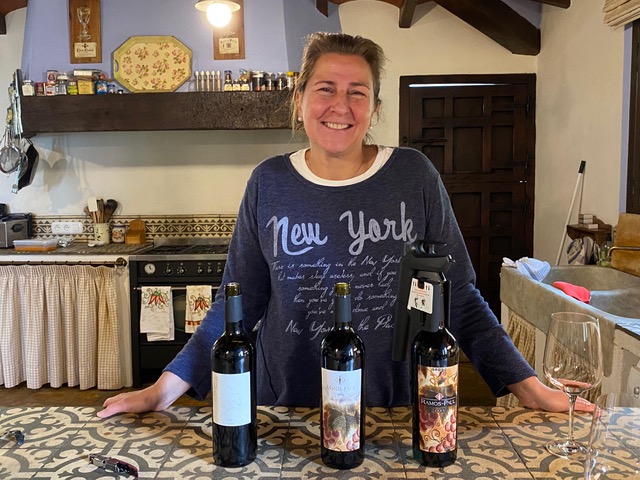
Pilar with Ramos-Paul vintage wines.«A very famous wine taster once said about our 2006 and 2005 vintages: Brad Pitt and George Clooney – take your pick!» Photo © Bodegas Ramos-Paul
It’s only about half an hour until the guests arrive for lunch. The hosts invite us for a quick tour of the wine cellar, which is located down a few stairs and starts under the house. It’s not our first visit here, but it’s always a magical experience. The tunnel, dug by specialist miners from the Czech Republic, winds in a long U-shape, more than 150 meters into the mountain.
As we stand among the French oak barrels, I can’t help but ask which of their wines is the ‘best’ one.
– We get that question a lot, says Nané with a twinkle in his eye. – I always answer with a counter-question: How many children do you have – and which is ‘best’? No one dares to answer that. A very famous wine taster once said of our 2006 and 2005 vintages: Brad Pitt and George Clooney – take your pick!
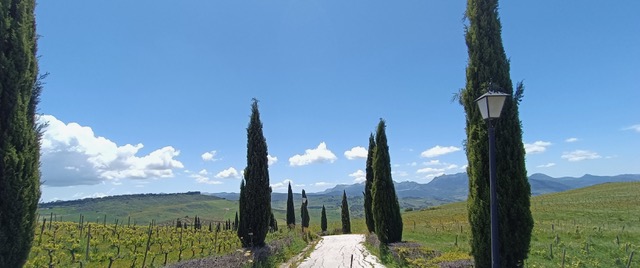
Bodegas Ramos-Paul. Photo © Karethe Linaae