
Mayor Isabel María Jiménez Pérez. Photo © Karethe Linaae
This is the first in a series of articles exploring lesser-known Andalusian towns through walks with their mayors. My starting point is Cartajima, a tiny village in Málaga’s Genal Valley, around a 40-minute drive from the Costa del Sol. If you don’t know the town, you’re not alone — very few people make the trip here. So, what are we waiting for?
CARTAJIMA – IN BRIEF:
Municipality of the Valle de Genal, Serranía de Ronda
Province: Málaga
Population: 206 (December 2025)
Mayor: Isabel María Jiménez Pérez
From copper to emerald
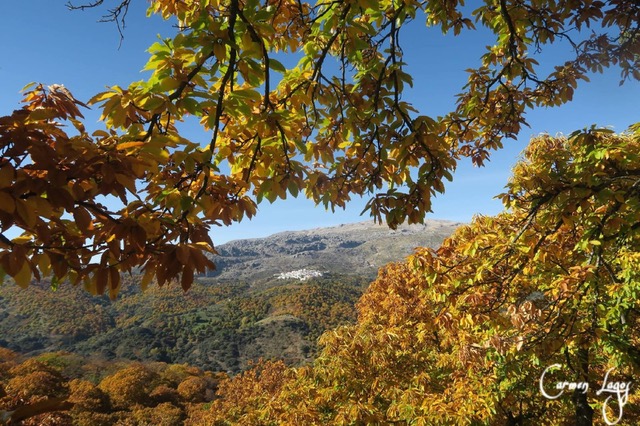
Cartajima. Photo © Carmen Lagos Ortiz
Whether one comes from the coast or from the inland, the winding country road into Cartajima is an adventure in itself. The village is perched on a ridge beneath the rugged peaks of Los Riscos de Cartajima — rock formations reminiscent of El Torcal in Antequera. In autumn, the town is surrounded by a copper-coloured chestnut forest. In spring, the landscape turns emerald — a natural treasure and the area’s main attraction.
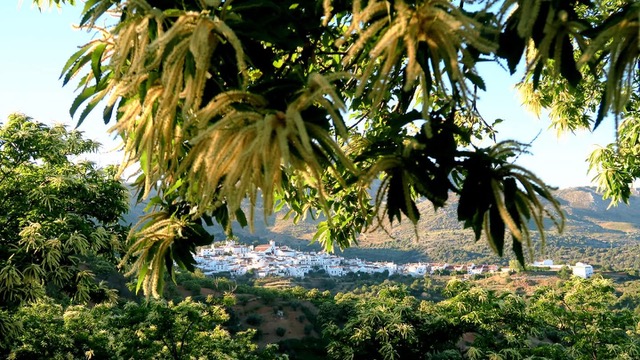
Cartajima in spring. Photo © Carmen Lagos Ortiz
I’m a tad early for my meeting with the mayor, so I take the opportunity to look around the village. Like other pueblos blancos, Cartajima has its own distinct character. First, there are no tourists. Under today’s threatening skies, I meet only a handful of locals, who greet me in a friendly, slightly curious way. I also come across a wishing well, where — as the saying goes — one should be careful what one wishes for, because it might come true.
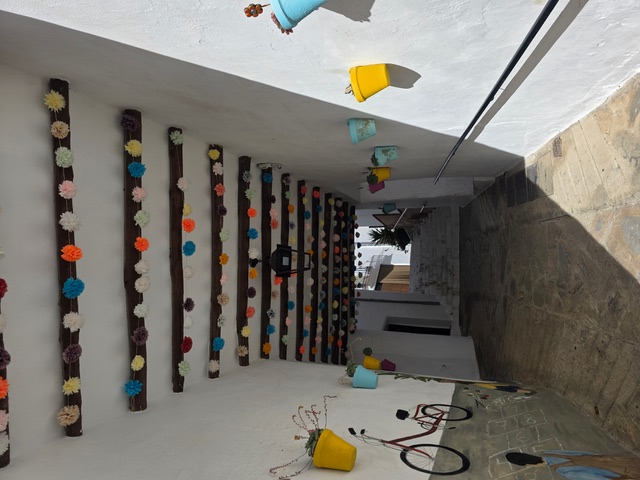
Tunnel vision. Photo © Karethe Linaae
The village charm is everywhere, starting with the handwritten note on the door of the town’s only hotel, which informs guests that the doorbell is hidden behind the lemon tree. The narrow streets are adorned with handmade decorations and murals depicting the town’s traditions and long history. Among other things, one finds the remains of the Roman road that once passed through here on the way to Cádiz.
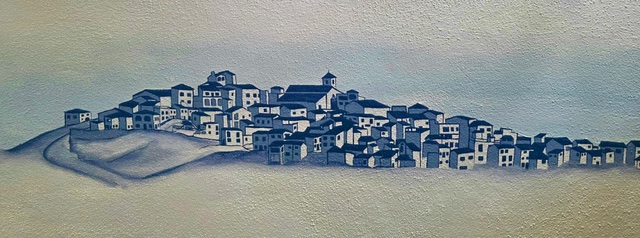
Mural of Cartajima. Photo © Karethe Linaae
In the 18th century, the town had nearly 1,500 inhabitants. Today, Cartajima is threatened not only by population decline but by what could become a total exodus. For this reason, I am keen to hear about the mayor’s projects and plans.
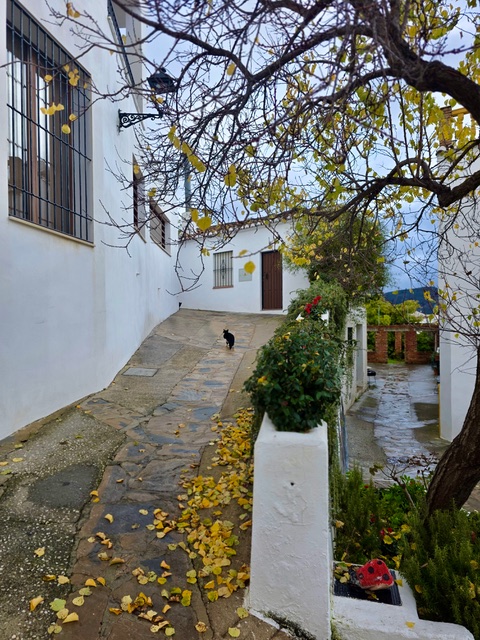
Lonesome cat. Photo © Karethe Linaae
I meet Isabel María Jiménez Pérez (53), or Isa among friends, in her office at the town hall. In the hour she has set aside for the interview, she does far more than answer my questions: she shows me around the village and along a nearby hiking trail, introduces me to a couple of city council members, greets everyone we meet and asks after their families, poses for the camera at the “kissing corner”, and stops by for a quick check on a municipal event scheduled for later that afternoon. Being the mayor of a tiny village clearly requires something quite different from holding the position in a larger municipality.
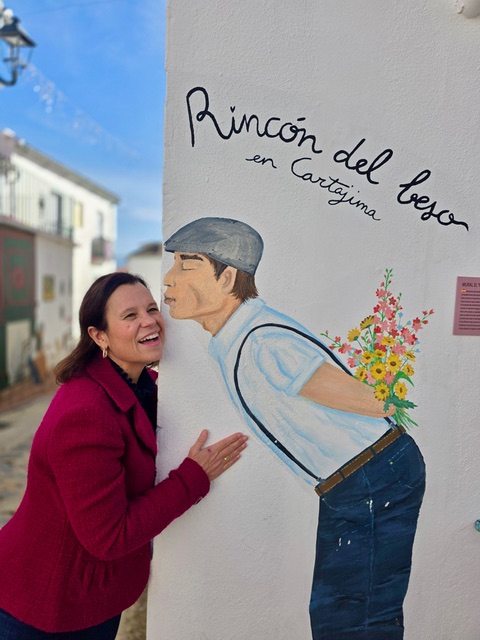
Posing on the "kissing corner". Photo © Karethe Linaae
Why did you become mayor of Cartajima?
– I had never been involved in politics before, but I accepted the position because of my desire to serve the community. I have a degree in economics and an MBA in market research, and I have worked mainly in labour law, taxation, public subsidies and business consulting. In many ways, this was a fortuitous turn in my life. My main goal as mayor is to listen to the residents and improve their quality of life. We are one of 15 rural municipalities in the Genal Valley, located within the Sierra de las Nieves National Park and the Serranía de Ronda. Cartajima is truly charming, but also quite isolated. It is like a hidden gem waiting to be discovered — but for the world to find us, we must first show the way.
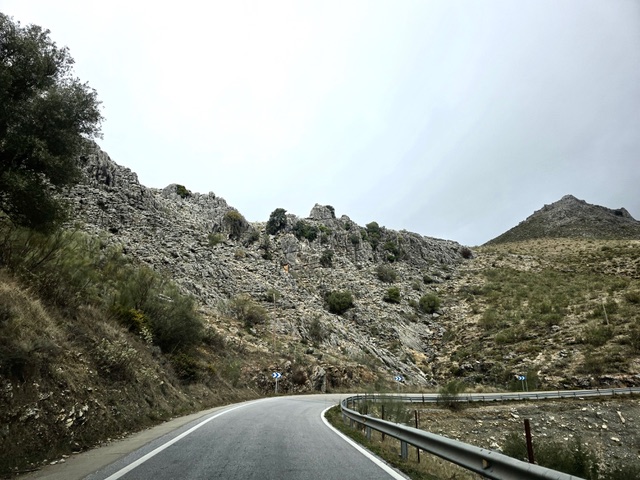
The road with los Riscos de Cartajima in the background. Photo © Karethe Linaae
What changes have you made since becoming mayor?
– Since April 2023, the team has delivered a series of concrete improvements that have reshaped daily life in the village. A year-round emergency medical ambulance service is now in place, marking a major step forward for local safety. The provincial government has been persuaded to expand the town’s water reservoir, while a desalination plant, water pump, solar panels on municipal buildings, underground waste containers and electric-vehicle charging points have been installed. Streets and public spaces have been upgraded with modern outdoor lighting, and the access road to town has been improved with proper shoulders. Trees and benches have been added, a youth centre created, a new gym built, and the town’s 26 murals restored.
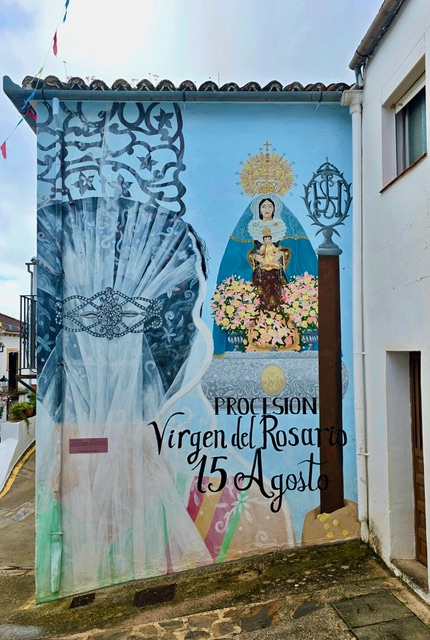
Murals illustrate the town’s important celebrations. Photo © Karethe Linaae
– Investment has also gone into people, with free music lessons for children, craft courses and cultural trips. The schoolyard now features a climbing wall, the church has been made wheelchair accessible, and in 2026, La Senda Perdida will be completed with sculptures by artist Diego Guerrero. With a limited labour market, the municipality prioritises local hiring to keep funds in the community. A couple of larger projects already underway are expected to generate employment across the valley — though details remain under wraps for now.
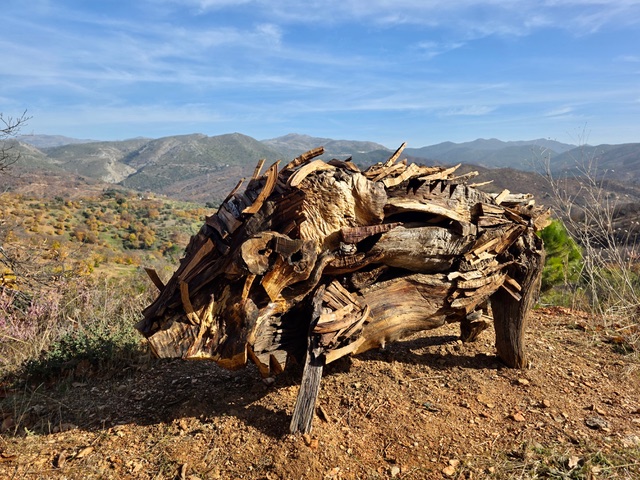
Wild boar wood sculpture by artist Diego Guerrero on la Senda Perdida. Photo © Karethe Linaae
What is a typical day like for you as mayor of Cartajima?
– I live in Ronda, a bigger town 20 minutes away. Before coming here today, I went shopping for our neighbours, because there is nothing available here in the village. I always think: What if it were my mother who needed something? Whether it’s clothes pegs, chalk paint or anything else, I’ll bring it. This morning, I went to the haberdashery to pick up ribbons for a neighbour. Then I collected a ladder for the town hall — and four buckets of paint. They were so large that I could only fit one in my car, so I’ll have to pick up the rest another day. I also fetched cured meats and flowers for the town festival. Lately, we’ve been offering courses in dried flowers, gilding and table setting, and at the moment I’m the one organising and running them. And of course, in addition come the usual tasks that come with being mayor.
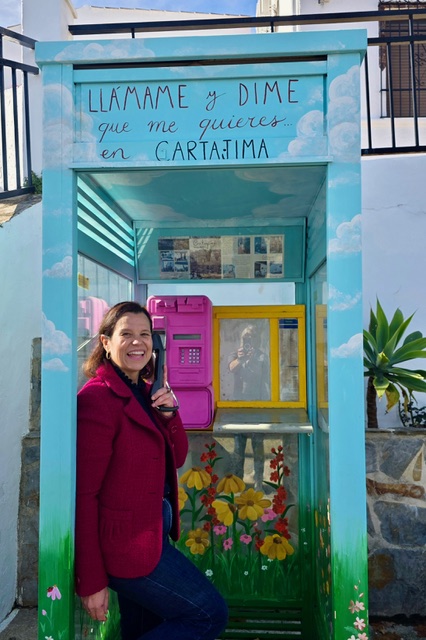
Call me! Photo © Karethe Linaae
How is the village affected by depopulation?
– Last Friday, 206 people were registered in the population register, but only between 70 and 90 people actually live here permanently. We have a small school where twelve students, from pre-school to primary level, are taught by the same teacher in a single classroom. Many residents who have left the village return to visit their families during holidays, but tourism is almost non-existent. We need both visitors and new businesses to improve the town’s prospects. Tourists often travel to places depicted on Instagram, so we are working to strengthen our social media presence. The situation is especially complicated for young people. When they cannot find work here, they move away, which further weakens the local community. Local commerce consists of a chestnut business, a restaurant at the entrance to the village, a handful of casas rurales, and the boutique hotel Los Castaños, run by Germans. That’s it.
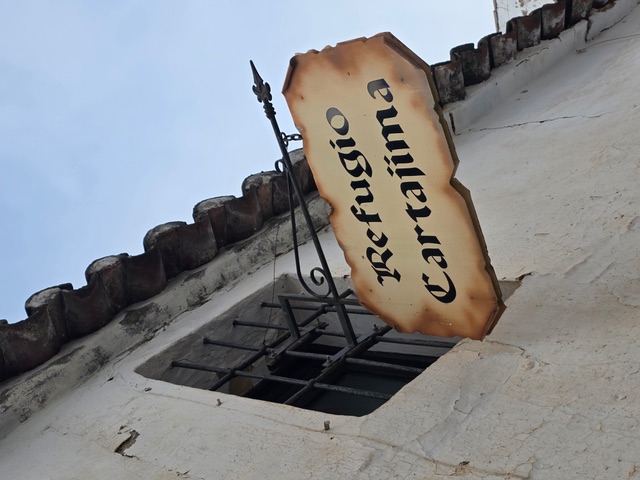
Sign. Photo © Karethe Linaae
What is the city council doing to attract people to the village?
– We are currently looking for premises to attract digital nomads and promote co-living and co-working. Perhaps someone wants to open a small shop? That’s exactly what we need. Small municipalities die if administrations do not invest in infrastructure and services, but our budgets are minimal. The Genal villages are only a few kilometres apart and can easily be visited on the same trip, so we should develop a shared tourist profile. On our own, we are invisible to the outside world. Together, I’m convinced we can achieve great things. We must turn our isolation into a strength and offer a combination of infrastructure, jobs and tourism — otherwise we risk disappearing. At the same time, we want to highlight the spectacular natural resources we have. In 2023, we launched the La Senda Perdida trail, but there are also routes to Los Riscos that have never been properly developed. In this day and age, it is a privilege to walk in nature without meeting a soul. We welcome visitors who come precisely to experience the natural environment we are lucky to be surrounded by.
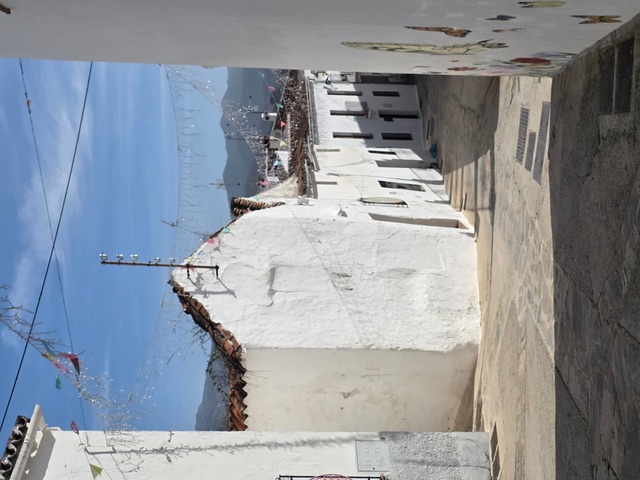
A classic white village. Photo © Karethe Linaae
When is the best time of year to visit Cartajima?
– Nature is at its most beautiful in spring and autumn. When it comes to celebrations, Easter is a must. The locals are deeply engaged, and the processions differ from those seen elsewhere. On Easter Sunday, it takes place in complete darkness: all village lights are switched off, and the route is lit only by candles. The event is recognised as of special tourist interest. Other events include La Romería del Niño Jesús on the first weekend of June, the town fair and cultural week on 15 August, the Virgen del Rosario on 7 October, and the traditional mosto festival, always held on the last weekend of November.
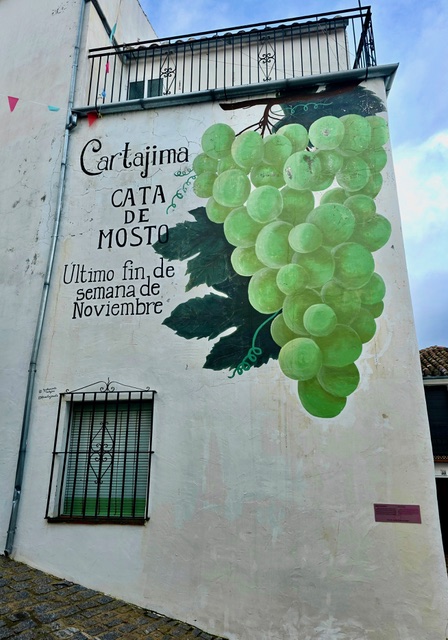
Village mural. Photo © Karethe Linaae
– But it is the natural surroundings that give all our celebrations an especially striking setting.
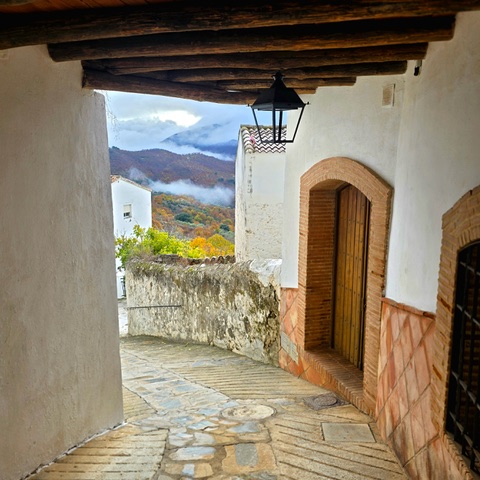
Sneak peek at the copper forest. Photo © Karethe Linaae