While Madrid, Barcelona, and the established coastal hotspots continue to dominate headlines, Granada has quietly become one of the more compelling property stories in Spain. Prices remain well below the national capitals, the market has moved from recovery into genuine momentum, and the city itself offers a quality of life that is difficult to match: a UNESCO World Heritage old town, the Alhambra, the Sierra Nevada on one side and the Mediterranean within reach on the other.
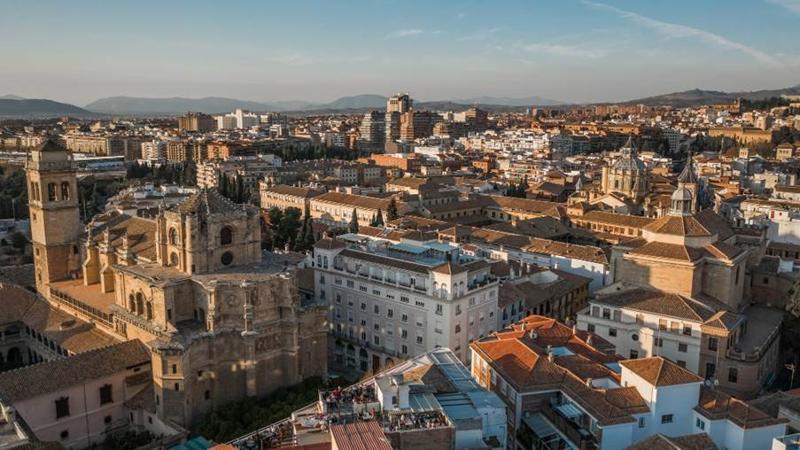
Granada's historic centre, where prices remain well below Spain's largest cities despite strong recent growth. Photo: Freepik
Granada's property market has outpaced Madrid, Barcelona, and Málaga
According to data from Spain's Ministry of Housing and Urban Agenda, Granada city is the provincial capital where home sales have risen the most compared with pre-2008 levels — the only major Spanish city where transaction volumes have not just recovered, but exceeded their pre-crisis peak. Over a recent 12-month period, the city recorded around 4,005 home sales, surpassing the levels last seen at the height of the 2006 boom.
This sets Granada apart. Madrid, Barcelona, and Málaga have all seen strong demand in recent years, but transaction volumes in each remain below their pre-crisis highs. Granada has moved into territory none of Spain's largest markets have reached — driven in part by buyers priced out of the bigger cities and drawn to a market that still offers genuine value.
Prices are rising fast, but remain well below Spain's major cities
Granada's affordability is real, but the market is not standing still. According to Tinsa's IMIE property valuation index, the average price of finished housing in Granada city reached €2,258/m² in the first quarter of 2026 — up 11.76% year on year. The wider province, where prices start from a lower base, rose even faster: €1,467/m², up 16.36% year on year. In practical terms, that puts a typical 90m² flat at around €203,000 in the city and roughly €132,000 across the province as a whole.
Tinsa's end-of-2025 report placed Granada among the fastest-growing provincial capitals in Spain, with annual growth of 14.1% — behind Madrid (20.9%) and Valencia (17.5%), but ahead of established coastal markets including Alicante and Santander. Even with that acceleration, Granada remains dramatically cheaper than Spain's largest cities: for buyers priced out of Madrid or Barcelona, it offers a major Spanish city with real heritage and infrastructure, still priced for accessibility.
What's driving demand in Granada
Granada is home to one of Spain's largest universities, with more than 60,000 students, researchers, and staff — the majority of whom rent. This creates a large, stable pool of rental demand with little dependence on tourism or seasonal cycles, giving the city a more diversified rental base than many purely coastal or resort markets.
- Heritage and quality of life
The Alhambra and the Albaicín, Granada's UNESCO-listed old quarter, draw visitors and international interest year-round. Combined with the Sierra Nevada — home to the southernmost ski resort in Europe — and the coast within roughly half an hour's drive, Granada offers a genuinely unusual mix of mountains, heritage, and sea access from a single base.
- Remote workers and international buyers
Granada's combination of lower living costs, strong infrastructure, and quality of life has increasingly attracted remote workers and international residents alongside its traditional academic and tourist base — a trend supporting demand for exactly the kind of well-located, mid-sized apartments that make up much of the city's housing stock.
What rental yields look like in Granada
Granada's rental market is best understood as broad-based rather than headline-grabbing. Demand is spread across students, healthcare and public sector workers, young professionals, and a growing international contingent — a genuinely diversified tenant base rather than one dependent on a single group. This tends to produce steadier, more consistent occupancy than markets driven primarily by seasonal tourism, even where the numbers on paper look less dramatic than in Spain's highest-yield provincial markets.
Read more at thinkSPAIN.com