"Love's Labour's Lost"
Wednesday, January 7, 2026
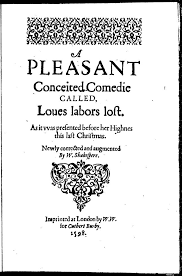 The name of this early comedy by William Shakespeare, written in the mid-1590s, makes a great title for this article by Paul Whitelock. The name of this early comedy by William Shakespeare, written in the mid-1590s, makes a great title for this article by Paul Whitelock.
It tells of a personal epiphany for him around the time of the Epiphany or Dia de Reyes, yesterday 6th January, 2026.
Original poster [Wikipedia]
Diary of a Nobody
This article is about the love and respect that I have recently lost for two Labour (socialist) prime ministers of European democratic countries. These are Pedro Sánchez, presidente del gobierno of Spain and Sir Keir Starmer, prime minister of the United Kingdom of Great Britain and Northern Ireland.
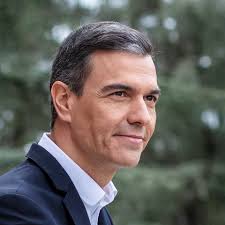 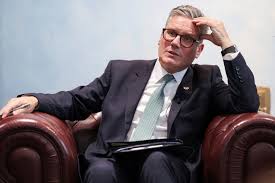
Pedro Sanchez [Facebook] Sir Keir Starmer [Independent en español}
My political origins
 I am a social democrat by instinct - I voted Liberal, LibDem and, in 1997 and 2001, New Labour in the UK, and if I could vote in Spain, where I have been resident for the last 17 years, I would support PSOE over PP and the myriad of smaller parties that have popped up in recent years. I am a social democrat by instinct - I voted Liberal, LibDem and, in 1997 and 2001, New Labour in the UK, and if I could vote in Spain, where I have been resident for the last 17 years, I would support PSOE over PP and the myriad of smaller parties that have popped up in recent years.
[Wikipedia]
My current allegiance
Since I have lived in Spain I have taken a keen interest in the politics of my adopted country. I felt comfortable living in Andalucia, socialist since Spain became a democracy following the death in 1975 of the fascist dictator General Francisco Franco Bahamonde.
Yet, in rece nt years everything has changed. Lifelong socialists have suddenly realised they are conservatives and have switched their support to PP and VOX. nt years everything has changed. Lifelong socialists have suddenly realised they are conservatives and have switched their support to PP and VOX.
I have been pretty much a lone voice speaking up for socialism.
Andalucia now has a regional government which is PP; Ronda council is led by a PP mayor; the village where I cast my vote is run by the PP ("aliens" may vote in local elections, BTW, but not in regional or national ones - why is that?).
[Partido Popular]
Pedro Sánchez
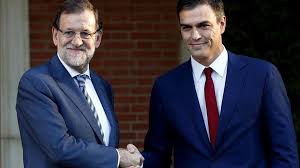 Pedro Sánchez Pérez-Castejón is the leader of the country I chose to move to 17 years ago. Pedro Sánchez Pérez-Castejón is the leader of the country I chose to move to 17 years ago.
For me he had it all when he shot to power following six years of right-wing mis-rule under the "dodgy" Mariano Rajoy.
Young, tall, good-looking and a fluent-English speaker, Sanchez was also a socialist, the secretary general and leader of PSOE.
[Wikipedia]
He first became prime minister in 2018, aged 46, after Mariano Rajoy was forced to resign; then again in 2020 as head of a coalition between PSOE and Unidos Podemos.
This ele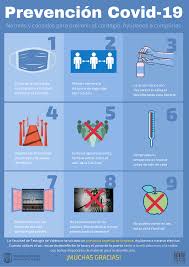 ctoral uncertainty coincided with the Covid-19 pandemic hitting the world with a vengeance. ctoral uncertainty coincided with the Covid-19 pandemic hitting the world with a vengeance.
Pedro Sanchez proved he had "cojones" by handling the crisis with a firm but deft touch.
Deaths from the Coronavirus were far fewer than had been predicted, largely because of brutal lockdowns demanded by Sánchez (cf. the chaos in England under Boris Johnson), which, although not popular, were supported by the majority and enforced by the police.
[Facultad Teologia]
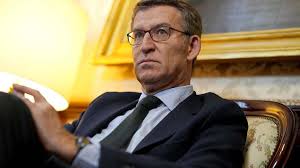 In the general election of 2023, called two years early by Sánchez, the PP, now led by Alberto Nuñez Feijoo, received the most votes but did not win enough seats (rescañas) to govern. In the general election of 2023, called two years early by Sánchez, the PP, now led by Alberto Nuñez Feijoo, received the most votes but did not win enough seats (rescañas) to govern.
He failed to form a coalition, so Sánchez had the next chance and managed to cobble together enough seats to form a coalition government with Sumar, Podemos and regional Basque and Catalan parties.
Alberto Nuñez Feijoo [El Periodico]
And this is when it all started to go wrong for Sánchez .
Meanwhile in the UK .....
 The Conservative government was lurching from crisis to crisis. The Conservative government was lurching from crisis to crisis.
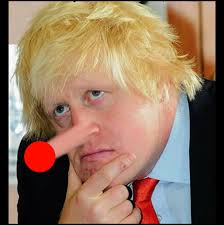
The party hierarchy got rid of the incompetent Bojo The Clown; Liz Truss, who lasted five minutes and wrecked the economy; and Rishi Sunak, who was out of his depth.
All three contributed to a major lack of confidence in the Conservatives on the part of the voters .
Bojo The Clown Johnson [Facebook]
Sunak called an early general election in 2024 (Why?) and the Tories were slaughtered at the ballot box. Labour, led by former Director of Public Prosecutions Sir Keir Starmer, stormed to a landslide victory.
Sir Keir Starmer
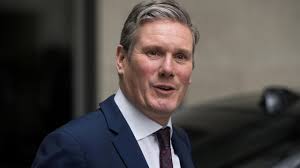 A working class lad, Starmer was bright and did well at school. A working class lad, Starmer was bright and did well at school.
He went on to Leeds University to read Law, gained a Masters degree from Oxford, did his articles and became a lawyer. By 2008 he was DPP, a post he held with distinction for five years.
Sir Keir Starmer [France24]
Starmer entered parliament as an MP for the first time in 2015, but quickly rose through the ranks and became party leader in 2020 following the debacle of Jeremy Corben's leadership.
I liked the "cut of his jib", and I continued to support him through all the criticism by the Tory Press, Nigel Farage, the Tory government which caused all the problems in the first place, disastrous opinion polls and the debacle of recent by-elections.
He has been effective on the international stage, but, I hate to say it, pretty hopeless at home. I've had enough.
If I had a vote in the UK - I do not - I would no longer vote Labour. I would revert to the LibDems.
Conclusion
 It is appropriate that I had my personal Epiphany (acc. to Webster's dictionary "a moment of sudden and great revelation or realization") at ..... Epiphany 2026, el Dia de Reyes. It is appropriate that I had my personal Epiphany (acc. to Webster's dictionary "a moment of sudden and great revelation or realization") at ..... Epiphany 2026, el Dia de Reyes.
Yes, I realised that Pedro Sanchez and Sir Keir Starmer, my great hopes for the future of Europe, weren't all they were "cracked up to be".
[Calendarr]
Pedro Sánchez and his coalition government have been mired in controversy. From alleged corruption, money-laundering and sexual misbehaviour by government ministers to controversy closer to home.
His wife, Begoña Gomez, has been accused of abusing her position as the wife of the prime minister, and his brother David Sánchez has been allegedly "up to something".
For all the good Pedro Sánchez has done, it's time for him to go - sadly!
***
As for Sir Keir Starmer, while being impressive on the European and World stages, he has looked ill-at-ease and uncertain back home.
His problems with f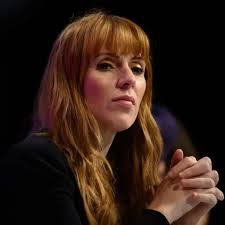 ormer deputy Angela Rayner, chancellor of the exchequer Rachel Reeves, a couple of defections to other parties, a Commons backbench revolt, a disastrous budget, policy U-turns, the loss of a safe seat in a by-election in Wales and terrible opinion poll ratings, the prime minister is treading on very thin ice. ormer deputy Angela Rayner, chancellor of the exchequer Rachel Reeves, a couple of defections to other parties, a Commons backbench revolt, a disastrous budget, policy U-turns, the loss of a safe seat in a by-election in Wales and terrible opinion poll ratings, the prime minister is treading on very thin ice.
Waiting in the wings to take over are the much-admired Wes Streeting, Secretary of State for Health and Social Care, and Rayner, who is very popular amongst fellow MPs.
Angela Rayner [BBC]
Sorry, Keir, you had my support for over a year. I still rate you as a statesman abroad, but you've failed dismally at home.
I'll see you at the Dole Office!
________________________________________________________________________________________
Note on Shakespeare's play
Love's Labour's Lost is one of William Shakespeare's early comedies, believed to have been written in the mid-1590s for a performance at the Inns of Court before Queen Elizabeth I. It follows the King of Navarre and his three companions as they attempt to swear off the company of women for three years in order to focus on study and fasting. Their subsequent infatuation with the Princess of France and her ladies makes them break their oath. In an untraditional ending for a comedy, the play closes with the death of the Princess's father, and all weddings are delayed for a year. The play draws on themes of masculine love and desire, reckoning and rationalisation, and reality versus fantasy.
_______________________________________________________________________________________
Links
Spain, is it really a country lacking glamour and with beaches full of drunken tourists gorging themselves on cheap beer and sunshine? | Sur in English
Why can’t we have the vote? - Secret Serrania de Ronda
© Paul Whitelock
Abbreviations and Acronyms:
BBC - British Broadcasting Corporation
PP - Partido Popular (conservative)
PSOE - Partido Socialista Obreros Españoles (socialist)
Podemos - "We can" in English (small left-wing party)
Sumar - "Unite" in English (left-wing coalition of 20 tiny parties, key coalition partner for PSOE)
VOX - Means "voice" in Latin (extreme right-wing party, close to fascism)
Pictures:
BBC, Calendarr, El Periodico, Facebook, France24, Independent en español, Partido Popular, Wikipedia,
Thanks:
Eye on Spain, MSN, Secret Serrania de Ronda, Wikipedia,
Tags:
BBC, Calendarr, Diary of a Nobody, El Periodico, Eye on Spain, Facebook, France24, Independent en español, MSN, Partido Popular, Paul Whitelock, Wikipedia,
á, é í, ó, ö
 1
Like
Published at 10:24 AM Comments (2)
1
Like
Published at 10:24 AM Comments (2)
Spain's 40th Anniversary of EU Membership
Friday, January 2, 2026
In the last 50 years two things happened that changed Spain - for ever and, in this writer's opinion, for the good.
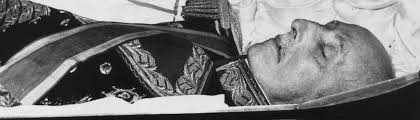 First of all, 50 years ago last November 20th, Franco finally left us when he died aged 95. First of all, 50 years ago last November 20th, Franco finally left us when he died aged 95.
[BBC]
His malevolent dictatorship became a monarchy within two days and after just three years Spain was a democracy again when the new constitution was agreed and implemented.
 Then, the second thing that changed Spain for the better was her accession to the European Economic Commuity (now the European Union). That was 40 years ago, on January 1st 1986. Then, the second thing that changed Spain for the better was her accession to the European Economic Commuity (now the European Union). That was 40 years ago, on January 1st 1986.
[Wikipedia]
I've written about the changes following Franco's demise elsewhere (links below) so today it's the turn of the EU.
History
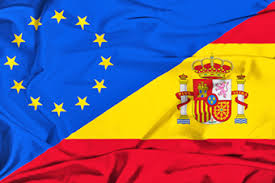 The Accession Treaty of Spain to the European Communities was signed on June 12, 1985, to enter into effect on January 1, 1986. Following this accession, Spain experienced a period of economic prosperity; during five consecutive years, it achieved the highest growth rate of the entire Community. The Accession Treaty of Spain to the European Communities was signed on June 12, 1985, to enter into effect on January 1, 1986. Following this accession, Spain experienced a period of economic prosperity; during five consecutive years, it achieved the highest growth rate of the entire Community.
[AvailableNow]
In addition to economic progress, this accession meant the end of the international isolation experienced since the Potsdam Declaration of August 1945, and the stabilisation of the recently established democracy, marking the end of the Spanish Transition.
- In the Council: Spain, which was the fifth most populous country in the Community, obtained eight votes in the council, compared to ten for the four most populous countries. The qualified majority was set at 54 votes.
- In the Commission: Spain had two of the 17 commissioners who became members of the European Commission.
- In the Parliament: 60 MEPs out of a total of 518 seats went to Spain.
According to TV channel Antena 3:
On Ist January 1986 Spain took a step forward which would change its history. Four decades after joining the EEC, the country can look back and measure the impact of that decision which sparked the modernisation of the economy consolidated democracy and redefined Spain's place in the world.
She can look back and see that the path followed together with Europe has not just been a process of political integration, but a shared history of transformation, challenges and collective ambition. What began as an open door to the future has become one of the most decisive decisions by contemporary Spain.
When Spain joined the EEC on 1st January 1986, the Spanish economy was still showing structural weaknesses, an industry in need of modernisation and a stretched labour market, but also looking forward hugely to working together with her fellow European partners.
Spain joined with enormous challenges, but also with the conviction tht Europe would be the lever to overcoming them.
The decisive impulse: From the Maastricht Treaty to the birth of the Euro (1992–2002)
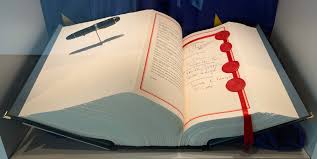 The decade of the 90s opened a decisive chapter with the Maastricht Treaty, which lit up the European Union just as we know it today and marked the path to a common curreency. The Euro, which entered circulation in 2002, did not just substitute for the peseta, it represented the consolidation of the Spanish presence at the heart of the European project It was a symbol of trust, modernisation and fully belonging. The decade of the 90s opened a decisive chapter with the Maastricht Treaty, which lit up the European Union just as we know it today and marked the path to a common curreency. The Euro, which entered circulation in 2002, did not just substitute for the peseta, it represented the consolidation of the Spanish presence at the heart of the European project It was a symbol of trust, modernisation and fully belonging.
[Wikipedia]
The hardest test: The financial crisis and the rescue of the global banking system (2008–2012)
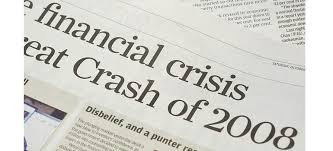 The explosion of the global financial crisis shook the European economy massively and Spain underwent one of its most difficult periods since the transition (following the death of Franco in 1975). The collapse of the housing sector, the massive destruction of the jobs market and tensions within the banking sector caused the country to request a financial rescue package. There were years of adjustments, uncertainty and profound social challenges. Spain restructured, the euro gained strengthand the EU recognised the need for more coordinated responses and standard mechanisms in order to confront future crises. The explosion of the global financial crisis shook the European economy massively and Spain underwent one of its most difficult periods since the transition (following the death of Franco in 1975). The collapse of the housing sector, the massive destruction of the jobs market and tensions within the banking sector caused the country to request a financial rescue package. There were years of adjustments, uncertainty and profound social challenges. Spain restructured, the euro gained strengthand the EU recognised the need for more coordinated responses and standard mechanisms in order to confront future crises.
An unprecedented challenge: the pandemic Next Generation EU funds (2020–2025)
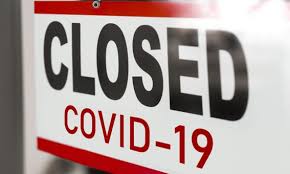 The Covid-19 pandemic put Europe to the test once again, this time it was simultanaeous and on all fronts: healthcare, economic and social. Faced with the gravity of the moment the Union reacted in a way never seen before: a common recovery plan to be jointly financed. The Covid-19 pandemic put Europe to the test once again, this time it was simultanaeous and on all fronts: healthcare, economic and social. Faced with the gravity of the moment the Union reacted in a way never seen before: a common recovery plan to be jointly financed.
The Next Generation EU funds offered Spain the chance to push digitalisation, ecological transition, innovation and new social policies. Between 2020 and 2025, this programme became a motor for modernising the country and for demonstrating that, faced with global crises, Europe can only advance as one.
Spain and Europe in 2026: A relationship which is strengthening and reinventing itself.
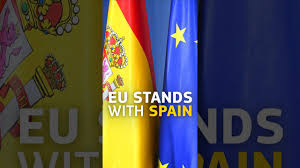 Four decades on Spain is one of the most influential countries within the European Union and, in turn, belonging to the EU has been key in transforming the country into a modern, open, diverse and competitive democracy. Four decades on Spain is one of the most influential countries within the European Union and, in turn, belonging to the EU has been key in transforming the country into a modern, open, diverse and competitive democracy.
Europe has enriched Spain with investments, stability and a greater international profile. Spain has contributed dynamism, European-ness, a capacity for consensus and a civic society which is deeply committed to the common project.
[YouTube]
Today Spain is not just in Europe; Europe is also in Spain. Together they continue to build a future in a continent which learns from the Past, moves forward with the Present day and looks at the Future with shared ambition.
Conclusion
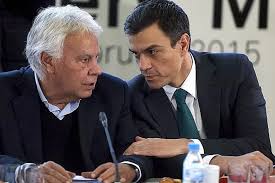 It was the foresight and resolve of a socialist (PSOE) prime minister, the long-serving Felipe Gonzalez, that took Spain into the EEC/EU in 1986. It was the foresight and resolve of a socialist (PSOE) prime minister, the long-serving Felipe Gonzalez, that took Spain into the EEC/EU in 1986.
And it is another PSOE government leader, Pedro Sanchez, who has presided over the recent period of prosperity.
Gonzalez and Sanchez [El Mundo]
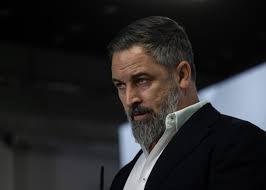 Let us hope that the Spanish voters see the light clearly soon enough to avoid the disasters that would ensue if they were to vote for a return to the dark ages of conservatism under the PP, or even worse, the catastrophe that the ultra-right VOX would wreak on the country. Let us hope that the Spanish voters see the light clearly soon enough to avoid the disasters that would ensue if they were to vote for a return to the dark ages of conservatism under the PP, or even worse, the catastrophe that the ultra-right VOX would wreak on the country.
VOX leader, Santiago Abascal [Democrata]
© The History Man
Pictures:
AvailableNow, BBC, Democrata, El Mundo, Wikipedia, YouTube
Thanks:
Translations: Paul Whitelock
Antena 3, El Mundo, Wikipedia,
Tags:
1975, 1986, Antena 3, BBC, democracy, Democrata, dictatorship, El Mundo, EEC, EU, Felipe Gonzalez, Franco, monarchy, PSOE, Paul Whitelock, Pedro Sanchez, Santiago Abascal, The History Man, VOX, Wikipedia,
2
Like
Published at 7:08 PM Comments (4)
What a decade we've just lived through!
Thursday, January 1, 2026
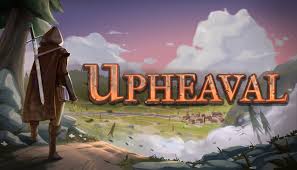 As we approach the end of 2025 it's an opportune moment to reflect on the last decade, one of much upheaval everywhere: throughout the world; in Spain; and at a personal level. As we approach the end of 2025 it's an opportune moment to reflect on the last decade, one of much upheaval everywhere: throughout the world; in Spain; and at a personal level.
[Image courtesy of Steam]
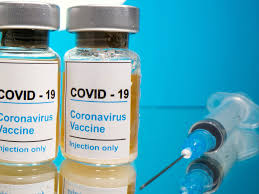 The last 10 years have presented everyone with a deluge of challenges: Al-Qaeda, Covid-19, Gaza Strip, Hamas, Hezbollah, ISIS, school shootings, Sudan, terrorism, Ukraine, to name a few ..... The last 10 years have presented everyone with a deluge of challenges: Al-Qaeda, Covid-19, Gaza Strip, Hamas, Hezbollah, ISIS, school shootings, Sudan, terrorism, Ukraine, to name a few .....
Covid-19 jab [EL PAIS]
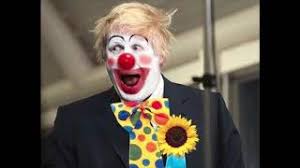 ..... and at a political level: Donald Trump, Vladimir Putin, Kim Yong Un, Viktor Orban, Bojo "The Clown" Johnson, Liz Truss, Rishi Sunak, Pedro Sanchez, Emmanuel Macron, Xi Jinping ..... ..... and at a political level: Donald Trump, Vladimir Putin, Kim Yong Un, Viktor Orban, Bojo "The Clown" Johnson, Liz Truss, Rishi Sunak, Pedro Sanchez, Emmanuel Macron, Xi Jinping .....
"Bojo The Clown" [YouTube]
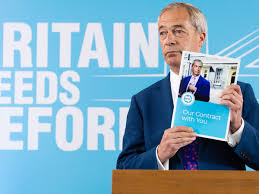 ..... and the rise of ultra-right political parties in Western countries, eg AfD, Reform UK, and VOX. ..... and the rise of ultra-right political parties in Western countries, eg AfD, Reform UK, and VOX.
Chile has just elected - the day before yesterday -Jose Antonio Kast, the ultra-right-wing candidate, as their new prime minister.
Nigel Farage, Reform Leader [The Guardian]
 Not to mention the apparent increase in natural disasters such as earthquakes, tsunamis, danas, wildfires, hurricanes, widespread flooding, melting ice-caps and glaciers, all caused by climate change. Not to mention the apparent increase in natural disasters such as earthquakes, tsunamis, danas, wildfires, hurricanes, widespread flooding, melting ice-caps and glaciers, all caused by climate change.
A tsunami [MuyInteresante]
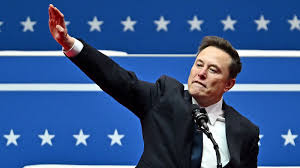 Watch out too for the meddling in politics of billionaires like Elon Musk, Mark Zuckerberg, Jeff Bezos, Warren Bufett and Lakshmi Mittal. Watch out too for the meddling in politics of billionaires like Elon Musk, Mark Zuckerberg, Jeff Bezos, Warren Bufett and Lakshmi Mittal.
There are others .....
Elon Musk does a Nazi salute [RTVE]
2015
Queen Elizabeth II becomes Great Britain's longest-reigning monarch, beating the previous record set by her great-great-grandmother, Queen Victoria
TV personality and real estate mogul Donald Trump launches his campaign for the Republican nomination for US President.
A series of massacres in Baga, Nigeria and surrounding villages by Boko Haram kills more than 2,000 people.
Two gunmen belonging to Al-Qaeda's Yemen branch kill 12 people and injure 11 more at the Paris headquarters of satirical newspaper Charlie Hebdo, prompting an anti-terrorism demonstration attended by over a million people and more than 40 world leaders.
An Airbus A320-211 operated by Germanwings is deliberately crashed by First officer Andres Lubitz in the French Alps, killing all 150 people on board.
148 people are killed, the majority students, in a mass shooting at the Garissa University College in Kenya, perpetrated by the militant terrorist organization al-Shabaab.
A magnitude 7.8 earthquake strikes Nepal and causes 8,857 deaths in Nepal, 130 in India,, 27 in China and 4 in Bangladesh with a total of 9,018 deaths.
Greece becomes the first advanced economy to miss a payment to the International Monetary Fund in its 71-year history.
The 2015 UK General Election results in the first Conservative majority government in 18 years.
I reach the age of 65 and can start drawing my old age pension from the UK, tiny though it is!
2016
30 people are killed and 56 injured in terrorist attacks in Ouagadougou, Burkina Faso, targeting a hotel and a nearby restaurant.
Suicide bombing attacks at Brussels' Zaventem airport and Maalbeek metro station kill 35 people and injure 300 more.
An earthquake of magnitude 7.8 strikes northwestern Ecuador killing 676 people and injuring over 6,000.
Ten people are killed and 15 wounded in a bombing near the Blue Mosque in Istanbul.[5]
30 people are killed and 56 injured in terrorist attacks in Ouagadougou, Burkina Faso,
The World Health Organization announces an outbreak of the Zika virus.[9]
EgyptAir Flight 804 crashes into the Mediterranean Sea en route from Paris to Cairo, killing all 66 people on board.[21]
A gunman claiming allegiance to the Islamic State opens fire at a gay nightclub in Orlando, Florida, killing 49 people and injuring 53 others.
ISIL is suspected to be responsible for attacking Atatürk Airport in Istanbul, Turkey, killing 44 people and injuring over 230 others.
86 people are killed and more than 400 others injured in a truck attack in Nice, France, during Bastille Day celebrations.
An earthquake of magnitude 6.2 hits central Italy, killing 299 people.
International investigators conclude that Malaysia Airlines Flight 17 was shot down by a Buk missile fired from an area controlled by pro-Russian rebels in eastern Ukraine.
Global CO2 levels exceed 400 ppm at the time of year normally associated with minimum levels. A 400 ppm level is believed to be higher than anything experienced in human history.
Hurricane Matthew makes landfall in Haiti as a category 4 hurricane, killing 842 and causing $2.8 billion in damages.
2016 United States presidential election: Businessman and television personality Donald Trump is elected the 45th President of the United States in a surprise victory against his opponent, former Secretary of State and First Lady Hillary Clinton.
A truck is deliberately driven into the Christmas market next to the Kaiser Wilhelm Memorial Church at Breitscheidplatz in Berlin, leaving 12 people dead and 56 others injured.
Withdrawal of the majority of US troops from Afghanistan after 15 years of war.
Ex-Bosnian Serb leader Radovan Karadžić is sentenced to 40 years in prison after being found guilty of genocide and crimes against humanity committed during the Bosnian War.
The United Kingdom votes in a referendum to leave the European Union, triggering the so-called Brexit.
Rita reaches 65 and starts to receive her pensions from Germany and the UK.
2017
2018
Pedro Sanchez becomes prime minister of Spain.
2019
The Coronavirus hits the world. this potentially global pandemic is named Covid-19.
2020
Covid becomes a world-wide pandemic. People start to die in their thousands.
2021
Rita and I both contract Covid-19 in January. Rita is hospitalised and I am locked down at home.
Andy, my niece's husband, dies in a plane crash in Australia.
Rita goes to Germany for post-Covid health care. They discover a tumour and she is operated on immediately to remove it. She is away in Germany for 2.5 months.
5 die in Montejaque (Malaga, pop. 960), our second home village.
2022
2023
My half sister Heather dies aged 83 following a long battle with Parkinson's disease.
2024
The year saw the continuation of major armed conflicts, including the Russian invasion of Ukraine, the Myanmar civil war, the Sudanese civil war, and the Islamist insurgency in the Sahel.
Israel's war on Gaza led to widespread protests and spillover conflicts into numerous other countries, most notably Lebanon, which was invaded by Israel in October.
This followed an intensification of the ongoing conflict between Israel and Hezbollah. In September, Israel escalated an offensive against the group, which resulted in the killing of four senior members of the Hamas hierarchy.
In November, heavy fighting resumed in the Syrian civil war, leading to the toppling of Ba'athist Syria, with Bashar al-Assad fleeing Syria in December.
The year also saw a rise in activity by the Houthi movement which contributed to a crisis in the Red Sea that impacted global shipping.
Approximately 80 countries, representing around 4 billion people, conducted national elections throughout the course of the year, including eight out of the ten most populous countries (Bangladesh, Brazil, Pakistan, Russia, India, Mexico, Indonesia, and the United States), as well as France, the United Kingdom, and Japan. The European Parliament also held elections.
Among democracies, over 80% saw the incumbent party lose support compared to the last election, including many significant losses. In countries like Japan, Botswana, and South Africa, incumbent parties that had dominated domestic politics for decades lost their majorities and either relinquished power or are holding on through coalitions with minor parties.
Bassirou Diomaye Faye won the 2024 Senegalese presidential election, becoming the first opposition candidate to win in the first round since the country's independence. In Sri Lanka, voters delivered a landslide victory to the National People's Power, previously a minor party.
On November 5, 2024, Republican Donald Trump won the 2024 United States presidential election.. The French and German governments lost votes of no confidence. In December, South Korean president Yoon Suk Yeol's attempt to declare and impose martial law was thwarted by members of parliament, sparking a political crisis that led to his impeachment.
Drought was declared in many regions of Spain.
I spent Christmas "home alone" for the first time in my seven-and-a-half decades of life on this earth. A Spanish man would call this situation "de Rodriguez" and he might look forward to a bit of "slap-and-tickle".
I had no such luck, but I enjoyed my own company with Paulinchen, our rescue kitten.
2025
A turbulent year
Dana in Valencia
Links:
"Bye, bye, Pedro. Pedro bye bye"?
Eye on TRUMP
My Covid-19 Diary - March 2020 to date
Rogues gallery – Hijo de Putin
Sanchez gives a masterclass
© The History Man
Pictures:
ELPAIS, Karl Smallman, MuyInteresante, Paul Whitelock, RTVE, Steam, The Guardian, YouTube
Thanks:
Karl Smallman, MSN, Paul Whitelock, RTVE, Wikipedia
Tags:
Al-Qaeda, AfD, Bojo "The Clown" Johnson, Chile, climate change, danas, Covid-19, Donald Trump, earthquakes, Elon Musk, Emmanuel Macron, Gaza Strip, glaciers, Hamas, Hezbollah, hurricanes, ISIS, Jeff Bezos, Jose Antonio Kast, Karl Smallman, Kim Yong Un, Lakshmi Mittal, Liz Truss, Mark Zuckerberg, melting ice-caps, MSN, national disaster, Paul Whitelock, Pedro Sanchez, RTVE, Reform UK, Rishi Sunak, Sudan, terrorism, Ukraine, ultra-right political parties, tsunami, Viktor Orban, Vladimir Putin, VOX, Warren Bufett, widespread flooding, wildfires, Xi Jinping, YouTube
1
Like
Published at 11:59 PM Comments (0)
Spam post or Abuse? Please let us know
|
|