In the last 50 years two things happened that changed Spain - for ever and, in this writer's opinion, for the good.
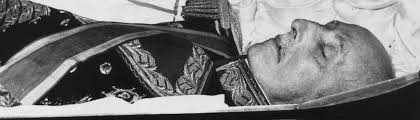 First of all, 50 years ago last November 20th, Franco finally left us when he died aged 95.
[BBC]
His malevolent dictatorship became a monarchy within two days and after just three years Spain was a democracy again when the new constitution was agreed and implemented.
 Then, the second thing that changed Spain for the better was her accession to the European Economic Commuity (now the European Union). That was 40 years ago, on January 1st 1986.
[Wikipedia]
I've written about the changes following Franco's demise elsewhere (links below) so today it's the turn of the EU.
History
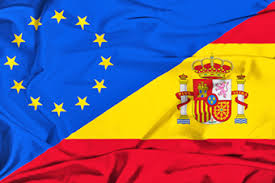 The Accession Treaty of Spain to the European Communities was signed on June 12, 1985, to enter into effect on January 1, 1986. Following this accession, Spain experienced a period of economic prosperity; during five consecutive years, it achieved the highest growth rate of the entire Community.
[AvailableNow]
In addition to economic progress, this accession meant the end of the international isolation experienced since the Potsdam Declaration of August 1945, and the stabilisation of the recently established democracy, marking the end of the Spanish Transition.
- In the Council: Spain, which was the fifth most populous country in the Community, obtained eight votes in the council, compared to ten for the four most populous countries. The qualified majority was set at 54 votes.
- In the Commission: Spain had two of the 17 commissioners who became members of the European Commission.
- In the Parliament: 60 MEPs out of a total of 518 seats went to Spain.
According to TV channel Antena 3:
On Ist January 1986 Spain took a step forward which would change its history. Four decades after joining the EEC, the country can look back and measure the impact of that decision which sparked the modernisation of the economy consolidated democracy and redefined Spain's place in the world.
She can look back and see that the path followed together with Europe has not just been a process of political integration, but a shared history of transformation, challenges and collective ambition. What began as an open door to the future has become one of the most decisive decisions by contemporary Spain.
When Spain joined the EEC on 1st January 1986, the Spanish economy was still showing structural weaknesses, an industry in need of modernisation and a stretched labour market, but also looking forward hugely to working together with her fellow European partners.
Spain joined with enormous challenges, but also with the conviction tht Europe would be the lever to overcoming them.
The decisive impulse: From the Maastricht Treaty to the birth of the Euro (1992–2002)
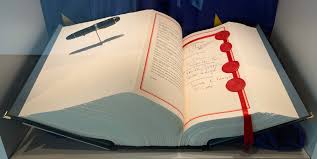 The decade of the 90s opened a decisive chapter with the Maastricht Treaty, which lit up the European Union just as we know it today and marked the path to a common curreency. The Euro, which entered circulation in 2002, did not just substitute for the peseta, it represented the consolidation of the Spanish presence at the heart of the European project It was a symbol of trust, modernisation and fully belonging.
[Wikipedia]
The hardest test: The financial crisis and the rescue of the global banking system (2008–2012)
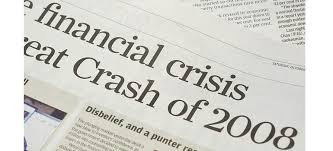 The explosion of the global financial crisis shook the European economy massively and Spain underwent one of its most difficult periods since the transition (following the death of Franco in 1975). The collapse of the housing sector, the massive destruction of the jobs market and tensions within the banking sector caused the country to request a financial rescue package. There were years of adjustments, uncertainty and profound social challenges. Spain restructured, the euro gained strengthand the EU recognised the need for more coordinated responses and standard mechanisms in order to confront future crises.
An unprecedented challenge: the pandemic Next Generation EU funds (2020–2025)
 The Covid-19 pandemic put Europe to the test once again, this time it was simultanaeous and on all fronts: healthcare, economic and social. Faced with the gravity of the moment the Union reacted in a way never seen before: a common recovery plan to be jointly financed.
The Next Generation EU funds offered Spain the chance to push digitalisation, ecological transition, innovation and new social policies. Between 2020 and 2025, this programme became a motor for modernising the country and for demonstrating that, faced with global crises, Europe can only advance as one.
Spain and Europe in 2026: A relationship which is strengthening and reinventing itself.
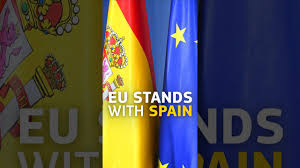 Four decades on Spain is one of the most influential countries within the European Union and, in turn, belonging to the EU has been key in transforming the country into a modern, open, diverse and competitive democracy.
Europe has enriched Spain with investments, stability and a greater international profile. Spain has contributed dynamism, European-ness, a capacity for consensus and a civic society which is deeply committed to the common project.
[YouTube]
Today Spain is not just in Europe; Europe is also in Spain. Together they continue to build a future in a continent which learns from the Past, moves forward with the Present day and looks at the Future with shared ambition.
Conclusion
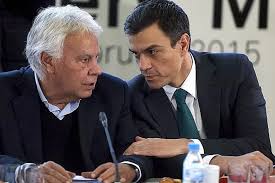 It was the foresight and resolve of a socialist (PSOE) prime minister, the long-serving Felipe Gonzalez, that took Spain into the EEC/EU in 1986.
And it is another PSOE government leader, Pedro Sanchez, who has presided over the recent period of prosperity.
Gonzalez and Sanchez [El Mundo]
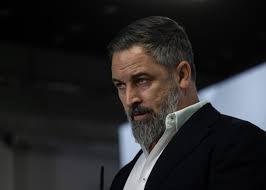 Let us hope that the Spanish voters see the light clearly soon enough to avoid the disasters that would ensue if they were to vote for a return to the dark ages of conservatism under the PP, or even worse, the catastrophe that the ultra-right VOX would wreak on the country.
VOX leader, Santiago Abascal [Democrata]
© The History Man
Pictures:
AvailableNow, BBC, Democrata, El Mundo, Wikipedia, YouTube
Thanks:
Translations: Paul Whitelock
Antena 3, El Mundo, Wikipedia,
Tags:
1975, 1986, Antena 3, BBC, democracy, Democrata, dictatorship, El Mundo, EEC, EU, Felipe Gonzalez, Franco, monarchy, PSOE, Paul Whitelock, Pedro Sanchez, Santiago Abascal, The History Man, VOX, Wikipedia,