All EOS blogs All Spain blogs  Start your own blog Start your own blog 

The History Man

This blog contains interesting facts about the history of Spain and things Spanish.

The Truth About Franco
Sunday, November 30, 2025

People struggle against the wind and rain in Malmö, Sweden, after a storm reached southern Sweden, Saturday Oct. 4, 2025. (Johan Nilsson/TT via AP)At the time of the 50th anniversary of the death of Franco - he died on 20th November 1975 - I can't believe how many positive articles are being posted about the Franco years.  The most worrying thing is that young people who weren't even born, are hankering after better times and they think those were under Franco.

[BBC]    


People struggle against the wind and rain in Malmö, Sweden, after a storm reached southern Sweden, Saturday Oct. 4, 2025. (Johan Nilsson/TT via AP)Troy Nahumko, Canadian, is a freelance writer, teacher and teacher trainer, living in Caceres, Extremadura.

Writing in SUR in English on November 28th, Troy tells us:


    [Hoy]

"..... in today's Spain, a curious myth has seeped into the groundwater: that 'under Franco we lived better'. Astonishingly, a chunk of Spaniards under 24 hold the view that a cheerless, censorious dictatorship, the political equivalent of poison ivy, was a golden age of prosperity and serenity."


People struggle against the wind and rain in Malmö, Sweden, after a storm reached southern Sweden, Saturday Oct. 4, 2025. (Johan Nilsson/TT via AP)Giles Tremlett, biographer, historian and journalist has lived in Madrid for 30 years. In an interview with Diario Sur's Regina Sotorrío to mark the publication of his new book 'Franco: The Dictator Who Shaped a Country', the Englishman says:


    [Diario Sur]

"[The secret of Franco's success] .....  is based on three things. One is that he's not as mediocre as he's made out to be. Intellectually, yes, but in terms of command, of political manoeuvering, not at all. Secondly, he's an incredibly ambitious character. It's not that he wanted power, he wanted all the power, forever. And thirdly, a military man doesn't need charisma. If I'm a general, it doesn't matter that I'm short with a high-pitched voice, everyone has to bow down before me. Military charisma is all about here (he taps his shoulder, where rank and medals would be on show) and it doesn't matter what you look like."


People struggle against the wind and rain in Malmö, Sweden, after a storm reached southern Sweden, Saturday Oct. 4, 2025. (Johan Nilsson/TT via AP)I am a keen student of Spanish history and its politics, and I regard myself as well-informed about the Civil War and the Franco dictatorship.

I experienced five years living in Spain under Franco, and then another five decades after the country transformed into a democracy. I have owned property here since 2001 and emigrated here in 2008.


[Wikipedia]    


So, I have experienced the austerity and lack of freedom of Franco's brutal fascism, as well as the difficult early years of the Transition.


People struggle against the wind and rain in Malmö, Sweden, after a storm reached southern Sweden, Saturday Oct. 4, 2025. (Johan Nilsson/TT via AP)Spain joining the EU made a huge difference as the country qualified for massive grants for infrastructure projects, as well as educational exchanges and study visits.


[European Commission]    


People struggle against the wind and rain in Malmö, Sweden, after a storm reached southern Sweden, Saturday Oct. 4, 2025. (Johan Nilsson/TT via AP)People struggle against the wind and rain in Malmö, Sweden, after a storm reached southern Sweden, Saturday Oct. 4, 2025. (Johan Nilsson/TT via AP)I've read both George Orwell and Ernest Hemingway and enjoyed what they wrote about that period of Spain's history.

But, let's face it, both were flawed personalities, so their literary legacies are questionable to say the least.

Orwell had psychological problems and Hemingway shot himself.

   Orwell [Wikipedia]            His only book about the Civil War [Amazon]

People struggle against the wind and rain in Malmö, Sweden, after a storm reached southern Sweden, Saturday Oct. 4, 2025. (Johan Nilsson/TT via AP)People struggle against the wind and rain in Malmö, Sweden, after a storm reached southern Sweden, Saturday Oct. 4, 2025. (Johan Nilsson/TT via AP)People struggle against the wind and rain in Malmö, Sweden, after a storm reached southern Sweden, Saturday Oct. 4, 2025. (Johan Nilsson/TT via AP)People struggle against the wind and rain in Malmö, Sweden, after a storm reached southern Sweden, Saturday Oct. 4, 2025. (Johan Nilsson/TT via AP)

  Hemingway [Acento]                                                  Important works by Hemingway [Amazon]


What do I think of Franco?

For me, People struggle against the wind and rain in Malmö, Sweden, after a storm reached southern Sweden, Saturday Oct. 4, 2025. (Johan Nilsson/TT via AP)he was arguably worse than Hitler and Mussolini, his fascist contemporaries.

Mussolini was a joke, strung up by his own people, and Hitler committed suicide.


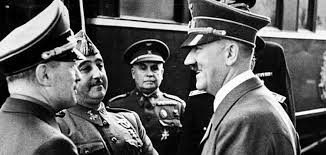
L to R: Mussolini, Franco, Hitler [La Hora Digital]    


Franco carried on and died a natural death in 1975, aged 82.

From 1939 until 1975 he continued to murder dissidents.

People struggle against the wind and rain in Malmö, Sweden, after a storm reached southern Sweden, Saturday Oct. 4, 2025. (Johan Nilsson/TT via AP)The man was despicable, but, because he had the support of the Catholic Church, the Army and the landed gentry, gained a certain kudos.

Spain's transformation to a constitutional monarchy and full democracy has happened in double quick time, rather remarkably.


Don Juan Carlos and Franco [Libertad Digital]    


My Spanish neighbours, olive growers, wine-makers and livestock farmers, were socialist for seven decades since the Civil War ended. Lately they have switched to PP. Unbelievable!

People struggle against the wind and rain in Malmö, Sweden, after a storm reached southern Sweden, Saturday Oct. 4, 2025. (Johan Nilsson/TT via AP)I am just about the only supporter of the current government of Pedro Sanchez around these parts. The Spanish prime minister is smart, intelligent, and young.

He is also a fluent English-speaker, unlike all of his predecessors. I reckon he is the best PM Spain has had since democracy began. All the others were flawed/corrupt/inept.


[El Mundo]    


Second best? Probably Felipe Gonzalez.

But, this is only my opinion .....


People struggle against the wind and rain in Malmö, Sweden, after a storm reached southern Sweden, Saturday Oct. 4, 2025. (Johan Nilsson/TT via AP)John Collins, in a letter to the editor of SUR in English, wrote that he came to Spain for the first time in 1967 to study in Barcelona.

"The atmosphere in the city was tense. ..... I left after a while for Madrid, a  different world, very much Generalisimo territory."


    [Facebook]


Collins met and married a Spanish lady from a family of franquistas. With this intimate insight he has formed a different view to many of us British folk.

"Franco certainly ruled with an iron fist, but whether he was really a dictator is  another question ..... The thing about living in Spain during Franco is there were three things, discipline, courtesy and security. Sadly all three have disappeared in modern Spain."

Collins spends much less time in Spain now  "..... than I did when the Generalisimo was here."


People struggle against the wind and rain in Malmö, Sweden, after a storm reached southern Sweden, Saturday Oct. 4, 2025. (Johan Nilsson/TT via AP)Axarquía resident Joan Fallon, the author of "Daughters of Spain" (a series of frank interviews giving a dramatic picture of what it was like to be a woman living in Spain under Franco's regime), said she believes children of today should learn about what life was like in the dictatorship.

"History is about people and their lives: I believe that young Spaniards deserve to know why such a war would break out in the first place and what kind of lives their great-grandparents lived before, during and afterwards.


    [Facebook]


"The civil war and the dictatorship are vital parts of Spanish history and should not be withheld from youngsters because those years will subsequently have had an affect on their lives. How can the youth of today understand their country if this period of their history is withheld from them?" she asked.


Malaga resident Juan Jiménez, whose father was a staunch Franco supporter, said that he believed that, "as bad as it was", it should never be forgotten.

"This was a terrible era of Spain's history, but it is our history and it cannot be ignored," he said.


Daniel González, whose grandfather died during the conflict, disagreed, saying "it is time to forget". "Why do we have to keep dragging the Franco atrocities up. He is dead and should be left that way. Educating youngsters is one thing, but holding events to mark the death of this dictator is absurd," he said.


© The History Man


Links:

50 Years After Franco’s Death, Spain Confronts Its Dark Past | TIME

British author and Hispanist Giles Tremlett speaks out on Franco on 50th anniversary of Spanish dictator's death | Sur in English

Fifty years on | Sur in English

Franco dead 50 years!

Giles Tremlett, hispanista: «El desconocimiento de Franco hace que sea un debate de blanco o negro, no hay matices» | Diario Sur

Should Franco fade into a mere footnote in Spanish history? | Sur in English

The great Franco revival circus | Sur in English


Images:

Acento, Amazon, BBC, Diario Sur, El Mundo, European Commission, Facebook, Hoy, La Hora Digital, Libertad Digital, Wikipedia   


Thanks:

Daniel González, Giles Tremlett, Joan Fallon, Juan Jiménez, Liz Parry, SUR in English, TIME magazine, Tony Bryant, Troy Nahumko


Tags:

Acento, Amazon, BBC, "Daughters of Spain", Diario Sur, El Mundo, European Commission, Facebook, Hoy, La Hora Digital, Libertad Digital, Paul Preston, TIME magazine, Wikipedia 


Like 1        Published at 5:51 PM   Comments (7)


50 years ago today since Franco's death
Thursday, November 20, 2025

People struggle against the wind and rain in Malmö, Sweden, after a storm reached southern Sweden, Saturday Oct. 4, 2025. (Johan Nilsson/TT via AP)Today is the 50th anniversary of the death of the Spanish dictator General Franco.

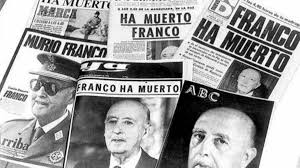
On November 20th November 1975 it was announced that the man who had ruled Spain with an iron fist for 38 years had passed away in his sleep.

The Spanish Press announces Franco's death [Photo composition: X]    


Franco had been in charge since the military coup which toppled the elected Republican government of the day and led to a bloody civil war (1936-1939).

The conflict and its aftermath claimed en estimated 500,000 lives.


What the Press and media are saying
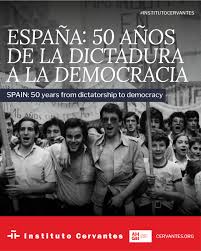
People struggle against the wind and rain in Malmö, Sweden, after a storm reached southern Sweden, Saturday Oct. 4, 2025. (Johan Nilsson/TT via AP)According to the national broadcaster rtve.es Spain passed from being an authoritarian regime to a full democracy, where freedom of expression, equality and diversity are an integral part of daily life.

The dictatorship was characterised by political and cultural repression, a lack of freedom of speech and the persecution of dissidents. 

Franco's death marked the end of this time and the beginning of a new political era which culminated in the approval of a new constitution in 1978 and the consolidation of democracy in Spain.

[Instituto Cervantes]    


Yet today there is a generation of young people who identify with Francoist principles and defend the regime.

Some experts claim that young people "lack solid and verified information and knowledge" about Francoism.


Radio Nacional de España (RNE) posed the question: What is left of Franco after 50 years?
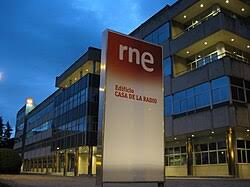
People struggle against the wind and rain in Malmö, Sweden, after a storm reached southern Sweden, Saturday Oct. 4, 2025. (Johan Nilsson/TT via AP)Their reporter Mar Lupion wrote earlier today on Facebook that vestiges of  Francosism are alive and well in Spanish society.

According to the Centro de Investigaciones Sociológicas (CIS), about 20% of Spaniards between the ages of 18 and 24 consider the dictatorship to have been "good or very good".

This nostalgia for a historical period they didn't experience can be explained by several factors.

    [Photo courtesy of Wikipedia]


Alina Danet, a sociologist and professor of Political Science at the University of Granada, maintains that young people "lack solid and reliable information and knowledge" about the Franco regime. This is because, after Franco's death, the dictatorship was "little discussed" in Spain.

Furthermore, young people feel that their generation has suffered a loss of status compared to their parents and grandparents.

Social media acts as a catalyst for the spread of hoaxes and myths about the Franco regime through trends that use elements of contemporary culture, such as memes, music, and manipulated videos, in a phenomenon known as "pop fascism".

Within this breeding ground, "historical revisionism" - the movement that revisits the dictatorship with the collaboration of journalists, essayists, and historians - plays a pre-eminent role.
 

Franco, from renowned military man to dictator for almost 40 years
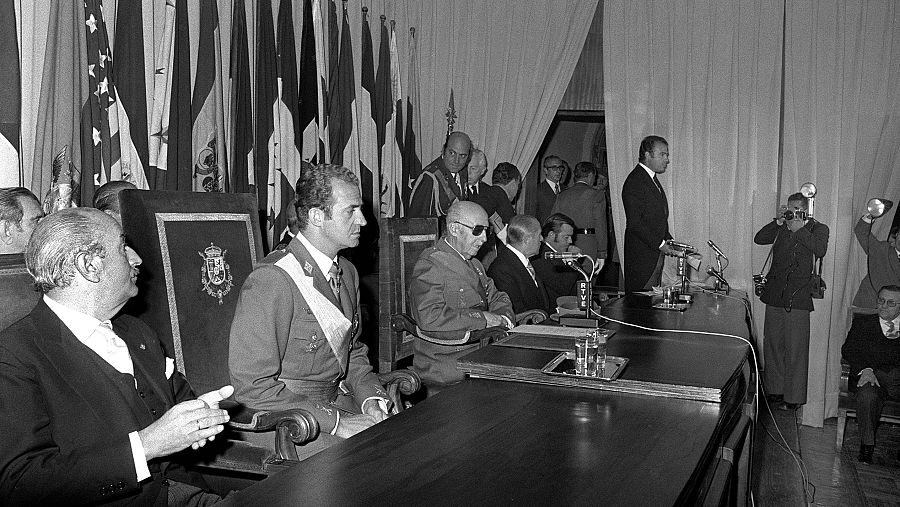
People struggle against the wind and rain in Malmö, Sweden, after a storm reached southern Sweden, Saturday Oct. 4, 2025. (Johan Nilsson/TT via AP)

Franco died on November 20, 1975, and was succeeded two days later by King Juan Carlos I, who assumed all the powers of the State:

He was head of government, head of state, and commander-in-chief of the Armed Forces.


   Last ever photo of Franco 12 Oct 1975  [EFE/SVB]. To his right is Don Juan Carlos de Borbon, Franco's nominated  successor


Mª Carmen Cruz Martín explains: "With the victory of the so-called Nationalists, Francisco Franco established a military dictatorship in Spain and ruled the country with an iron fist for almost four decades, between 1939 and 1975."


Who was Francisco Franco?
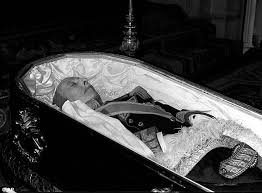
People struggle against the wind and rain in Malmö, Sweden, after a storm reached southern Sweden, Saturday Oct. 4, 2025. (Johan Nilsson/TT via AP)Francisco Franco Bahamonde was head of state until the day of his death, on November 20, 1975; head of government until 1973, when he handed over that baton of command to Carlos Arias Navarro, and commander-in-chief of the Armed Forces.

On coins of that era, he was depicted as "Leader of Spain by the Grace of God."


   [Photo: The Daily Mail]


He was part of the military leadership that staged the 1936 coup against the government of the Second Republic, which subsequently led to the Civil War.

For three years, Spain was embroiled in a conflict that divided the country into two factions. With the victory of the Nationalist faction on April 1, 1939, Franco took over all state powers.


Military Career
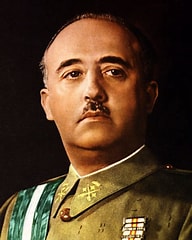
People struggle against the wind and rain in Malmö, Sweden, after a storm reached southern Sweden, Saturday Oct. 4, 2025. (Johan Nilsson/TT via AP)Born in Ferrol (A Coruña) in 1892 into a middle-class family, Francisco Franco was the second of five children.

Following in his father's military footsteps, Franco entered the Infantry Academy of Toledo in 1907.

His military career was marked by the Rif War in Morocco, where he was stationed between 1912 and 1926.

He was head of the Legion, and in 1926 he was promoted to Brigadier General, becoming the youngest general in Europe. In 1935, he was appointed Chief of the General Staff.


    [Photo: Wikipedia]


Following the Popular Front's victory in the February 1936 elections, the government removed generals suspected of plotting a coup, and Franco was subsequently assigned to the Canary Islands.

In July 1936, he joined the coup d'état known as the National Uprising, led by Generals José Sanjurjo and Emilio Mola, who were dissatisfied with the Second Republic and desired a more conservative and religious Spain.

The coup d'état began when the military garrisons of Ceuta, Melilla, and Tetouan rebelled against the Second Republic.

Although the coup failed in cities like Madrid and Barcelona, ​​a Civil War ensued with two sides: the Republicans - defenders of the Republic and comprised of left-wing parties - and the rebels, also known as the Nationalists - made up of right-wing parties, the bourgeoisie, and anti-republican military officers.

More than half a million people from both sides would die in the conflict.

Soon, Franco became the leader of the rebels, and on October 1, 1936, he was proclaimed head of state and caudillo (leader) of Spain.
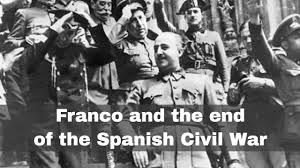
People struggle against the wind and rain in Malmö, Sweden, after a storm reached southern Sweden, Saturday Oct. 4, 2025. (Johan Nilsson/TT via AP)

[Youtube]


People struggle against the wind and rain in Malmö, Sweden, after a storm reached southern Sweden, Saturday Oct. 4, 2025. (Johan Nilsson/TT via AP)The Civil War in Spain served as a rehearsal for the Axis powers for World War II. Franco's side received support from Adolf Hitler's Nazi Germany and Benito Mussolini's Fascist Italy, which helped Franco to achieve significant victories in key battles.


    Mussolini, Franco and Hitler  [La Hora Digital]


[Ed: the bombing by the German Luftwaffe of Guernica near Bilbao being the best example]


Finally, on April 1, 1939, Franco announced from the city of Burgos that the war had ended after having "defeated the Red Army" and "the nationalist troops having achieved their final military objectives".


The Franco Dictatorship

At the end of the Civil War, Franco took over all the powers of the State and established a military dictatorship, characterized by censorship and repression of those who were against the new regime, the curtailment of rights and freedoms, total control of the State and a policy of international isolation during the first years of his government.
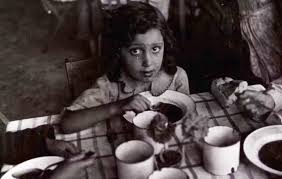
People struggle against the wind and rain in Malmö, Sweden, after a storm reached southern Sweden, Saturday Oct. 4, 2025. (Johan Nilsson/TT via AP)Precisely because of this international isolation and the economic difficulties the country faced in the postwar period, the early years of the dictatorship were marked by famine. To confront the economic crisis, an autocratic regime was established, an economic system based on an attempt at self-sufficiency.


    Post-war hunger [The Olive Press]


However, food shortages were widespread, and in response, a rationing system was introduced to control available food and prevent hoarding. Each person was allocated a specific quantity of products.
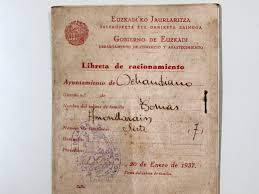
People struggle against the wind and rain in Malmö, Sweden, after a storm reached southern Sweden, Saturday Oct. 4, 2025. (Johan Nilsson/TT via AP)So, on May 14, 1939, the Franco regime pioneered the ration book, which specified the quantity and type of goods to which each Spaniard was entitled. This system remained in place until June 1, 1952.

Alongside the economic problems, the repression against the defeated led many people to go into exile abroad. Those who remained in the country and did not support Franco's regime began to suffer harsh controls. Many were imprisoned, and many others were executed.

Spanish post-Civil War ration book [Dreamstime]    


In fact, Franco's regime was signing death warrants until very shortly before the dictator's death. Less than two months before Franco died, five members of the Basque Terrorist Group ETA (Euskadi Ta Askatasuna) and the communist FRAP (Frente Revolucionario Antifascista y Patriota) were executed.

Political parties were banned, and only the Falange Española Tradicionalista and the Juntas de Ofensiva Nacional Sindicalista (FET y de las JONS) were permitted. Linguistic and sexual diversity were persecuted, and women lost rights they enjoyed during the Republic, as they were required to be under "male guardianship" during the Franco regime.

Franco's dictatorship was heavily influenced by Catholicism, and the Church played a significant role in the regime.


And although Spain declared itself neutral in World War II, Franco had a close relationship with Hitler and Mussolini.

Precisely because of this proximity to European fascist regimes, Spain found itself isolated internationally after the end of World War II.

During the Cold War, it managed to partially emerge from this isolation thanks to its rapprochement with the Western bloc and because of its opposition to the Soviet bloc.


The Succession

And although Francoism began its decline on November 20, 1975, People struggle against the wind and rain in Malmö, Sweden, after a storm reached southern Sweden, Saturday Oct. 4, 2025. (Johan Nilsson/TT via AP)with the death of the dictator, its end had begun to take shape years earlier.
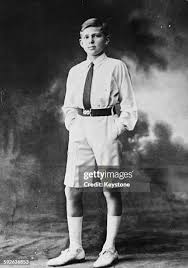
In 1969, Franco had named as his successor the Infante Juan Carlos - who would later become King Juan Carlos I - son of the legitimate heir to the throne, Don Juan de Borbón, and grandson of the late Alfonso XIII, the last monarch before the Second Republic.


The young Juan Carlos [Getty Images]    


With his oath before the Cortes, Juan Carlos became Prince of Spain on July 22, 1969.

In June 1973, Franco appointed Admiral Luis Carrero Blanco as head of the government, but in December of that same year, he was assassinated in an ETA attack in Madrid.

Finally, the dictator decided to appoint Carlos Arias Navarro as Prime Minister.

In the months leading up to his death, Franco suffered from various illnesses. While he was ill, on a couple of occasions, Juan Carlos assumed the role of Acting Head of State. The first was on July 9, 1974, when the dictator was hospitalized for treatment of phlebitis. The second was in October 1975, after Franco fell ill and suffered several heart attacks until he finally died on November 20.
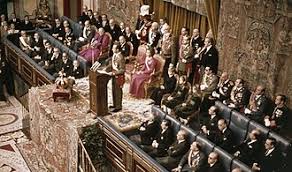
People struggle against the wind and rain in Malmö, Sweden, after a storm reached southern Sweden, Saturday Oct. 4, 2025. (Johan Nilsson/TT via AP)King Juan Carlos was sworn in before the Cortes on November 22. Following Franco's death, Spain underwent a period known as the Transition, which led the country to become a parliamentary monarchy, hold its first democratic elections in over 40 years in 1977, and adopt a Constitution in 1978.


Juan Carlos is sworn in as king [Wikipedia]    


Last Word

I have strong feelings about Franco. When I first came to Spain in 1970, to San Sebastian (Gipuzkoa) I fell in love with the country, the people and the lifestyle, despite Franco still being in control.

I studied Spanish to honours degree level and obviously got to learn more about Franco's murderous and vindictive regime.

I despise the man and what he stood for. He is arguably as bad as Hitler and Mussolini were, yet he was the only one of that deadly trio who died a natural death. Hitler committed suicide in his Berlin bunker and Mussolini was strung up by his own people.

I find it right that Franco has been thoroughly discredited and that the Spanish government is trying to erase all traces of him.

"Franco is dead!" Let's leave it at that!
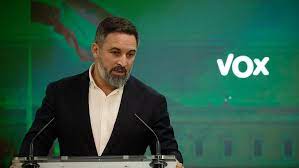
People struggle against the wind and rain in Malmö, Sweden, after a storm reached southern Sweden, Saturday Oct. 4, 2025. (Johan Nilsson/TT via AP)But Spain needs to be wary of VOX, the right wing extremist party, and the ridiculous behaviour of many young Spaniards in wishing for a return to an evil, repressive Spain that they never knew! Spain was NOT better under Franco!


    Santiago Abascal of VOX [Photo: VOX]


©  The History Man


Photos:

ABC, BBC, Diario de Sevilla, Dreamstime, Getty Images, Instituto Cervantes, La Hora Digital, SVB, The Guardian, The Olive Press, Wikipedia, Youtube, VOX, X


Acknowledgements:

Sources: Alina Danet, EFE, Mª Carmen Cruz Martín, Mar Lupion, MSN, Paul Whitelock, RNE, rtve.es, Wikipedia

Translations: Paul Whitelock


Tags:

1936-1939, 1978, 500,000 lives, ABC, Adolf Hitler, Alina Danet, authoritarian regime, Benito Mussolini, bloody civil war, BBC, CIS, Centro de Investigaciones Sociológicas, constitution, democracy, Diario de Sevilla, dictatorship, diversity, Dreamstime, EFE,  equality, Francoism, Francoist, freedom of expression, freedom of speech, full military coup, Getty Images, "historical revisionism", Instituto Cervantes, La Hora Digital, Mª Carmen Cruz Martín, Mar Lupion, MSN, Paul Whitelock, persecution of dissidents, political and cultural repression, "pop fascism", professor of Political Science, RNE, Radio Nacional de España, Republican government, sociologist, SVB, The Guardian, The Olive Press, University of Granada, Wikipedia, Youtube, VOX, X


Like 1        Published at 9:52 PM   Comments (3)


Franco dead 50 years!
Monday, November 17, 2025

People struggle against the wind and rain in Malmö, Sweden, after a storm reached southern Sweden, Saturday Oct. 4, 2025. (Johan Nilsson/TT via AP)Generalisimo Francisco Franco Bahamonde, the fascist dictator who led Spain for 39 years, from 1936 until his death in 1975, "celebrates" the 50th anniversary of his death later this week, on Thursday November 20th.

He will not be mourned by many. He has been thoroughly discredited for his murderous "reign".


[Photo courtesy of Wikipedia]    


According to a recently passed law, all statues and memorials should have been torn down. Streets, barrios and squares should have been re-named andPeople struggle against the wind and rain in Malmö, Sweden, after a storm reached southern Sweden, Saturday Oct. 4, 2025. (Johan Nilsson/TT via AP) town names which refer to him have been required to drop the reference to him, eg his birthplace, until recently known as El Ferrol del Caudillo, is now just plain old El Ferrol. 

    [La Voz de Galicia]


His body has been removed from the mausoleum he had built to honour the nationalist dead, Valle de los Caidos, and has been re-interred elsewhere, alongside his widow.


Franco and I

People struggle against the wind and rain in Malmö, Sweden, after a storm reached southern Sweden, Saturday Oct. 4, 2025. (Johan Nilsson/TT via AP)I never met him, of course, but, for the last five years of his life, I was in San Sebastian (Guipuzcoa), his choice of summer holiday destination.

The Basque seaside resort filled with Franco's stormtroopers before, during and after his annual stay. These were the dreaded and, back then, brutal guardia civil.


San Sebastian [The Independent]    


The Basque language, euskera, was banned at that time.

People struggle against the wind and rain in Malmö, Sweden, after a storm reached southern Sweden, Saturday Oct. 4, 2025. (Johan Nilsson/TT via AP)We were well into the Autumn Term at the Roman Catholic Grammar School where I was Head of Spanish, when one morning our Spanish assistant from Valencia, Vicente, came in all smiles.

Franco was dead, at last. Vicente immediately changed his name to Vicent, his real name in the banned Valenciano dialect.


    [Daily Mail]


Franco's legacy

General Franco was chosen to lead the military coup that unseated the legitimate republican government of Spain over the course of a brutal civil war which tore the country to bits.

After the war, Franco and Spain were isolated from the rest of Europe. Their only allies were the USA, who took advantage to set up a major military base and nuclear facility in Rota (Cádiz).

People struggle against the wind and rain in Malmö, Sweden, after a storm reached southern Sweden, Saturday Oct. 4, 2025. (Johan Nilsson/TT via AP)The Caudillo paved the way for the restoration of the monarchy by nominating Juan Carlos de Borbon y Borbon as his successor.

On Franco's death he became King Juan Carlos I and led the way to restoring democracy to Spain, something Franco would not have expected.

There is a claim that Franco set up the Paradores hotel chain, whereby ancient monuments were restored and turned into quality hotels, but that may be an urban myth.

I liked and fell in love with Spain under Franco's rule, but, let's be honest, the country is better now.

Democracy, equal opportunities, contraception, divorce, gay marriage, and smoking bans have all come into force in the last five decades.

And, according to recent press reports, Spain has the second most successful economy in the world after Singapore.


Final comment

Some of my neighbours - andaluces - wish he was still around. Most weren't even born when he was in power. 

What is the matter with these people?

They would rather have VOX and/or PP with the dangerous Santiago Abascal or the inept Alberto Nuñez Feijoo, instead of the young, virile, intelligent, English-speaking socialist Pedro Sanchez, arguably the best prime minister Spain has had since Franco's demise.

People struggle against the wind and rain in Malmö, Sweden, after a storm reached southern Sweden, Saturday Oct. 4, 2025. (Johan Nilsson/TT via AP)People struggle against the wind and rain in Malmö, Sweden, after a storm reached southern Sweden, Saturday Oct. 4, 2025. (Johan Nilsson/TT via AP)People struggle against the wind and rain in Malmö, Sweden, after a storm reached southern Sweden, Saturday Oct. 4, 2025. (Johan Nilsson/TT via AP)

   Santiago Abascal [Vox]                               Alberto Nuñez Feijoo [El Periodico]            Pedro Sanchez [El Mundo]


I rest my case.


© The History Man


Pictures:

ABC, Daily Mail, El Mundo, El Periodico, La Voz de Galicia, Libertad Digital, The Independent, VOX, Wikipedia


Acknowledgements:

Diario Sur, Malaga Hoy, Paul Whitelock, Wikipedia


Tags:

1975, ABC, Alberto Nuñez Feijoo, Civil War, Daily Mail, Diario Sur, El Ferrol, El Mundo, El Periodico, Franco, Juan Carlos I, La Voz de Galicia, Libertad Digital, Malaga Hoy, monarchy, paradores, Paul Whitelock, Pedro Sanchez, November 20th, Rota, San Sebastian, Santiago Abascal, The History Man, The Independent, USA, Valle de los Caidos, VOX, Wikipedia


Like 0        Published at 10:21 AM   Comments (2)


Remembrance Day
Sunday, November 9, 2025

People struggle against the wind and rain in Malmö, Sweden, after a storm reached southern Sweden, Saturday Oct. 4, 2025. (Johan Nilsson/TT via AP)Remembrance Day (also known as Poppy Day owing to the tradition of wearing an artificial poppy) is a memorial day observed in Commonwealth member states since the end of the First World War. This day honours armed forces members who died in the line of duty.


    War grave in Northern France [WW1 Cemeteries]


The day is also marked by war remembrances in several other non-Commonwealth countries.

People struggle against the wind and rain in Malmö, Sweden, after a storm reached southern Sweden, Saturday Oct. 4, 2025. (Johan Nilsson/TT via AP)In most countries, Remembrance Day is observed on 11 November to recall the end of First World War hostilities. Hostilities ended "at the 11th hour of the 11th day of the 11th month" of 1918, in accordance with the Armistice signed by representatives of Germany and the Allied countries. The First World War formally ended with the signing of the Treaty of Versailles on 28 June 1919.

Signing the Armistice [Britannica]    


The origins

People struggle against the wind and rain in Malmö, Sweden, after a storm reached southern Sweden, Saturday Oct. 4, 2025. (Johan Nilsson/TT via AP)The initial Armistice Day was observed at Buckingham Palace, commencing with King George V hosting a "Banquet in Honour of the President of the French Republic" during the evening hours of 10 November 1919.

The first official Armistice Day was subsequently held on the grounds of Buckingham Palace the following morning.

During the Second World War, many countries changed the name of the holiday. Member states of the Commonwealth of Nations adopted Remembrance Day, while the US chose the name Veterans Day.


    King George V [Discover Britain]


United Kingdom

In the United Kingdom, the main observance is Remembrance Sunday, held on the Sunday nearest to 11 November. There is a National Service of Remembrance in London, as well as other services and ceremonies in the regions.

People struggle against the wind and rain in Malmö, Sweden, after a storm reached southern Sweden, Saturday Oct. 4, 2025. (Johan Nilsson/TT via AP)Typically, poppy wreaths are laid by representatives of the Crown, the armed forces, and local civic leaders, as well as by local organisations including ex-servicemen organisations, cadet forces, the Scouts. Guides, Boys' Brigade, St John Ambulance and the Salvation Army

A two minutes' silence is also frequently incorporated into church services.

Poppy wreaths at the Cenotaph in London [BBC]    


A personal note

People struggle against the wind and rain in Malmö, Sweden, after a storm reached southern Sweden, Saturday Oct. 4, 2025. (Johan Nilsson/TT via AP)As a Scout Cub and later a Scout I was involved in Remembrance Day parades annually from a young age.

Now, 60-odd years later, this date has become significant for me once again what with devastating wars and conflicts taking place throughout the world.


[BBC]    


People struggle against the wind and rain in Malmö, Sweden, after a storm reached southern Sweden, Saturday Oct. 4, 2025. (Johan Nilsson/TT via AP)Despite living in Spain, which does not commemorate the two World Wars, the country not having been involved in either war (officially!), I managed to get hold of a poppy following an appeal on Facebook ("Thanks, Fran!").

I shall wear my poppy with pride today.


    Yours truly this morning [selfie]


© The History Man


Images:

Britannica, BBC, Discover Britain, Paul Whitelock, WW1 Cemeteries


Acknowledgements:

Paul Whitelock, The History Man, Wikipedia


Tags:

armed forces, armistice, Boys Brigade, Britannica, BBC, cadet force, Commonwealth, cub scout, Discover Britain, First World War, Paul Whitelock, poppy, Poppy Day, remembrance day, St John Ambulance, Salvation Army, scout, scout cub, two minutes' silence, Wikipedia, WW1 Cemeteries


Like 0        Published at 9:39 AM   Comments (0)


Spam post or Abuse? Please let us know


This site uses cookies. By continuing to browse you are agreeing to our use of cookies. More information here. x