Andalucía was always ‘Red’ right up until recent times.
Up to, and after the Civil War, the enormous estates that made up the fertile part of the region was under the thumb of the latifundistas, the absent landlords from Madrid and elsewhere.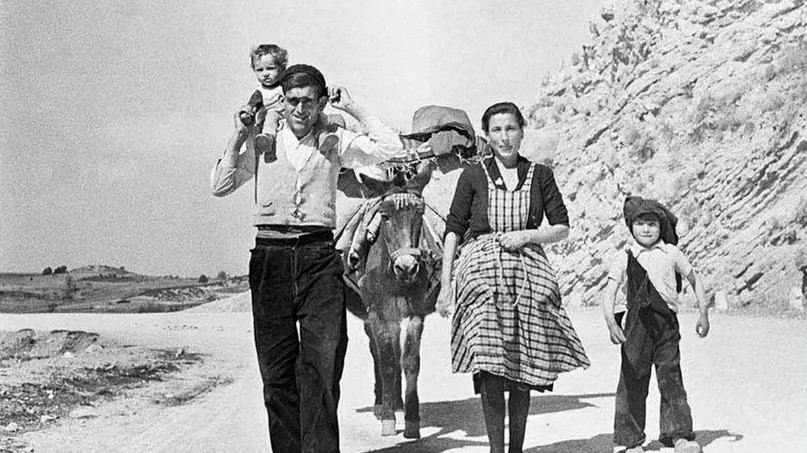
During the War, or at least until the fascists regained control, the land was run (no doubt ineptly) by the colectivos. The worker soviets. The cities were impoverished, and many people – those that could – had left for Catalonia, Algeria, France, Germany and where possible, Mexico and South America. A figure given suggests 2,700,000 emigrated searching for a better life elsewhere.
The huge majority of the andaluces in those difficult times were lefties – perhaps understandably – and when Franco eventually went to His Reward in 1975, Spain soon threw forth a progressive leader from Seville – Felipe González and the Spanish Socialist Workers Party, the PSOE.
Spain took off, under the new democracy, but Andalucía, always poor and forgotten by Madrid, continued to lag far behind. Its regional government, based in Seville and held by PSOE figures, was noted for its corruption.
Seville: not only the capital of Andalucía’s eight provinces, but also its wealthiest. They say that the money came in – but it never left to be distributed in the satellite provinces (particularly Almería, at almost seven hours by train).
Poor leadership: Manuel Chaves and José Antonio Griñán caught in the ERE scandal; Susana Díaz, inept and then the one after her… (you know, I’m not even going to bother to look him up).
Now, in 2026, those people are all gone – some with prison sentences, others deserving of them. Even Felipe González, Seville’s most famous son, is now under a cloud.
The Junta de Andalucía, the regional authority, is currently in the hands of a conservative. He’s Juanma Moreno, perhaps the third or fourth in importance in the whole of the PP. Elections are to be held on May 17th and he’ll no doubt get in again.
How did the voters come to switch their allegiances?
For one thing, they discovered a social class below them: the immigrants.
Second, as above, they saw the corruption and graft in the socialist camp.
Thirdly, simply voting conservative gives one, at least and if nothing else, the sensation of having joined the middle classes.
And life goes on. Only, it doesn’t if you get ill.
Juanma Moreno, like Isabel Díaz Ayuso in Madrid, has been supporting the private health sector at the expense of the public one. Ayuso is stained with the unnecessary deaths of the 7,291 elderly folk in the residencias during the Covid, Juanma has the problem of the lost breast cancer results which affected several thousand women. They have both been seen to be dismantling their regional public health systems.
The PSOE-A only has the one shot at the moment in its electioneering (despite having a senior ex-Government minister as their candidate), and that’s the state of the Servicio Andaluz de Sanidad. The public health service is clearly underfunded and being drained by the private sector – and there are many who don’t have the funds for private insurance.
The elections in Andalucía will probably run as expected, but supposing Moreno has to come to a deal with Vox. Will their ‘national priority’ put me back at the far end of the waiting list, in a public hospital that is sorely under-financed?