Generally speaking, the weather in northern Spain isn’t as good as in the south, 4but there are other wonderful things to be found there (spectacular landscapes, 4cuisine, deep-rooted traditions, etc.).
But today I want to talk about Llanes, a town in the Autonomous Community of Asturias
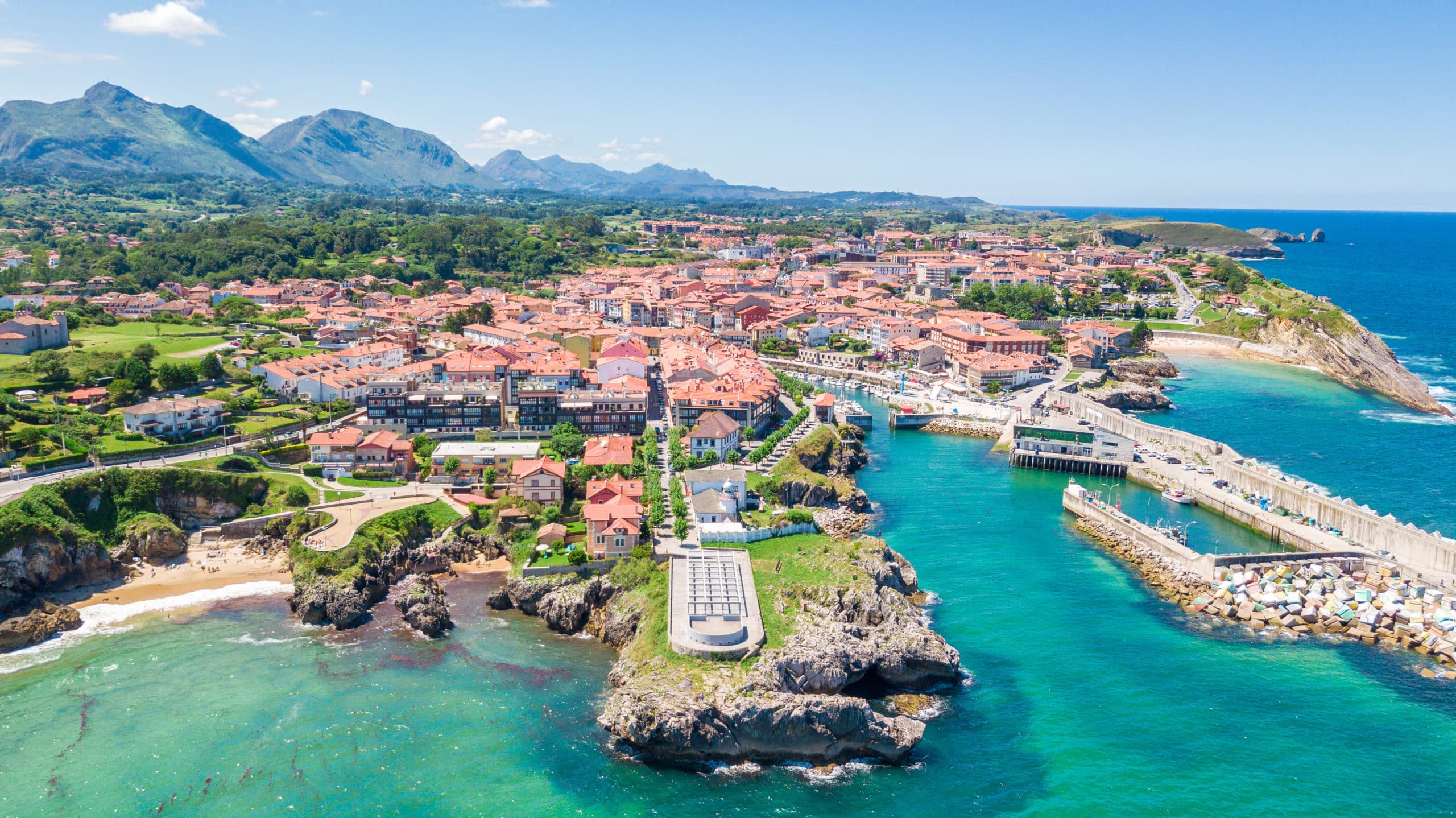
Llanes lies on the shores of the Cantabrian Sea and close to the Picos de Europa, boasting numerous beaches and a well-preserved architectural heritage.
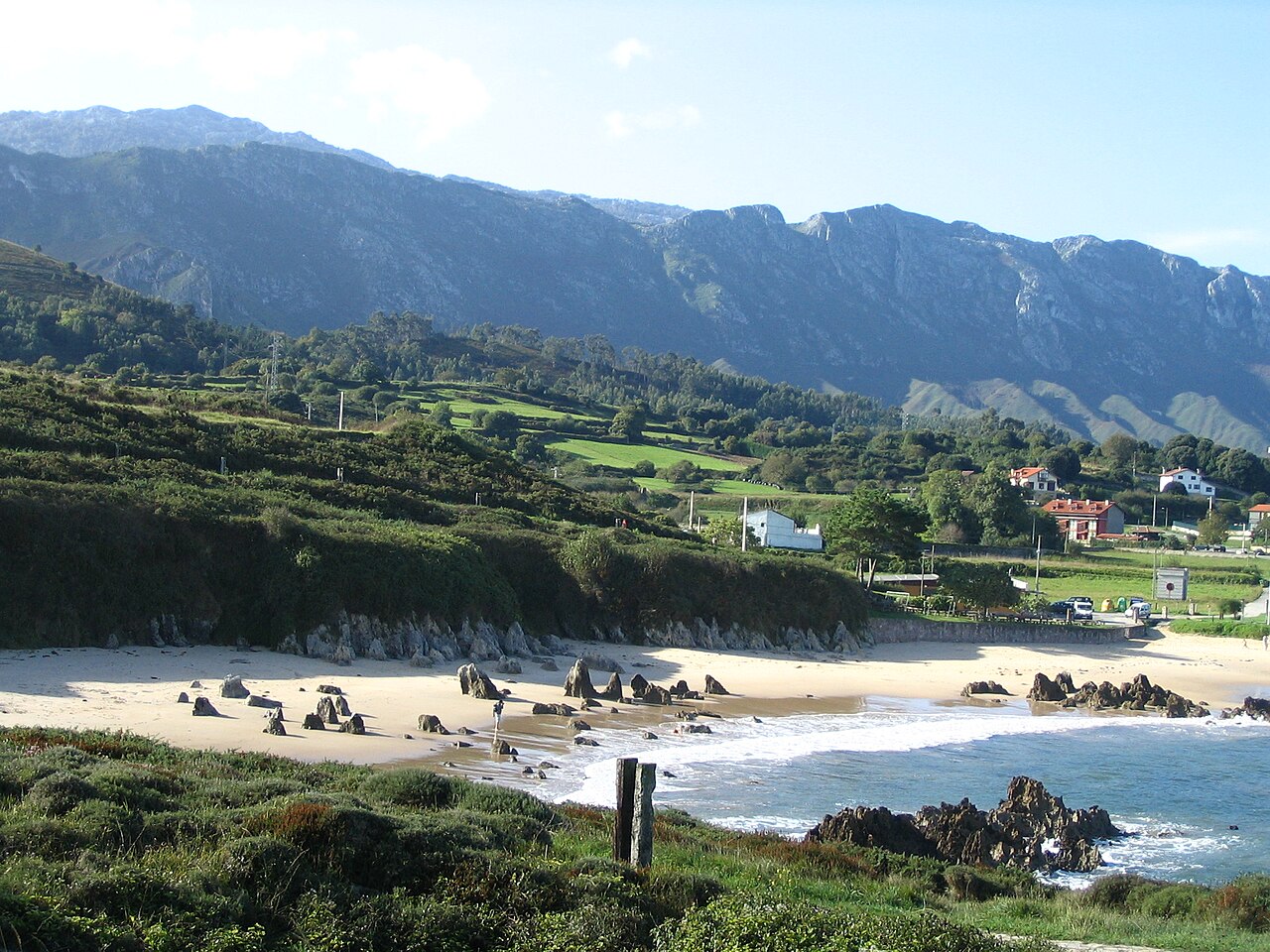
Beach of Toró
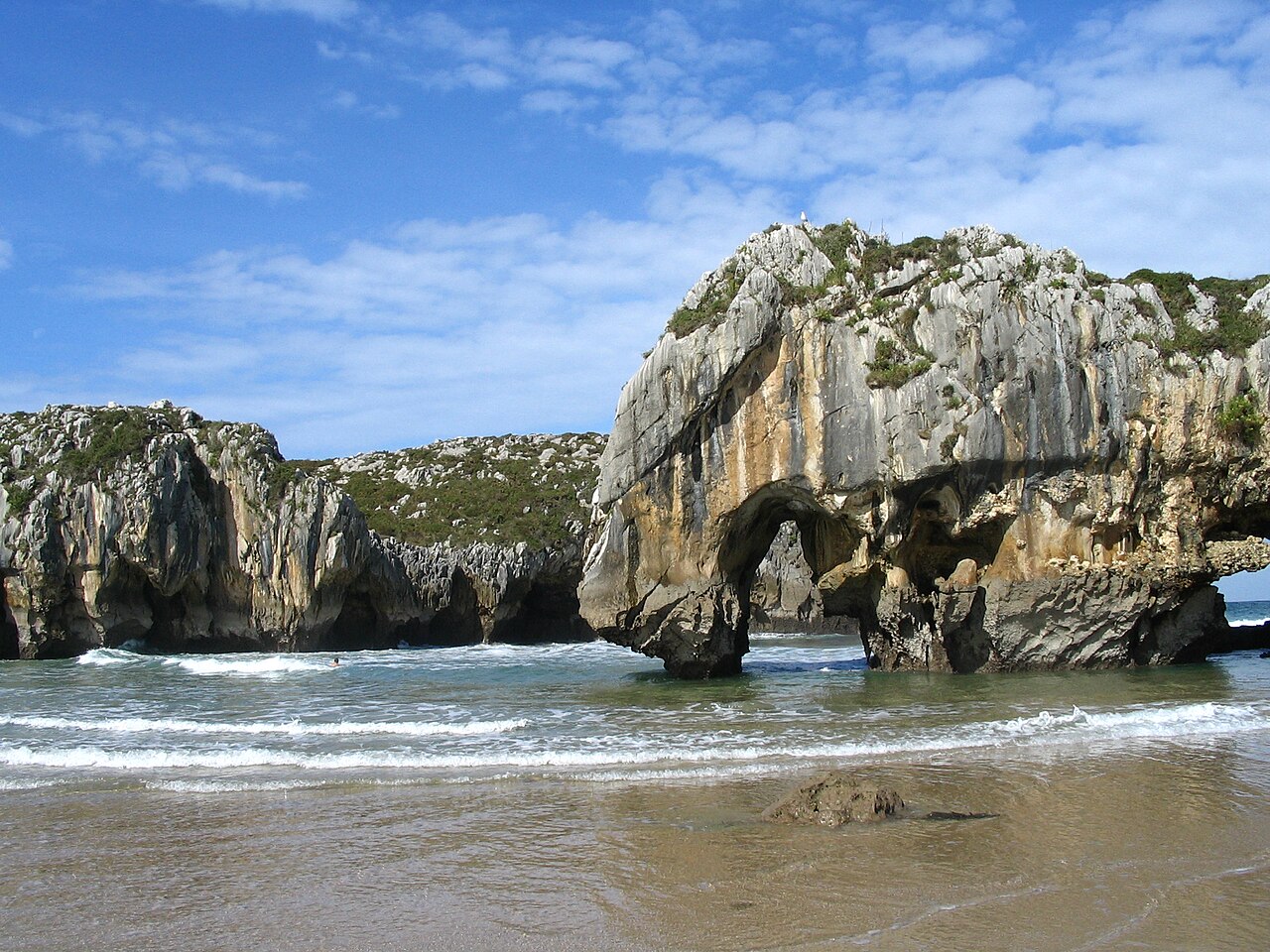
Beach Caves of sea
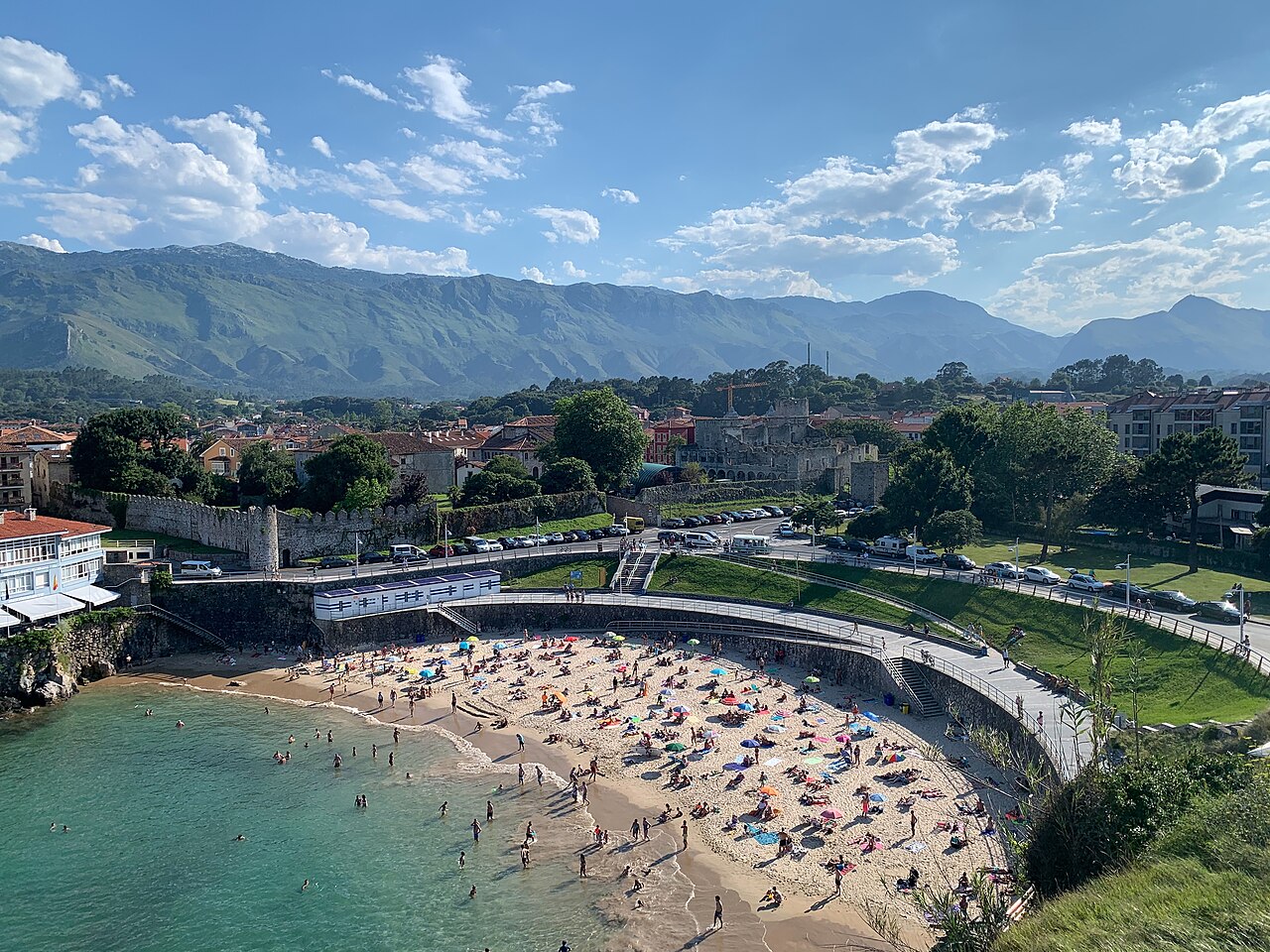
Beach of Llanes
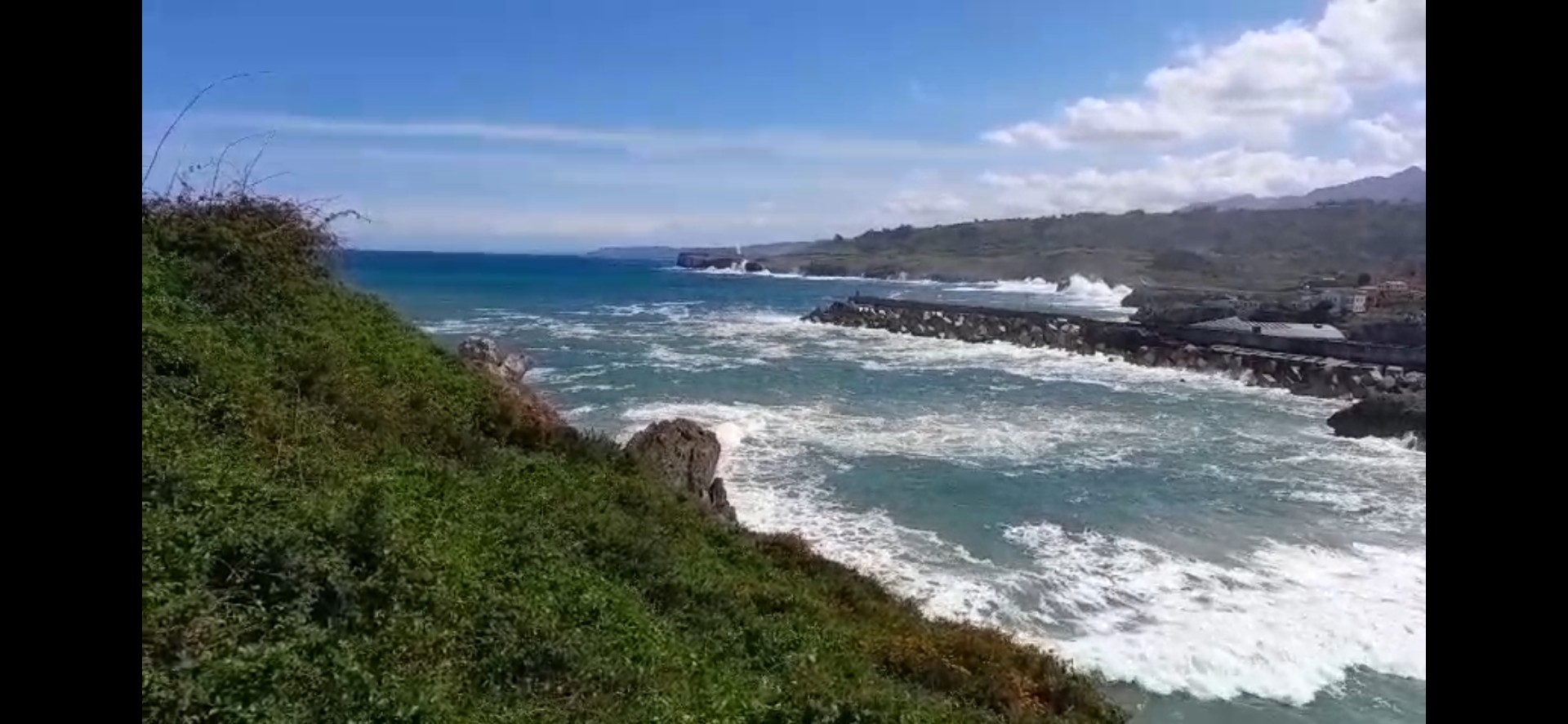
Rocks on the beach at Llanes
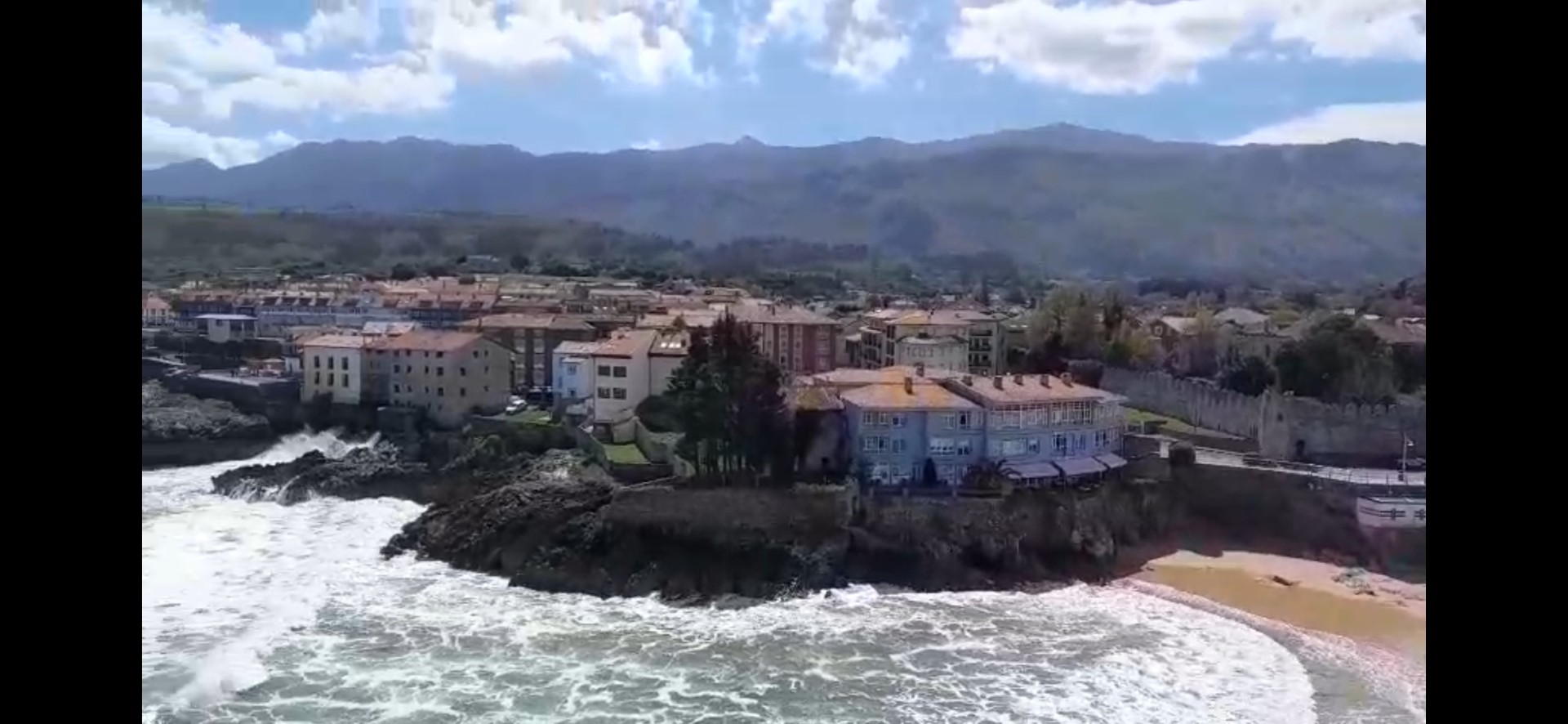
Beach and the town
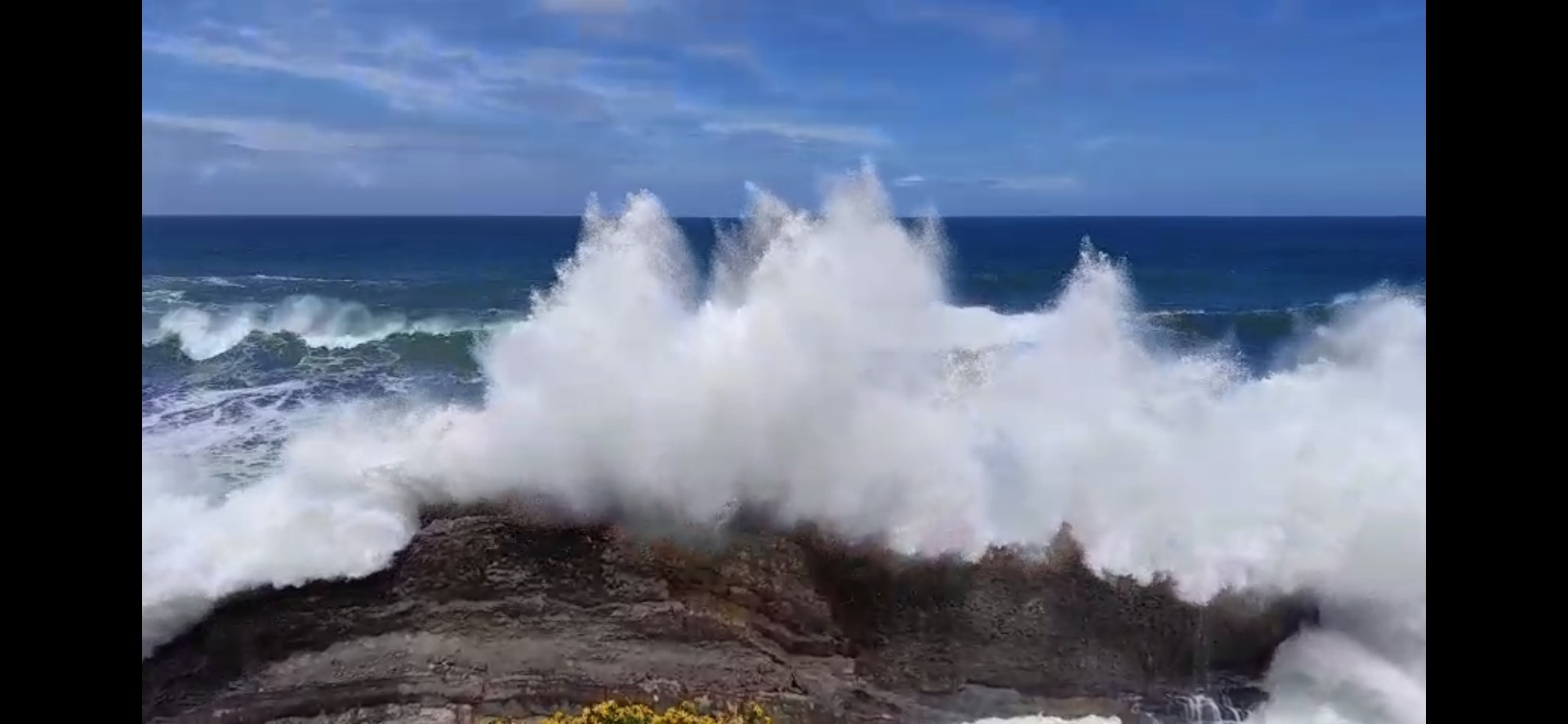
The fury of the Cantabrian sea (a 6-metre wave)
In the 13th century, the settlement known as Puebla de Aguilar was granted a charter by Alfonso IX of León, becoming the town of Llanes.
It is bordered to the north by the Cantabrian Sea, to the south by Onís, Cabrales, Peñamellera Alta and Peñamellera Baja, to the east by Ribadedeva, and to the west by Cangas de Onís and Ribadesella.
At various points along the municipality’s coastline, a geological phenomenon known as a ‘bufón’ can be observed: holes created by erosion just a few metres from the edge of certain cliffs, which are connected to the sea and through which columns of sea water are sprayed by the force of the waves.
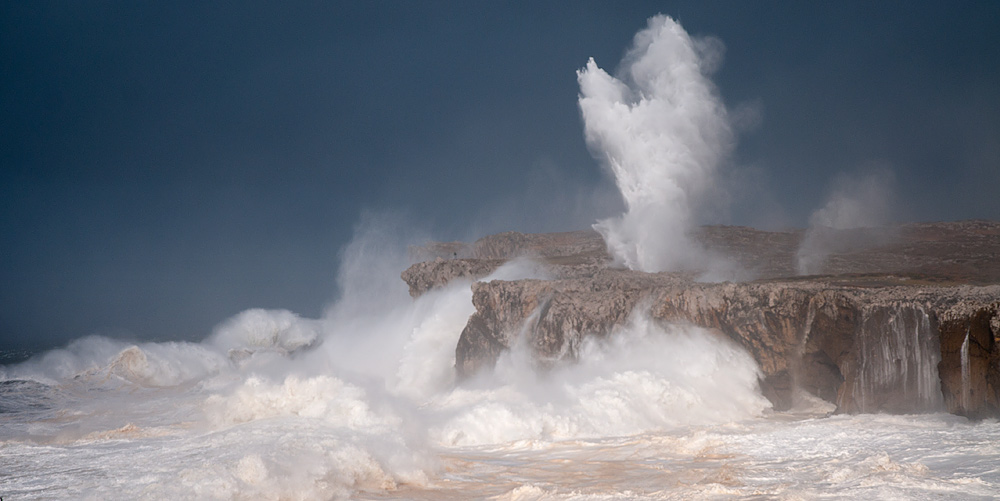
Bufones de Pria
Human presence in this area dates back to the Lower Palaeolithic period, evidenced by a series of stone tools found at La Riera and in the Balmori Cave, as well as remains from the Middle Palaeolithic, such as those in the Arnero Cave, and from the Upper Palaeolithic, such as those found in the Cueto de la Mina caves. It can be said that all stages of our prehistory are represented in the municipality of Llanes. From the Magdalenian period, there are remains in the caves of La Ribera and Balmori. There is a scarcity of remains from the Iron Age, as well as from the pre-Roman and Roman periods, where no remains of hill forts have been found, goddess Manes.
In the Middle Ages, these lands were known as the lands of Aguilar (and the town of Llanes as Puebla de Aguilar); their administrative centre was at Soberrón Castle, situated in the Sierra del Cuera, where its remains are still visible. The administration of the territory was divided amongst religious institutions, with the 12th-century Monastery of San Salvador de Celorio and the local nobility, such as Don Alfonso Suárez and Doña Cristilde, managing a vast estate. Alfonso IX likely granted the town charter to Llanes in 1225 as a means of strengthening the defences of these lands. Later, Alfonso X the Wise granted the town a new charter. The entire town centre was surrounded by a wall, indicating its defensive nature. This wall, begun by Alfonso X, was completed in the 15th century.
Alfonso XI granted them the privilege of holding two annual fairs; this king also granted them their own salt warehouse, as Llanes had a thriving port at that time. Ships from Llanes sailed to ports in Andalusia, Portugal, France, the Netherlands and England. This privilege was revoked by the Catholic Monarchs in 1493. At this time, within the municipal district of Llanes, livestock farming and agriculture formed a fundamental pillar of the local economy.
In the 13th and 14th centuries, this council maintained fraternal ties with other towns in León and Castile as a means of defence against the nobility, as the town passed through various hands; for instance, Henry II bequeathed it to his illegitimate son, Don Alfonso, Count of Noreña. Following several disputes between the count and the crown, the count was defeated and the council of Llanes regained its status as a royal council.
In the 15th century, John II granted this town and that of Ribadesella to Diego Fernández de Quiñónez, as compensation for the confiscation of other towns belonging to him; this family would be expelled from Asturias by the future King Henry IV due to their constant disputes with the crown, and the town was reincorporated into the royal domain under the Catholic Monarchs in 1490. Around this time, Llanes suffered two major fires.
In the 16th and 17th centuries, the Benedictine monastery of Celorio exerted a 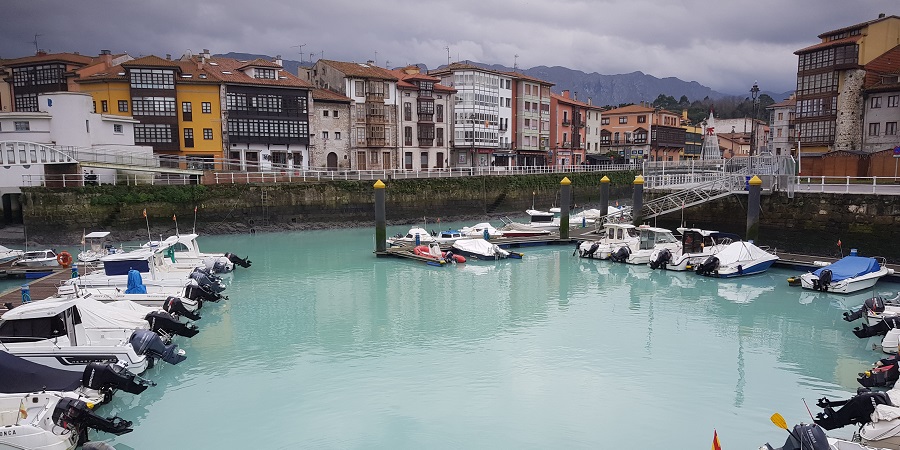
Port of Llanes
In the 18th century, the town’s economy began to decline, partly due to the continuous wars and the introduction of conscription into the Royal Navy, which took 4seafarers to serve in the Royal Navy.
In the 19th century, during the War of Independence, French troops entered Llanes and hostilities began immediately, with Don Blas de Posada commanding the Llanes troops. In 1809, French troops entered Llanes, burning its archives and the palace of the Dukes of Estrada. Llanes fell into French hands several times during this century, notably during the Battle of the River Purón. The Liberal Triennium led to some parishes being established as independent municipalities. In the mid-19th century, the large-scale emigration of people from Llanes to the colonies is particularly noteworthy. The end of the century saw the completion of several projects, such as the San Pedro promenade (built in 1847), the municipal hospital, the covered market, and so on.
In the 20th century, industrial activity was limited. During the Spanish Civil War, major battles were fought on the peaks of the Llanes mountains. The Republican troops were defeated and the council, which had been in the hands of the Popular Front, was conquered by Franco’s troops.
In Llanes, a group of brick-tile craftsmen (Tejeros)emerged who became very popular, and whose work was valued and sought after not only in Asturias but also in León. They would leave the town in groups or teams in May to head for the mountain pastures or villages that had requested their services; they would return home in September. They carried with them the tools needed to make the tiles, which were produced on the very spot where the order had been placed. The people of the hamlets or mountain pastures helped by cutting the vegetation for fuel in the kiln and floor tiles at a rapid pace. The presence of these tile-makers is linked to the decline with tiles, as it was becoming increasingly difficult to find skilled thatchers.
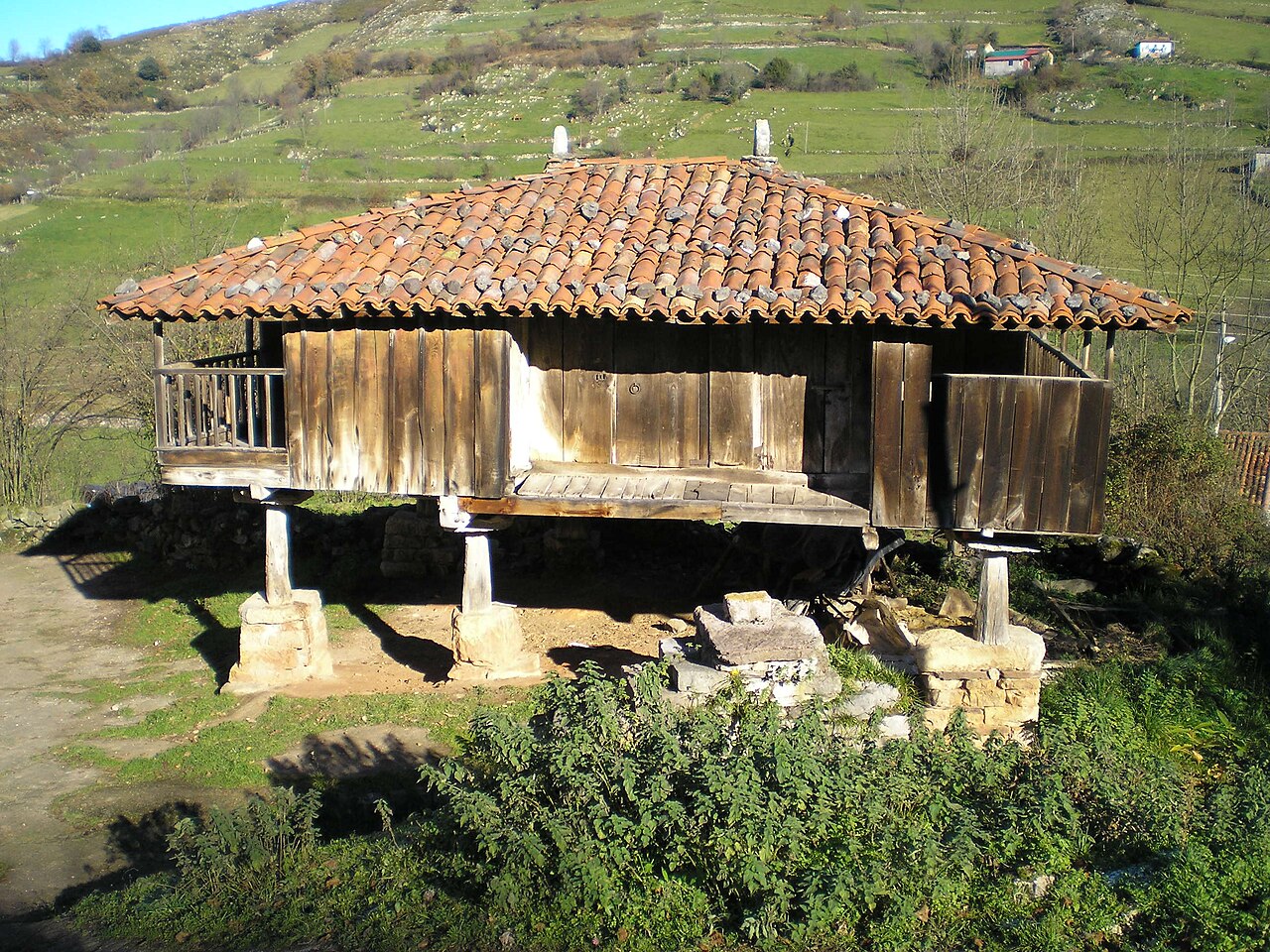
Asturian granary with a tiled roof (named Panera)
The existence of the tile makers of Llanes is documented in the 18th century in the Catastro de Ensenada, which records 950 tile makers:
"There are many farm labourers who work in the tile factory every year, from 4mid-May to mid-September."
Llanes boasts an extensive artistic heritage comprising churches, mansions, 4palaces and houses. Among these, the following stand out:
The Palace of the Count of Vega del Sella, 18th century. The Torrexon de los century. The Convent of the Augustinian Nuns. The monument dedicated to Egido Gavito Bustamante, Mayor of Poo. The Mansion of Sinforiano Dosal. The House of he Lions, Villa Flora, 1906. La Rula, 1935. The Casino Theatre Society. Two m4onuments, in tribute to the Republicans of the Civil War and to the Condor Legion. The Mendoza Cortina Palace. The Partariu Palace.
Llanes boasts outstanding historical monuments and notable traditions. It is a traditional fishing port. It also p4reserves part of its city walls, and within its walls (the historic centre) there are important monuments, such as:
The Basilica of Santa María del Concejo
The House of Rivero
The Palace of the Count of Vega de Sella
The Palace of El Cercado.
Today, Llanes still has an active fishing port and its economy is sustained by tourism. It has shops, restaurants, bars and a wonderful seafront promenade, the San Pedro promenade, on the cliff.
Furthermore, a recent work is worth mentioning: the ‘Cubos de la Memoria’ (Cubes of Memory) by the Basque painter Agustín Ibarrola. This is an original, somewhat controversial idea, in keeping with Ibarrola’s style, which involved painting the concrete blocks protecting the town’s harbour with various motifs.
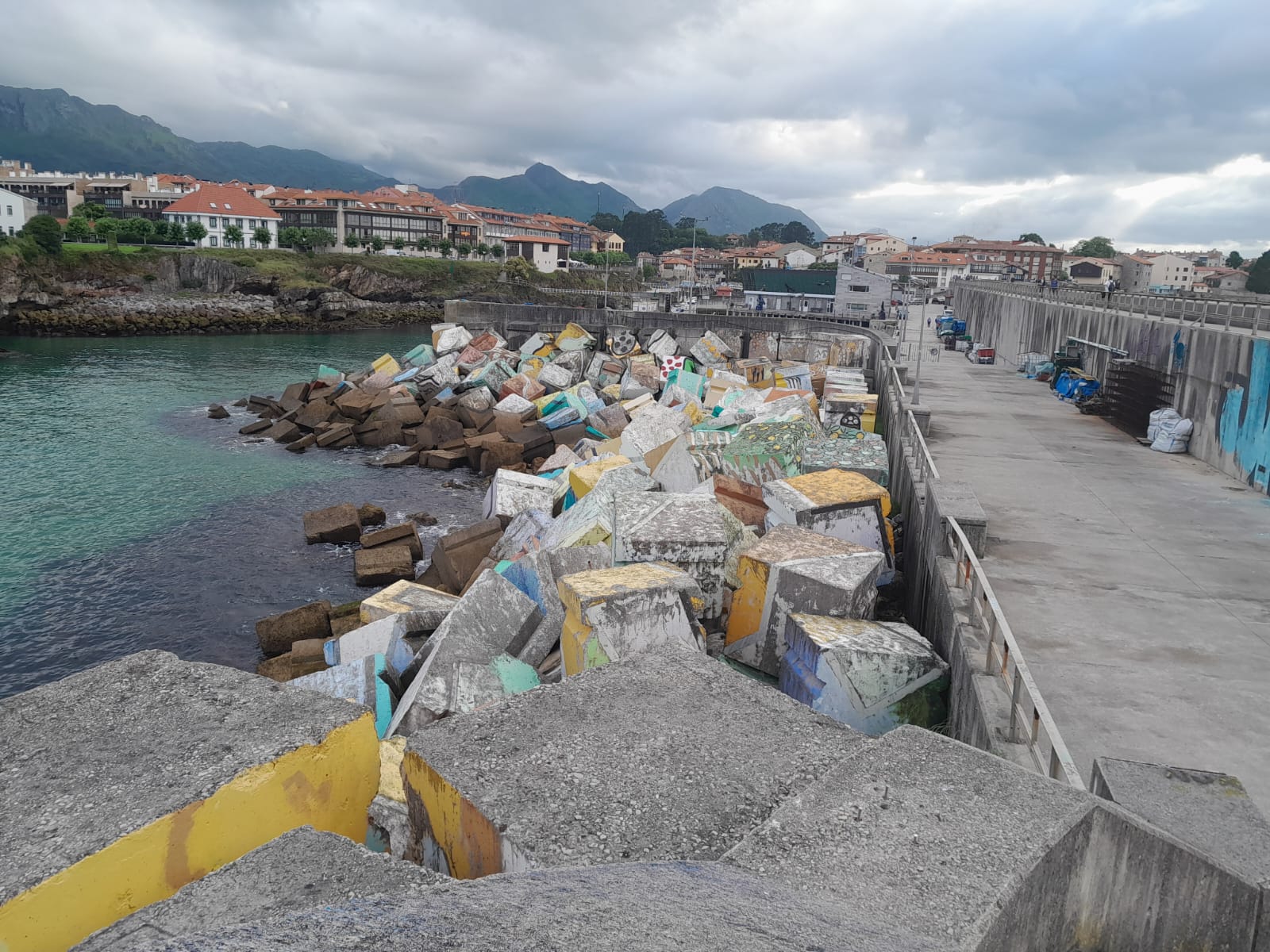
Cubes of memory
Llanes’s cuisine features dishes such as ‘langosta a la llanisca’ (Llanes-style lobster), baked sea bream and sea bass, ‘verdinas con marisco’ (green beans with seafood), ‘fabada asturiana’ (Asturian bean stew), ‘pantruque’ (a dish made from cornmeal and bacon) and desserts such as ‘arroz con leche’ (rice pudding) and ‘casadielles’.
You can also order the typical ‘Cachopo’ (two large veal fillets, traditionally stuffed with Serrano ham and cheese, coated in flour, egg and breadcrumbs, and finally fried.
And one very typical event in Llanes is the river fishing competition to catch the first salmon of the year, known as the ‘Campanu’. It is known by this peculiar name because, years ago, when the first salmon was caught, all the churches would ring their bells to announce the event.
In 2025, the fisherman Javier Bueno caught a salmon weighing 6.89 kg and measuring 83 centimetres. He caught it in the River Narcea.
The restaurant ‘La Finca’, in Oviedo, purchased this Campanu from 2025 and paid 10,000 euros for it.
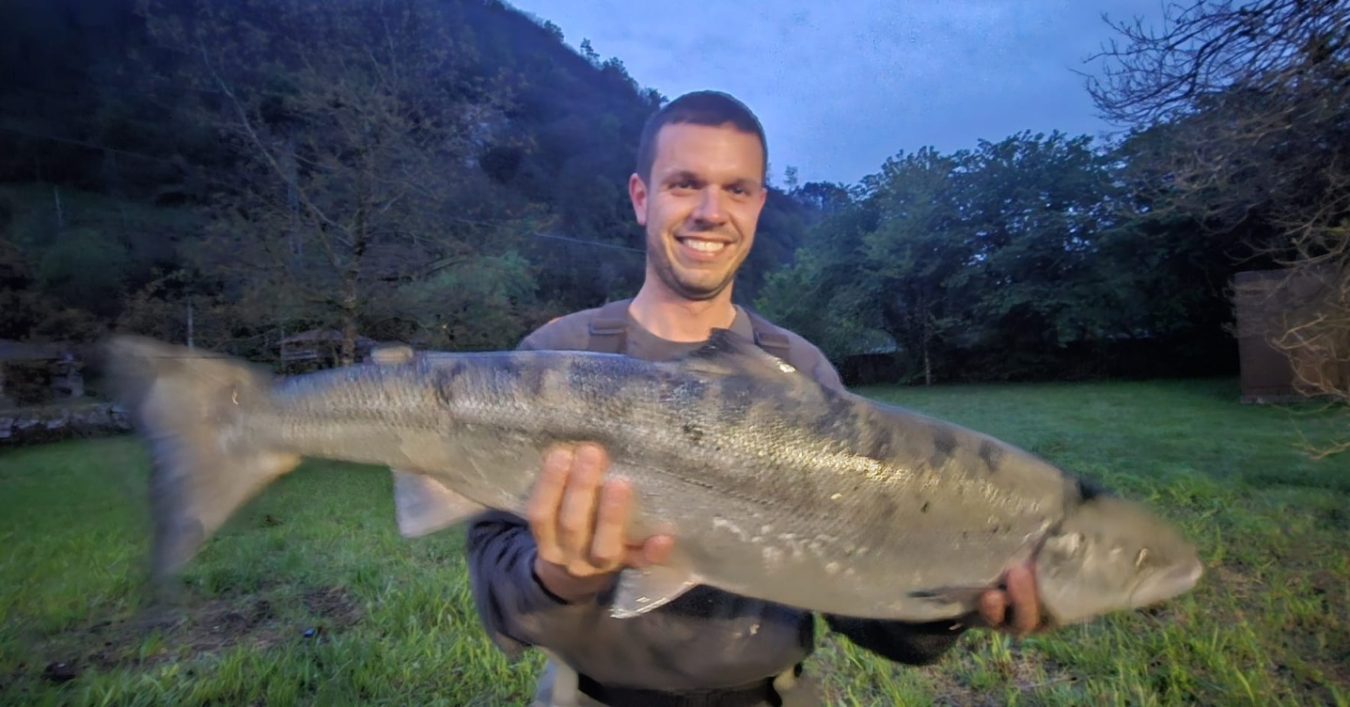
Javier Bueno with the Campanu (2025)
This year’s competition will take place from 18 April to 5 July.
How can you get to Llanes? :
By road (A-8): Llanes is well connected via the Cantabrian motorway, which links the Basque Country with Galicia via Asturias.
By bus (ALSA): There are regular services from cities such as Gijón, Oviedo, Santander, Bilbao and even Madrid.
From Santander Airport (the closest to Llanes): About 90 km from Llanes. Ideal for flying in from other Spanish or European cities.
Car hire: A convenient option if you’re arriving by air or want to explore the area at your own pace.
Access from the Northern Way: Many pilgrims arrive on foot, as Llanes is a key stop on this route.
Well, I hope you’ll be able and willing to visit Llanes and other towns in Asturias to enjoy their scenery, cuisine and other wonders.