Be healthy and be happy in Spain
Thursday, July 30, 2020
A few days ago, the British Government made the decision to force British tourists to be quarantined upon returning home from Spain. This seemed to me very hard news, for British tourists and for tourism entrepreneurs in Spain. Now I will explain my point of view.
It is true that now in Spain there are many sprouts of Covid-19; but, when I see the News, on television, they always say that the outbreaks have occurred in "Nightlife" (in private parties, botellon, etc.). Note: "Botellón" is a massive gathering of young people to drink cheaper than in a disco. This is a big problem, because young people usually don't want to wear a mask when they go out to have fun at night; nor do they want to keep their distance from other young people. I think that the authorities should ban this type of party.
For example, the celebration of a soccer victory is a problem, as happened in July 2018, when England beat Sweden, to advance to the Champion Semifinals.

English people watching a football match

Too much young people gathered in a botellon
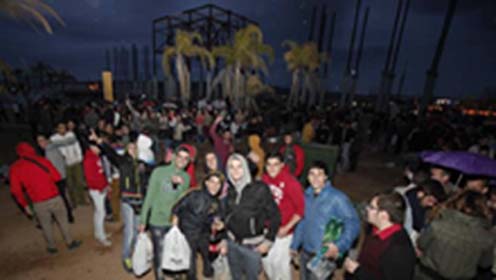
Some young people laughing and without any mask in a botellon
Young people seems not to be afraid at night:

Look at so many people in a botellon
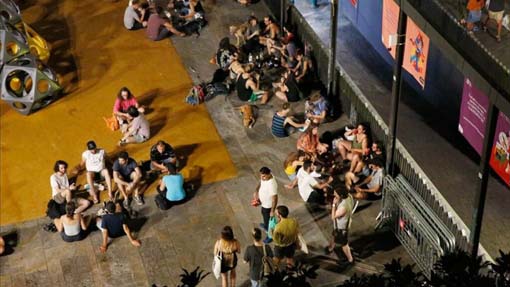
Any other young people in a botellon

So many people in a disco
However, I have never heard of a new outbreak appearing in a supermarket, or in a pharmacy, or on a street; no, because, in those places, almost everyone has a mask and keeps the social distance, which the Spanish government asked us to do. So I think that if we listen to what the experts recommend, we should have no problem.
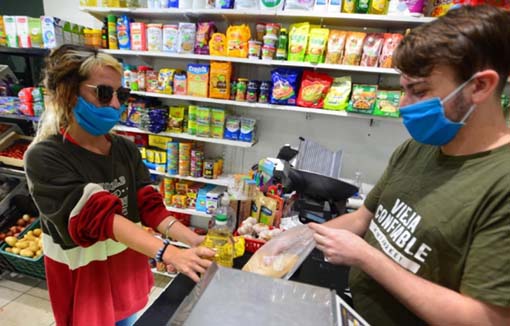
At the supermarket
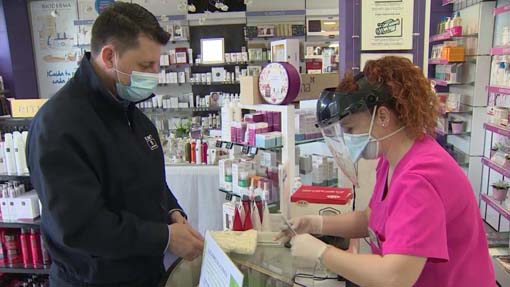
In the pharmacy
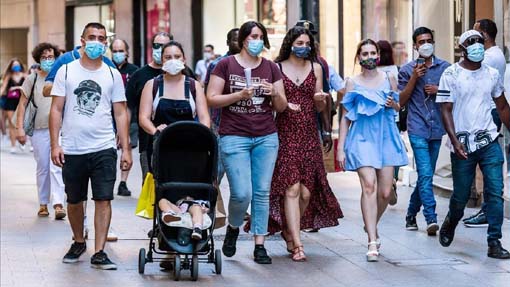
Some girls on a street
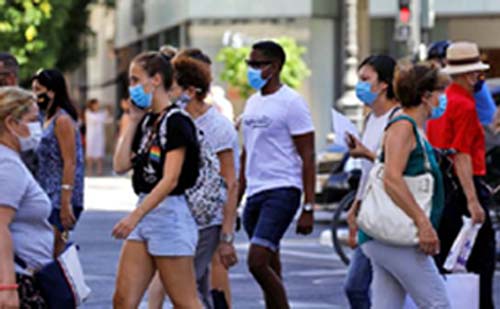
More young people on a street
Another group of young people
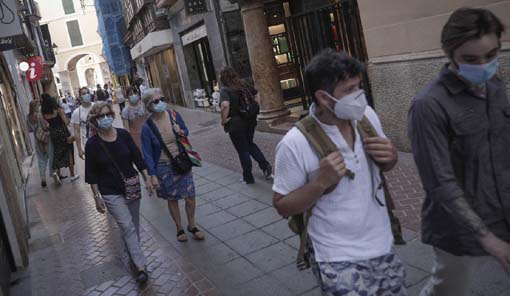
People of different ages on a street of Mallorca
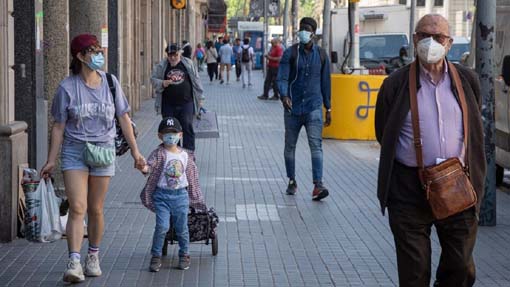
More people wearing a mask and keeping their distance
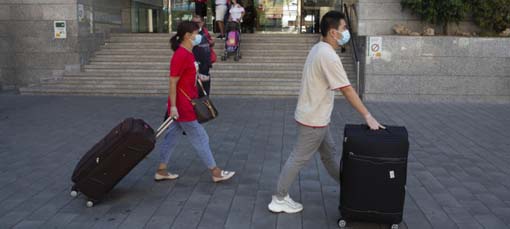
Tourists with mask on arrival in Spain

A hotel cleaner cleaning a room

Two tourists driving along the promenade in Benidorm

An old couple with a mask on a beach of Benidorm
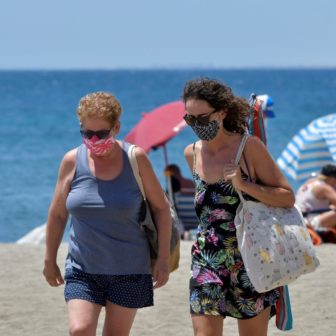
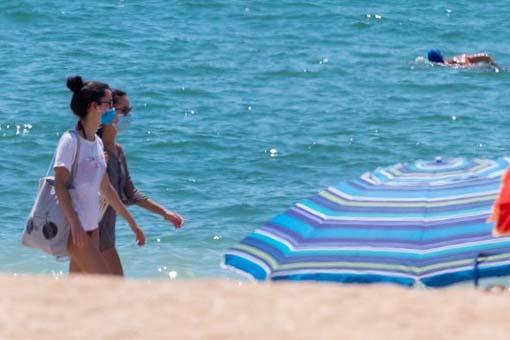
Young people with a mask too
Therefore, I hope that the British Government will think about the decision and trust to Spain. And if you decide to come to Spain --or if you live here-- please be healthy and be happy.
Until my next post, kind regards,
Luis.
Please click below:

 1
Like
Published at 1:16 AM Comments (0)
1
Like
Published at 1:16 AM Comments (0)
A fish recipe in Spain for this summer
Sunday, July 19, 2020
Today I would like to show you a recipe called "Monkfish and zucchini with chorizo pepper sauce", by the great Spanish chef, Karlos Arguiñano.
Karlos Arguiñano says that: "A monkfish is a white fish that contains proteins of high biological value, and that has many vitamins and minerals that make this dish a tasty and healthy menu".
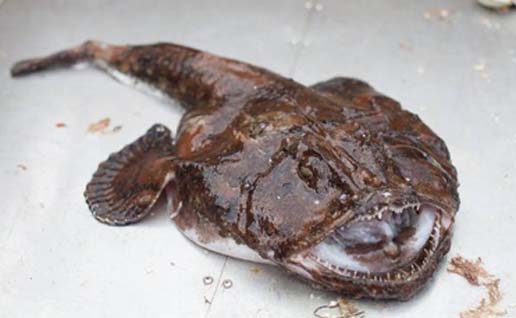
A monkfish

Monkfish tails
These are the Ingredients for 4 people:
1 monkfish tail (500 grams)
1 zucchini
4 cloves of garlic
2 red onions
1 apple
5 dried red peppers
20 grams of breadcrumb
100 milliliters of white wine
Flour
I beaten egg
Extra virgin olive oil
Salt
Parsley

A green zucchini

Cloves of garlic

Red onions

Apple
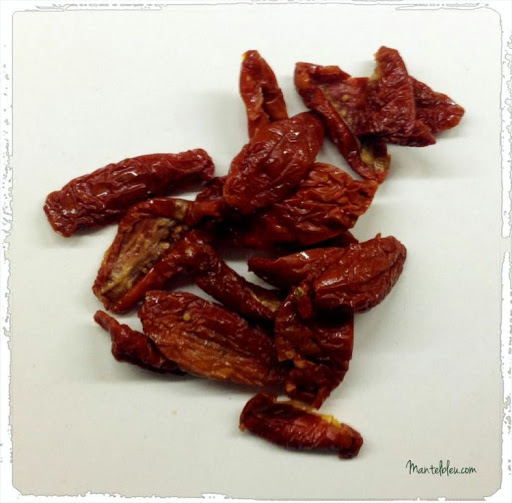
Dried red peppers
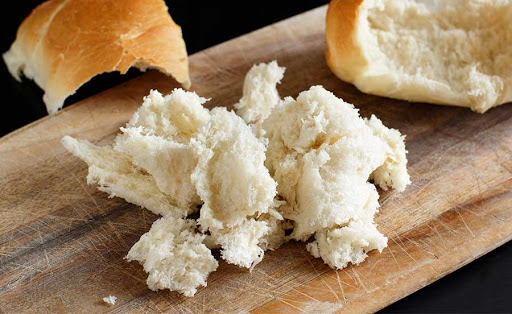
Breadcrumb

White wine

Flour

Beaten egg

Extra Virgin Olive Oil

Salt

Parsley
And this is the elaboration of the recipe:
Remove the stems from the dried red peppers. Put them in a saucepan and cook them for 20 minutes. Move away, take the meat out and reserve it. Also reserve 400 ml of the cooking water from the dried red peppers.
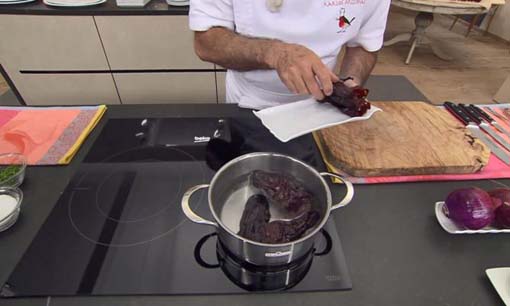
Arguiñano is cooking the dried red peppers
Peel the garlic cloves, cut them into slices and brown them in a saucepan with a little bit of olive oil. Peel the red onions, dice them and add them. Sauté the onions until golden. Peel the apple, remove the core, cut it and add it. Also add the meat of the dried red peppers, the breadcrumbs, the white wine and the cooking water of the dried red peppers. Cook the sauce over medium heat for about 20 minutes. Transfer it through the food mill to a saucepan and keep it warm.
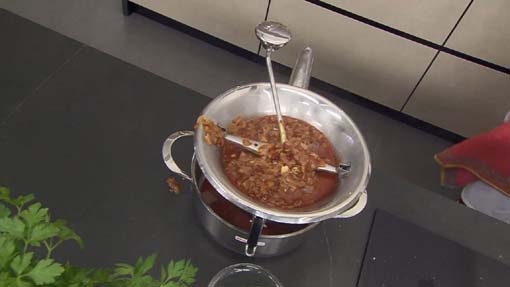
The sauce from the food mill
Wash the zucchini and cut it (with skin) into half centimetre slices. Season, coat them with flour and beaten egg and fry them in a pan with oil. Remove and drain them on a plate covered with absorbent kitchen paper.
Cut the fish into fillets ½ centimetre thick. Coat them with flour and beaten egg and fry them in the same pan where you fried the zucchini. Drain them on a plate covered with absorbent kitchen paper.
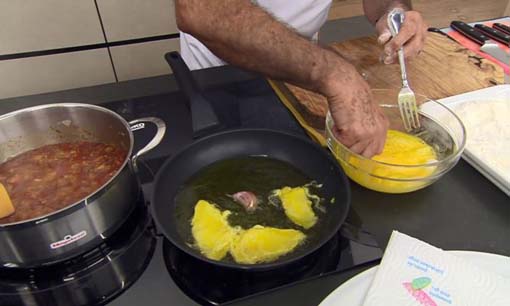
Arguiñano is frying the fish
Serve on each plate a little bit of sauce and a few pieces of fish and a few pieces of zucchini. Decorate the dishes with some parsley leaves.
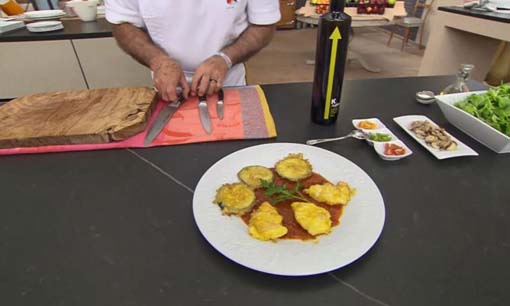
Arguiñano has decorated the dish

And this is the dish up close
Well, I hope that you have liked this recipe and hope that you will try to cook it very soon.
Until my next post, kind regards,
Luis.
Please click below:

0
Like
Published at 12:10 AM Comments (1)
New cold meat shop in southern Spain
Thursday, June 25, 2020
Today I would like to talk to you about the "Cold meats Guijuelo by Isaías Hernández", which has opened a new shop in Algeciras (Cádiz).
The company ISAIAS HERNANDEZ VARAS, S.L. has its factory in Campillo de Salvatierra (a district of Guijuelo, in the province of Salamanca, northwest of Madrid).
The meat products industry, in the Guijuelo region, is one of the most important in Spain, dedicating a large part of the population to it. You can speak of Guijuelo as a privileged population economically, with one of the per capita incomes highest in Spain.
Iberian pig hams and cold meats are famous and of great quality, although they come from a large part of the Extremaduran and Andalusian meadows, they find here the ideal place for their curing, thanks to a characteristic cold and dry climate.
In the municipality there are 173 companies dedicated to the industry, mostly to the food industry related to ham and cold meats. But, as I said to you at the beginning, I would like to tell you about the company of Isaias Hernandez.
As I said at the beginning, the Isaias Hernandez Cold meats factory is located in Campillo de Salvatierra. Here you can see a map, with Campillo de Salvatierra on the left side:
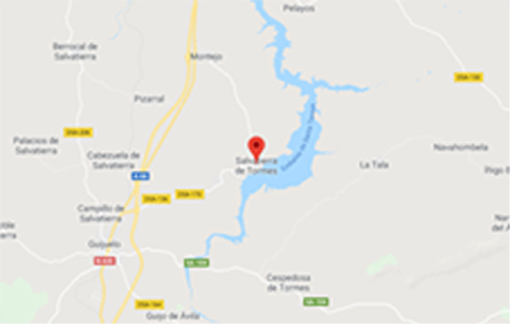
A map of Campillo de Salvatierra
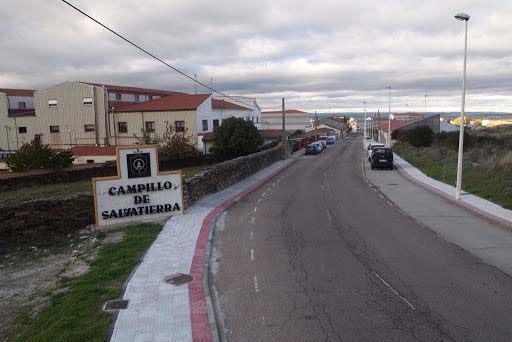
The entrance to Campillo de Salvatierra
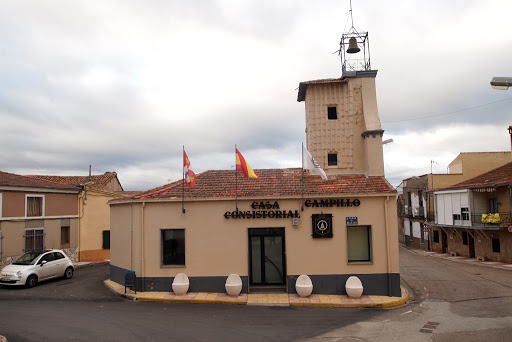
The Town Hall of Campillo de Salvatierra
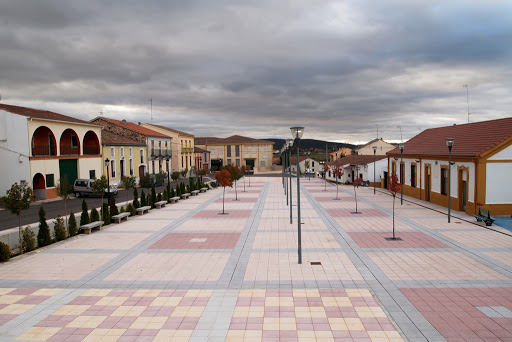
Plaza Mayor of Campillo
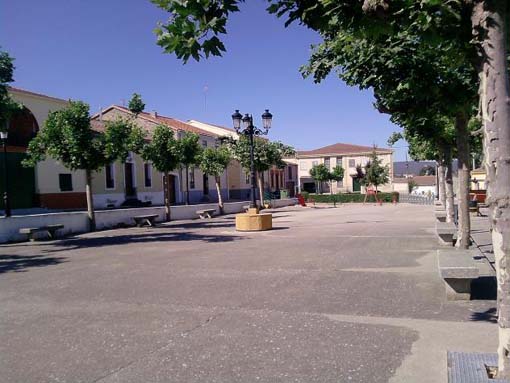
Another square of Campillo de Salvatierra
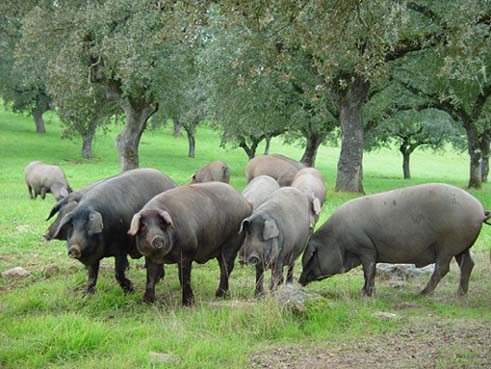
Pigs eating acorns in the Guijuelo region
Here you can see the Factory of the company:
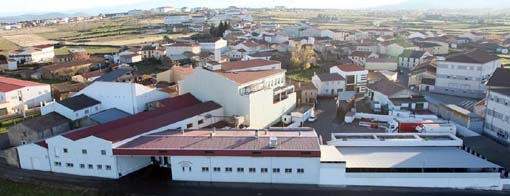
The Factory of Embutidos Guijuelo
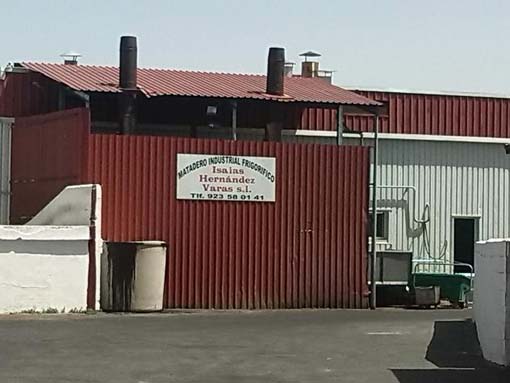
Factory slaughterhouse
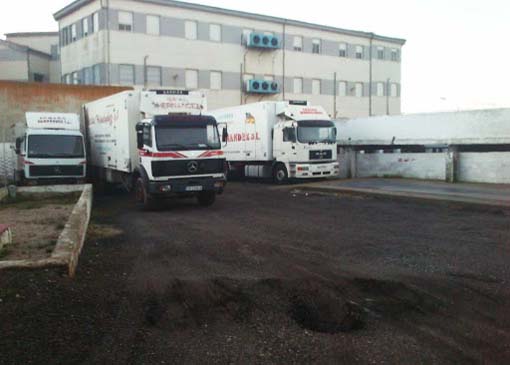
Trucks waiting at the factory
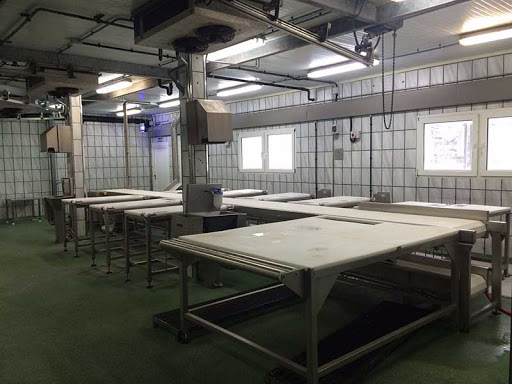
Cutting room
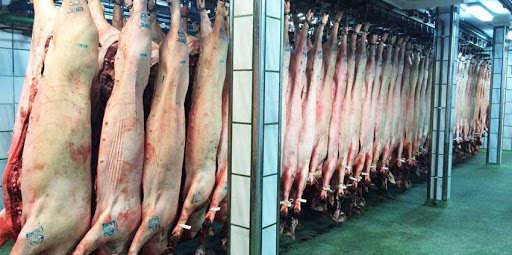
Some pigs prepared for cutting
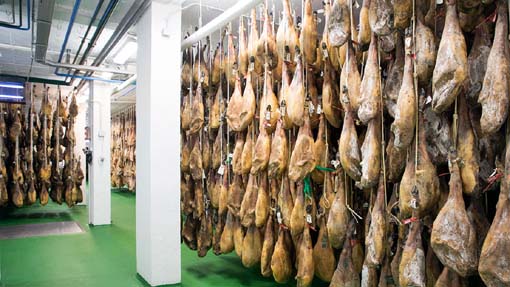
Ham curing room
On Saturday July 12, 2019, Campillo celebrated its Festivities in honor of the Virgen del Carmen and the women of the village carried the Virgin in procession, from the church of San Andres to the Plaza Mayor.

Procession of the Virgen del Carmen
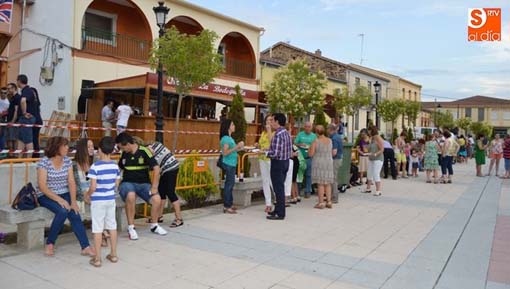
Celebration with ham in the Festivities of the Virgin
In the Guijuelo region, there are several companies dedicated to the elaboration of pork products; but as I said to you at the beginning, I would like to speak to you only about ISAIAS HERNANDEZ VARAS S.L. This company has several shops in Spain --and specifically in Andalusia it has a shop in Chiclana (Cádiz), in La Linea de la Concepción and another one in Algeciras (Cadiz) --.
Until this month, the shop of Algeciras was situated in the Ancha Street; but, since two weeks, it has changed its place to a passageway, located next to the previous shop. On the next image, you can see the old shop closed, beside the passageway, on the left side.
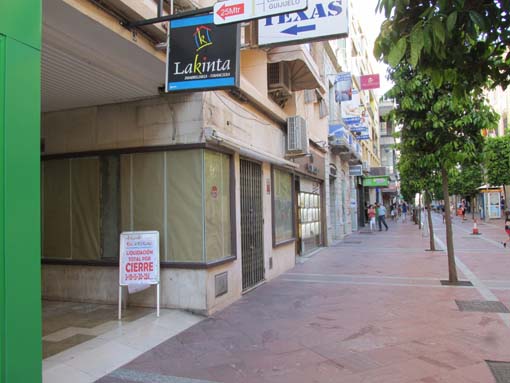
Regino Martinez (Ancha) Street, 5.
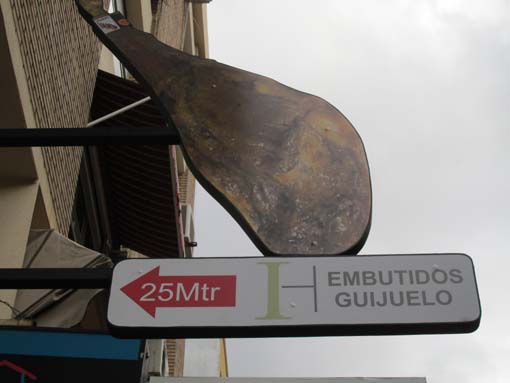
Arrow indicating the way to the new shop
You must go to the bottom of the passageway and turn right, to find the new shop.
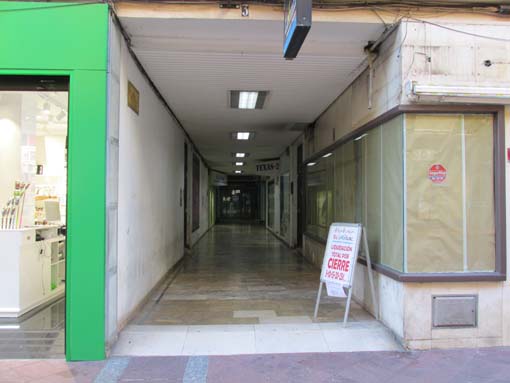
The passageway
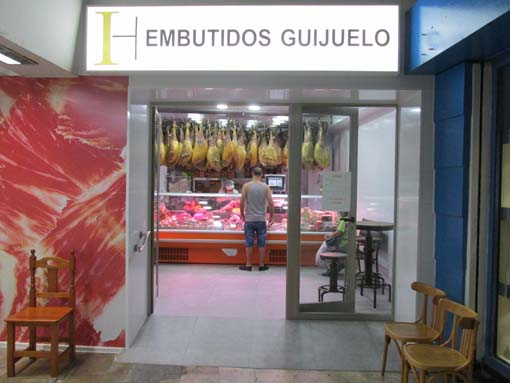
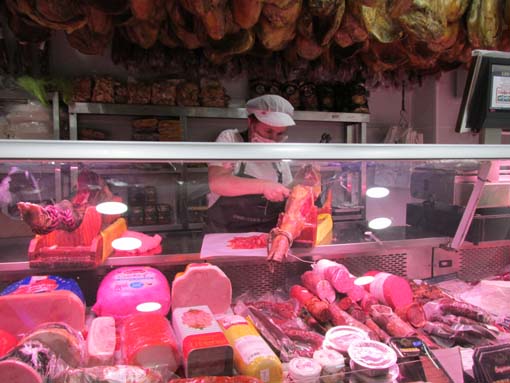
The new shop
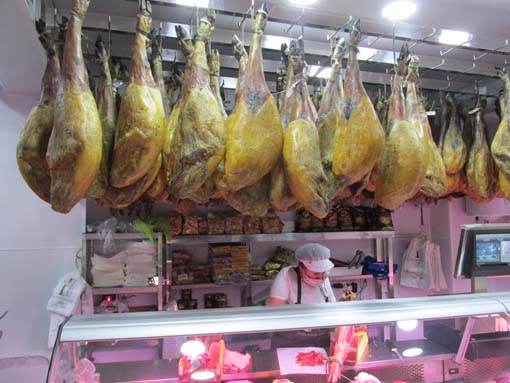
Some hams hanging in the shop
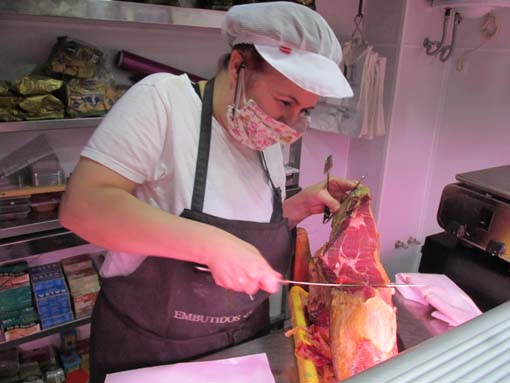
Susana cutting ham with a great mastery
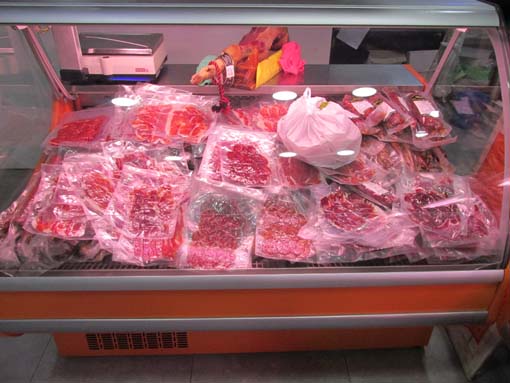
Ham, loin and chorizo vacuum packed
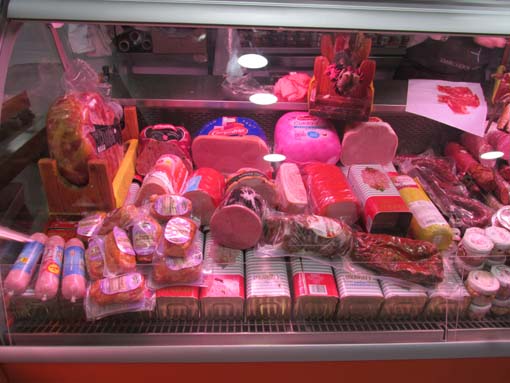
Mortadella, chopped, turkey and other cutting products
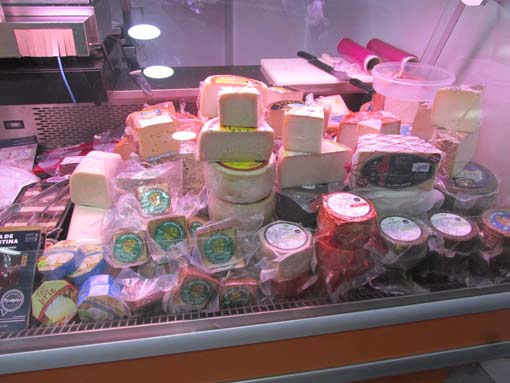
Several cheeses to carry
if you want to buy any cold meat online, you must call by phone or enter the company's website --and enter Contacto: www.embutidosguijuelo.com --. Algeciras shop phone number: 956 66 95 06.
Well, I hope that you will like this article and hope that you will buy something of those products to enjoy something typical of Spanish gastronomy.
Until my next post, kind regards,
Luis.
Please click below:

0
Like
Published at 2:40 AM Comments (0)
A Spanish cardiologist discovers how to do complete electrocardiograms with an Apple Watch
Tuesday, January 21, 2020
We already knew that new technologies help us to have a more comfortable and advanced life, in many fields --such as Science, Medicine, Automotive, etc--; but what we do not know is the limit that the creation of new devices has --perhaps there is no limit--.
Well, it has been a Spanish doctor who has discovered an important utility of the "Apple Watch" smartwatch. Indeed, the cardiologist of the San Carlos Clinic Hospital in Madrid, Miguel Ángel Cobos, has discovered that complete electrocardiograms can be done with Apple smart watches, called Apple Watch, series 4 and 5, with a reliability index similar to of those made in health centres.

Miguel Angel Cobos

Apple Watch
This discovery, which was published last November, in the “Annals of Internal Medicine” magazine, was made fortuitously when he played with the Apple Watch, that he had given his wife, and wanted to check if he could do it, as indicated by the Manufacturer, an electrocardiogram.
Although the watch already comes with an application that, thanks to electrodes, records cardiac activity for 30 seconds, it is not able to detect the symptoms of a myocardial infarction, since for this, as a conventional electrocardiogram does, it is necessary to obtain twelve derivations of the electronic activity of the heart.
However, the doctor, who has said he has "no relationship with Apple", has found that if the Apple Watch is placed on the left wrist, then on the leg, where the derivations of the limbs are obtained, and finally in different points of the thorax, where the precordial leads are recorded, a good result is obtained.

The Apple Watch on the leg
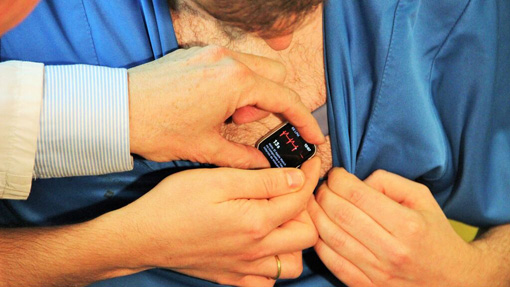
The Apple Watch on the thorax
"In this way it is possible to have an electrocardiogram similar to a conventional electrocardiograph" , he said, to highlight that this finding will allow anyone to make themselves, or any other and anywhere, a complete electro that, interpreted by a cardiologist, could reduce the number of visits to the emergency services.
In addition, it can help to gain time in clinical decision making in a "delicate or borderline" situation, such as a heart attack. In fact, and according to the checks made by Dr. Cobos, the results are similar to those obtained with conventional equipment, both in healthy people and in those with a heart condition.
"It is an absolutely relevant finding that demonstrates that technologies applied to health are advancing at a dizzying speed and that they can play a very important role in care, diagnosis and monitoring", said the Minister of Health of the Community of Madrid, Enrique Ruiz Escudero.

Enrique Ruiz Escudero
Well, I hope this invention can help many people around the world.
Until my next post, kind regards,
Luis.
Please click below:

0
Like
Published at 11:13 PM Comments (0)
Another Spanish saying and proverb 85
Wednesday, January 15, 2020
Today I would like to show you a very popular Spanish expression: "De bigote", which would literally be: "Of moustache".
In the Dictionary of the Royal Academy of the Spanish Language, the idiom "Man with a mustache" is registered, as a punctual complier of his obligations, and "Man with the moustache to the eye" is also registered, referring to what, by arrogance, makes that the twisted tip of the mustache points to the same eye, but the "moustache" idiom, --not more, nothing else--, as a magnifying expression of whatever --man, thing, circumstance, etc.-- is not yet included in the Dictionary of the Language, for more than, since the days of the Civil War, as Iribarren (a Spanish poet) points out, it enjoy great pedicament, in colloquial language. For example: "Have you seen the Ferrari that Trespalacios bought?, impressive, kid" = "¿Has visto el Ferrari que se ha comprado Trespalacios?, de bigote, chico". It is also said, for example: “It is absolutly freezing" = "Hace un frio de bigote"..

Man with the moustache to the eye
Well, I hope that you will like this article.
Until my next post, kind regards, Luis.
Please click below:

0
Like
Published at 12:04 PM Comments (0)
An investment group from England has a tourism project for southern Spain
Monday, December 23, 2019
An English investment group projects a rural tourist complex, in Jimena (Cadiz, south of Spain), creating a gastronomic center for agricultural, livestock and hunting products in the area, five rural houses, a luxury campsite and a four-star hotel. The project is named: “International Rural Tourism Center”.
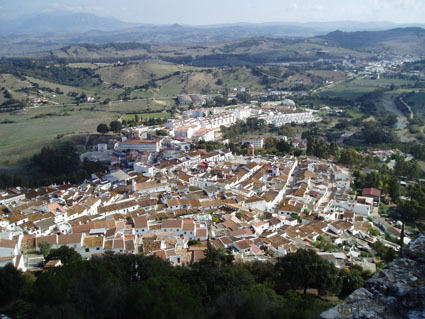
General view of Jimena
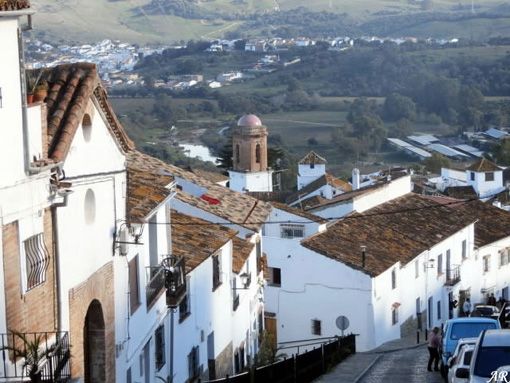
Jimena up close
The project aims to provide a boost for tourism activity, in the municipality, and will be developed in three farms: Canuto Largo, Los Canutos de Boga and Las Jarillas, all of them owned by the Virginia Spain Group, which belongs to Knightsbridge Investment.
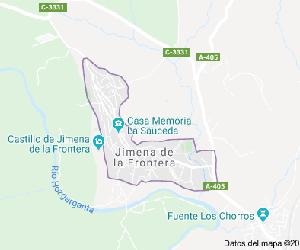
Investment zone
The land is located west of San Pablo de Buceite and north of Jimena, within the Natural Park of the Alcornocales, in a perfect place for rest, where there are magnificent views for hiking and all kinds of rural tourism activities and ecotourism.
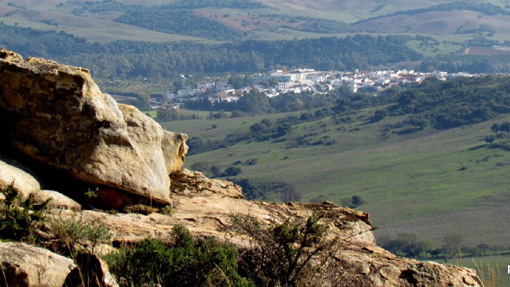
San Pablo de Buceite from Canuto Largo
Park of the Alcornocales (Park of cork oaks):
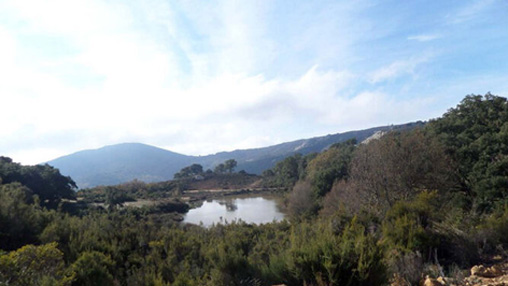
The Alcornocales
In Vega Barría, within Las Jarillas, a space outside the Natural Park dedicated to organic farming, it is intended to locate a center for the processing and manufacturing of agricultural, livestock, hunting and other farm resources. It will be designed in the style of a large Andalusian farmhouse and will have different areas for cooking, catering, visitor center, product exhibition areas, kitchens, warehouses, terraces and outdoor patios for the use of visitors.
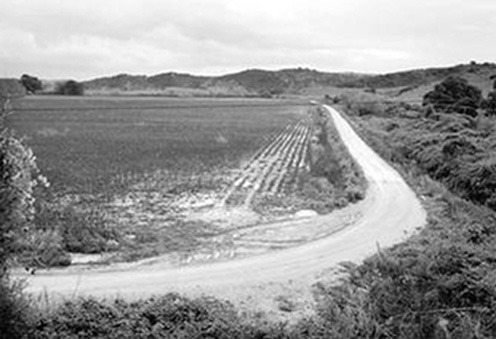
Vega Barría
Nearby is planned to build a rural hotel for students of the kitchen workshop and other visitors of the municipality that will have twenty rooms on two floors, with gallery-style access, dining areas, bar, terrace, barbecue, kitchens, warehouses, changing rooms for Employees and laundry. Everything will be designed to comply with the four-star tourist regulations. In addition, around the hotel there will be ten spaces to install a luxury campsite, whose customers will also enjoy the services and facilities of the hotel and nearby there will be a helipad (in the farm Las Jarillas).
In order to accommodate the visitors, the construction of five rural houses, grouped in as many farm-shaped complexes, is proposed. These buildings will be located in the Canuto Largo and Los Canutos de Boga farms, specifically in the place where a construction currently exists.
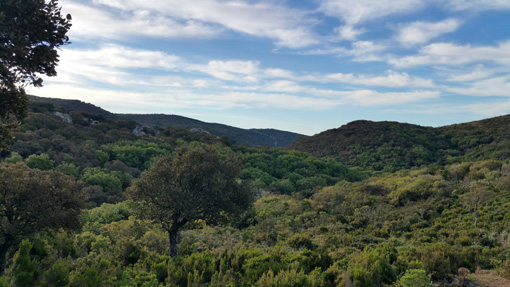
Another view of the Game Reserve of Los Alcornocales
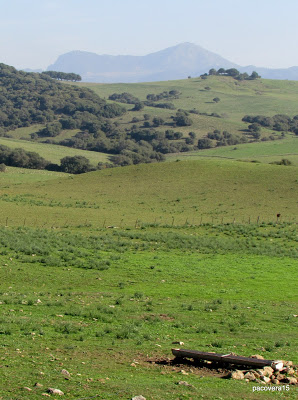
Area to Canuto largo
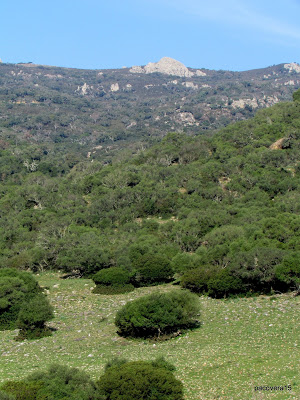
Another area going to Canuto Largo
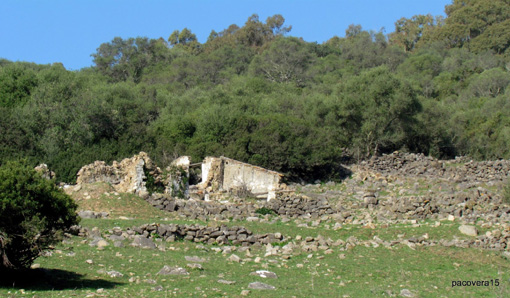
Walk to Canuto Largo
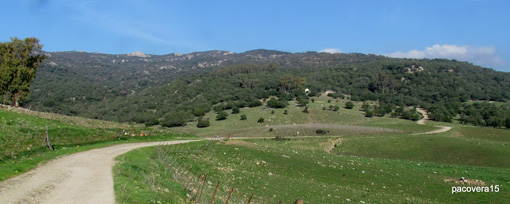
Another view of the walk of Canuto Largo
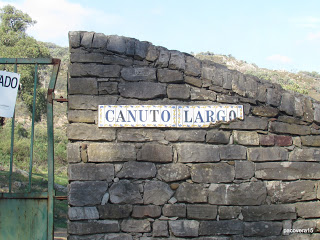
Entrance to Canuto Largo
The project contemplates that, to minimise any environmental and landscape alteration, the buildings, that are built within the Natural Park, will be located on land adjacent to the existing ones, because they have access rolled by rural roads. Within these areas, the best location, in terms of views and hours of sunshine, has been sought.
The style of the architecture, chosen to lift the buildings, will be of the traditional type, for which materials of common use will be used, in this type of constructions, such as wood and stone, Arabic tiles and painted plastering. In all cases, the promoters affirm that they have tried to reflect the style of the houses of the region and the Andalusian farms and farmhouses.
The Canuto Largo estate has important springs that supply existing buildings. It is planned that the supply to the new buildings be made from them. The gray water will be treated and recovered for its use for irrigation.
The supply of electrical energy will be carried out through renewable systems of own production. It will be of wind and solar origin for which strategically placed wind turbines and photovoltaic panels will be installed. The construction of the buildings is expected to have a high level of insulation in walls, ceilings and floors, with triple glazing. In addition, the electrical equipment and lamps will be of low consumption, which will ensure that the energy needs of the buildings are relatively low. All will have solar panels for domestic hot water. The intention is that the buildings are self-sufficient for energy consumption.
The International Center for Rural Tourism will generate 40 temporary jobs, for 18 months, and 20 stable ones, when it is in operation.
The City Council verified that the land is, according to current regulations, on soils classified as non-developable. The Canuto Largo and Los Canutos de Boga farms have an urban protection rating of special protection, while Las Jarillas is a Zone of Territorial Interest. Both the determinations of the Master Plan for the Use and Management of the Game Reserve of the Alcornocales (PRUG) as well as those of the Territorial Management Plan of the Campo de Gibraltar (POTCDT) and of the Municipal Subsidiary Regulations allow the use of rural tourism in these types of land .
The Plenary Session of the City Council of Jimena unanimously approved the Declaration of Public Interest of the project in May. With that step, it was only in the absence of the promoter requesting the building licenses to begin its development.

Plenary Session of the City Council of Jimena
The mayor, Francisco Gómez, made a very positive assessment after the plenary of the approval of the three projects. He indicated that the investment for the municipality will be about 3.7 million, that will affect the municipal coffers and employment, in both companies and personnel. “It has been an intense job during these years with administrative procedures and meetings with the other groups for the declaration of public interest and for them to start asking for the building permits to develop the project”, explained the mayor.
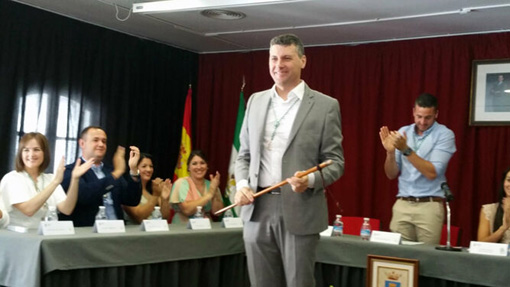
The Major of Jimena
“All groups have unanimously approved the project and have lived up to it. At all times, investments that encourage job creation have been sought and Jimena continues to grow at a tourist level”, added Gomez.
Well, I hope this project goes forward.
Until my next post, kind regards,
Luis.
Please click below:

1
Like
Published at 10:48 PM Comments (2)
The treasure of the Onagra in Spain
Tuesday, December 10, 2019
Today I would like to tell you about a wild plant, with yellow flowers, which is called "Onagra" and grows on the coasts of the Atlantic and the Mediterranean Sea.

Onagra flowers

Flowers of Onagra up close
The horticulturist, Jose Manuel Sánchez, explains us the properties of this plant.

Jose Manuel Sanchez
The first thing we have to do is to see if the seed capsules can be opened.
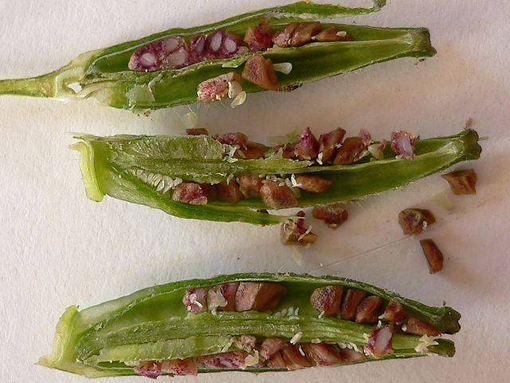
The seed capsules
Jose Manuel says that maybe you do not know the Evening Primrose, but maybe you have heard about Evening Primrose Oil, which has many health benefits, especially for women --for menstruation, for menopause for circulation, for the skin and many more-- .
All that comes out of this wonderful plant, which has beautiful flowers and they smell very good. But what interests us is to remove the seeds from the capsules. The capsules dry out as Autumn progresses. When the capsules are dry, we take out the seeds; but we had to open many capsules, to get enough seeds and thus to make enough evening primrose oil or evening primrose infusion.

The seeds

Onagra oil

Evening Primrose Pearls

Evening Primrose Infusion
Well, I hope that you will like to know this information about the Onagra.
Until my next post, kind regards,
Luis.
Please click below:

0
Like
Published at 1:46 AM Comments (0)
Spanish scientists discover a substitute for plastic from banana
Tuesday, November 26, 2019
In recent years, an important concern, which we have throughout the world, is the management of plastics and other non-biodegradable materials. But, on the other hand, there are many scientists investigating new materials, to replace, for example, plastic --which, unfortunately, is thrown into rivers and sea, many times--.

Residues of plastic
Well, but some scientists, from the University of Las Palmas de Gran Canarias (ULPGC), have developed a material, similar to plastic, from the banana fibers.
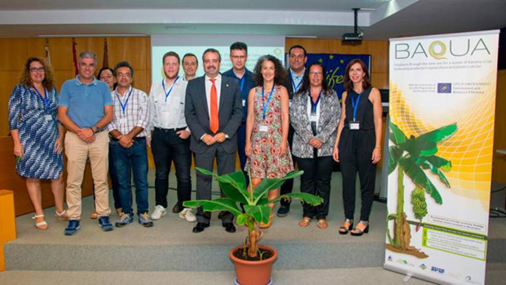
The team of scientists
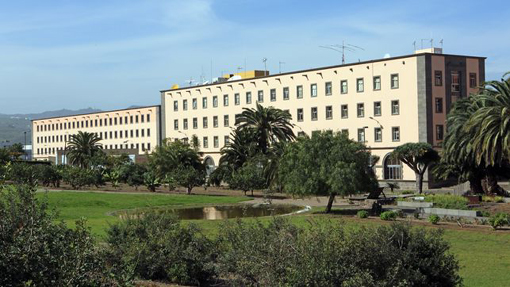
University of Las Palmas
Gran Canaria, Tenerife and La Palma could be the first three islands of the archipelago to have banana fiber extraction plants, a material of natural and biodegradable origin that can be used to manufacture bags for agriculture, feed for fish and tissues, in addition of to reinforce plastic parts of all kinds.
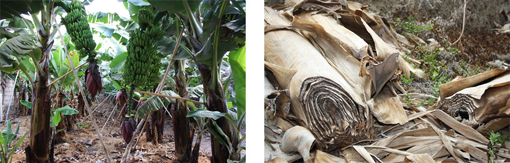
Banana trees and dry leaves of banana
Financed with European funds, the Life Baqua project of the University of Las Palmas de Gran Canaria (ULPGC) seeks to "replace a good part of the pieces and plastic bags that people use every day with materials of natural origin", has said its project coordinator, Mario Monzón, during the day of presentation of the results obtained during the three years that the investigation has been extended.

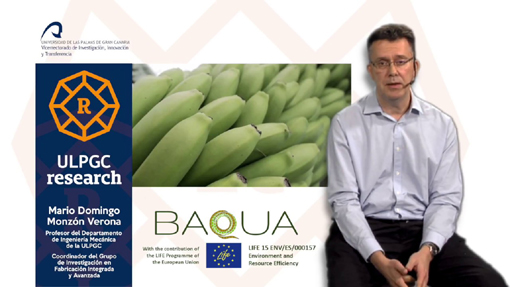
Mario Monzón Verona
The appointment of last October has sought to involve different sectors of society, in the project, and has had the presence of potential investors from other regions of the European Union (EU) such as Martinique (France) or Madeira (Portugal), has designated Monzón.
In his opinion, this "is a strategic moment" for this project to be put into practice, due to "the great worldwide demand for sustainable materials that replace plastics".
"The idea is that up to five plants for fiber extraction can be set up in the Canary Islands, one in Gran Canaria, two in Tenerife and two in La Palma", said the coordinator, to point out that these would be the three islands where "the numbers indicate that it could be profitable”.
The project is currently under study for its industrial implementation, both in the Archipelago and in other regions of the EU.
For the Rector of the ULPGC, Rafael Robaina, Life Baqua is “an example of how universities can contribute to the economy”, in this case specifically to the Canarian economy, where entrepreneurs must “brace themselves and start investing in this type of ideas", since, in his opinion, both companies and the academic institution "owe to society".

Rafael Robaina
The fibers extracted from the banana rolls have allowed the ULPGC researchers to create elements such as tissues and bags that can be used to protect the banana pineapple itself in the plantations, replacing the synthetic bags that are currently used in the agriculture.
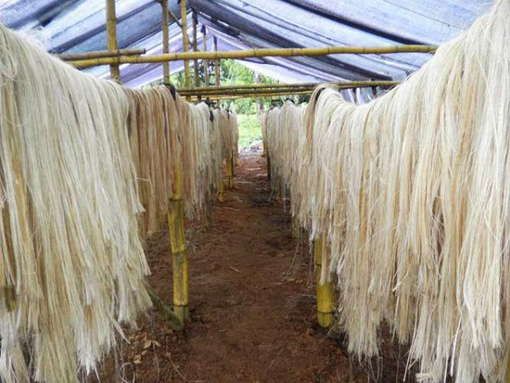
Fibers of bananas
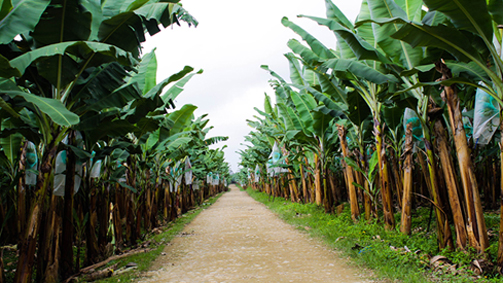
Banana trees with bags for protecting pineapples of bananas
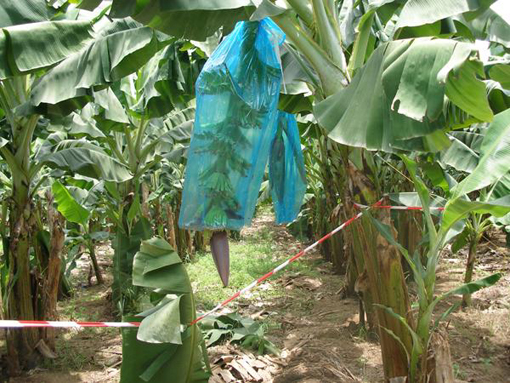
Bag for protecting the pineapple
In this way, a "circular economy" model would emerge, because "the material that leaves the plantation returns to it as a bag", Monzón said to remind that the same fibers can also be used to reinforce plastic parts of all kinds as vehicle interiors.
With the pulp of banana tree rolls, obtained during the fiber extraction process, researchers have managed to create additives for fish feed.
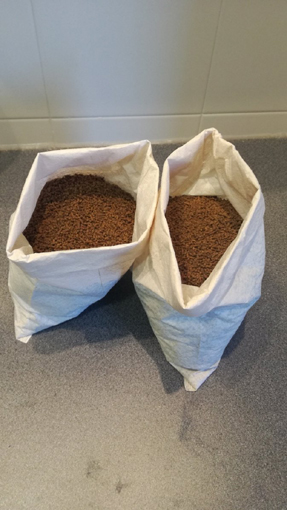
Additives for fish feed
But banana fibers have also been used to make baskets, for example, as in the image below, which wraps around a bottle.

A wicker basket for protecting the bottle of crystal
"We are very happy because one hundred percent of the banana tree rolls is used and, even, the liquid that comes out of it also has a number of properties that could be of great interest", concluded the coordinator and researcher, to anticipate that, in the next Projects, it could begin to study what applications this liquid may have.
Well, I hope that this future project will go ahead and i hope that the bags obtained from the banana fibers can be sold all over the world, to end the plastic problem.
Until my next post, kind regards,
Luis.
Please click below:

Tags (ignore)
bolsa,
#bolsa,
plátano,
platano,
#platano,
fibra,
#fibra,
universidad,
#universidad,
#plastico,
plastico,
cientifico,
#cientifico,
investigar,
#investigar,
investigador,
#investigador,
proyecto,
#proyecto,
fondo,
fondos,
#fondo,
#fondos,
españa,
#españa,
español,
#español,
años,
#años,
biodegradable,
#biodegradable,
gran canaria,
#canaria,
canaria,
tenerife,
#tenerife,
la palma,
#laspalmas,
desarrollo,
#desarrollo,
desarrollar,
#desarrollar,
cesta,
#cesta,
hoja,
#hoja,
Tags (ignore)
Bag,
#bag,
banana,
#banana,
Fiber,
#fiber,
College,
#college,
#plastic,
plastic,
scientific,
#scientific,
Research,
#research,
investigator,
#investigator,
Draft,
#draft,
background,
Money,
#background,
#money,
Spain,
# Spain,
Spanish,
# Spanish,
Jahr,
# Years,
biodegradable,
#biodegradable,
Gran Canaria,
#canaria,
canary,
Tenerife,
#tenerife,
the Palm
#laspalmas,
Developing,
#developing,
develop,
#develop,
basket,
#basket,
sheet,
#sheet,
0
Like
Published at 11:50 PM Comments (0)
Beef stew by a master of Spanish cuisine
Saturday, November 16, 2019
Today I would like to show you the recipe for “Beef Stew”, by Karlos Arguiñano.
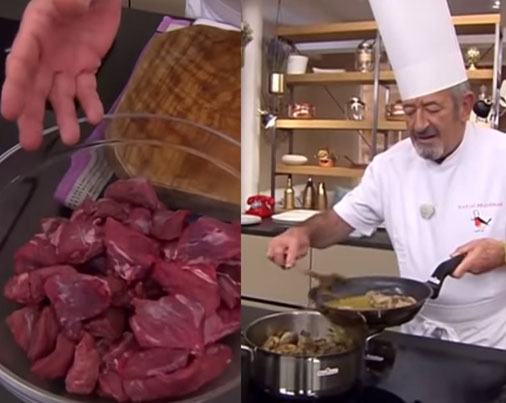
Karlos Arguiñano cooking
These are the Ingredients (for four people):
700 grams of veal to cook (aguja = needle).
3 onions
200 ml of red wine
25 gr of black chocolate
1 bay leaf
Salt
Parsley
24 small potatoes
12 shallots
½ litre of beef stock
Extra virgin olive oil
1 teaspoon thyme powder
Pepper
Note: The shallot is a vegetable native to Asia, which closely resembles onion and its flavour is between onion and garlic.
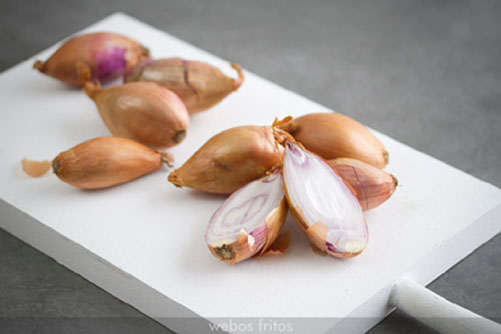
Chalotas = shallots
To make this dish, first you have to cut the meat into bite pieces, salt and pepper and put them to brown in the fast pressure cooker with a drizzle of oil. When it browns a little, peel and chop the diced onions. Add them to the pot and cook everything together for 15 minutes.
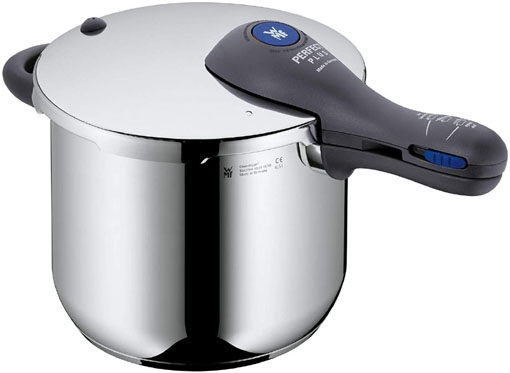
Fast pressure cooker
Add the bay leaf, thyme, ounces of chocolate, broth and wine. Boil it, cover the pressure cooker and stew the meat for 20 minutes, after the valve rises.
Peel the shallots. Heat a pan with a little oil. Add the shallots and potatoes (clean and skinned) and cook them over medium-low heat for about 20 minutes. Sprinkle them with a little chopped parsley and season.

Skinned shallots
Serve the meat with its sauce and accompany it with the potatoes and shallots. Garnish with a sprig of parsley.
And this must be the result:
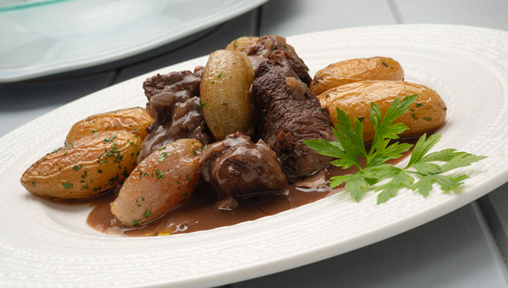
Advice: The sauce is not bound, but if you like it thicker you can pass it through the pastry or bind it by adding a little refined cornmeal diluted in cold water.
Well, I hope that you will want to try to cook this recipe.
Until my next post, kind regards,
Luis.
Please click below:

Etiquetas (ignorar):
estofado,
#estofado,
ternera,
#ternera,
maestro,
#maestro,
cocina,
#cocina,
eyeonspain,
#eyeonspain,
España,
#españa,
español,
#español,
Karlos,
#karlos,
Carlos,
#carlos,
Arguinano,
#arguinano,
cocinando,
#cocinando,
ingredientes,
#ingredientes,
cuatro,
#cuatro,
gramos,
#gramos,
personas,
#personas,
cebollas,
#cebollas,
chocolate negro,
#chocolate,
#negro,
vino tinto
#vinotinto,
hoja,
#hoja,
laurel,
#laurel,
salt
#salt,
perejil,
#perejil,
papas pequeñas,
#papas,
#pequeñas,
chalotes,
#chalotes,
litro,
#litro,
caldo,
#caldo,
de,
#de,
res,
#res,
aceite,
#aceite,
oliva,
#oliva,
virgen,
#virgen,
extra,
#extra,
cucharada,
#cucharada,
tomillo,
#tomillo,
polvo,
#polvo,
pimienta,
#pimienta,
nota,
#nota,
vegetal,
#vegetal,
cocinero,
#cocinero,
origen,
#origen,
Asia,
#asia,
parece,
#parece,
cebolla,
#cebolla,
ajo,
#ajo,
chalotes,
#chalotes,
plato,
#plato,
hacer,
#hacer,
como hacer,
#como,
cortar,
#cortar,
carne,
#carne,
trozos,
#trozos,
dorar,
#dorar,
olla,
#olla,
presión rápida,
#presion,
#rapida,
llovizna,
#llovizna,
pela,
#pela,
pica,
#pica,
picadas,
#picadas,
pico,
#pico,
picar,
#picar,
agregar,
#agregar,
añadir,
#añadir,
cocine,
#cocine,
master chef,
#master,
#masterchef,
#chef,
junto,
#junto,
onzas,
#onzas,
cubrir,
#cubrir,
limpias,
#limpias,
limpieza,
#limpieza,
limpiar,
#limpiar,
guisar,
#guisar,
guiso,
#guiso,
tutorial,
#tutorial,
sazona,
#sazona,
espolvorea,
#espolvorea,
espolvorear,
#espolvorear,
aproximado,
#aproximado,
aproximadamente,
#aproximadamente,
minuto,
#minuto,
minutos,
#minutos,
fuego,
#fuego,
salsa,
#salsa,
salseo,
#salseo,
servir,
#servir,
sirviente,
#sirviente,
camarero,
#camarero,
sirvo,
#sirvo,
acompañar,
#acompañar,
consejo,
#consejo,
consejos,
#consejos,
receta,
#receta,
recetas,
#recetas,
Luis,
#luis,
post,
#post,
saludos,
#saludos,
clic,
#clic
0
Like
Published at 11:40 AM Comments (0)
Another abandoned village in the north west of Spain
Saturday, November 9, 2019
Ciñera (or Ciñera de Gordón) is a Spanish village, belonging to the municipality of La Pola de Gordón, in the province of León and the region of the Central Mountain, in the Autonomous Community of Castilla y León.
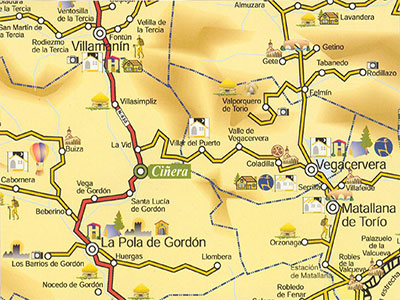
The map of Ciñera
This small village is located on the Bernesga River, on the N-630 road between La Robla and Asturias.
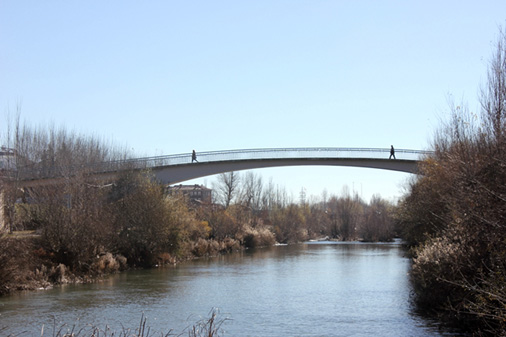
Bernesga river
It has a railway station on the León-Gijón line.
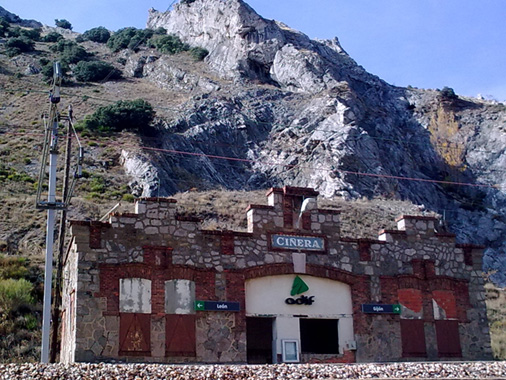
The Ciñera Station
In Ciñera, there is one of the best preserved beech trees in Spain, the Faedo of Ciñera, located near the village, next to a mine.
The Faedo of Ciñera is a small forest located in Ciñera de Gordón (León), about 35km from the capital. The colour of the forest, in autumn, is spectacular and has a tree of more than 500 years, known as "Fagus". In 2007, the Forest received an award for the “most careful forest in Spain”.
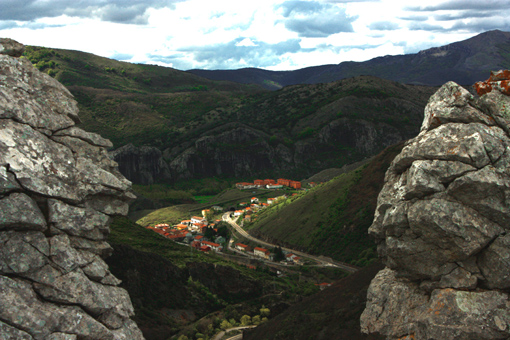
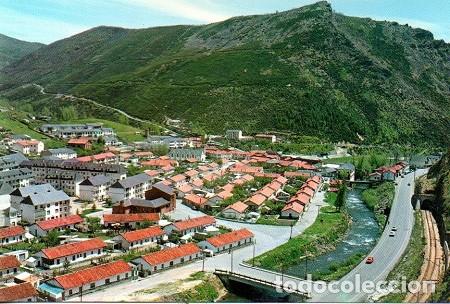
A general view of Ciñera
Another view of Ciñera
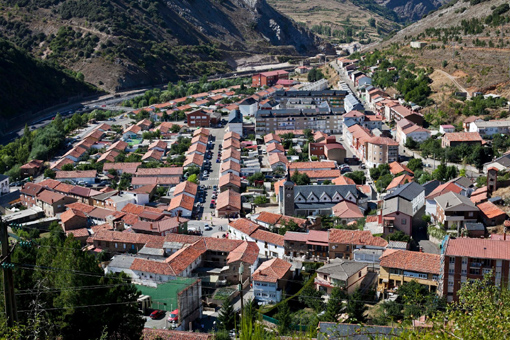
Ciñera up close
To get to Faedo, you have to get to Ciñera and leave the car near the church or at the sports center. There is a road of 1.5 km approximately until reaching a mine entry.
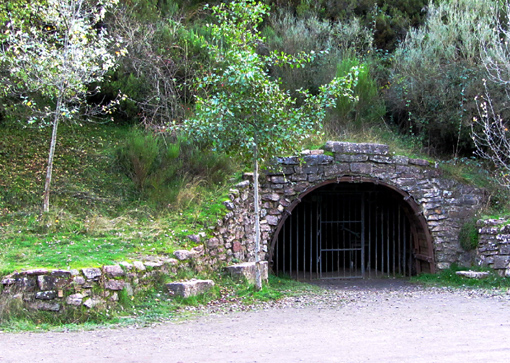
The mine entry
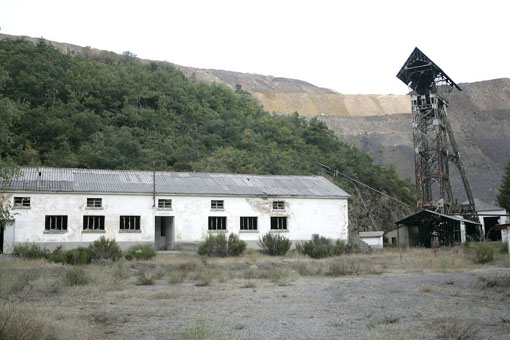
The mine El Pozo Ibarra of Ciñera
We follow the path and we find a stone bridge and the creek.
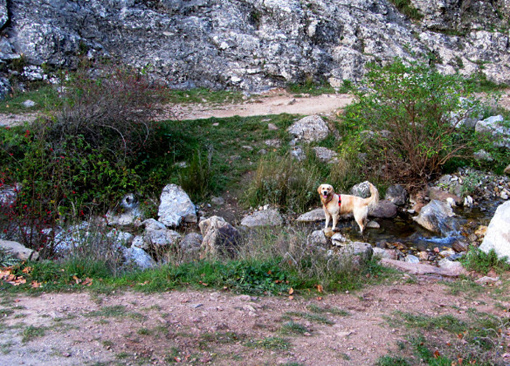
The creek
We follow a small wooden walkway and, in a few metres, the road widens and we contemplate this beautiful picture.
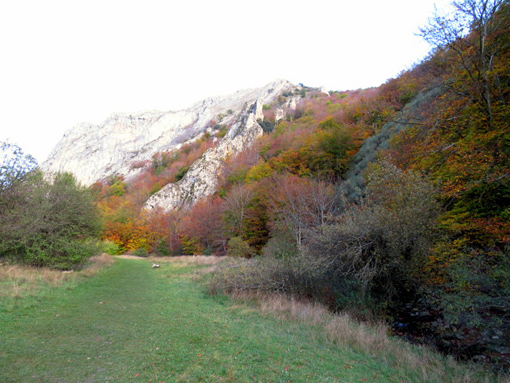
Finally, we enter the Faedo, reminiscent of a forest enchanted by its colour and the sinuous shapes of the trees ...
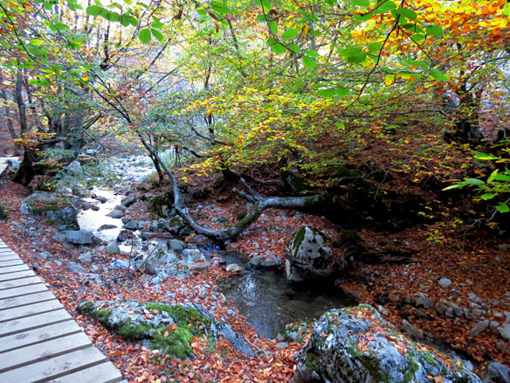
Starting inside the Faedo
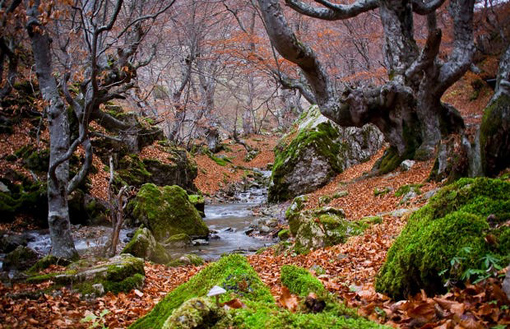
Another part of the stream
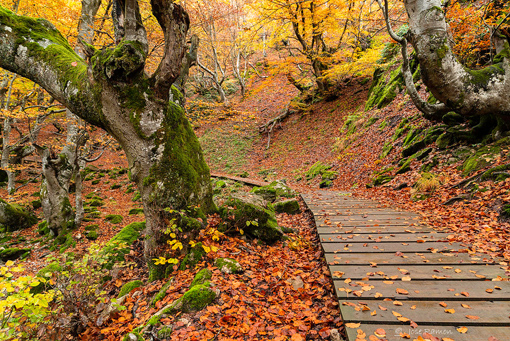
Another piece of the path
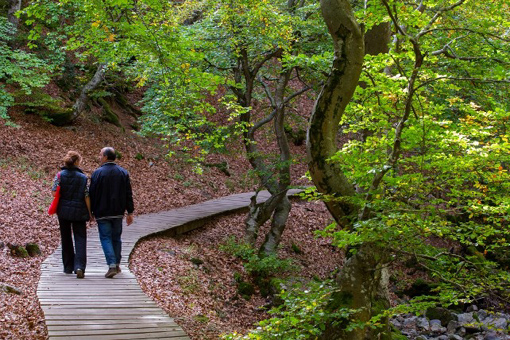
A pleasant walk through the Faedo
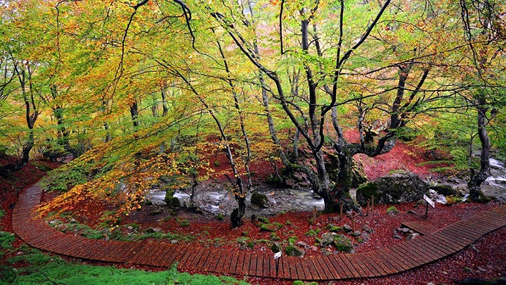
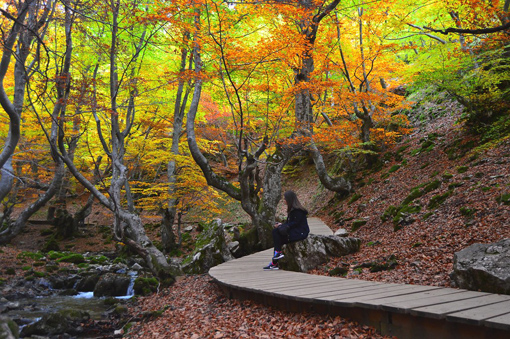
Resting in the Faedo
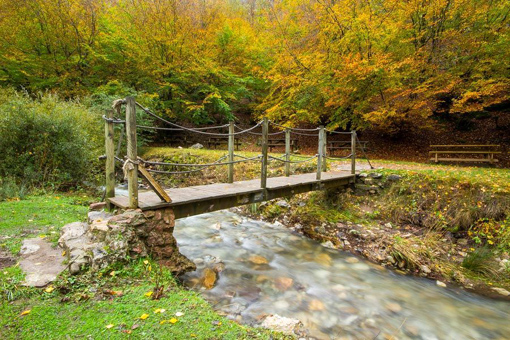
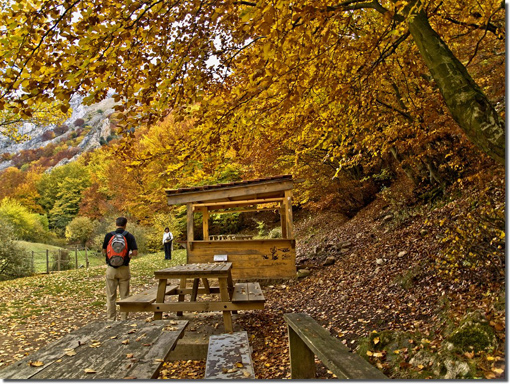
Another incredible corner inside the Faedo

The incredible colours of Faedo
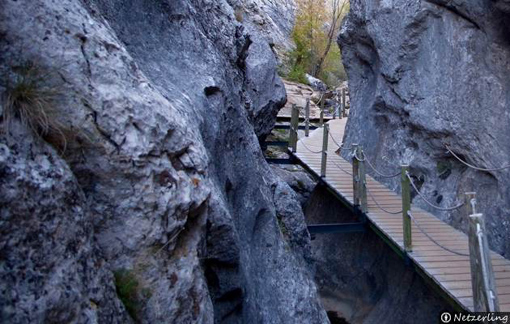
Gorge of the Faedo
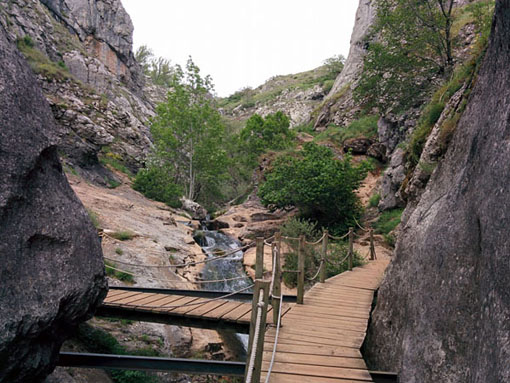
Another part of the gorge
After a good walk, through the Faedo, you will surely be hungry and, therefore, I recommend the restaurant "La Hornaguera".
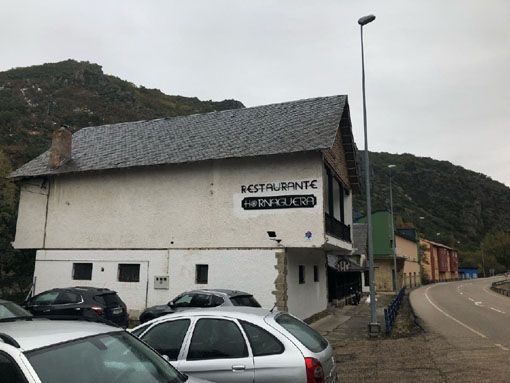
La Hornaguera with a parking
Telephone number: 987 58 41 33.
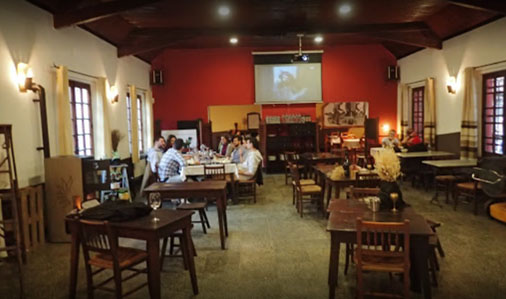
La Hornaguera inside
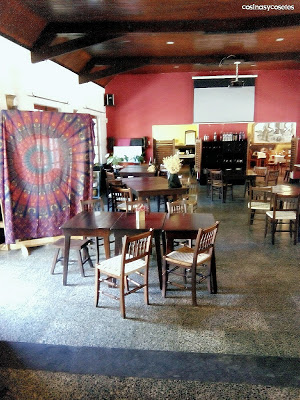
There is a terrace behind:
These are some of the typical dishes of La Hornaguera:
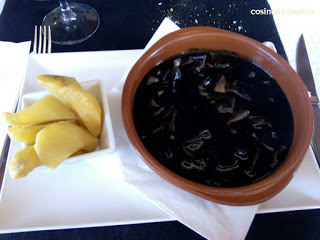
Squid in ink
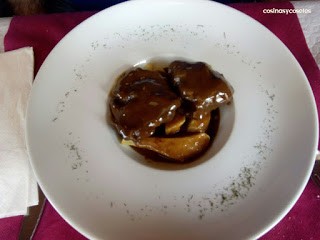
Braised cheek
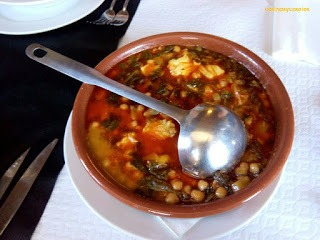
Chickpeas with cod and spinach
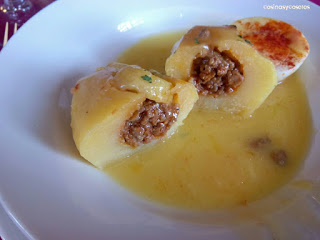
Meat stuffed potatoes
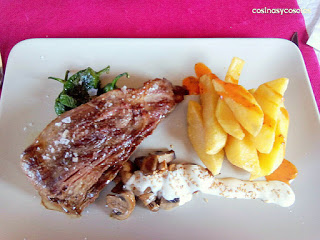
Sirloin with cheese sauce
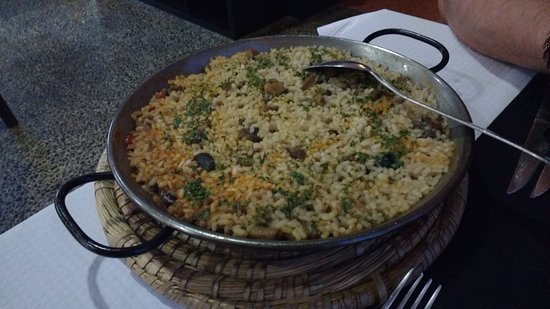
Rice with mushrooms
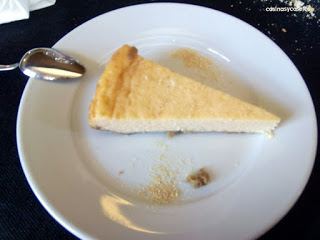
Cheesecake

Lemon mousse
Well, i hope that you will like this article and hope that you will able to visit that wonderful area.
Until my next post, kind regards,
Luis.
Please click below:

abandonada,
abandonado,
#abandonada,
#abandonado,
villa,
#villa,
pueblo,
#pueblo,
noroeste,
#noroeste,
España,
#españa,
#puebloabandonado,
ciñera,
#ciñera,
gordón,
#gordon,
español,
#español,
perteneciente,
#perteneciente,
municipio,
#municipio,
La Pola,
#lapola,
provincia,
#provincia,
región,
#region,
Montaña Central,
#montañacentral,
#montaña,
#central,
#centro,
Castilla y León,
#castillayleon,
pequeño,
#pequeño,
río,
#río,
Bernesga,
#bernesga,
Asturias,
#asturias,
la robla,
#larobla,
Gijón,
#gijon,
hayedos,
#hayedos,
Faedo de Ciñera,
#faedodeciñera,
Ciñera de Gordón,
#ciñeradegordon,
Fagus,
#fagus,
espectacular,
#espectacular,
el bosque mas cuidado,
el bosque mas cuidado de España,
2007,
El Pozo Ibarra de Ciñera,
#elpozoibarradeciñera,
arroyo,
#arroyo,
bosque encantado,
#bosqueencantado
abandoned,
#abandoned,
villa,
#villa,
village,
#village,
northwest,
#northwest,
Spain,
#Spain,
#abandoned village,
maid,
#daughter,
fat
#gordon,
Spanish,
#Spanish,
belonging,
#belonging
municipality,
#municipality,
The Pola,
#thepola,
Province,
#province,
region,
#region,
Central Mountain,
#centralmountain,
#mountain,
#central,
#center,
Castile and Leon,
#castilleandleon,
little,
#little,
River,
#River,
Bernesga,
#bernesga,
Asturias,
#Asturias,
the robla,
#therobla,
Gijón,
#gijon,
beech trees
#beechtrees,
Faedo de Ciñera,
#faedodeciñera,
Gordón's maid,
#ciñeradegordon,
Fagus,
#fagus,
spectacular,
#spectacular,
the most careful forest,
the most careful forest in Spain,
2007,
The Ibarra Well of Ciñera,
#theibarrawellofciñera,
stream,
#stream,
enchanted Forest,
#enchantedforest
1
Like
Published at 12:23 PM Comments (2)
Spam post or Abuse? Please let us know
|
|