Alternative Malaga - Exploring the La Axarquía region
Tuesday, May 28, 2013
With some of the best weather in Europe, and miles upon miles of beautiful Mediterranean coastline, it’s no surprise to see hear that the Costa del Sol is increasingly becoming one of the most popular travel destinations for European holiday makers. Marbella and Puerto Banus continue to attract some of the wealthier visitors but there is plenty more to see and do throughout the rest of the region. With travel sites like momondo helping you find cheap flight deals in and out of Spain, this part of Malaga can be an amazing place to visit even if you’re on a budget.
Finding the best things to see
La Maroma is the highest mountain peak in the Sierra Tejeda range, at the edge of the Malaga-Granada border. Many of the pueblos blancos of La Axarquía rest on the slopes of La Maroma with amazing views past the mountains to the sea (and the Moroccan coast on a clear day), with endless hiking trails in between. The entire area is a massive mountain nature reserve that also includes the Sierra Almijara and Sierra Alhama ranges, home to numerous species of rare birds (you’re almost certain to see eagles), mountain goats and the Iberian Lynx. Gorges, waterfalls, pre-historic caves, remnants of Phoenician, Roman and Moorish civilizations – it is a hiker’s paradise without doubt. Many of the villages will offer detailed maps and possibly contact information for trail guides; for example, there is a tourist office in Canillas de Aceituno where you can find information, and from there it is only a seven hour trek to the very summit of La Maroma at almost 2100m. However, if you’re not quite up to all of this hiking but still want to see the terrain for yourself, you can hire a small plane from the nearby Axarquía – Leoni Benabu Airport to fly you past. Otherwise, for even more adventure, try paragliding through.
Finding the best places to eat
Restaurante Sollun in Nerja, with Chef Juan Quintanilla, earned a well deserved Michelin recognition in 2012 for creative and impressive Spanish cuisine, and a personal approach to service. It’s one of the most exciting restaurants anywhere between Malaga and Almeria with a unique modern flair applied to traditional Spanish classics with occasional elements of fusion. The menu is always changing and with only about five tables in the dining room, you’d better reserve a table in advance and before word gets out much further. For more casual fare, the numerous chiringuitos right on the beach all along the coast offer the freshest of seafood and the coldest of beer in the most relaxed of environments.
Finding the right beach
The most beautiful and isolated beaches lie near Maro, just beyond Nerja, and eastward into Granada province at La Herradura. Here the cliffs rise dramatically from the sea and many of these beaches lie within national parkland so they’re protected reserves. Exploring is half the fun, and of course, the more remote the beach the fewer people you will encounter. Playa Cantarrijan, in a cove right at the border between Malaga and Granada provinces, is a favourite. With two chiringuitos right on the beach you needn’t bring your own food and drink, and there is a more private section of beach accessible by an ankle deep traverse around a huge rock sticking out of the sea. The most secluded and hidden beaches will be most easily accessed on a small boat chartered from nearby Caleta de Velez or La Herradura.
Finding somewhere to stay
While there are some four star hotels in the area, if it’s authentic exploration you’re after and an insight into local life, you’ll definitely want to stay in a private villa where you can live like a local. Try an established villa rental and tour company such as A&K Villas or an independent luxury villa rental agent. A new startup company called Caramel Trail is even developing full luxury trip planning services with accommodation in La Axarquía. You can stay on or near the beach, but a property in the hills off of the coast will offer a more culturally immersive and authentic experience.
 0
Like
Published at 4:39 PM Comments (0)
0
Like
Published at 4:39 PM Comments (0)
Surviving Summer in warmer climates - 10 Tips to help you get by
Tuesday, May 28, 2013
I do not know whether you are aware of this little fact or not, but just in case you have planned to visit the heart and the south of Spain this summer, pay attention and read carefully: it is hot! If, for example, you have an apartment in Seville, you should take a look at this survival guide, unless of course you feel like dying from dehydration.
- Rule #1: Never move more than fifty meters away from a fountain unless you bring some water with you.
- Rule #2: Never fall asleep at the beach. That is suicide; spontaneous combustion! Well, a night in a hospital at least.
- Rule #3: You have to be really mad to go for a walk between 12-7pm. There is an extreme risk of being stuck to the asphalt if you do.
- Rule #4: Who minds if hats were never your thing? Your brain sure is and you would like to continue to use it, do you not? So, protect it!
- Rule #5: Take advantage of the evenings. Nothing is quite like a Spanish summer night. Before those delightful hours it is almost impossible to speak.
- Rule #6: Have you ever heard of pescaíto frito? You cannot abandon this world without having eaten it with an ice cold beer. Thus, you are only allowed to leave your apartments in Seville at midday if it is for this reason alone. But, make sure you take a fan and the bar where you will be has a spot in the shade for you. Otherwise, your ice cold beer will turn into soup in about three minutes (and the fish will be over-cooked).
- Rule #7: Remember sun screen is your best friend.
- Rule #8: Do not be ashamed of sweating, everybody does it here.
- Rule #9: Do not go into the water when you are drunk. Yes, I know is tempting, however you can be embarrassed the rest of your life in a matter of seconds when you realize that an old lady has saved you and you are naked in front of the eyes of dozens of people.
- Rule #10: If you have been clever enough you will have chosen your Seville apartments with a terrace. So, it is a must to enjoy a sunset barbecue with your friends on said terrace before leaving.
0
Like
Published at 4:14 PM Comments (0)
Looking to earn while you're travelling?
Monday, May 13, 2013
One of the questions I always get asked is “How did you find a job in Spain?” A lot of people would love to work in Spain, and if you're from Europe, it’s a little easier to do so, but what if you’re from the US? And also, what type of work is available for you once you get here?
Here are a few examples of some of the most common forms of employment for most expats around the world, and Spain is no exception.
Teach English Privatley
It may seem a little tedious, but this is a good way to find work. There are tons of people in Spain who want to improve their English. Right now might be a tough time because of the crisis, but there are always lots of listings for people who want English classes online. Check out sites like Loquo and Mis Clases Particulares. Post flyers in your neighbourhood, and let everyone know you’re an English teacher.
The main issue with private classes is that students can be flaky. Flaky students = no money for you. I once had a girl who wanted 8 hours of class a week. The first week, she came every day right on time, so I blocked out my schedule. But she turned out to be absolutely crazy and didn’t show up at all for classes…so I missed out on a big chunk of money I’d been expecting to use for rent and groceries.
Other common problems you might run into are struggling to fill your schedule, and spending a lot of time travelling and preparing classes.
Look for language academies, bars and restaurants, or temporary summer programs for under-the-table jobs.
Amelie from Amelie Says Hola reminded me that a TEFL or CELTA certification may help if you want to work at a language academy.
Work for an au pair/nanny program or babysit
There are lots of websites that have listings for families abroad who want an English-speaking au pair – just a quick Google search for “au pair jobs Spain” gives you tons of results. I have zero personal experience with this, so I can’t recommend any reputable sites myself. But I do have a friend in Barcelona who successfully worked as an au pair, so it can be a good option. Your family may give you free food and housing.
The downsides with this job are not having much time away from work, and having to deal with somebody else’s kids!
You can also try babysitting for families in your city. I got offered a job to pick up the kids from school at lunchtime, give them their lunch, and take them back to school (yeah, that school had a 2-hour break in the middle of the day). A lot of families like their kids having an English-speaking babysitter.
Look for freelance work
A lot of the time, freelance jobs are place-flexible, so if you can find somebody to write for you’re good to go. This requires a bit of leg-work and self-discipline, but it can be a nice way to make a chunk of cash.
Work online
Like freelance writing, this one is place-flexible. There are tons of jobs you can do remotely, so see if you can find a job that’s online. I work for a website, and I’ve had a couple of friends work for me from different locations and get paid via PayPal. If you can find one of these jobs, it’s a great way to get a solid stream of money. Again, you do have to be lucky to find one of these, but it does happen.
It might be hard to make all your money with just private English classes, but combine that with some freelance writing and you’re good to go. Talk to everyone you know about your work situation, and something should turn up.
Finding jobs without the paperwork in Spain can be frustrating, but I know lots of people who have made it work. It’s tough, but with some hard work and a bit of luck you can pull it off.
Also, here’s some more general info about finding work in Spain:
- How to Live & Work in Spain -holayessica.com/2012/06/12/how-to-live-work-in-spain/#
- Hope this helps and if you have any tips to share, do let me know!
0
Like
Published at 12:23 PM Comments (0)
My favourite Spanish dishes - Part Two
Thursday, September 6, 2012
Like most of the Spanish dishes, gazpacho can be cooked as well in several ways. Warm or cold, soup, salad or even stew, gazpacho is generally made from tomatoes, cucumber, onion, garlic, a little olive oil, wine vinegar, salt and sometimes (rarely) ham.
My favorite gazpacho is a soup made of tomatoes, cucumber, onion, garlic, olive oil, vinegar and salt, all blended, served with croutons, ice cubes and an addition of fresh chopped tomatoes, onions and cucumber. Perfect for a late lunch in Andalusia!
Many say that Crema Catalana is the same with the French Crème Brule, but there still are some tiny differences between the two fabulous desserts. For example, crème Brule is baked in a Bain-marie and is usually served warm, while the Catalan cream is always served cold and it has a custard infused with lemon rind and cinnamon, instead of vanilla, being much more refreshing than its stylish French sister.
I like them both, I love vanilla, but for a hot summer day, nothing compares with a Crema Catalana in Barcelona!
I am usually quite reticent when it comes to seafood but, believe me, gambas ajillo in Spain are simply delicious! Whether served as tapas or as a main dish, garlic prawns are very quick and easy to prepare: take some fresh prawns, cook them in a little olive oil with garlic and chili flakes and in about 10 minutes you’ll have one of the tastiest meals on your table. Buen provecho!
Queso Manchego, also named The Cheese of Don Quixote due to the fact that Cervantes mentioned it in the legendary “Don Quixote of la Mancha” is a very tasteful cheese made of sheep’s milk. The original Queso Manchego is exclusively prepared in La Mancha region from a specific sheep’s breed called “Manchega” but it can also be consumed all over Spain. I was lucky to try it in Madrid and I can say that its intense flavor has totally impressed me from the very first moment. Amazing!
I’ve always thought allioli or aioli is a Spanish mayonnaise with lots of garlic. The truth is allioli is neither Spanish, nor French and not even Italian, it is actually originally for the Middle East, according to Jamie Oliver and I have no choice but to believe him.
Anyway, I first ate it in Spain and for me it’s a Spanish sauce, a very addictive and tricky one. With such a simple recipe, allioli should be very easy to prepare. Well, it isn’t, at least for me, that’s why I prefer to eat it in Spain with just about anything: tortilla, fish, baked potatoes, anything but sweet. Oh, Spain I miss you so much!
I would say that one thing that I mostly loved in Spain were those crowded long bars above which were hanging, instead of chandeliers, some huge chunks of “hamon”. So surprising at first sight and yet so original and pleasant! It was wonderful to have a drink while the bartender was cutting me a slice of the incredible ham. A great authentic experience that everyone should try while in Spain!
If you happen to spend your vacation in Marbella or anywhere in Andalusia you should try the grilled fresh fish on the beach.
Do not bother to find a restaurant; the Andalusian beaches are equipped with some ingenious boats filled with sand where the fishermen themselves cook some of the most delicious sardines on the burning coals. A nice meal, healthy and cheap, just perfect for a hot summer day on the beach!
In the end, I have to mention that each meal I served in Spain, in any area of the country and any of its islands, began with a traditional introduction – usually bread (toasted or not, black or white), a bowl of green marinated olives (sometimes accompanied by marinated little onions), and the well-known aioli (sometimes replaced with butter). These being said, I hope my article will help you to flavor a bit your Spanish experience!
0
Like
Published at 2:22 PM Comments (1)
My favourite Spanish dishes - Part One
Thursday, September 6, 2012
It’s almost impossible to emulate the gastronomical variety of Spain. There are so many regions, each with their own specialties that tourists will find themselves overwhelmed by thousands of fragrances and tastes.
Spain is famous for many things such as flamenco, football, its beautiful coastlines, the long lazy sunny days, the excellent nightlife, the usual siestas, the locals’ incredible long names, the islands and the fact that Spanish language is one of the most widely spoken language on Earth after Mandarin Chinese, but this vibrant area of Iberian Peninsula is also very well-known for its delicious food.
You are not allowed to visit Spain without experiencing the famous Tapas! It’s like visiting Paris without seeing the Tour Eiffel or like ordering an American coffee in Italy.
First of all, tapas are not a particular food; they are a sort of little meals that Spaniards eat anytime of the day or night, anywhere. I won’t make a general presentation of tapas because you can find it anywhere on the internet, and it will probably take me few hours to share my own personal tapas experience, I will just tell you some interesting facts about this Spanish way of eat.
Tapas are part of the Spanish culture and for a better understanding of this fact you should know that in Spain there is also a verb “tapear”, which means “eating tapas”. Beyond all this fuss, these little meals are not always free. While cities like Madrid and even Barcelona provide tourists these little pleasures free of any costs every time you order a drink in a bar or a pub, there still are areas such as the Basque Country or Andalusia where you probably won’t get any free tapas.
The best tapas I’ve ever had were in Madrid, in their popular tapas bars where you don’t even have to pay for your lunch or dinner, because every time you order a bear, you’ll get a nice plate with mini sandwiches, almonds, squids or any other snacks, but never the same dish, which is absolutely great.
On the other hand, the tastiest tapas I’ve tried consisted in a platter of blue cheese on a beach in Mallorca, for which I paid but it definitely worth every penny.
First time in my life when I’ve tasted tortilla I was on a ferryboat, on my way to Ibiza. I remember it was a big “bocadillo con tortilla”, a tortilla sandwich. I liked it so much that I could not resist and ate three of them.
Later, I’ve discovered that there are actually many forms of tortilla, some of them with a thicker texture and other thinner and soft, but this Spanish omelette always consists of potatoes, eggs, onion, salt and pepper, being the most common dish in the country.
Although, they say tortilla is very easy to prepare, I’ve always had a problem in cooking it, never managed to bake it properly in the middle, I wonder why.
Paella is a traditional rice dish originating in Valencia. In Spain there are three well-known types of paella: Paella Valenciana (white rice, vegetables, chicken, duck and rabbit meat, land snails, beans and spices), Seafood Paella (rice, seafood and seasoning) and Paella Mixta, which is actually a free-style mixture usually made of rice, chicken, seafood including clams, vegetables, olive oil, saffron, and other spices.
I love paella mixta, especially served directly from paellera as a romantic dinner on the beach, in a late summer evening accompanied by a cold glass of sangria and… the breeze.
Part two coming soon!
0
Like
Published at 2:21 PM Comments (0)
Teaching English In Madrid, Spain
Thursday, August 23, 2012
So i've been living in Madrid for just over a month now and i've been mega busy. For the past three weeks i've been doing a Tefel course and it's been amazing. I've just come across this site called MadridTeacher.com and it's got loads of tips and hints for newbies like me!
Here's a link to an interview with the guy Steven Harold Starry who runs the Madridteacher site -Transitionsabroad.com/publications/magazine/0411/Freelance_English_Teaching_in_Madrid.shtml.
But if you havent got time to read it all now, here are a few of the points i thought are worth mentioning. My comments are in Green
Enjoy!
1 "...the high turnover rate among teachers in the lower echelons in the English academies means plenty of opportunities to find teaching jobs every year."
2 "Being a teacher is hard work. Do not ever forget that the English teaching profession can be quite unforgiving to those who underestimate the possible difficulties. - I agree but it's so rewarding.
3 "For British teachers, getting a work permit for English teaching jobs in the local academies is easy... For Americans, it will usually take a lot more work"
4 [Madrid] is far too expensive for everybody, not just for English teachers. - As long as you are wise, you can manage on a budget pretty well.
6 "It is more important than ever for teachers to save up their money before they come over to Madrid because their savings will have to pay for a big part of their stay in the beginning." - I think the more money you can save before coming out here, the better. It's good for peace of mind too.
7 "Networking is critical to an English teacher's success." - The more people you know, the more opportunites you will come across.
8 "The best way to deal with "the system" is to be patient and methodical about everything" - This is so true and is something is should probably apply to other parts of my life!
0
Like
Published at 8:03 PM Comments (0)
Prado Museum, Madrid
Thursday, August 23, 2012
There is so much to see and do in Madrid. I've been here for ove a month now and feel like i've barely scratched the surface! One of the things on my to do list i can cross off now is the Prado Museum, one of the biggest galleries in the world.
It has the biggest collection of Spanish art, spanning from the 12th to the 19th centuries, with paintings by El Greco, Velásquez, Ribera, Zurbarán, Murillo and Goya. The Flemish School is also well represented, with paintings by Van Der Weyden hanging alongside works by Van Dyck and Bosch. Amongst the Italian masters are Titian, Tintoretto, Raphaël and Botticelli. Don't miss "The Triumph of Bacchus" in the Vélasquez collection. Amongst others, the Goya collection includes "La Maja vestida" and "La Maja desnuda". The Prado Museum occupies an 18th century building, designed by Juan de Villanueva.
I went with a local spanish guy who is on my english teaching course. He studied History in Barcelona and I loved that fact that i could ask questions about what we were seeing and could get an enthusiastic genuine response. Much better than anyaudio guide! IF you want more tips about what to see and do while you're in Spain, take a look at TravelBusy, they've got some great posts about the top attractions.
0
Like
Published at 7:36 PM Comments (0)
Vicky Cristina Barcelona - Barcelona through Woody Allen´s camera
Tuesday, April 10, 2012
Barcelona is a beautiful area and it’s no surprise that so many directors decided to shoot their movies here. This is a great way for movie lovers who visit the city to discover the different places where the movies have been set. If you are a cinema fan and you are taking part in a movie tour around Europe, Barcelona is a must-visit city. Why not walk the streets of the Catalan capital looking for places where the scenes have been shot and reliving your favourite scenes from the film.
As well as Cédric Klapish, with his movie L´Auberge Espagnole aired in 2002, the famous director Woody Allen chose the city of Barcelona as a set. Indeed, the American director, after he visited the country, had decided to move to Spain with his team, and more particularly to Barcelona, to film some of the scenes of his successful movie Vicky Cristina Barcelona. A movie starring the famous Spanish actors Javier Bardem (Juan Antonio) and Penélope Cruz (María Elena), but also the Woody Allen´s Muse, Scarlett Johansson (Cristina).
The movie tells the story of Vicky and Cristina, two American’s women who are coming to Barcelona to spend their summer. There, they meet Juan Antonio, a painter, who even though he is separated with his ex-wife, María Elena, still has a confrontational relation with her.
The director did not choose this movie´s title at random. As he says, “as I was writing the screenplay, I was thinking about nothing but creating a story in which Barcelona would be a full-fledged character. I wanted to pay the city a tribute because I love it as well as the rest of Spain…”. During the filming of the movie, the director had planned to give his movie the title “Midnight in Barcelona”, a title which curiously seems to the one that Woody Allen will shoot later in Paris (Midnight in Paris).
You want to visit the places where the movie has been shot in Barcelona?
If yo are a cinema addict and you want to discover the movie from a different point of view in Barcelona, the best option would be to rent an apartment in Barcelona, ideally in a central location. Spend your time going to the Parc Güell (L3, Lesseps), discovering the Sagrada Familia (L5, Sagrada Familia) or the Fundació Miró… and even more places where Woody Allen shot the movie in Barcelona. If you want a complete list of those places, you can take a look at the site Barcelonamovie.
0
Like
Published at 6:21 PM Comments (0)
Five driving tours in Barcelona
Thursday, December 8, 2011
The popular city of Barcelona is the capital city of the Catalonia region, which is a scenic rich region with the Pyrenees Mountain Range located to the north and the Costa Blanca coast to the southeast. So if you have stayed in the city in the past, you have surely spent time down Las Ramblas, La Ribero, browsed around the Gothic Quarter and perhaps visited the Camp Nou!
What you may not be aware of is that much of the Catalonia region is actually very reachable in a day trip from Barcelona! For some touring ideas check out our guide to the top 5 driving tours of the Catalonia region…
Barcelona to Gerona Driving Tour
This driving tour is about 103km in length, and will take you about 1 hour and 15 minutes to complete. Starting out from Barcelona, the key is to travel along the north east coast get onto the Gerona A7 road, then the Autopista Barcelona-Montmelo Road and the AP 7 road, which is a partial toll road.
Gerona is a pleasant and attractive medieval city, which is perched on the side of a hill and offers great space to explore. Places to look out for are the Cinema Museum, the historic Jewish Quarter and the Roman ruins in the area, notably the Roman baths. The medieval architecture is really something to savour in the town. Gerona is actually an ideal base if you wanted to make further trips to places like Olot and Figueres. It's an ideal central point to take excursions to the beaches of Costa Brava, or coastal towns such as Calella de Palafrugell.
Figueres - A Day Trip from Barcelona
After reaching Girona, you could head on for Figueres, which in total is 140km and a two hour drive from Barcelona, and to get there take the AP 7 partial toll road to Gerona, and follow the signs for Figueres. Figueres is a small town on the French border, which was the birthplace of renowned artist Salvador Dali, and the town is now home to the Dali Museum. Whether you have an interest in surreal abstract art, or just interested in the life of Dali himself, this is a must visit place to see how he lived and where he came from that made create his wonderful work.
Port Lligat Dali Museum, a smaller museum dedicated to Salvador Dali, is to be found at Port Lligat, Cadaqués. The museum is in a former residence of the artist, who lived there from 1930 until his wife became deceased in the early 1980s. Or travel to Gala Dali Castle in Púbol – which is a shrine to Dali's deceased wife and his home place for the remainder of his life.
Barcelona to Tarragona Driving Tour
The pleasant town of Tarragona is located to the southwest of Barcelona, around 115km away, and would take around 80 minutes for you to get there. Again, take the AP 7 route south from Barcelona, and you will be driving through some majestic mountain scenery en route.
Tarragona is an ancient port town, and is situated in a terrific setting, on a hill which rises over 150 metres above the Mediterranean Sea. The hill’s highest point is the Cathedral. Perhaps the main attractions in Tarragona are the Roman and Ancient ruins to be found there. This ancient Phoenician and Roman settlement is fascinating for those interested in history.
Tarragona has plenty to occupy the family, with a majestic beach nearby, the famous Port Aventura Amusement park quite nearby along with the holiday resort town of Salou.
Andorra - Driving tour from Barcelona
Andorra is a separate nation from Spain – but can be accessed by car quite easily and is well recommended as a driving tour destination from Barcelona. On route to Andorra, you will be astounded by the magnificent mountain scenery on the E9 road. With a driving distance of over 200km, it would take probably over three hours to reach Andorra.
Andorra is the only country in the world where Catalan is the first language, although French and Spanish are spoken. Andorra is an excellent destination for skiing with wonderful slopes all year round. It is also a great place for shopping due to the tax free status of the country.
Barcelona to Olot Driving Tour
Situated to the northeast of Catalonia in Spain, Olot is located 110km from Barcelona and takes nearly two hours to get there along the C17 and then the C152.
The biggest attraction of the Olot area are its volcanic craters, which are renowned as being the best preserved on the European continent. One of the most fascinating things to see here is a church that was built in one of the craters, and the view is most spectacular. Why not visit the scenic villages of Banyoles and Besalu via Olot as part of your driving tour.
So if you're heading to Spain and you want to get away from the city, Make yourself a packed lunch, find a place that offers cheap car hire and spend your trip soaking up some true Catalan culture.
0
Like
Published at 10:43 PM Comments (0)
Five things to do in Seville for free
Thursday, December 8, 2011
Don’t make the mistake of missing out on Seville. For budget travellers, Andalucia’s capital has plenty more to offer than scorching summers and tasty tapas. You won’t have to spend a single penny on enjoying these sights and sounds. You might even leave that little bit more cultured too. That’s the idea right?
View Seville in a larger map
Santa Cruz
Seville’s lovely old Jewish quarter is famous the world over as being one of the quaintest, most attractive, barrios in all of Spain. For that reason alone you’re going to want to stroll down its delightful cobbled streets, twist in and out of its alleyways and wander past its thick-walled houses. Seeing this area on foot won’t cost you a dime. It’ll also provide you with some shady spots to escape the searing summer sun too!
Home to some of the cities oldest churches, make sure you stop in their courtyards and take in Seville’s elegant past as the city founded on the riches of the Americas. There’s plenty for your literary nerds too. The legend of that saucy Spaniard Don Juan is set on the streets of Santa Cruz. Check out the Plaza de los Venerables, Don Juan’s supposed birthplace, and pay homage to the man who swash buckled and seduced his way to the deflowering of a hundred delicate virgins. Just don’t get any ideas now. Remember how it all ended for the Don?
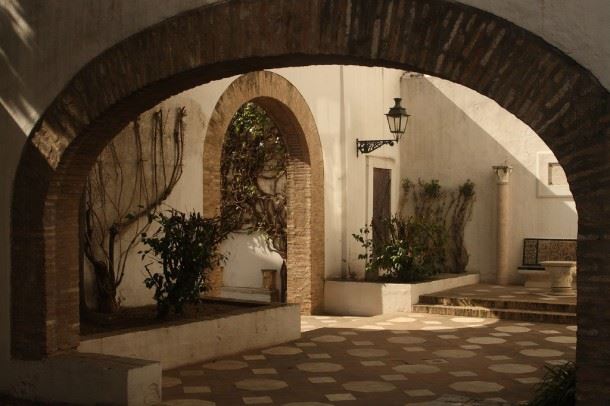
Santa Cruz by: Matthew Black
Plaza de Espana
Free all year round, the recently renovated Plaza de Espana is definitely worth whiling away a few hours. Designed for the Latin American expo in 1929, this semi-circular palace looks particularly stunning slap bang next to the park of Maria Luisa (whose gigantic ferns make it too worth a wander). Navigate the path leading across from the horse drawn carts (yes, don’t worry, you are in present day Spain) stationed next to the giant centre fountain and head to the two towers looming over the circle of shining colours. Here you can see the separate artistic designs dedicated to each of Spain’s regions, each with its own cultural motifs and decorations. Keep your eyes peeled for the painted donkeys of Badajoz. Beat the pants off the real-life horses nearby.
Go to the Plaza de Espana at night and you’ll be in for an even greater treat with the square lit up and its alcoves illuminated. Run your hands all over the tilework and amble up to the balcony for views out over the Plaza below. Watch as tourists bump into each other in rowboats on the water that runs in a ring beneath the bridge. Apparently it’s the same bridge that Princess Leia walks across in Star Wars: The Emperor Strikes Back. No Jabba the Hut though I’m afraid.
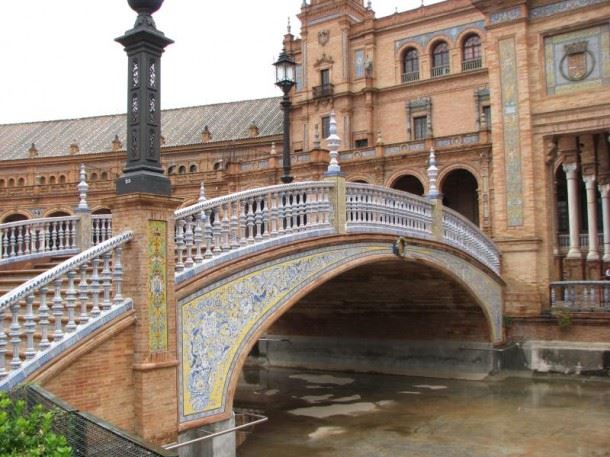
Plaza de Espana by: asw909
Parroquia de San Lorenzo
Seville’s Parroquia de San Lorenzo means that budget travellers needn’t break the bank to see some top rated art in this part of Spain. Step inside the church, a 14th century architectural mix of North European gothic meets Arab mudejar, sit back and take in its glory. The Parroquia, famous for its five naves, also features an altarpiece designed in 1632 by Martinez Montañés, considered the best Sevillian sculptor of the time. Not a shade on me though.
Searching for more creative inspiration? Head next door and you’ll be able to walk straight up to the feet of the most famous statue of Christ in Seville at the Basilica de Nuestro Señor Jesús del Gran Poder. Make sure you don’t miss out on the mural painting of the Virgin de Rocamador or Murillo’s painting “Charitas” either. We’d never miss a good virgin. Nor should you.
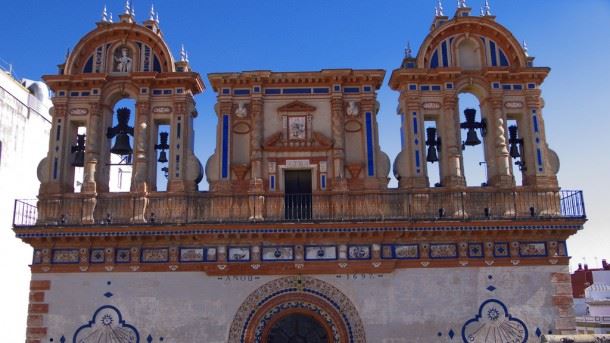
Parroquia de San Lorenzo by: JJ Filpo
Cathedral and Giralda
Go any other time of the week to Seville’s symbolic Cathedral and Giralda and expect to pay the price for such beauty. Head on a Sunday however and you can enjoy the cities most famous landmark entirely forfree.
Seville Cathedral, the third largest in the world, is a splendid blend of Christian and Arabic styles (not surprising given its foundation on the site of an old mosque), finished in the 16th century. Here you can see the tomb of the legendary Christopher Columbus, for whom Seville had to thank for its hey day as one of the worlds richest cities after the discovery of the Americas. The inside of the cathedral is no less opulent with its retablo (carved scenes from the life of Christ), the Giralda (a minaret converted into a bell tower) and the longest nave in all of Spain. Keep an eye out for the dome mind; it’s collapsed a fair few times since old Columbus’ has been laid to rest.
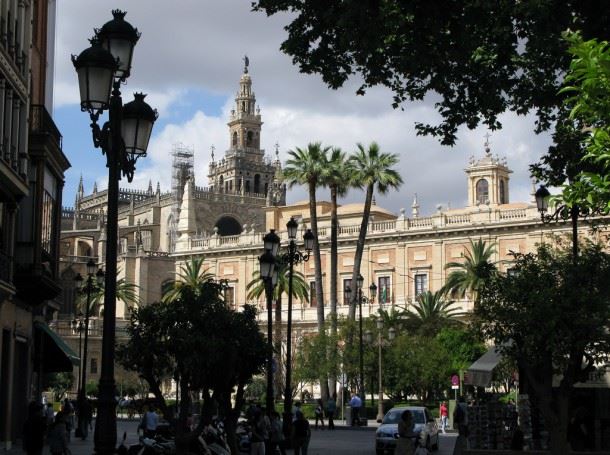
Cathedral Giralda by: Wit
Museo de Bellas Artes
If you still haven’t had your fill of all the wonderful art that Seville has on offer, it’s worth checking out the Museo de Bellas Artes and having a wander around its galleries for free.
This 17th century building houses one of the finest art galleries in the whole of Europe, featuring works by Seville’s own Murillo, Velazquez and El Greco. If you do find yourself tiring looking at the work of such gods (it’s OK the rest of us are human) take a peek at the museums hedged gardens. A nice little break from the buzz of the cerveza swigging centre!
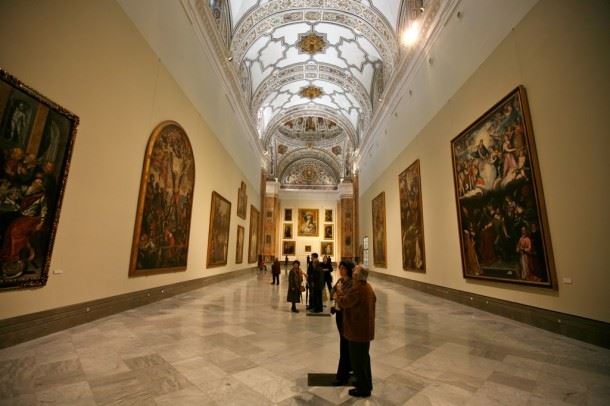
Museo de Bellas Artes by: Alex E Proimos
Seville guarantees a good time for the cash strapped traveller, just prepare to have your eyes bombarded by all the glitz and glamour on display.
0
Like
Published at 10:21 PM Comments (0)
Spam post or Abuse? Please let us know
|
|